Every Cow, Sheep and Goat in Kenya to Carry ANITRAC Livestock Tags as Government Targets Cattle Rustling
- ANITRAC livestock tags in Kenya will give every cow, sheep and goat a traceable identity as government targets cattle rustling, disease and food safety risks.
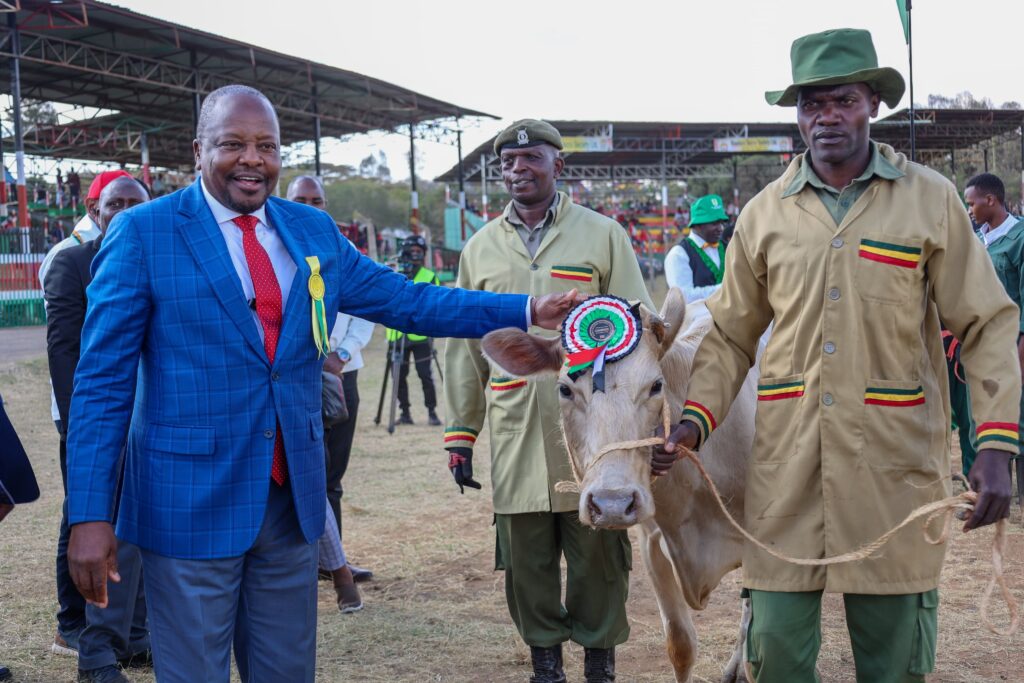
Every cow, sheep and goat in Kenya will be required to carry an Animal Identification and Traceability (ANITRAC) tag as the government expands the national livestock identification system to tackle cattle rustling, improve disease surveillance and strengthen access to domestic and international markets.
Agriculture and Livestock Development Cabinet Secretary Sen. Mutahi Kagwe said the ANITRAC livestock tags in Kenya will give individual animals a distinctive identity, allowing their movement and history to be traced through the livestock value chain.
The government expects the system to make it harder for stolen animals to be moved between markets or sold without detection. It will also provide authorities with information needed to trace animals during disease outbreaks and improve food safety controls.
Kagwe said every cow will carry a distinctive yellow ANITRAC ear tag and warned livestock thieves against attempts to remove the identification by cutting animals’ ears.
“Every cow will have a yellow ANITRAC tag. If you are found with cattle without the tag, you must explain to the police. If somebody has cattle whose ears have been cut off, the police should arrest that person,” Kagwe said.
The remarks were made during the official opening of the Central Kenya National Show 2026 in Nyeri, where the CS also outlined government measures targeting livestock, avocado, macadamia, tea and coffee value chains.
ANITRAC Tags to Strengthen Livestock Traceability and Fight Theft
The national ANITRAC system is expected to create a digital identity for livestock, giving authorities and other authorised actors greater visibility of animals from the farm through the market and other stages of the value chain.
For livestock farmers, the system is intended to address one of the longstanding challenges affecting pastoral and livestock-producing communities: livestock theft.
Cattle rustling has affected livestock owners in several parts of Kenya, with stolen animals often moved across administrative boundaries before being sold. A traceable identification system gives law enforcement and livestock authorities an additional mechanism for establishing the identity and movement history of animals.
Kagwe’s warning over animals with cut ears signals the government’s intention to treat deliberate removal of livestock identification as a serious enforcement issue.
The system goes beyond livestock security. Traceability is increasingly important in livestock trade because buyers need assurance about where animals originated, their health status and the conditions under which livestock and animal products entered the market.
ANITRAC will therefore support disease surveillance by making it easier to identify animals and trace their movements when a disease outbreak is reported.
This is particularly important for diseases that can spread quickly when animals are moved between farms, markets and production areas.
The system is also expected to support food safety by strengthening the ability of authorities to track livestock through the value chain.
Kenya is seeking to expand its livestock export markets, making animal identification, health certification and traceability increasingly important requirements for international trade.
The ANITRAC rollout is being implemented alongside the national livestock vaccination programme. Kagwe said more than 20 million cattle, sheep and goats had already been vaccinated nationwide as the government strengthens animal health systems.
The combination of vaccination and traceability is expected to give Kenya better information on livestock health while supporting compliance with requirements in premium markets.
For farmers, stronger traceability could also improve confidence among buyers who require information about the origin and health history of animals.
Government Targets Higher Returns from Avocado and Macadamia
During the Nyeri event, Kagwe also announced increased government support for avocado and macadamia farmers through quality planting materials, extension services, aggregation, certification and improved market access.
He warned farmers and traders against harvesting and selling immature avocado and macadamia, saying the practice damages Kenya’s reputation in international markets and affects farmer earnings.
International buyers require mature produce, consistent quality, traceability and reliable supply. The government plans to strengthen aggregation and certification systems while encouraging greater local processing.
The objective is to ensure more value generated from agricultural production remains within producing counties through processing, employment and other value chain activities.
Kagwe said farmers who produce quality agricultural products and access organised markets should earn more than those forced to sell early to middlemen.
“A farmer who sells a quality product into a well-organised market should earn more than a farmer who is forced to sell early to a middleman,” he said.
The concerns over immature produce are also linked to Kenya’s ability to maintain access to high-value export markets.
Harvesting before crops reach the required maturity affects quality and market acceptance. Repeated quality problems can also weaken buyer confidence and reduce opportunities for producers seeking to supply premium markets.
The government therefore wants farmers, aggregators, exporters and other value chain players to work within stronger quality control and certification systems.
For avocado and macadamia producers, access to quality planting materials and extension services is also expected to support improved production and better crop management.
The emphasis on aggregation is intended to improve how farmers organise produce for buyers while reducing problems associated with fragmented marketing.
Tea and Coffee Reforms Enter New Phase
Kagwe also used the Central Kenya National Show to outline reforms in the tea and coffee sectors.
On tea, he said the Tea Levy Regulations, 2026, which took effect on May 1, provide for a 0.8 percent levy on tea exports.
According to Kagwe, the proceeds are intended to support tea infrastructure, including feeder roads and buying centres, protect Kenyan tea from unfair competition and promote value addition.
He said tea farmers should see tangible benefits through improved infrastructure, more efficient buying centres, stronger markets and better returns.
Kenya has traditionally relied heavily on bulk tea exports, and the government is seeking to increase value addition through branding, packaging, blending and other processing activities.
The shift is intended to allow Kenya to capture a greater share of the value generated after tea leaves leave the farm.
Better roads and buying centres could also improve the movement and handling of tea from producing areas, while stronger market systems could improve the connection between farmers and buyers.
In the coffee sector, Kagwe said implementation of the Coffee Act, 2026 had entered the operational stage following the establishment of the Coffee Board of Kenya and the Coffee Research and Training Institute.
President William Ruto appointed Henry Gichuhi Kinyua as Non-Executive Chairperson of the Coffee Board on September 4.
The Ministry is also finalising the gazettement of the Council and Chairperson of the Coffee Research and Training Institute.
Kagwe said the coffee reforms must now translate into practical benefits for farmers.
These include transparent systems, access to quality planting materials, reliable agricultural research and extension services, stronger cooperatives and improved access to high-value markets.
The reforms in coffee, tea, horticulture and livestock point to a broader government focus on improving the organisation of agricultural value chains and increasing the share of value reaching producers.
For livestock farmers, the ANITRAC system represents a shift towards a more traceable and technology-based livestock economy.
Every animal will have an identity linked to information required for traceability, while vaccination and disease surveillance programmes will provide additional animal health information.
The government expects the system to reduce livestock theft, improve disease control and strengthen Kenya’s ability to supply livestock and animal products to markets with strict traceability requirements.
The success of the programme will depend on nationwide registration, proper use of the identification system and cooperation between farmers, livestock officers, traders, markets, law enforcement agencies and other value chain actors.
For farmers in pastoral areas, where livestock forms a major part of household wealth, improved animal identification could provide an additional layer of protection against theft.
For commercial livestock producers, the system could strengthen records needed for organised marketing and participation in formal livestock value chains.
For Kenya’s export ambitions, traceability will also be important in demonstrating the origin, movement and health status of animals entering international markets.
The government is therefore positioning ANITRAC as more than a livestock identification programme. It is part of a wider effort to create a more organised livestock sector built around animal health, traceability, food safety, market access and value addition.
With more than 20 million cattle, sheep and goats already vaccinated nationwide, the government is also linking livestock identification with animal health interventions.
The wider agricultural reforms outlined in Nyeri show a similar emphasis on quality, certification, market organisation and value addition across different sectors.
For farmers, the immediate priority will be compliance with the livestock identification programme while taking advantage of stronger systems for animal health, markets and agricultural production.
The government now expects every cow, sheep and goat to carry an ANITRAC tag as Kenya moves towards a livestock sector where animals are easier to identify, trace and monitor from the farm to the market.
SEO Keywords: ANITRAC livestock tags in Kenya, ANITRAC Kenya, livestock identification Kenya, animal traceability Kenya, cattle rustling Kenya, livestock tagging Kenya, livestock vaccination Kenya, livestock disease surveillance, livestock export Kenya, animal identification and traceability
https://farmerstrend.co.ke/farming-news/anitrac-livestock-tags-in-kenya-cattle-rustling/https://farmerstrend.co.ke/wp-content/uploads/2026/09/Every-Cow-Sheep-and-Goat-in-Kenya-to-Carry-ANITRAC-Livestock-Tags-as-Government-Targets-Cattle-Rustling-1024x683.jpghttps://farmerstrend.co.ke/wp-content/uploads/2026/09/Every-Cow-Sheep-and-Goat-in-Kenya-to-Carry-ANITRAC-Livestock-Tags-as-Government-Targets-Cattle-Rustling-150x150.jpgFarming NewsANITRAC livestock tags in Kenya will give every cow, sheep and goat a traceable identity as government targets cattle rustling, disease and food safety risks.Every cow, sheep and goat in Kenya will be required to carry an Animal Identification and Traceability (ANITRAC) tag as the government expands the...FarmersTrendjohn doefarmerstrend@gmail.comAdministratorFarmers Trend Ltd.











Leave a Reply