From Italy to Kenya: Can Blood Oranges Thrive Outside the Mediterranean? A 2026 Profit & Yield Analysis
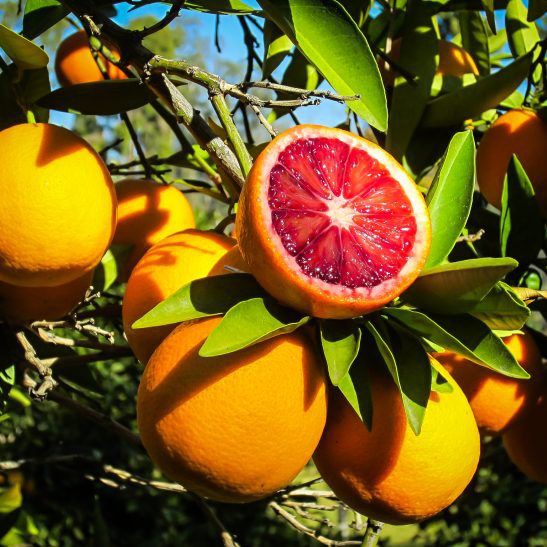
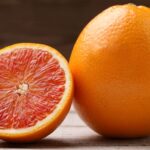
Blood oranges evoke images of Sicilian groves and Mediterranean sunshine. The deep crimson flesh and berry-tinged flavor command premium prices worldwide. Italian farmers have cultivated these specialty fruits for centuries.
Kenyan farmers now ask a pragmatic question. Can this Mediterranean crop produce viable yields in East Africa? The answer requires an examination of climate, agronomy, and market dynamics.
This article provides a comprehensive analysis. It draws on available data from Kenyan agricultural sources and international trade statistics. The focus remains on practical insights for farmers and investors. Blood orange farming in Kenya represents the highest value opportunity in citrus production.
Blood Orange Profit Per Acre Kenya ranges from KES 1.5 million to KES 2.9 million annually under optimal management.
What Defines a Blood Orange?
Blood oranges are a mutation of the sweet orange (Citrus sinensis). The red coloration comes from anthocyanins. These natural pigments are antioxidants. They are rare in citrus fruits.
Three main varieties dominate global production. Moro is the earliest maturing variety. It has deep red flesh and a strong flavor. Mature trees produce 150 to 250 fruits per year. The harvest window runs from January to March. Tarocco offers a sweeter profile with lower acidity. This variety is popular in European export markets. It produces 200 to 300 fruits per mature tree. Tarocco matures from February to April. Sanguinelli is a late-season variety. It matures from March to May. This cultivar demonstrates good drought tolerance. The reddish rind and flesh make it suitable for processing.

These varieties differ significantly from common oranges. They require specific conditions for the red pigmentation to develop. The cool night temperatures of the Mediterranean trigger anthocyanin production. Research shows that Moro has significantly higher concentrations of total anthocyanins, hydroxycinnamic acids, and flavones compared to other varieties .
The Climate Question: Mediterranean vs. Kenyan Conditions
The Mediterranean region offers a distinct climate profile. Summers are warm and dry. Winters are cool and mild. The diurnal temperature variation is substantial.
Blood oranges need warm days for sugar production. They require cool nights for pigment development. Temperatures between 20 and 30 degrees Celsius during the day are optimal. Cooler nights signal the fruit to produce anthocyanins.
Kenya presents diverse agro-ecological zones. The highland areas show potential for blood orange cultivation. Altitudes between 1,200 and 1,800 meters above sea level are suitable . These regions include Murang’a, Nyeri, Kericho, Eldoret, and Nakuru. The temperature ranges in these areas match the crop’s requirements. Warm days and cooler nights occur naturally at these elevations. This diurnal variation is critical for color development.
Rainfall patterns also matter. Blood oranges need 800 to 1,200 millimeters of annual rainfall. Irrigation can supplement dry seasons. Drip irrigation systems effectively manage water delivery.
Soil conditions must be suitable. Deep, well-drained loam soils are ideal. Heavy clay or waterlogged soils are problematic. Soil pH should range from 6.0 to 6.5.
Suitable Growing Areas in Kenya
Blood oranges perform well in most citrus-growing regions provided temperatures are warm and frost levels remain low. Ideal regions include Lower Central Kenya including Murang’a, Kirinyaga, and Nyeri. Eastern counties such as Machakos, Kitui, and Makueni offer suitable conditions. Rift Valley mid-altitude zones covering Kericho, Eldoret, and Nakuru are appropriate. Western Kenya warm areas and Coastal belt regions also support cultivation .
The crop thrives in temperatures between 15°C and 30°C, with adequate sunlight essential for proper fruit coloration and sweetness development. Well-drained sandy loam soils with slightly acidic to neutral pH provide the best results .
For the African citrus greening disease (AfGGD), its distribution is influenced by temperature. In Kenya, the disease is most prevalent on Washington navel orange growing in altitudes above 1,400 meters above sea level and is least found in the lower midlands between 800 and 1,250 meters above sea level .
Blood Orange Yield Per Acre in Kenya
Yield varies by variety, management level, and growing conditions. Grafted trees fruit in 1 to 2 years, unlike seed-grown trees that take 3 to 5 years. Under standard spacing of 6 meters by 6 meters, you can plant approximately 120 trees per acre.
In a conservative scenario, each tree produces 100 kilograms of fruit. Total yield reaches 3,600 kilograms per acre. An average scenario with proper management delivers 15 to 45 kilograms per tree, yielding 5,000 to 7,000 kilograms per acre. Under optimistic conditions with excellent care, each tree produces 150 kilograms. Total yield reaches 18,000 to 22,500 kilograms per acre.
Blood Orange Yield Per Acre in Kenya
| Scenario | Yield Per Tree | Total Yield Per Acre |
|---|---|---|
| Conservative | 100 kg | 3,600 kg |
| Average | 15-45 kg | 5,000-7,000 kg |
| Optimistic | 150 kg | 18,000-22,500 kg |
Blood Orange Profit Per Acre Kenya under a conservative scenario with local market prices shows strong returns. At 3,600 kilograms per acre and an average local market price of KES 225 per kilogram, gross revenue reaches KES 810,000. After annual production costs, net profit ranges from KES 720,000 to KES 757,000 per acre annually .
Under an optimistic scenario with 150 productive trees and 150 kilograms per tree at KES 250 per kilogram, gross revenue reaches KES 5,625,000 per acre. Net profit after KES 80,000 annual costs ranges from KES 1.92 million to KES 2.92 million per acre . Farmers should realistically expect performance between these figures.
Cost of Blood Orange Seedlings in Kenya and Establishment Costs
Grafted seedlings cost KES 500 at farmers trend, call or WhatsApp 0724 559 286 or 0790 509 684 to order Blood Orange Seedlings. For a one-acre plot using 120 to 160 trees with drip irrigation, total establishment costs require careful budgeting.
Cost of Blood Orange Seedlings in Kenya and Establishment Per Acre
| Item | Estimated Cost (KES) |
|---|---|
| Grafted seedlings (120-160 × KES 500 average) | KES 48,000 – 80,000 |
| Land preparation (ploughing, harrowing) | KES 15,000 – 20,000 |
| Hole preparation and manure (120-160 holes) | KES 25,000 – 40,000 |
| Drip irrigation system | KES 60,000 – 100,000 |
| Labor for planting and initial maintenance | KES 20,000 – 30,000 |
| Total establishment cost | KES 168,000 – 270,000 |
For a 1/8-acre plot with 35 to 50 trees, total initial costs are estimated at KES 122,000 to KES 195,000 .
Annual production costs for a mature orchard from year three onward include manure and fertilizer at KES 20,000 to KES 30,000. Pest control costs range from KES 8,000 to KES 15,000. Labor for pruning, irrigation management, and harvesting costs KES 15,000 to KES 30,000. Certification for organic or GlobalGAP standards, if applicable, costs KES 20,000 to KES 30,000. Total annual costs range from KES 63,000 to KES 105,000. The break-even period is 1 to 2 years after commercial production begins .
Revenue Per Acre: Local vs. Export Markets
The market is the primary advantage of this crop over common citrus. Blood orange farming in Kenya delivers premium prices across all channels. Local market farm gate prices for fresh Grade 1 fruit range from KES 50 to 80 per fruit or KES 150 to 300 per kilogram. Supermarket retail prices reach KES 100 to 150 per fruit depending on size. Ordinary oranges sell for KES 10 to 20 each .
Export markets offer substantially higher returns. Prices in Europe, the USA, and the Middle East reach KES 500 to 1,500 per kilogram. Export requires certification including GlobalGAP and organic certification where applicable .
Revenue Per Acre: Local Market (Conservative)
| Metric | Value |
|---|---|
| Trees per acre (6m x 6m) | 120 |
| Yield per tree | 30 kg |
| Total yield | 3,600 kg |
| Local market price | KES 225 per kg |
| Gross revenue | KES 810,000 |
| Annual production cost | KES 53,000 – 90,000 |
| Net profit | KES 720,000 – 757,000 |
Revenue Per Acre: Export Market (Premium)
| Metric | Value |
|---|---|
| Export price | KES 750 per kg |
| Gross revenue | KES 2,700,000 |
| Export costs and certification | KES 300,000 – 700,000 |
| Net profit | KES 2,000,000 – 2,400,000 |
Orchard Establishment and Management
Land preparation begins with site selection. Choose a sunny, well-drained site with 6 to 8 hours of sunlight. Proximity to roads reduces transport costs. Plant windbreaks such as Grevillea or mango trees to reduce wind damage.
Soil preparation requires clearing weeds and plowing to 30 centimeters depth. Dig planting pits measuring 60 centimeters by 60 centimeters by 60 centimeters. Space pits 5 to 6 meters apart, allowing 278 to 400 trees per hectare. Mix topsoil with 10 to 15 kilograms of well-rotted manure or compost. Add 100 grams of rock phosphate. Adjust pH with lime at 1 to 2 kilograms per pit if pH falls below 5.5. Use sulfur if pH exceeds 6.5. Create raised beds in heavy soils to prevent waterlogging, which is critical for root health.
Planting uses grafted seedlings for faster fruiting and disease resistance. Rootstocks like lemon or sour orange enhance drought tolerance. Avoid seed propagation due to slow growth and variable quality. Place seedlings in pit centers, ensuring graft unions sit 5 to 10 centimeters above soil. Backfill with soil-manure mix and water immediately with 15 liters per plant. Remove rootstock shoots regularly. Plant in March to April or October to November during rainy seasons to leverage natural moisture for root establishment .
Irrigation requires watering young trees every 3 to 4 days with 15 to 25 liters per plant for 2 to 3 years. Water demand increases during flowering from October to December and fruiting from January to May. Mature trees need irrigation during dry spells. Drip or mini-sprinkler systems costing KES 50,000 to 80,000 per 1/8-acre conserve water .
Mulching and pruning maintain orchard health. Apply 10 centimeters of organic mulch such as straw or palm fronds, keeping it 10 to 15 centimeters from the trunk to retain moisture and suppress weeds. Avoid mulch contact with the trunk to prevent rot. Conduct formative pruning in years 1 to 2 to maintain a single stem and 3 to 4 main branches. Remove dead, crowded, or low-hanging branches annually to enhance fruit size and airflow .
Composting and natural fertilization support sustainable production. Mix citrus prunings, manure, and crop residues in a 2:1:1 ratio. Turn piles every 2 to 3 weeks for 2 to 3 months. Apply 10 to 20 kilograms per plant annually around the drip line. Intercrop with legumes such as cowpeas or beans to fix nitrogen and improve soil structure. Incorporate residues annually. Foliar feeds such as Goldchance Super Flowers and Fruits with NPK 12:5:45 plus trace elements at 50 grams per 20 liters of water during flowering boost fruit set .
Pest and Disease Management: Focus on Citrus Greening Disease
Blood oranges face similar threats as other citrus crops. The most serious threat is citrus greening disease, also known as Huanglongbing or HLB. It is caused by bacteria belonging to the Candidatus Liberibacter group.
In East Africa, the heat-sensitive form of the disease caused by Claf (African citrus greening disease or AfGGD) is vectored by Trioza erytreae, also known as the African citrus triozid or ACT. This disease remains the most prevalent threat, particularly in cooler, mid to high altitude areas. It causes yield losses of 25 to 100 percent in Kenya and Tanzania.
In Kenya, the disease is not found below 800 meters above sea level because both the bacterium and citrus psyllids are sensitive to high temperatures. Optimum temperature for symptom expression is 21 to 24 degrees Celsius. Symptoms are masked above 26 degrees Celsius . The International Centre of Insect Physiology and Ecology (ICIPE) has produced habitat suitability maps for Trioza erytreae in western to southern Kenya, showing high probability areas in red .
Early symptoms farmers should watch for include yellow shoots scattered throughout the canopy. Leaves show irregular yellow blotches, unlike nutrient deficiency which is symmetric. Reduced leaf size and thin canopy development appear. Fruits become small and misshapen with uneven coloring. The taste turns bitter or sour. Premature fruit drop occurs.
Distinguishing citrus greening from nutrient deficiencies requires careful observation. Nitrogen deficiency causes uniform yellowing across entire leaves. Magnesium deficiency produces symmetrical yellowing from leaf edges. Citrus greening creates irregular, blotchy yellow patterns that are asymmetrical across the leaf midrib.
Prevention and management strategies focus on exclusion and vector control. Use disease-free budwood from certified nurseries. Strictly control citrus psyllids using approved insecticides. Remove and destroy severely infected trees because they will never bear fruit. If only a few branches are affected, prune them out. Use biopesticides such as neem oil to control psyllids. Leave flower strips or intercrop with beans to encourage natural enemies like parasitic wasps that feed on psyllid nymphs. Regular scouting is essential. Check orchards weekly for signs of pests or disease .
Nearly all commercial citrus species are susceptible to citrus greening disease. These include sweet oranges, tangerines, mandarins, lemons, limes, grapefruits, and pomelos.
Recommended insecticides for psyllid control include several active ingredients. Thiamethoxam, found in products like Actara 25WG and Summit 120SC, has a 5-day pre-harvest interval but is toxic to bees so do not spray on flowering trees. Imidacloprid, available as Confidor 200 SL and Thunder OD 145, also has a 5-day interval and is toxic to bees. Lambda-cyhalothrin, in Duduthrin 1.7 EC and Jackpot 5% EC, has a 5-day interval and is very toxic to aquatic organisms.
Harvesting and Post-Harvest Handling
Blood oranges are ready for harvest when the peel shows an orange-red blush. The fruit should be firm. Color development continues on the tree. Sweetening does not continue after picking.
Use clippers to cut fruits from the tree. Leave the stem attached. Pulling by hand damages the rind. This reduces shelf life significantly. Harvest in the morning when fruits are coolest.
Blood oranges bruise more easily than common oranges. Handle with care during sorting and packing. Grade fruits by size, color, and absence of blemishes. Grade 1 fruits command the highest prices.
Storage conditions affect shelf life. Store fresh fruit at 5 to 10 degrees Celsius. Maintain 85 to 90 percent humidity. These conditions maintain quality for three to four weeks. Cold storage or processing extends preservation. Varieties with thicker crust such as Tarocco Meli and Moro are most suitable for transport to distant markets due to their greater resistance to mechanical damage .
Export Certification and Market Access
For farmers meeting international quality standards, export markets offer higher returns. Blood orange farming in Kenya can achieve KES 500 to 1,500 per kilogram in export markets.
Export certification requires compliance with specific standards. GlobalGAP certification is mandatory for access to high-value markets like the EU, UK, and Middle East. Export documentation includes an Export License from AFA-HCD for all markets. A Phytosanitary Certificate from KEPHIS is required for all markets. An AFA-HCD Export Certificate serves all markets. GlobalGAP or KenyaGAP Certificate from an accredited certification body is essential for EU and UK supermarket chains. A Non-Preferential Certificate of Origin from KNCCI covers all markets. An EUR.1 Movement Certificate from KRA Rules of Origin applies to EU markets. A Laboratory Test Report from AFA-HCD accredited labs is required for most fresh produce. A BRC Global Standard Certificate from a BRC-accredited auditor is needed for UK buyers.
Most smallholder farmers participate in exports through three established models. Outgrower schemes involve a licensed exporter sourcing from registered smallholder farms under a structured supply agreement. Cooperatives allow farmer cooperatives to pool resources to operate a shared packhouse and hold a collective export license. Direct export requires AFA-HCD farm registration, which is free of charge for farms under 5 hectares, and requires packhouse certification and full vetting process.
Certification bodies operating in East Africa include AfriCert Ltd. at info@africert.co.ke, EnCert Ltd. at musanioka@yahoo.com, Bureau Veritas Kenya Ltd. at cer.nairobi@ke.bureauveritas.co, and SGS Kenya at Irene.kombo@sgs.com.
The Verdict: Can Blood Oranges Thrive in Kenya?
The evidence supports a positive assessment. Blood oranges thrive in Kenya under the right conditions. The key is matching varieties to specific agro-ecological zones. Highland areas with proper temperatures provide the required diurnal variation. This variation is essential for pigment development. Soils must be well-drained and appropriately managed.
The market dynamics are favorable. Local demand already exceeds domestic production. Imports are substantial and increasing. Consumers are willing to pay premium prices. The major risks are manageable. Using certified disease-free seedlings prevents HLB. Proper orchard management minimizes pest and disease issues. Irrigation systems mitigate rainfall variability.
Initial investment is significant. Orchard establishment requires capital for seedlings, land preparation, and irrigation. The payback period is three to four years. Long-term returns justify the investment. Blood orange cultivation offers a viable diversification opportunity. It provides higher returns than common citrus. It targets premium local and export markets. It requires knowledge of specialty crop management.
This is not a low-risk, low-effort enterprise. It is a serious agricultural business. The rewards are substantial for farmers who manage their orchards well. The transition from Mediterranean to Kenyan conditions has begun. Early adopters are already selling premium fruit. The market opportunity is clear. The agricultural conditions are suitable. The question is no longer “Can blood oranges thrive?” but “Are you ready to grow them?”
https://farmerstrend.co.ke/trending/blood-orange-farming-in-kenya-2/https://farmerstrend.co.ke/wp-content/uploads/2026/09/GWjLC9RWwAIaEdb-1.jpghttps://farmerstrend.co.ke/wp-content/uploads/2026/09/GWjLC9RWwAIaEdb-1-150x150.jpg# TrendingBlood Orange FarmingCitrus FarmingFruitsIn FruitsAfrican citrus greening disease,agribusiness Kenya.,agricultural guide,blood orange,blood orange farming in kenya,blood orange profit per acre kenya,blood orange yield per acre kenya,Central Kenya,citrus diseases,citrus farming Kenya,citrus greening disease kenya,citrus pests,citrus psyllids,cost of blood orange seedlings in kenya,eldoret,export citrus farming,farming guide,feasibility study,GlobalGAP Kenya,high-value crops Kenya,highland citrus farming,HLB,kenya,Kenyan agriculture,Kericho,Kirinyaga,kitui,long form content,machakos,makueni,moro,Murang'a,Nakuru,Nyeri,Orchard management,pillar article,profit analysis,Rift Valley,sanguinelli,tarocco,yield analysisBlood oranges evoke images of Sicilian groves and Mediterranean sunshine. The deep crimson flesh and berry-tinged flavor command premium prices worldwide. Italian farmers have cultivated these specialty fruits for centuries.Kenyan farmers now ask a pragmatic question. Can this Mediterranean crop produce viable yields in East Africa? The answer requires...FarmersTrendjohn doefarmerstrend@gmail.comAdministratorFarmers Trend Ltd.






Leave a Reply