Smallholder Dairy Systems Transformation in Kenya Gets Boost from KALRO and Teagasc Partnership
Smallholder dairy systems transformation in Kenya is underway through a KALRO, Teagasc, and Greenfield partnership. Improved forages are doubling milk yields for farmers.

In Kenya, more than 1.8 million smallholder farmers produce over 80 per cent of the country’s milk. Yet productivity remains low due to high feed costs, poor forage systems, and weak links between research and farmers. Many farmers struggle to get enough quality feed for their cows. Those who manage to buy feed find it expensive. The result is low milk production and low incomes.
The Sustainable Dairy Farming initiative is changing that. The project is led by KALRO in partnership with Teagasc, the Irish agriculture and food development authority, and Greenfield International. It is improving productivity, reducing costs, and strengthening farmer resilience.
The initiative is addressing key constraints such as high feed costs, poor forage systems, and weak links between research and farmers. It promotes forage-based dairy systems capable of supplying more than 90 per cent of animal nutritional needs. When cows have enough quality feed, they produce more milk.
At the core of the initiative is an innovative model that connects research, extension, and farmers. This is done through Dairy Innovation Support Units and cooperative-led Farm Innovation and Learning Hubs. These hubs bring together farmers, extension officers, and researchers. They share knowledge, test new technologies, and learn from each other.
Key achievements
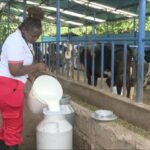
The project has produced impressive results. Improved forages can double milk yields. This results in higher farmer incomes and increased milk supply to cooperatives. A farmer who used to get 10 litres per day can now get 20 litres. That extra milk means more money.
Increased farm incomes are impacting positively on household income. The money is being reinvested locally. Farmers are buying better inputs. They are sending their children to school. They are improving their homes. This stimulates rural economies and creates sustained incentives for continued technology adoption.
Farmer Innovation and Learning Hubs and cooperative-supported networks continue to support knowledge exchange. They sustain peer-to-peer adoption beyond the project’s direct reach. Farmers learn from other farmers. When one farmer succeeds, others want to try the same methods. The adoption spreads naturally.
The project demonstrates a scalable model for dairy transformation. It delivers improved productivity, climate resilience, and value chain integration. The model can be replicated in other regions and other countries.
Why this partnership works
The Kenya-Ireland partnership is a good example of how long-term investment in knowledge systems and local institutions can deliver sustainable transformation in smallholder agriculture. The Irish partners bring experience from their own dairy sector. Kenya brings the local knowledge and the farmers. Together, they are building something that lasts.
The smallholder dairy systems transformation in Kenya is not just about cows and feed. It is about people. It is about families. It is about communities. When farmers earn more, their children eat better. When children eat better, they learn better. When they learn better, they have more opportunities.
The project is also about sustainability. The improved forages are adapted to local conditions. They are drought-tolerant and require less water. They improve soil health. They reduce the need for expensive chemical fertilizers. This makes the system more resilient to climate change.
The Dairy Innovation Support Units play a critical role. They are the link between research and practice. They take what scientists have learned and share it with farmers. They also take feedback from farmers back to researchers. This two-way communication ensures that the research is relevant and practical.
The Farm Innovation and Learning Hubs are where the real transformation happens. Farmers come together to learn new techniques. They see demonstrations of improved forages. They hear from farmers who have already tried the new methods. They get support from extension officers. They leave with new knowledge and new confidence.
The smallholder dairy systems transformation in Kenya is still in its early stages. But the results so far are encouraging. Farmers who have adopted the improved forages are seeing real benefits. Their cows are healthier. Their milk production is higher. Their incomes are growing.
The challenge now is to scale up. The project has shown what is possible. Now it needs to reach more farmers. More Dairy Innovation Support Units are needed. More Farm Innovation and Learning Hubs are needed. More farmers need access to improved forages.
The partnership between KALRO, Teagasc, and Greenfield International is committed to that goal. They are working with cooperatives, county governments, and other partners to expand the initiative. The smallholder dairy systems transformation in Kenya is a long-term project. But the vision is clear: a dairy sector that is productive, profitable, and sustainable.
The work continues. The farmers are learning. The cows are producing. The incomes are rising. The smallholder dairy systems transformation in Kenya is happening. One farm at a time. One cow at a time. One litre at a time. The future of dairy farming in Kenya is bright. And it starts with a simple idea: better feed for better cows. Better cows for better milk. Better milk for better lives.
Read original article here
https://farmerstrend.co.ke/livestock-farming/dairy-farming/smallholder-dairy-systems-transformation-in-kenya/https://farmerstrend.co.ke/wp-content/uploads/2026/06/Smallholder-Dairy-Systems-Transformation-in-Kenya.jpghttps://farmerstrend.co.ke/wp-content/uploads/2026/06/Smallholder-Dairy-Systems-Transformation-in-Kenya-150x150.jpgDairy Farming# TrendingSmallholder dairy systems transformation in Kenya is underway through a KALRO, Teagasc, and Greenfield partnership. Improved forages are doubling milk yields for farmers.In Kenya, more than 1.8 million smallholder farmers produce over 80 per cent of the country's milk. Yet productivity remains low due to high feed costs, poor...FarmersTrendjohn doefarmerstrend@gmail.comAdministratorFarmers Trend Ltd.


Leave a Reply