20 Fruit Trees That Thrive Well on Hot Regions: A Commercial Farming Guide for ASAL Fruit Farming in Kenya
20 Fruit Trees That Thrive Well on Hot Regions: A Commercial Guide for ASAL Fruit Farming in Kenya
Before You Start: A Simple Truth About Hot Areas
For many years, people in dry parts of Kenya thought that hot land could not grow good fruit. They believed that only maize and maybe a few local mango trees could survive. That thinking is old and wrong.
The truth is this: many fruit trees actually do very well in hot, dry places. Some even do better than in rainy areas. Here is why:
- Fruit that grows in hot sun often tastes sweeter because the sugar gets more concentrated.
- Fruit grown in dry weather has thicker skin. This means it can travel long distances to market without getting damaged.
- The color of fruits like pomegranate and blood orange becomes much deeper and more attractive when nights are warm.
A mango from Makueni tastes sweeter than one from Murang’a. A pomegranate from Baringo has a richer red color than one from cooler areas. That is a fact that buyers notice and pay more for.
This guide by Farmers Trend Ltd. highlights practical steps to turn your hot, dry land into a profitable fruit farm. No hard words. No confusing science. Just straight talk from people who have done it.
And when you are ready to buy seedlings, turn to Farmers Trend Limited Nursery in Muranga – the most trusted certified source for ASAL fruit trees. Call 0790509684 or visit https://agrovet.farmerstrend.co.ke/ to order online.
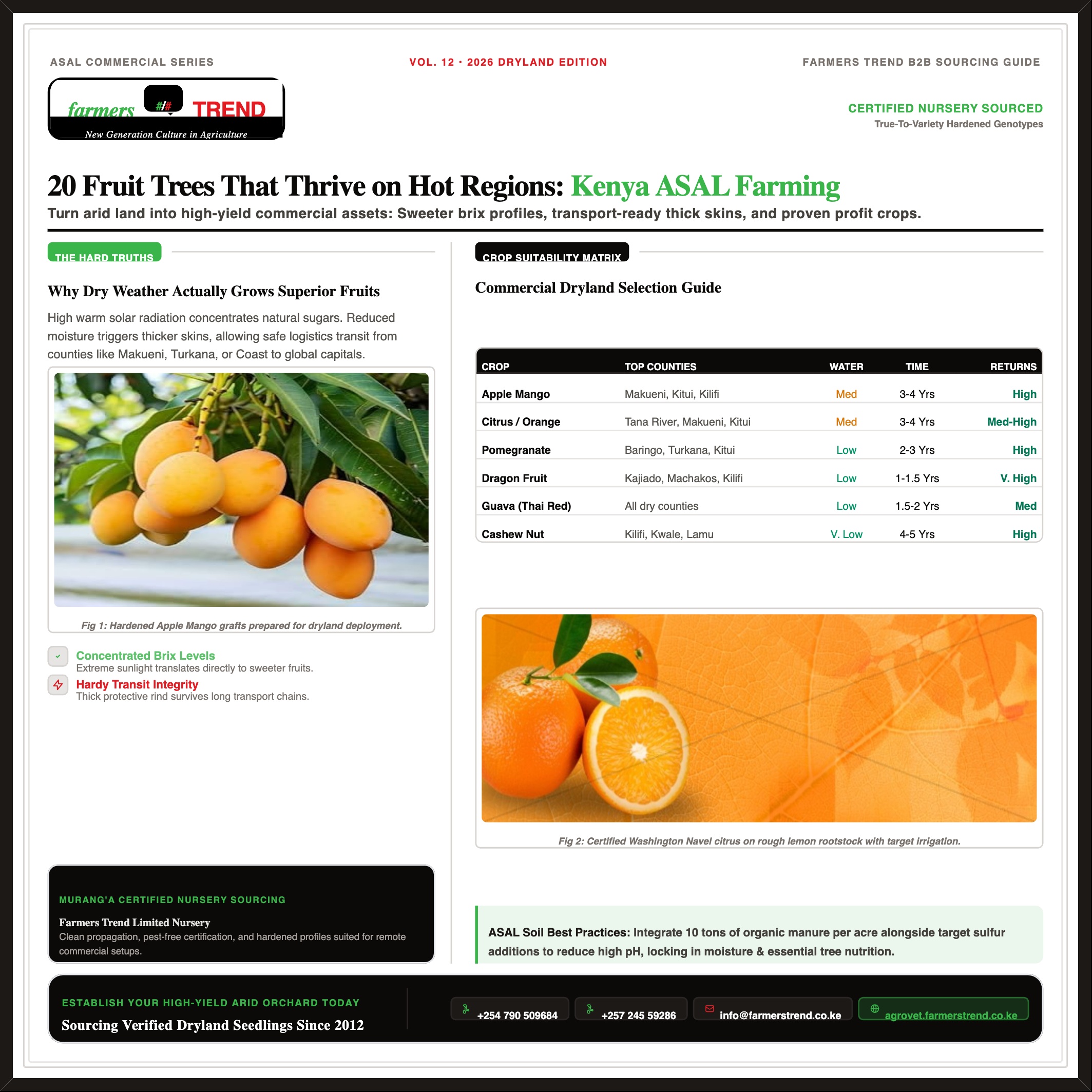
Quick Decision Table: Which Fruit Fits Your Farm?
Use this table to pick the right fruit for your county. The “Read Full Guide” links will take you to separate, detailed articles for each crop on our website.
| Fruit Crop | Best for These Counties | Water Need | Time to First Harvest | Profit Potential | Read Full Guide |
|---|---|---|---|---|---|
| Mango | Makueni, Kitui, Kilifi, Machakos | Medium | 3-4 Years | High | Read Mango Guide → |
| Orange (Citrus) | Tana River, Makueni, Busia, Kitui | Medium | 3-4 Years | Medium-High | Read Citrus Guide → |
| Mandarin | Makueni, Kitui, Taita Taveta | Medium | 2-3 Years | Medium-High | Read Mandarin Guide → |
| Lemon | Turkana, Baringo, Kisumu, Kitui | Low-Medium | 2-3 Years | Medium | Read Lemon Guide → |
| Lime | Kilifi, Kwale, Taita Taveta | Medium | 2-3 Years | High | Read Lime Guide → |
| Avocado | Kisumu, Laikipia, Kilifi, Homa Bay | Medium-High | 3-4 Years | Very High | Read Avocado Guide → |
| Guava | All dry counties | Low | 1.5-2 Years | Medium | Read Guava Guide → |
| Pomegranate | Baringo, Turkana, Kitui, Kajiado | Very Low | 2-3 Years | High | Read Pomegranate Guide → |
| Dragon Fruit | Turkana, Machakos, Kajiado, Kilifi | Low | 1-1.5 Years | Very High | Read Dragon Fruit Guide → |
| Custard Apple | Kilifi, Kwale, Makueni, Tharaka | Low-Medium | 2-3 Years | Medium | Read Custard Apple Guide → |
| Jackfruit | Kilifi, Kwale, Kisumu, Tana River | High | 4-5 Years | Medium | Read Jackfruit Guide → |
| Soursop | Kilifi, Kwale, Taita Taveta, Kisumu | Medium-High | 3-4 Years | High | Read Soursop Guide → |
| Breadfruit | Kilifi, Kwale, Lamu, Kisumu | Medium | 3-4 Years | Medium | Read Breadfruit Guide → |
| Cashew Nut | Kilifi, Kwale, Lamu, Tana River | Very Low | 4-5 Years | High | Read Cashew Guide → |
| Sapodilla | Machakos, Kitui, Makueni, Embu | Low | 5-6 Years | Medium | Read Sapodilla Guide → |
| Canistel (Egg Fruit) | Kilifi, Kwale, Makueni, Tharaka | Low-Medium | 3-4 Years | Medium | Read Canistel Guide → |
| Star Fruit | Kilifi, Kwale, Kisumu, Taita Taveta | Medium | 2-3 Years | Medium | Read Star Fruit Guide → |
| Loquat | Laikipia, Narok lowlands, Upper Machakos | Medium | 3-4 Years | Low | Read Loquat Guide → |
| White Sapote | Laikipia, Narok lowlands, Upper Machakos | Medium | 4-5 Years | Low | Read White Sapote Guide → |
| Passion Fruit | Coast, Kisumu, Meru lowlands, Laikipia | Medium | 8-12 Months | High | Read Passion Fruit Guide → |
| Lychee | Upper Machakos, Laikipia | Medium | 4-5 Years | Very High | Read Lychee Guide → |
| Fig | All dry counties (especially Baringo) | Low | 2-3 Years | Medium | Read Fig Guide → |
| Papaya | All dry counties | Medium | 9-12 Months | Medium | Read Papaya Guide → |
| Jujube | Makueni, Machakos, Kitui, Coast | Very Low | 2-3 Years | High | Read Jujube Guide → |
All seedlings listed above are available from Farmers Trend Limited Nursery, Muranga. Call 0790509684 to order.
Part One: Big Money Trees (Wait 3-5 Years, Earn for 20 Years)
These trees take a few years to start producing, but once they do, they can feed your family and pay school fees for a long time. They have ready buyers in Nairobi and even outside Kenya.
1. Mango: The King of Makueni
The old mango trees you see everywhere – the ones with lots of fiber and a short season – do not make good money anymore. Buyers want sweet, smooth, fiberless fruit that can travel well.

Which mango variety should you plant?
If you live in Makueni, Kitui, or Tharaka Nithi, go for Apple Mango or Kent. Apple Mango is sweet with no fibers. Exporters fight to buy it. Kent comes later in the season, so you have fruit to sell when Apple Mango is finished. If you are near the coast in Kilifi or Kwale, Tommy Atkins is a good choice. Its skin is tough, so it does not get damaged on the long truck ride to Nairobi. Ngowe is another coastal favorite – big, round, and harvested from June to August.
How to plant mango trees
Leave a lot of space between trees. Plant them five meters apart by five meters apart. This gives you about one hundred and fifty trees per acre. The wide spacing is very important in dry areas because each tree has to compete for little water.
Dig a hole that is sixty centimeters deep, sixty centimeters wide, and sixty centimeters long. Mix the topsoil with two full wheelbarrows of old manure. Put this mixture back into the hole. Plant your seedling at the start of the rainy season.
Watering mango trees correctly
This is where many farmers in Kitui and Baringo make a mistake. They think a big tree does not need water. Wrong. Mango trees need fifty liters of water per tree every week during flowering (around August) and when fruits are growing. In October, when it is very hot and dry, give each tree seventy liters per week. Use drip irrigation – never splash water on the leaves.
Pest control for mangoes
Fruit fly is your biggest enemy. One fly can ruin many fruits. Hang methyl eugenol traps in your orchard – one trap for every acre. Hang them at chest height. Change the liquid in the traps every six weeks.
Pro Tip from the Field:
In lowland Embu and Tharaka, mango trees sometimes refuse to flower because nights are too warm. To force flowering, spray the leaves with potassium nitrate. Mix two hundred grams of potassium nitrate in twenty liters of water. Spray in late July. This tricks the tree into thinking it is time to bloom.
Where to get certified mango seedlings: Farmers Trend Limited Nursery, Muranga. Call 0790509684.
Read the full detailed mango farming guide here.
2. Oranges, Lemons, Limes, and Other Citrus
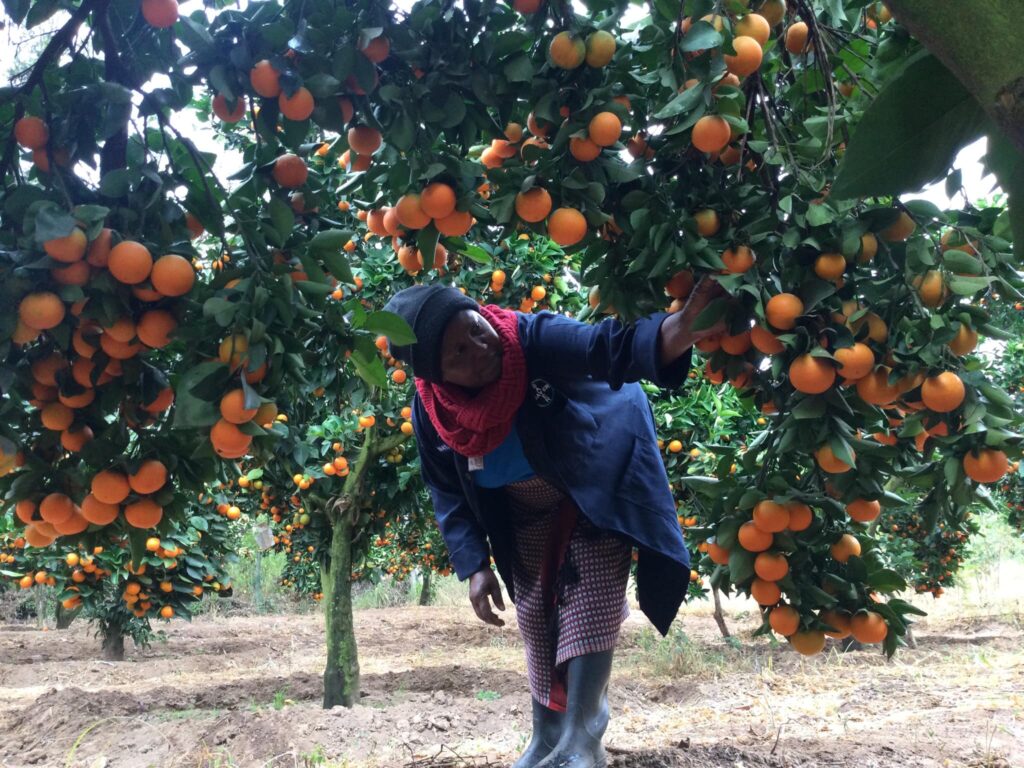
Citrus trees are some of the easiest fruits to grow in hot, dry areas because the rough lemon rootstock (the bottom part of the tree) is naturally tough and can handle little water. The problem is not water – it is a small insect called the citrus psyllid that spreads a deadly disease called greening.
Which citrus variety for which county?
In Makueni and Kitui, Washington Navel orange is the best choice. It has no seeds and does not need another tree nearby to produce fruit. If you want a longer harvest season, plant Valencia orange as well. Valencia ripens three months after Navel, so you can sell oranges from July all the way to October.
If you live in Laikipia or the lowlands of Narok, try Blood Orange (Moro variety) . This orange only turns red when nights are cool – below fifteen degrees. The red color makes it very special. People in Nairobi pay four hundred shillings per kilogram for blood oranges.
For farmers in Tana River and Baringo where the soil is chalky (alkaline), Minneola Tangelo – a mix of grapefruit and mandarin – handles the high pH well. Coastal farmers in Kilifi and Kwale should focus on grapefruit (Ruby Red) . It loves humidity and produces bitter-sweet fruit that juice companies buy.
How to plant citrus trees
Plant citrus trees four meters apart by five meters apart. This gives you about two hundred and fifty trees per acre. Dig holes fifty centimeters deep. Add two hundred grams of triple superphosphate (TSP) to each hole. This helps the roots grow deep. Do not add nitrogen fertilizer at planting time – it burns young roots.
Watering citrus
New trees need twenty liters of water twice per week for the first six months. After that, you can reduce to forty liters per tree every week.
The deadly citrus greening disease
This disease has no cure. It has destroyed many orchards in Machakos and Kisumu. A tiny brown insect (the psyllid) spreads it. Because your area is warm all year, this insect never sleeps. You must spray neem oil every two weeks without fail. Mix fifty milliliters of neem oil in twenty liters of water.
Check your trees every month. If you see yellow shoots that look like the tree is hungry, but the leaves are also small and crooked, pull that tree out and burn it immediately. Do not plant another citrus tree in that same hole for at least one year.
Where to get certified citrus seedlings: Farmers Trend Limited Nursery, Muranga. Call 0790509684.
Read the full detailed citrus farming guide here.
3. Lemons and Limes for Hot Areas
Lemons are even tougher than oranges. A lemon tree in Kitui can survive on much less water.

Which lemon variety?
For Turkana and Baringo, plant Lisbon lemon. It has thorns, but it can handle forty-degree heat. Eureka lemon has no thorns, but it struggles when temperatures go above forty degrees. In Kisumu and Busia where the air is more humid, the variegated pink lemon (striped green and yellow skin with pink inside) sells for five hundred shillings per kilogram to hotels, even though it gives you fewer fruits.
Limes for the coast
Mexican lime (also called Key lime) is small and very sour. Hotels in Kilifi and Mombasa buy a lot of them. Plant lime trees five meters apart.
Where to get certified lemon and lime seedlings: Farmers Trend Limited Nursery, Muranga. Call 0790509684.
Read the full detailed lemon and lime guide here.
4. Avocado: Big Money, But Be Careful
Avocado is one of the most profitable fruits in Kenya right now. But it does not grow well in every dry area. Do not plant avocados in Turkana, Kitui lowlands, or Tana River unless you have a way to remove salt from your water. Avocados hate salt and chalky soil.
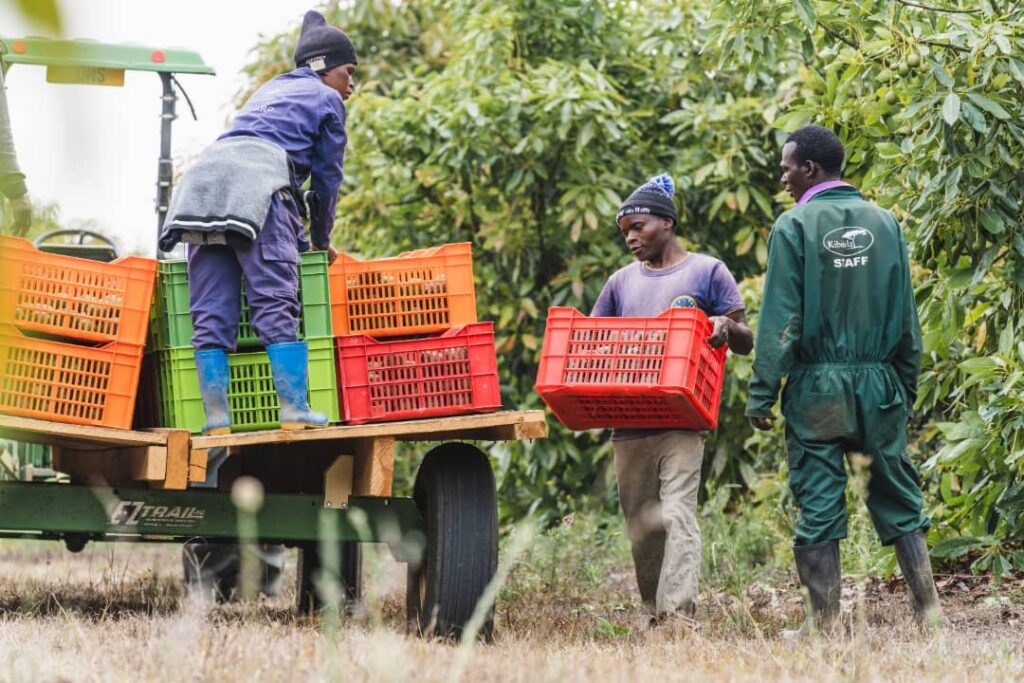
Where can avocados grow well in dry areas?
Avocados do well in:
- Humid dry areas: Kilifi, Kwale, Taita Taveta, Kisumu, Homa Bay, Migori.
- High altitude dry areas: Laikipia, upper Machakos, Narok lowlands.
Avocados will fail in hot, dry lowlands like Kitui, Makueni (below eight hundred meters), and Baringo.
Which avocado variety and rootstock?
Hass is still the best for export. But the rootstock matters more than the top part. For coastal areas, Duke 7 rootstock can handle a little bit of salt. For Laikipia and Narok, Mexicola rootstock can survive light frost. Fuerte is an older variety with smooth skin. It does well in Meru lowlands and Embu lowlands, but it produces fewer fruits than Hass.
How to plant avocados
Space avocado trees five meters apart by five meters apart (about one hundred and fifty trees per acre). This is wider than citrus because avocado trees grow big.
In Kisumu and Homa Bay, where rainfall is high, plant your avocados on mounds that are thirty centimeters high. If the roots sit in water for just two days, they will rot and the tree will die.
Wind protection
Avocado trees have weak branches and shallow roots. If your farm is in a windy area like Kajiado or Laikipia, you must plant windbreaks. Plant two rows of casuarina trees on the western side. Or plant moringa trees every five meters along your boundary. Without windbreaks, your avocados will drop fruits too early, and branches will snap during the December winds.
Pro Tip from the Field:
Avocado trunks get sunburned in hot areas. Paint the trunk with white paint mixed with equal parts water. This reflects the sun and stops the bark from cracking. Cracks let in beetles that kill the tree. Do this for the first three years until the branches grow enough to shade the trunk.
Where to get certified avocado seedlings: Farmers Trend Limited Nursery, Muranga. Call 0790509684.
Read the full detailed avocado farming guide here.
Part Two: Tough Trees That Survive on Little Care
These trees are hard to kill. They can handle drought, poor soil, and neglect. They start producing fruit within two years. They are perfect for farmers who cannot afford to hire many workers or who have large areas of rough land.
5. Guava: The Tree That Refuses to Die
Guava will start giving you fruit just eighteen months after planting. It produces twice every year. It will keep producing for decades. The local white guava has many seeds and does not fetch a good price. But improved varieties change the game.

Which guava variety?
Thai red guava has pink flesh inside. Hotels pay two hundred shillings per kilogram for it. Giant Ka Hua Kula comes from Hawaii. It produces fruit as big as a small apple. The flesh is crisp and crunchy. It travels well to Nairobi. If you want to sell to juice companies, the old white local guava is fine.
How to plant guava
Space guava trees four meters apart by four meters apart. This gives you three hundred fifty trees per acre. Guava responds well to heavy pruning, so you can pack them tightly. Dig holes forty centimeters deep and forty centimeters wide. Mix in five kilograms of old manure. Guava does not need perfect soil, but it grows much better with organic matter.
Fruit fly is a big problem for guava
Guava is the number one favorite food for fruit flies in Kenya. One fruit with fly larvae inside can ruin your whole harvest because you cannot see the damage from outside. Use methyl eugenol traps – one per acre. Also spray protein bait on the lower leaves every ten days while fruits are growing. Mix hydrolyzed protein with malathion.
Where to get certified guava seedlings: Farmers Trend Limited Nursery, Muranga. Call 0790509684.
Read the full detailed guava farming guide here.
6. Pomegranate: The Desert Specialist
Pomegranate is the crop for Turkana, Baringo, and Kajiado. It grows well even when borehole water has a little salt. It can survive daytime temperatures above forty degrees. When things get really bad, the tree drops its leaves and sleeps until water comes back. Then it wakes up and grows again.
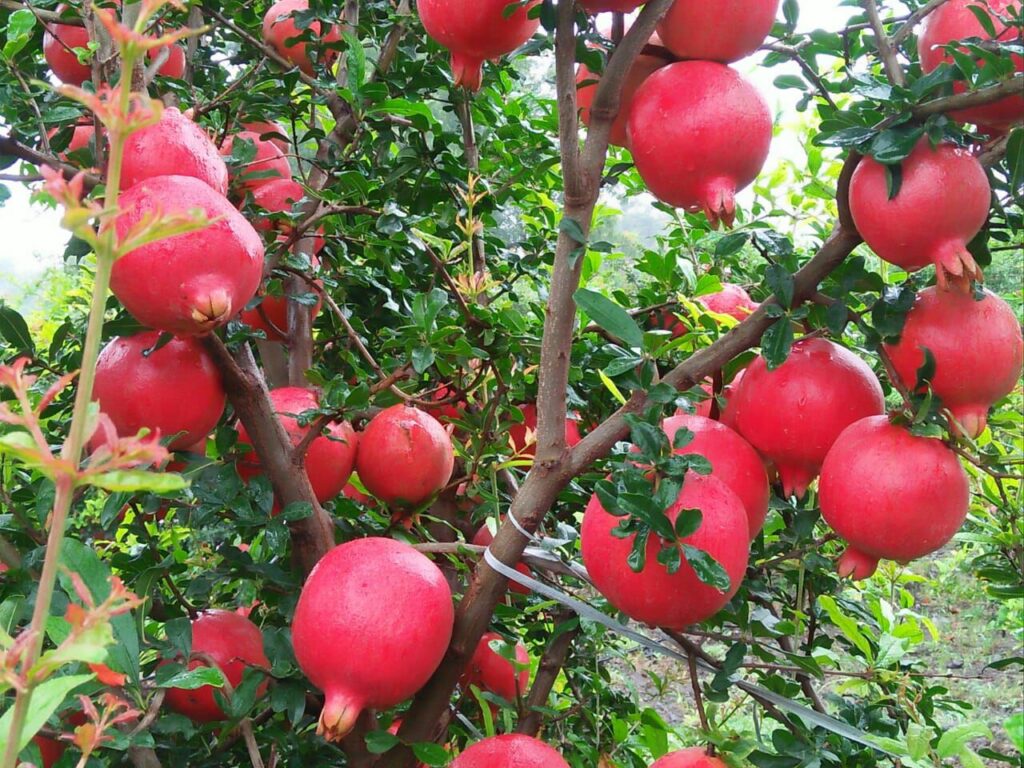
Which pomegranate variety?
Wonderful is the standard variety grown all over the world. It produces large red fruit with tart seeds. Juice companies love it. Acco comes from Israel. Its seeds are soft – you can eat them without spitting. Customers prefer this. For extreme heat like Turkana where temperatures reach forty-eight degrees, the Russian variety Desertnyi is the only one that will survive.
How to plant pomegranate
Space pomegranate plants four meters apart by three meters apart. This gives you about four hundred fifty plants per acre. The closer spacing works because pomegranate grows like a bush, not a tall tree. Train each plant to have three or four main trunks. Remove small suckers growing from the base regularly.
Watering pomegranate
Pomegranate needs only one thousand five hundred liters of water per tree per year. That is thirty percent less than a mango tree.
When to harvest
Pomegranate does not change color much when it is ready. Do not look at the skin. Instead, tap the fruit with your knuckle. If you hear a ringing sound like a bell, it is not ready. If you hear a dull thud, the seeds inside are fully grown and sweet. Pick it.
Where to get certified pomegranate seedlings: Farmers Trend Limited Nursery, Muranga. Call 0790509684.
Read the full detailed pomegranate farming guide here.
7. Dragon Fruit: A Cactus That Pays Well
Dragon fruit is a cactus. It will give you fruit just twelve months after planting cuttings. Because it is a cactus, it loses very little water compared to other fruit trees. It opens its pores at night when the air is cooler, so water does not evaporate quickly.

Which dragon fruit variety?
Vietnamese Jaina has white flesh and thick skin. Exporters prefer it because it ships well. Bloody Mary has red flesh inside. It sells for six hundred shillings per kilogram to juice bars and hotels in Nairobi. Israel Yellow has yellow skin and is the sweetest of all, but it gives you fewer fruits and you may need to hand-pollinate the flowers in Machakos.
The trellis system
Dragon fruit is a climbing cactus. It cannot hold itself up. You must build a trellis. Use concrete posts or treated eucalyptus posts spaced two meters apart. Run wires horizontally at one point two meters high and another wire at one point eight meters high. Plant two cuttings next to each post. The trellis will cost you about three hundred thousand shillings per acre, but it will last fifteen years.
Watering dragon fruit
Use drip irrigation only. Never spray water on the leaves or stem – this causes rot. Each plant needs two to four liters of water per day. In Turkana’s extreme heat, run your drip system at four o’clock in the morning. This cools the roots before the sun rises.
Where to get certified dragon fruit seedlings: Farmers Trend Limited Nursery, Muranga. Call 0790509684.
Read the full detailed dragon fruit farming guide here.
8. Custard Apple and Soursop
These two fruits are not common in Kenya yet. That means farmers who plant them now will have no competition.
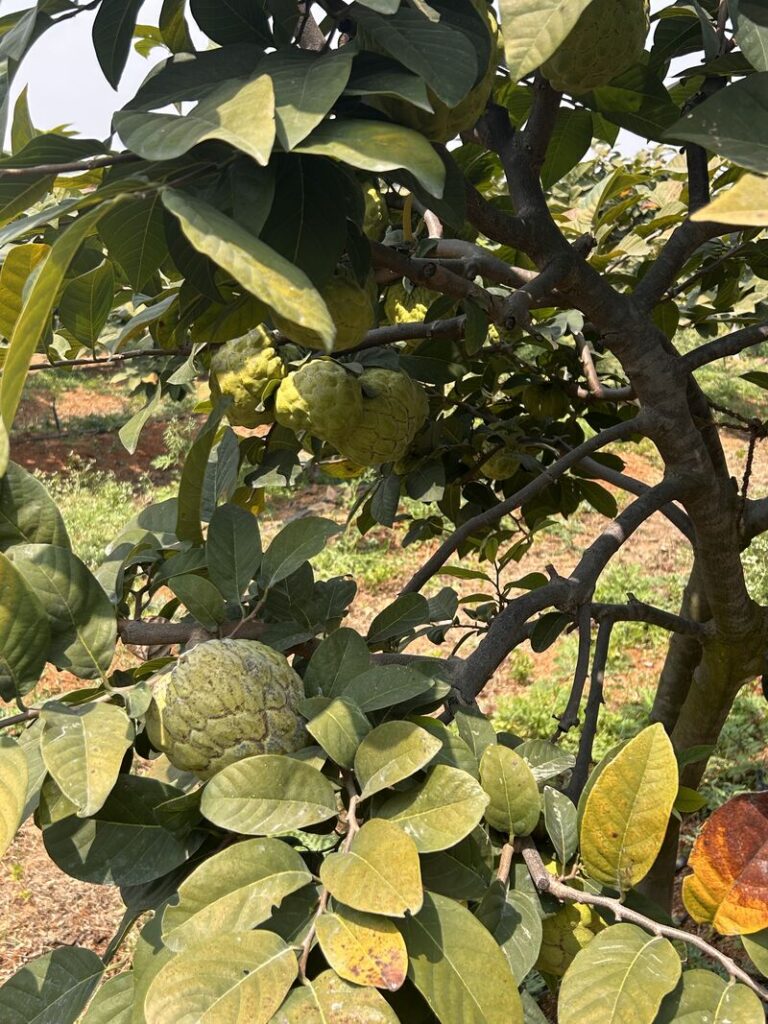
Custard apple (Sugar apple)
The flesh is creamy and sweet, like vanilla custard. But the fruit is soft and bruises easily. You can only sell it within fifty kilometers of your farm. Plant trees five meters apart. You will get your first fruits in two years. Nairobi fruit shops sell custard apples for one hundred fifty shillings each.
Soursop
Soursop fruits are much larger – up to five kilograms each. The flesh is tart and fibrous. People make juice and smoothies from it. Some believe it has cancer-fighting properties, which makes demand high. Soursop needs humidity. Do not plant it in very dry areas like Kitui. Plant only in Kilifi, Kwale, Taita Taveta, and Kisumu. Space trees six meters apart.
Where to get certified custard apple seedlings and soursop seedlings: Farmers Trend Limited Nursery, Muranga. Call 0790509684.
Read the full detailed custard apple farming guide and soursop farming guide here.
Part Three: New and Unusual Fruits (First Mover Advantage)
These fruits are rare in Kenya. Supply is low. Farmers who plant them now can set their own prices for the next ten years.
9. Jackfruit
Jackfruit is the largest fruit that grows on a tree. One fruit can weigh forty kilograms. A mature tree can produce two hundred fruits per year. But the tree needs a lot of space and a lot of water.
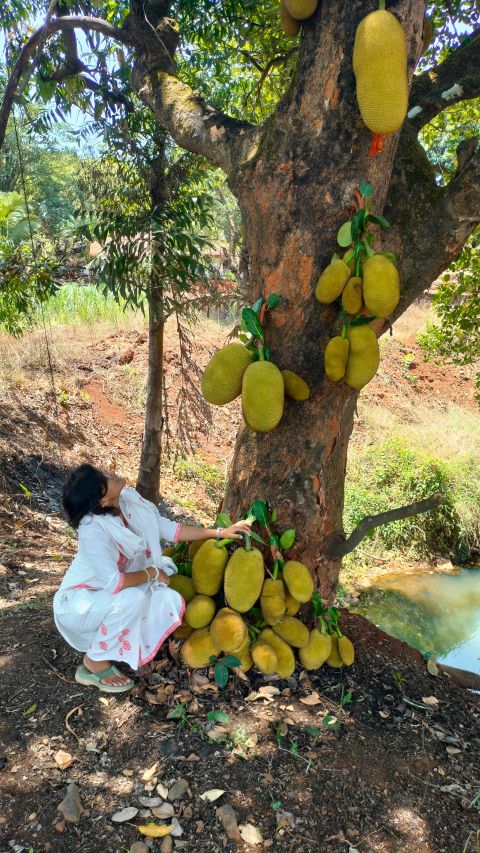
Where to plant jackfruit
Jackfruit does well in humid dry areas like Kilifi, Kwale, Lamu, Tana River, and the lake region (Kisumu, Homa Bay, Migori). It will fail in very dry places like Kitui and Turkana.
Local vs grafted varieties
The local jackfruit has many seeds and fibrous flesh. Grafted varieties from India produce crisp, sweet flesh with small seeds. The Singapore variety is best for eating fresh.
Spacing
Jackfruit trees grow huge – twelve meters tall with a canopy ten meters wide. Space them twelve meters apart by twelve meters apart. That is only thirty trees per acre. For the first five years, you can grow guava or dragon fruit between the jackfruit trees to earn money while you wait.
Where to get certified jackfruit seedlings: Farmers Trend Limited Nursery, Muranga. Call 0790509684.
Read the full detailed jackfruit farming guide here.
10. Breadfruit
Breadfruit is cooked and eaten like a vegetable. You roast it, and it tastes like fresh bread. You can also slice it and fry it into chips that sell for eight hundred shillings per kilogram at Nairobi farmers’ markets.
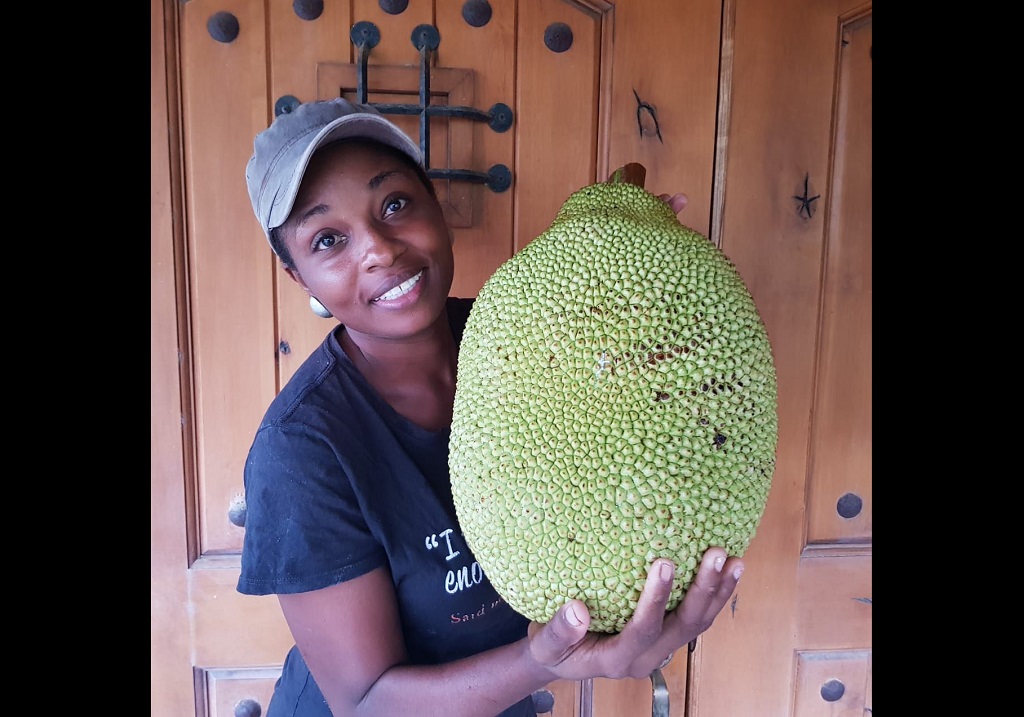
Breadfruit grows very well in coastal dry areas. Propagate it from root cuttings. Space trees eight meters apart. You will get your first fruits in three years. There is almost no market for breadfruit in Kenya yet. But first movers will supply coastal hotels looking for something new and exotic.
Where to get certified breadfruit seedlings: Farmers Trend Limited Nursery, Muranga. Call 0790509684.
Read the full detailed breadfruit farming guide here.
11. Cashew Nut
Cashew is a two-in-one crop. The nut is the main product. But the cashew apple (the swollen fruit stalk) can be juiced or fermented into wine.
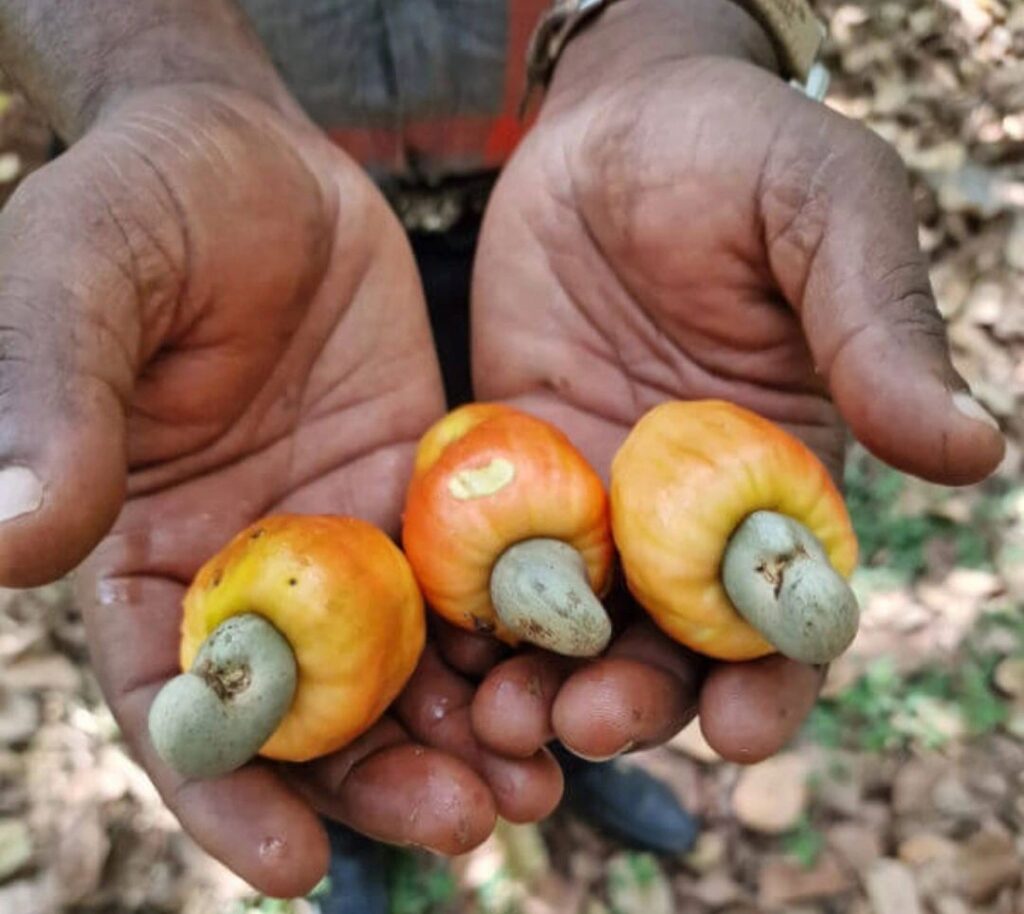
Where to plant cashew
Kilifi, Kwale, Lamu, and Tana River are the traditional cashew areas. The tree is extremely tough and grows well in sandy, poor soil.
Spacing and waiting time
Space cashew trees eight meters apart. It takes four years to get your first harvest. The nut must be processed (roasted to remove the caustic oil inside the shell). You need a processor or a cooperative to do this. The cashew apple spoils within twenty-four hours. You must juice it immediately or turn it into wine.
Market prices
Raw cashew nuts sell for one hundred fifty shillings per kilogram. Processed kernels sell for five hundred shillings per kilogram. Most are exported to India through Mombasa.
Where to get certified cashew seedlings: Farmers Trend Limited Nursery, Muranga. Call 0790509684.
Read the full detailed cashew nut farming guide here.
12. Sapodilla
Sapodilla produces brown, potato-shaped fruit. The flesh tastes like brown sugar and malt. The tree is very tough and grows slowly.
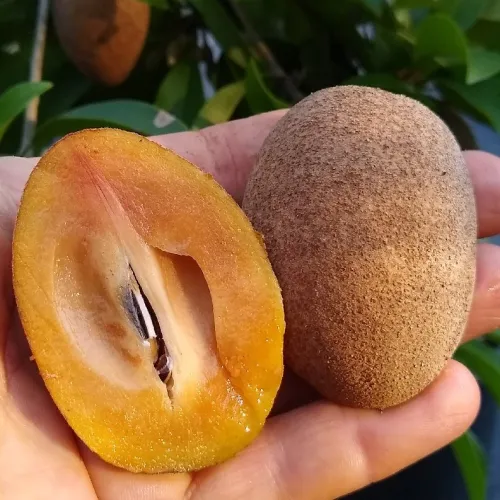
Where to plant sapodilla
All dry counties except Turkana (too hot). It does especially well in Machakos, Kitui, and Makueni.
Spacing and waiting time
Space sapodilla trees eight meters apart. It takes six years to get your first fruit. This is the longest wait on this list. But the tree will live for one hundred years and needs very little care after it is established.
Market
Most Kenyans do not know sapodilla. Sell to upscale grocery shops in Nairobi and to the Asian community, who call it chikoo. The price is four hundred shillings per kilogram.
Where to get certified sapodilla seedlings: Farmers Trend Limited Nursery, Muranga. Call 0790509684.
Read the full detailed sapodilla farming guide here.
13. Canistel (Egg Fruit)
Egg fruit has a dry, mealy texture like a hard-boiled egg yolk. But it tastes sweet and nutty. You use it in smoothies, milkshakes, and baking.

Plant canistel in coastal dry areas (Kilifi, Kwale) and warm lowlands (Makueni, Tharaka). It does not like frost, so do not plant it in Laikipia. Space trees six meters apart. It fruits in three years.
Where to get certified canistel seedlings: Farmers Trend Limited Nursery, Muranga. Call 0790509684.
Read the full detailed canistel farming guide here.
14. Star Fruit (Carambola)
When you slice star fruit crosswise, you get star-shaped pieces. The sweet variety is used as a garnish for cocktails and salads.
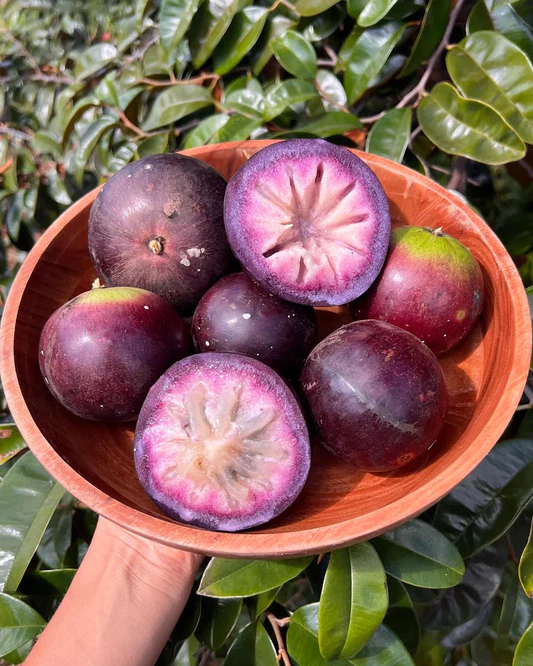
Plant star fruit in coastal dry areas and the lake region. It needs humidity and will fail in very dry areas like Kitui. The sweet varieties like Sri Kembangan and Fwang Tung are for fresh eating. The sour varieties like Golden Star are for cooking. Space trees five meters apart. It fruits in two years.
Where to get certified star fruit seedlings: Farmers Trend Limited Nursery, Muranga. Call 0790509684.
Read the full detailed star fruit farming guide here.
15. Loquat
Loquat produces small pear-shaped fruit with orange flesh. It tastes like a mix of apricot and cherry. The tree flowers in autumn and fruits in March to May.
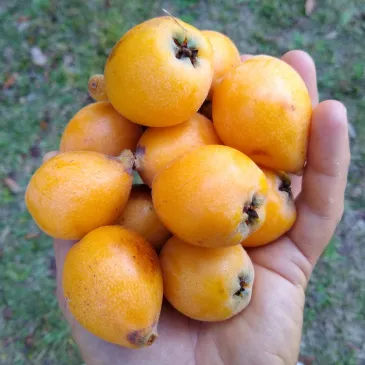
Plant loquat in cooler dry highlands: Laikipia, upper Machakos, and Narok lowlands. Loquat fails in hot lowlands like Turkana. Space trees four meters apart. It fruits in three years. The fruit is delicate, so you must harvest daily as it ripens.
Where to get certified loquat seedlings: Farmers Trend Limited Nursery, Muranga. Call 0790509684.
Read the full detailed loquat farming guide here.
16. White Sapote
White sapote produces green fruit with creamy white flesh. It tastes like vanilla pudding mixed with banana. The tree comes from Mexico and does well in Kenyan highlands.
Plant white sapote in Laikipia, Narok lowlands, and upper Machakos. It can handle light frost. Space trees seven meters apart. It fruits in four years. The fruit bruises easily, so sell it locally.
Where to get certified white sapote seedlings: Farmers Trend Limited Nursery, Muranga. Call 0790509684.
Read the full detailed white sapote farming guide here.
17. Passion Fruit
Passion fruit is a vine, not a tree. But it makes money too quickly to leave out. The purple variety does well in cooler dry areas. The yellow variety does well at the coast.
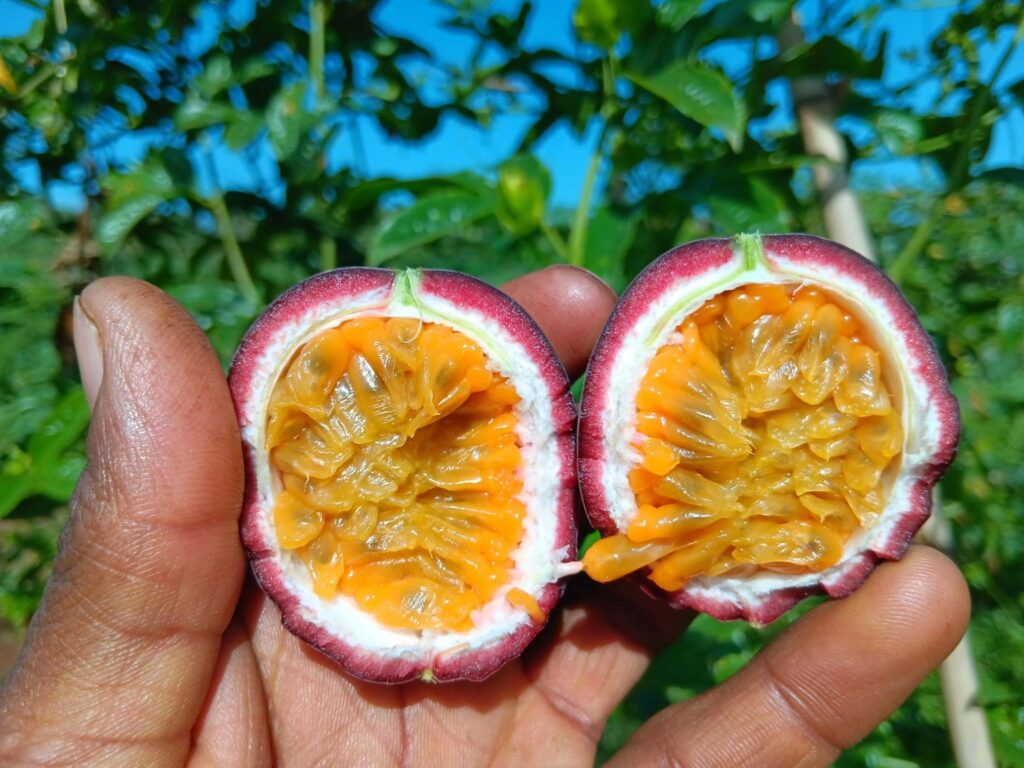
Where to plant
Purple passion fruit: Laikipia, upper Machakos, Kisumu. Yellow passion fruit: Kilifi, Kwale, Taita Taveta.
Trellis and replanting
Install posts at three meters apart by two meters apart. This gives you about eight hundred vines per acre. You must replace your vines every five years because a virus called passion fruit woodiness disease kills them. This high replacement cost means passion fruit is less profitable than tree fruits for small farmers.
Where to get certified passion fruit seedlings: Farmers Trend Limited Nursery, Muranga. Call 0790509684.
Read the full detailed passion fruit farming guide here.
18. Lychee
Lychee produces translucent, juicy flesh covered in a rough red shell. It is a high-value export crop. In Dubai, it sells for one thousand shillings per kilogram.
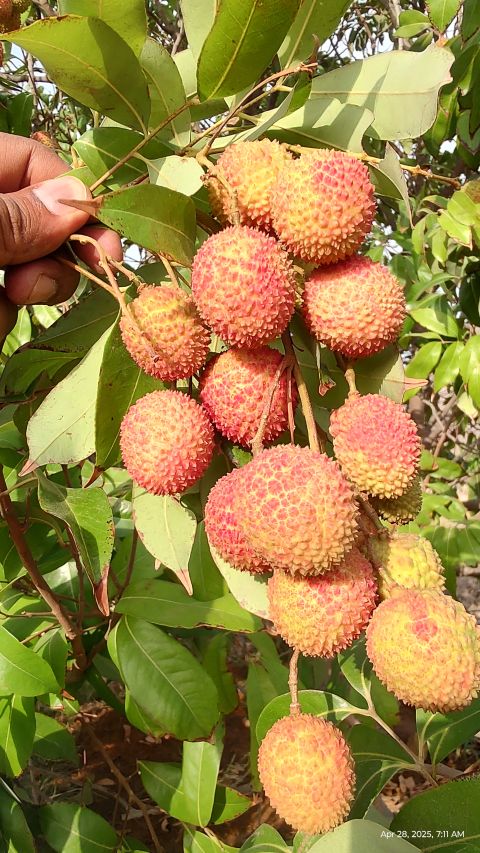
Lychee needs a cool, dry winter to trigger flowering. It grows in Murang’a but struggles in most dry areas. The only dry areas suitable are upper Machakos (above 1,400 meters) and Laikipia. It fails in coastal heat.
Where to get certified lychee seedlings: Farmers Trend Limited Nursery, Muranga. Call 0790509684.
Read the full detailed lychee farming guide here.
19. Fig
Fig is a small tree that produces sweet, chewy fruit. You can eat it fresh or dry it. The tree is very tough once established.

Where to plant fig
All dry counties. Fig can handle chalky soil up to pH 8.0, making it perfect for Baringo and Turkana.
Which variety?
Brown Turkey is the most reliable variety in Kenya. Black Mission is sweeter but less vigorous.
Spacing and harvest
Space fig trees four meters apart. Propagate from cuttings. Figs fruit within two years. Harvest when the fruit droops and the skin cracks slightly near the stem.
Where to get certified fig seedlings: Farmers Trend Limited Nursery, Muranga. Call 0790509684.
Read the full detailed fig farming guide here.
20. Papaya (Pawpaw)
Papaya is the fastest fruit on this list. You can harvest just ten months after planting from seed.
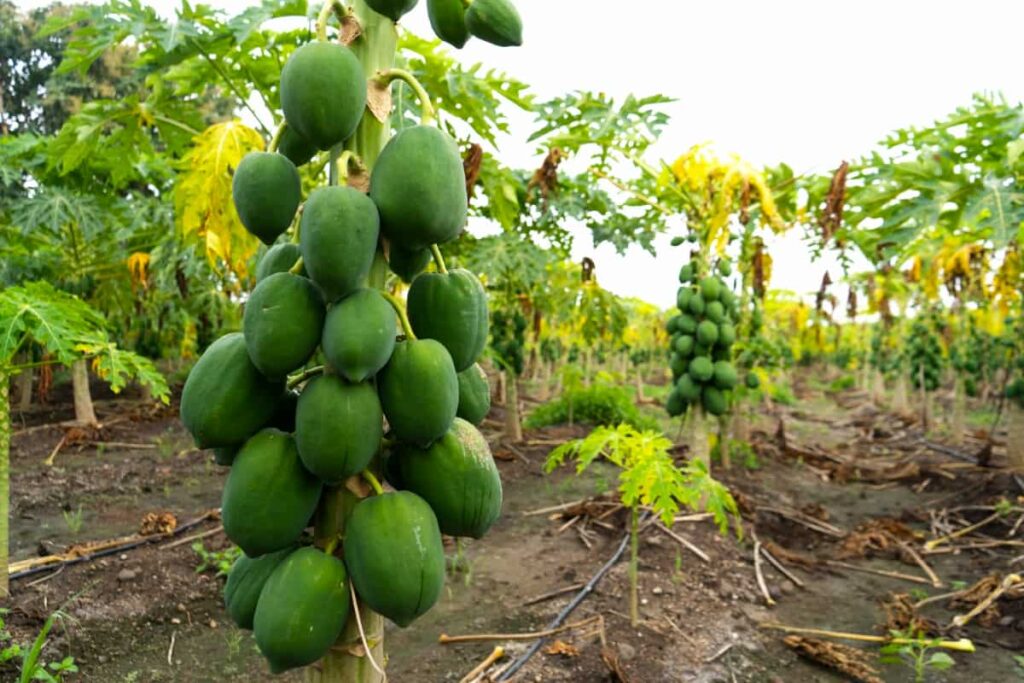
Which variety for dry areas?
Mountain papaya (small and sweet) fails in lowlands. Use Solo Sunrise (red flesh) or Solo 8 (yellow flesh). Both handle heat well. For juice processing, large hybrid varieties (five to ten kilograms per fruit) are more profitable.
Spacing
Space papaya trees two meters apart by two meters apart. That is twelve hundred trees per acre. Papaya is actually a herb, not a tree, and lives only three to five years. You need one male tree for every ten female trees for pollination. Better yet, buy hermaphrodite seeds (self-pollinating) from Farmers Trend Limited Nursery.
Where to get certified papaya seedlings: Farmers Trend Limited Nursery, Muranga. Call 0790509684.
Read the full detailed papaya farming guide here.
21. Jujube (Chinese Date) – Bonus Crop
Jujube is not on the original list, but it deserves a place because it is one of the toughest fruits for hot, dry areas. The fruit looks like a small date and tastes like a sweet apple when fresh, or like a date when dried.
Where to plant jujube
All dry counties. It thrives in Makueni, Machakos, Kitui, and the coast. It can survive on as little as 500mm of rain per year.
Which variety?
Thai jujube (also called Indian jujube) produces large, crisp fruit. Masr is a local variety that does well in hot lowlands.
Spacing
Space jujube trees four meters apart by three meters apart. It fruits in two years. The market is growing quickly because dried jujube is sold as a healthy snack in Nairobi supermarkets.
Where to get certified jujube seedlings: Farmers Trend Limited Nursery, Muranga. Call 0790509684.
Read the full detailed jujube farming guide here.
Part Four: Which Fruit for Your County? A Simple Guide
For Makueni, Kitui, and Machakos lowlands: Start with mango (Apple or Kent) as your main crop. While waiting for mangoes to grow, plant dragon fruit on trellises between the mango rows. Around the edge of your farm, plant pomegranate as a windbreak and for extra income.
For Kilifi, Kwale, and Taita Taveta: Plant cashew nut for long-term security and mango (Tommy Atkins) for medium-term cash. Add soursop and custard apple as special crops for coastal hotels.
For Turkana, Baringo, and Kajiado (with irrigation): Pomegranate is your safest bet. Dragon fruit under shade net also works well. Stay away from avocado and most citrus. Fig trees along your drip lines will give you drought-proof production.
For Kisumu, Homa Bay, and Migori: Avocado (Hass) is your best option for high returns. Plant on mounds to stop waterlogging. Jackfruit and breadfruit fill the gaps. Lemon (Eureka) handles the humidity well.
For Laikipia and Narok lowlands: Blood orange (Moro) and loquat take advantage of the cool nights. Purple passion fruit gives you quick returns. White sapote is your experimental high-value crop.
Part Five: The Basics That Apply to All Fruits
Every fruit in this guide succeeds or fails based on three things: water, soil, and where you buy your seedlings.
Watering in dry areas
Drip irrigation is not optional. Sprinklers waste half your water to evaporation and cause fungal diseases. Your drip system must have pressure-compensating emitters if your land is sloping. Bury your main water pipe at least forty centimeters deep. If the sun heats the water above thirty-five degrees, it will damage fine roots.
Fixing your soil
Most dry area soils are chalky (high pH) and low in organic matter. Before planting, spread ten tons of manure per acre (about one hundred debes). For each hole, add two hundred grams of sulfur powder. This lowers the pH and unlocks nutrients that were stuck in the soil. After planting, cover the ground around your trees with dry grass or rice husks. This keeps soil temperature below thirty degrees.
Where to buy your fruit seedlings in Kenya – The Most Important Decision
This is the most important decision you will make. Do not risk your money on roadside seedlings or cuttings from your neighbor’s old tree. Many farmers in Makueni and Kitui have lost two years of production because they planted uncertified vines that carried diseases or turned out to be the wrong variety.
Farmers Trend Limited Nursery in Muranga is the most trusted and certified source of fruit seedlings for ASAL counties in Kenya. All our seedlings are:
- Tissue-culture certified – free from viruses and diseases.
- True to variety – you get exactly what you order (Apple Mango, Hass Avocado, Vietnam Jaina Dragon Fruit, Wonderful Pomegranate, and all other 20 fruits in this guide).
- Hardened for ASAL conditions – our seedlings are gradually exposed to higher temperatures and lower water before they leave the nursery, so they survive better in Makueni, Turkana, and Kilifi.
Frequently Asked Questions (FAQ)
1. What is the best fruit tree for Turkana?
Pomegranate (Wonderful or Desertnyi variety) is the best choice for Turkana. It tolerates high heat, salty water, and alkaline soil. Dragon fruit under shade net is the second best. Both are available from Farmers Trend Limited Nursery. Call 0790509684.
2. Which fruit trees are most drought-resistant?
The most drought-resistant fruits for Kenyan ASALs are pomegranate, jujube, dragon fruit, fig, and cashew nut. These can survive on less than 1,500 liters of water per tree per year.
3. How much money can I make from one acre of dragon fruit in Kenya?
A mature acre of dragon fruit (2,000 plants on trellises) can produce 10,000 to 15,000 kilograms per year. At a farmgate price of 200 shillings per kilogram, gross revenue is 2 to 3 million shillings per acre per year by Year 3.
4. Can avocados grow in hot, dry areas like Kitui?
No. Avocados fail in hot, dry lowlands like Kitui, Makueni (below 800m), and Baringo. They need either humidity (coast, Kisumu) or higher altitude (Laikipia, upper Machakos). Although, some varieties like Hass and Fuerte are proving to adapt to almost all climatic conditions.
5. Which fruit tree gives the fastest harvest in ASAL Kenya?
Papaya gives harvest in 9 to 12 months from seed. Passion fruit gives harvest in 8 to 12 months. Dragon fruit gives harvest in 12 to 18 months from cuttings.
6. What spacing should I use for fruit trees in dry areas?
Spacing depends on the crop. Mango needs 5m x 5m (150 trees/acre). Citrus needs 4m x 5m (250 trees/acre). Dragon fruit on trellis uses 2m x 1m (2,000 plants/acre). Always use wider spacing in dry areas to reduce competition for water.
7. How do I control fruit flies without expensive chemicals?
Use methyl eugenol traps (one per acre) hung at chest height. Also use protein bait sprays made from hydrolyzed protein mixed with a small amount of malathion. Spray only on the lower leaves every ten days during fruiting.
8. Where can I buy certified fruit seedlings in Makueni or Turkana?
Certified tissue-culture seedlings are available from Farmers Trend Limited Nursery in Muranga. We deliver to all counties, including Makueni, Kitui, Machakos, Turkana, Kilifi, and Baringo. Call 0790509684 or email info@farmerstrend.co.ke. You can also order online at https://agrovet.farmerstrend.co.ke/
9. Do I need a male and female tree for all fruits?
No. Mango, citrus, pomegranate, guava, and papaya (hermaphrodite varieties) are self-pollinating. Dragon fruit needs cross-pollination between different varieties. Some passion fruit varieties need hand pollination in certain areas.
10. Can I grow these fruits without irrigation in ASAL Kenya?
No. You cannot grow commercial fruit trees in Kenyan ASALs without irrigation. Even drought-resistant trees need drip irrigation during establishment (first 18 months) and during flowering and fruiting. Rain-fed fruit farming only works in high-rainfall zones.
11. Does Farmers Trend Limited Nursery deliver to my county?
Yes. We deliver seedlings to all counties in Kenya, including remote areas like Turkana, Mandera, and Marsabit. Call 0790509684 to confirm delivery schedule and costs. We also arrange on export to other nations too.
12. Do you offer a buyback guarantee for the fruits?
Yes. Farmers who buy certified seedlings from Farmers Trend Limited Nursery and follow our planting guide qualify for our buyback program. We guarantee to buy your first two tons of dragon fruit or pomegranate at the prevailing market price. Terms apply – call for details.
Take Away: Start Small, Start Now with Farmers Trend Limited Nursery
You do not need one hundred acres. Start with one acre of dragon fruit on trellises. You will need about three hundred thousand shillings for the trellis, one hundred fifty thousand for drip irrigation, and one hundred thousand for seedlings. That is your total investment.
Harvest starts in month twelve. By month twenty-four, you have recovered your capital. By month thirty-six, you can expand to five acres.
The dry counties of Kenya are not wastelands. They are the next fruit basket of East Africa. The only question is whether you will plant today or watch your neighbor harvest tomorrow.
Make the right choice from the start. Buy certified seedlings from Farmers Trend Limited Nursery.
Contact Farmers Trend Limited Nursery Today
- 📍 Location: Muranga, Kenya (physical nursery open for visits – call for directions)
- 📞 Phone (Call or WhatsApp): +254790509684
- 📧 Email: info@farmerstrend.co.ke
🛒 Virtual Agrovet (Order Online for Delivery Anywhere in Kenya): https://agrovet.farmerstrend.co.ke/
🌐 Website: www.farmerstrend.co.ke
What We Offer:
- Soil testing services
- Irrigation design and installation
- Monthly agronomic farm visits
- Buyback guarantee for most fruits
- Free farming advice via phone and WhatsApp
Special Offer for ASAL Farmers:
Mention this guide when you call or order online, and get 10% off your first order of 500 seedlings or more. Plus, free delivery within Muranga and surrounding counties for orders above 1,000 seedlings.
How to Order:
- Call or WhatsApp 0790509684
- Tell us your county and the fruit varieties you want
- We confirm availability, price, and delivery date
- Pay via M-Pesa (paybill number provided on call) or through our virtual agrovet website
- We deliver seedlings to your farm anywhere in Kenya
- Receive free after-sales support for the first three months
Final Word from Farmers Trend
The dry counties of Kenya are changing. Farmers who plant the right trees today will be the ones sending their children to university and buying neighboring plots tomorrow.
Farmers Trend Limited Nursery has been serving Kenyan farmers for years. We know ASAL farming because we work with farmers in Makueni, Turkana, Baringo, and Kilifi every single day. We know what works and what fails. We do not sell seedlings just to make a sale – we sell solutions that work in your specific conditions.
Call 0790509684 today. Your orchard starts now.
This guide is updated annually. Last revision: June 2026.
Farmers Trend Limited – Growing Kenya, One Tree at a Time.
Follow us on social media for daily farming tips:
- Facebook: Farmers Trend Kenya
- WhatsApp Catalogue: Link
Disclaimer: Prices and market rates mentioned in this guide are estimates based on 2025-2026 market surveys. Actual prices may vary by season, location, and fruit quality. Contact Farmers Trend Limited Nursery for current pricing and availability.
https://farmerstrend.co.ke/fruits/asal-fruit-farming-guide/https://farmerstrend.co.ke/wp-content/uploads/2026/06/20-Fruit-Trees-That-Thrive-Well-on-Hot-Regions-A-Commercial-Farming-Guide-for-ASAL-Fruit-Farming-in-Kenya.jpghttps://farmerstrend.co.ke/wp-content/uploads/2026/06/20-Fruit-Trees-That-Thrive-Well-on-Hot-Regions-A-Commercial-Farming-Guide-for-ASAL-Fruit-Farming-in-Kenya-150x150.jpgFruits# Trendingavocado farming in Kisumu,best fruit trees for ASAL Kenya,best lemon variety for Turkana irrigation,certified fruit seedlings KALRO,citrus farming in lowland areas,commercial fruit farming Makueni,dragon fruit farming Turkana,drip irrigation design,drought tolerant fruit trees Kenya,farmgate prices Kenya,fruit farming ROI per acre,fruit fly control for guava in Kajiado,fruit spacing per acre Kenya,fruit tree spacing,fruit trees for coastal Kenya,fruit trees that thrive well on hot regions,high density planting for dragon fruit Kenya,high value fruits for semi arid lands,how to grow custard apple in Kilifi,intercropping fruit trees,irrigation for fruit trees dry regions,jackfruit farming profitability Kenya,KEPHIS export standards,mango varieties for Kitui,mulching in dry areas,organic pest control,pomegranate farming Baringo,Post-harvest handling,rootstock selection,soil pH for citrus in Tana River,trellis system,water requirement for pomegranate per tree,which fruit trees grow best in Machakos lowlands20 Fruit Trees That Thrive Well on Hot Regions: A Commercial Guide for ASAL Fruit Farming in Kenya Before You Start: A Simple Truth About Hot Areas For many years, people in dry parts of Kenya thought that hot land could not grow good fruit. They believed that only maize and...FarmersTrendjohn doefarmerstrend@gmail.comAdministratorFarmers Trend Ltd.




Leave a Reply