Silage Production for Dairy Farmers in Laikipia Boosts Milk Yields and Household Income
Dairy farmers in Laikipia County are achieving significant increases in both milk production and household income. This progress is thanks to a new climate-smart agriculture initiative focused on silage production. The project empowers women, youth, and smallholder farmers. It is designed to help these communities adopt sustainable dairy farming practices.
For years, farmers in arid and semi-arid regions have faced a persistent challenge. During dry seasons, feed becomes scarce. When there is no grass, cows produce less milk. Milk production drops sharply. Families that depend on dairy farming suffer financial losses. Children go hungry. School fees go unpaid. The cycle of poverty continues.
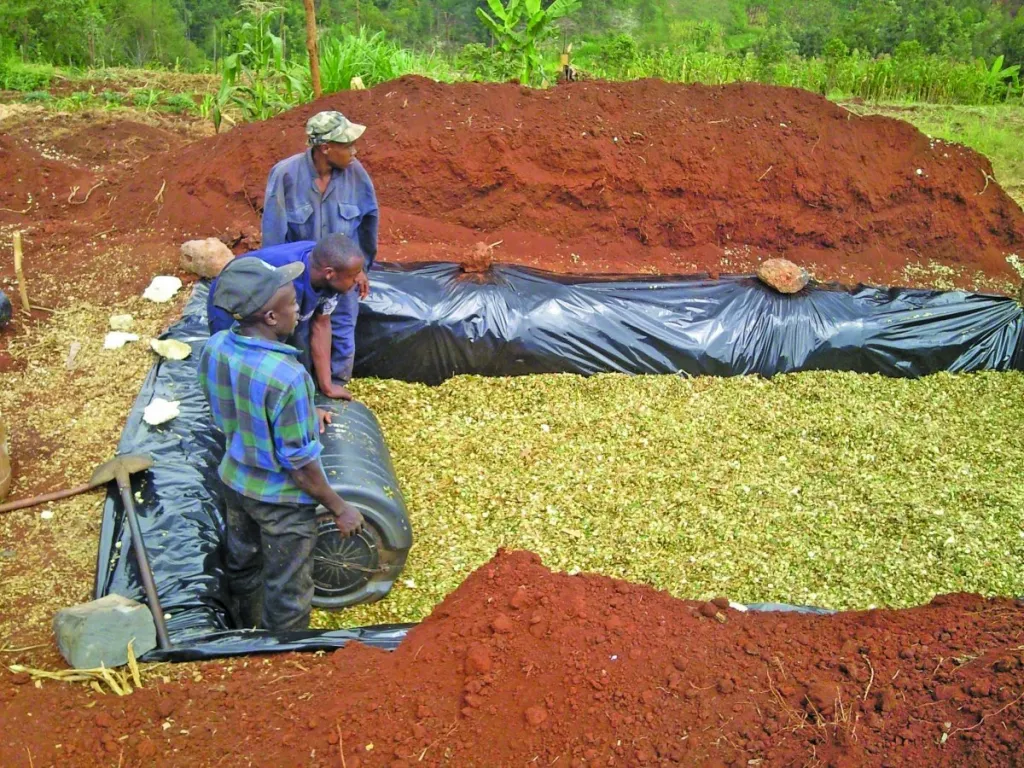
The “Mama Silage Bag” is changing this. This simple yet effective innovation is helping farmers reverse the trend of feed shortages. The bag is a specialised container that allows farmers to preserve nutritious fodder. During wet seasons when grass is plentiful, farmers can cut and store feed. They pack the forage tightly into the bag. They seal it. Fermentation begins. Weeks or months later, when the dry season arrives, the silage is ready.
Farmers can now store feed during periods of abundance. This ensures a stable supply of livestock feed during drought seasons. When other farmers are scrambling for hay, silage farmers are feeding their cows. When milk prices spike because supply is low, silage farmers are still producing. Their income remains stable.
The technology also reduces costs. Farmers no longer need to rely on expensive commercial feeds. A bag of dairy meal can cost hundreds of shillings. A bag of silage costs much less because the farmer makes it from grass grown on their own land. The savings add up quickly.
Consistent access to quality feed is directly contributing to better overall livestock health. Cows that eat silage produce more milk. They also produce milk with higher butterfat content. The milk tastes better and fetches a higher price at the market.
Spearheaded by ChildFund, the initiative has already trained more than 1,000 farmers across Nyeri and Laikipia counties. The programme emphasizes increasing the palatability of feeds. Farmers are learning about improved Napier grass varieties. These varieties are more nutritious than traditional grass. They also grow faster and survive drought better.
When fresh pasture is unavailable, livestock still receive good nutrition. The silage is soft, moist, and easy for cows to digest. The cows eat more. They produce more milk. They stay healthier. The benefits multiply.
Beyond the immediate boost in milk yields, the project is fostering economic opportunities for women and youth. Women are being integrated into the dairy value chain. They are learning how to make silage. They are selling it to neighbours. They are forming groups to market their products. Youth who once saw no future in farming are now finding jobs in silage production and distribution.
The silage production for dairy farmers in Laikipia is not a complex technology. It does not require expensive machinery. It does not need imported materials. The bags are made locally. The grass grows on local farms. The training is provided by local extension officers. This is an African solution to an African problem.
The impact of the Mama Silage Bag extends beyond individual farms. When farmers produce more milk, they supply more to local cooperatives. The cooperatives process and sell the milk to towns and cities. More milk in the market means lower prices for consumers. More milk also means less reliance on imported dairy products.
The silage production for dairy farmers in Laikipia is also good for the environment. When farmers make silage, they harvest grass before it goes to seed. This encourages the grass to grow back thicker. The land becomes healthier. Soil erosion decreases. Water retention improves.
The initiative aligns with the government’s climate-smart agriculture agenda. Kenya is facing more frequent and severe droughts. Farmers must adapt. Silage is a proven adaptation strategy. It has been used in Europe and America for decades. Now it is taking root in Laikipia.
The silage production for dairy farmers in Laikipia is a success story worth sharing. It shows that smallholder farmers can overcome climate challenges. It shows that simple technologies can have big impacts. It shows that when women and youth are empowered, entire communities benefit.
Farmers who were once struggling to keep their cows alive are now thriving. They are paying school fees. They are renovating their homes. They are investing in their farms. The sense of hopelessness that once hung over the community has lifted.
The Mama Silage Bag is more than a bag. It is a symbol of resilience. It is a tool of empowerment. It is a pathway out of poverty. The silage production for dairy farmers in Laikipia is proof that with the right support, farmers can not only survive climate change but thrive in spite of it.
As the project continues to expand, more farmers will be trained. More bags will be distributed. More milk will be produced. More families will be lifted out of poverty. The silage production for dairy farmers in Laikipia is just the beginning. The future of dairy farming in Kenya’s drylands looks brighter than it has in years. And it all started with a simple bag and a bold idea.
https://farmerstrend.co.ke/trending/silage-production-for-dairy-farmers-in-laikipia/https://farmerstrend.co.ke/wp-content/uploads/2026/06/Silage-Production-for-Dairy-Farmers-in-Laikipia.webphttps://farmerstrend.co.ke/wp-content/uploads/2026/06/Silage-Production-for-Dairy-Farmers-in-Laikipia-150x150.webp# TrendingDairy farmers in Laikipia County are achieving significant increases in both milk production and household income. This progress is thanks to a new climate-smart agriculture initiative focused on silage production. The project empowers women, youth, and smallholder farmers. It is designed to help these communities adopt sustainable dairy farming...FarmersTrendjohn doefarmerstrend@gmail.comAdministratorFarmers Trend Ltd.




Leave a Reply