Jackfruit Farming in Kenya: 2026 Guide to Earning KSh 1.6 Million Per Acre with Grafted Seedlings
Jackfruit Farming in Kenya: The 2026 Guide to Profits and Sustainable Production
Jackfruit farming in Kenya represents one of the most promising opportunities for farmers seeking long-term income with relatively low maintenance. Known locally as fenesi, this giant fruit has transformed from a backyard tree into a commercial crop fetching premium prices in urban markets across the country. The growing demand for jackfruit, both as fresh fruit and as a plant-based meat substitute, creates a perfect entry point for farmers willing to invest in this versatile crop.
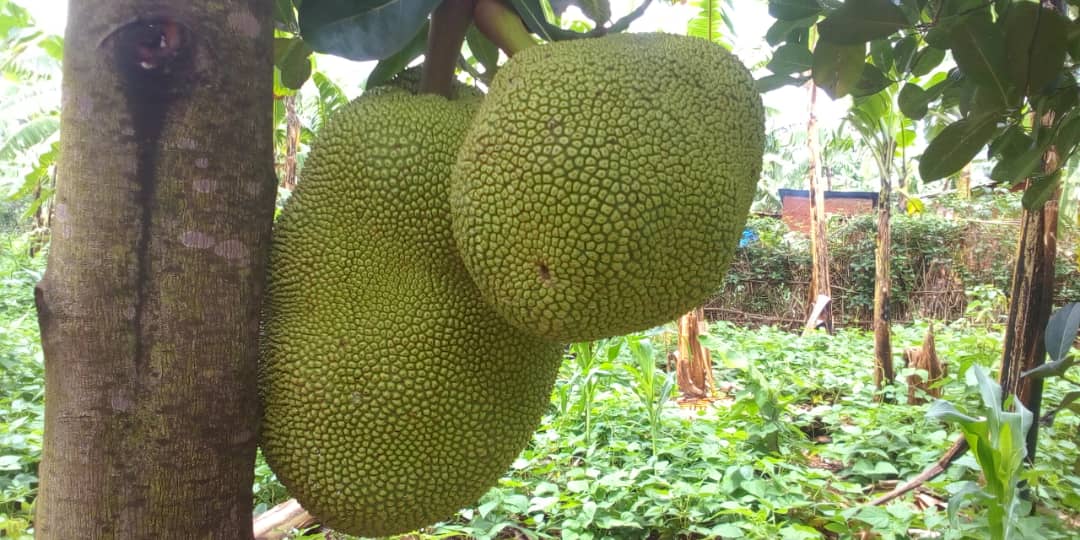
The numbers tell a compelling story about jackfruit farming in Kenya. A single mature jackfruit tree yields 100 to 250 fruits annually. Each fruit weighs between 5 and 35 kilograms depending on variety and growing conditions. In Mombasa markets, a big fruit sells for 800 to 1,000 shillings. One tree can generate 250,000 shillings per year at these prices. With 70 trees per acre using standard spacing, your gross income potential reaches 1.6 million shillings annually from the fifth year onward.
Jackfruit offers something unique in the fruit market. It serves both as a fresh fruit and as a meat substitute. The unripe fruit has a texture similar to pulled pork when cooked. This has opened the vegan meat market, with demand growing in Nairobi restaurants and supermarkets. Processed jackfruit products fetch even higher prices than fresh fruit. Farmers who understand both markets position themselves for maximum returns.
This guide by Farmers Trend ltd. provides everything you need to know about jackfruit farming in Kenya. You will learn about suitable regions, best varieties, establishment costs, spacing, pest management, and market opportunities. The information comes from successful commercial growers and agricultural research stations across the country. By the end, you will understand why jackfruit farming in Kenya deserves serious consideration for your agricultural portfolio.

The Commercial Potential of Jackfruit Farming in Kenya
Is jackfruit farming profitable in 2026? Yes, and the evidence comes from successful farmers across Kenya. Eric Munene in Chuka harvests 3,000 fruits per season, with each fruit fetching 400 shillings at the farm gate. He started with family trees and expanded to 30 plants after discovering the Mombasa market where a single slice sells for 100 shillings. His success demonstrates the potential of jackfruit farming in Kenya for farmers willing to learn and expand.
In Baringo County, farmers supply a thriving roadside market near Nakuru. Mary Wairimu sells mature jackfruits at an average price of 650 shillings each. Farmers in Baringo receive 300 to 400 shillings per fruit directly from roadside buyers. The demand continues growing as travelers discover the fruit and spread word to friends and family in urban centers.
Clement Kotonya in Homa Bay County has 200 jackfruit plants on four acres. Each plant produces 30 to 50 fruits per harvest, with three harvests annually. He sells each fruit at 300 to 500 shillings depending on size and quality. His annual income from jackfruit exceeds 1 million shillings, proving that jackfruit farming in Kenya can support a family comfortably.
A single jackfruit tree in Mombasa can generate 250,000 shillings per year. Each tree bears around 250 fruits annually, with big fruits fetching 800 to 1,000 shillings. This demonstrates the exceptional value of well-managed trees in the right location. Farmers near major markets capture these top prices.
For a commercial orchard, gross income per acre ranges from 1 million to 1.6 million shillings annually. This assumes 70 mature trees per acre, each producing 100 to 150 kilograms of fruit. At 30 shillings per kilogram for wholesale fresh fruit, revenue reaches 1 million shillings. With premium sales to processors and direct markets, returns exceed 1.6 million shillings. These figures make jackfruit farming in Kenya one of the most profitable perennial fruit ventures available.
Best Regions for Jackfruit Farming in Kenya
Which regions in Kenya are best for jackfruit? The tree thrives in tropical and subtropical climates with temperatures of 25°C to 35°C. It tolerates a range of conditions but performs best in warm, humid areas. Understanding regional suitability is essential for successful jackfruit farming in Kenya.
Coastal Kenya leads in jackfruit production. Mombasa, Kilifi, Kwale, and Lamu counties have ideal growing conditions. The warm temperatures year-round support continuous growth and multiple fruiting cycles. The coastal market itself is the largest consumer of jackfruit in Kenya, creating ready demand for local farmers. Farmers in these areas enjoy proximity to buyers and premium prices.
Western Kenya is another major production zone. Busia County alone accounts for 65 percent of jackfruit in Kenya. Farmers in Busia grow the fruit in pure stands, along hedges, and intercropped with other crops. Kakamega, Bungoma, and Vihiga counties also have significant production. The average farm has five to six jackfruit trees, with some farmers owning up to 30 trees. This region offers proven conditions for jackfruit farming in Kenya.
Lake Victoria regions including Siaya, Kisumu, Homa Bay, and Migori counties offer excellent conditions. Clement Kotonya’s successful farm in Homa Bay demonstrates the potential of this region. The warm, humid climate around the lake suits jackfruit perfectly. Farmers here benefit from both local markets and proximity to Kisumu, a major urban center.
Central Kenya counties like Murang’a, Kirinyaga, and Thika produce quality jackfruit at lower altitudes. The volcanic soils combined with adequate rainfall support good growth. Farmers in these areas benefit from proximity to Nairobi markets, reducing transport costs and allowing quick delivery of fresh fruit. This makes jackfruit farming in Kenya viable even in areas traditionally associated with other crops.
Eastern Kenya counties including Meru, Tharaka Nithi, and Embu have suitable conditions. Farmers like Eric Munene in Chuka have built profitable enterprises. The eastern slopes of Mount Kenya provide good drainage and adequate rainfall. The altitude must stay below 1,500 meters for best results.
Rift Valley areas at lower altitudes, including parts of Nakuru and Baringo, also produce jackfruit successfully. The roadside market near Nakuru demonstrates growing demand in this region. Farmers in Baringo supply travelers heading to and from the coast, capturing good prices.
Best Jackfruit Varieties for the Kenyan Market
What are the best varieties for the Kenyan market? Farmers choose based on flesh color, taste, and market preference. Variety selection is a critical decision in jackfruit farming in Kenya.
Yellow-fleshed jackfruit is grown by 78 percent of farmers in Busia County. This variety has thinner flesh, a stronger aroma, and sweeter taste. It is the most common variety in local markets. The fruits are large and yield well. Farmers targeting traditional markets find this variety reliable and accepted.
Orange-fleshed jackfruit is grown by 38.5 percent of farmers. Despite being less common, this is the most preferred variety among consumers. Orange-fleshed jackfruit is sweeter, has less latex, matures quickly, and is perceived as more nutritious. Farmers seeking premium prices should prioritize this variety. It stands out in markets and attracts repeat customers.
White-fleshed jackfruit is also grown but less common. It has its own market niche. Some consumers prefer the milder taste. This variety works well for processors who blend different types.
Bangkok Lemon is highly recommended for taste. This variety produces sweet, crisp flesh with excellent eating quality. It commands premium prices in urban markets. The fruit size is moderate, making it suitable for smaller households. For jackfruit farming in Kenya targeting high-end consumers, this variety is an excellent choice.
Black Gold is prized for resilience. This variety tolerates pest pressure better than others and produces consistently under less-than-ideal conditions. It is a good choice for farmers in marginal areas or those practicing low-input agriculture. The fruits are reliable and the trees hardy.
Honey Gold produces smaller fruits of 5 to 10 kilograms with sweet, crisp flesh. It is ideal for fresh markets where consumers want manageable fruit sizes. The quality is excellent for eating fresh. Families in urban areas prefer this size because they can consume the fruit without waste.
Cochin produces medium-sized fruits of 10 to 20 kilograms. It is juicy and high-yielding, making it suitable for processing. The fruit holds up well during transport. Farmers supplying distant markets appreciate this characteristic.
When selecting varieties for jackfruit farming in Kenya, consider your target market. For fresh fruit sales to supermarkets and direct consumers, choose Honey Gold or Bangkok Lemon. For processing and bulk markets, Cochin or Black Gold work well. Many commercial farmers plant multiple varieties to spread harvest timing and serve different market segments.
Grafted Jackfruit Seedlings and Prices
How much do grafted jackfruit seedlings cost? Prices range from 500 to 850 shillings per seedling depending on the source and variety. Quality seedlings are the foundation of successful jackfruit farming in Kenya.
Grafted seedlings offer significant advantages over seed-grown trees. They begin fruiting in three to four years compared to seven to ten years for seed-grown trees. They produce fruit true to the parent variety with consistent quality. The trees are shorter and easier to harvest. The investment in grafted seedlings pays back through faster returns and better fruit.
Farmers Trend Limited offers high-quality grafted jackfruit seedlings through their nurseries and online virtual agrovet platform. Their seedlings are propagated from select varieties including Honey Gold, Bangkok Lemon, and Cochin. The online platform allows farmers to order from anywhere in Kenya and receive delivery. Visit the Farmers Trend website to browse available varieties and current prices. You can place orders through their virtual agrovet platform and have seedlings delivered to your farm.
The Farmers Trend online virtual agrovet platform makes accessing quality seedlings easier than ever. You can compare varieties, check prices, and place orders from your phone or computer. This service saves travel time and ensures you get certified planting material. The platform also provides access to agronomic advice and input supplies for your jackfruit farming in Kenya venture.
Farmers Trend has physical locations where you can inspect seedlings before purchase. Their nurseries maintain mother blocks of proven varieties to ensure genetic quality and consistent performance. Staff are trained to advise on variety selection based on your location and target market.
When buying seedlings for jackfruit farming in Kenya, look for healthy plants with straight stems and vibrant green leaves. The graft union should be strong and well-healed with no cracks or damage. Roots should be well-developed but not pot-bound, circling the container. Avoid seedlings with yellow leaves, damaged stems, or signs of disease.
Growth Timeline and Harvest Expectations
How long does it take for a jackfruit tree to fruit? The answer depends on your planting material. Understanding this timeline helps you plan cash flow for your jackfruit farming in Kenya operation.
Grafted trees begin fruiting in three to four years. This is the best choice for commercial farmers seeking quick returns. Trees planted from quality grafted seedlings establish quickly and produce their first small crop in year three. Production increases annually, reaching full potential by year six to eight.
Seed-grown trees take seven to ten years to fruit. They also produce variable fruit quality since seedlings do not come true to type. Avoid seed propagation for commercial jackfruit farming in Kenya. The waiting period is too long and the results too uncertain for a serious business.
Year one focuses on establishment. Trees grow roots and develop above-ground structure. Water consistently and control weeds. Protect young trees from livestock. Apply mulch to conserve moisture and suppress competition.
Year two brings significant growth. Trees reach two to three meters in height. The canopy expands. Continue good care and nutrition. Apply fertilizer to support vigorous development.
Year three sees first fruits on grafted trees. Expect 5 to 10 fruits per tree. This early harvest signals that your orchard is on track. Allow fruits to develop while continuing to support tree growth.
Year four production increases to 20 to 50 fruits per tree. By year five, trees produce 50 to 100 fruits annually. Full production arrives in year six to eight with 100 to 250 fruits per tree. At this stage, your jackfruit farming in Kenya operation reaches maximum income potential.
The trees remain productive for 50 to 70 years with proper care. Regular pruning removes old wood and encourages new growth. Annual fertilization maintains soil fertility. Pest and disease control prevents problems that shorten orchard life. This long lifespan makes jackfruit farming a generational investment. Your children and grandchildren will benefit from the orchard you plant today.
Recommended Spacing for Commercial Orchards
What is the recommended spacing for commercial jackfruit orchards? Jackfruit trees grow large and need room to spread. Proper spacing is essential for long-term success in jackfruit farming in Kenya.
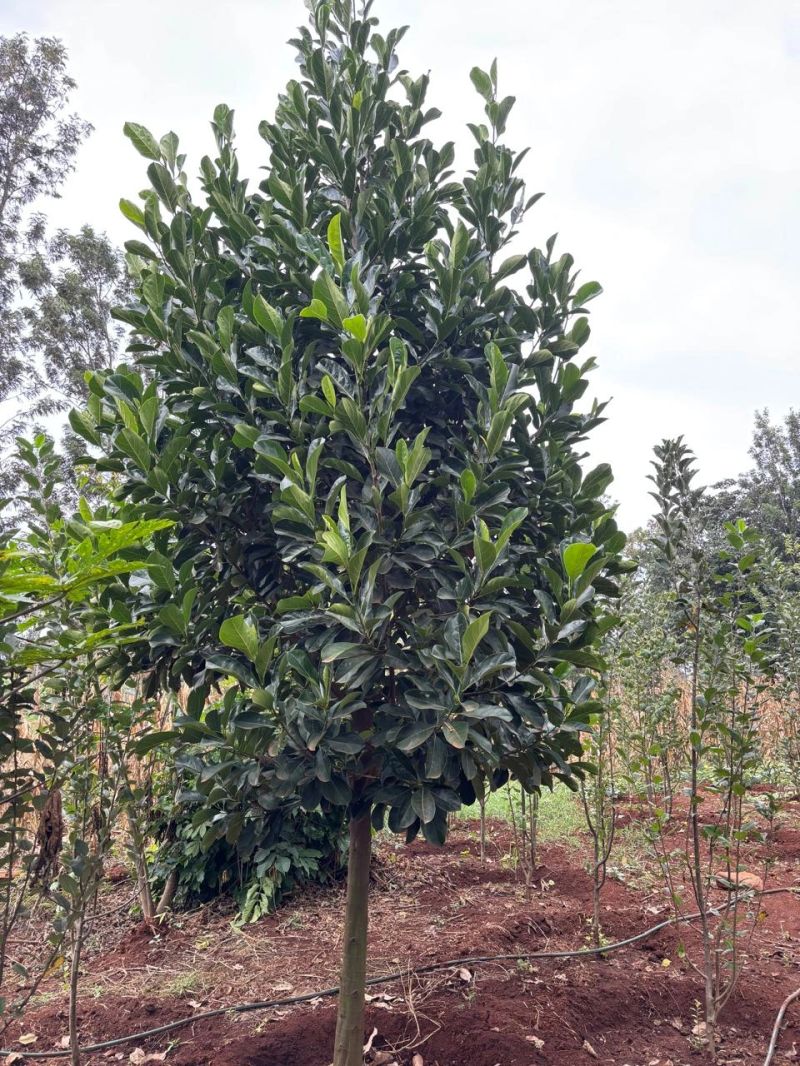
The standard spacing is 8 meters by 8 meters. This gives you approximately 70 trees per acre. This spacing allows each tree to develop a full canopy without competing with neighbors. Air circulates freely, reducing disease pressure. Sunlight reaches all parts of the tree for even fruiting. Access for harvesting remains easy throughout the orchard’s life.
Some farmers use wider spacing of 10 meters by 10 meters for 40 to 45 trees per acre. This allows maximum individual tree growth. Trees become very large and produce more fruit per tree. Total yield per acre is similar to closer spacing because of larger tree size. This approach works well for farmers with plenty of land.
For high-density plantings, some commercial orchards use 5 meters by 7 meters for 120 trees per acre. This requires more intensive management and regular pruning. Dwarf varieties work best for high-density systems. This approach is newer in Kenya but shows promise for farmers seeking maximum early production.
Clement Kotonya in Homa Bay plants at 8 meters square. He emphasizes that large spacing is necessary because branches grow huge and need room to spread. His experience with 200 trees on four acres validates this approach for commercial jackfruit farming in Kenya.
When planning your orchard, consider future access. Leave space between rows for vehicles and equipment. Think about harvest operations. Wider rows make picking easier and reduce fruit damage during collection.
Ideal Soil and Water Requirements
What are the ideal soil and water requirements for jackfruit? Meeting these needs ensures optimal growth and production for your jackfruit farming in Kenya venture.
Soil type should be deep, sandy loam to clay loam with good drainage. Jackfruit cannot tolerate waterlogged soils. Roots that sit in water for more than a day or two will rot, and the tree will die. Avoid areas with poor drainage or high water tables. If your land has heavy clay, plant on raised mounds.
Soil pH should range from 5.0 to 7.5. Slightly acidic to neutral conditions are ideal. Test your soil before planting. Your county agricultural office can assist with testing. If pH is below 5.0, apply agricultural lime at rates recommended by soil test results. If pH is above 7.5, incorporate organic matter to improve conditions.
Organic matter is essential for jackfruit farming in Kenya. Dig holes 60 centimeters wide and 60 centimeters deep. Mix topsoil with 20 kilograms of well-decomposed manure. This gives young trees a nutrient-rich environment for root development. Add 200 grams of DAP fertilizer to each hole for phosphorus.
Rainfall requirements are 1,000 to 2,400 millimeters annually. Jackfruit tolerates drier conditions with irrigation. In areas with distinct dry seasons, supplemental irrigation during fruiting improves fruit size and quality. Drip irrigation is most efficient for established orchards.
During the first year, water young trees every two to three days in dry weather. Apply 20 to 30 liters per tree weekly. Mature trees are drought-tolerant but benefit from irrigation during fruit development. Consistent moisture produces larger, juicier fruits.
The tree thrives in temperatures of 22°C to 35°C. It tolerates brief periods outside this range but cannot handle frost. Altitude should be below 1,500 meters, with best yields below 1,000 meters. Higher altitudes slow growth and delay fruiting.
Planting Guide for Commercial Success
Proper planting establishes the foundation for your orchard. Follow these steps for best results in jackfruit farming in Kenya.
Choose a sunny site with 6 to 8 hours of direct sunlight. Jackfruit needs full sun for maximum production. Protect from strong winds that can break branches and damage fruit. Plant windbreaks on exposed boundaries if needed.
Prepare holes 60 centimeters wide and 60 centimeters deep. Dig at least two weeks before planting. This allows the soil to settle and any weed seeds to germinate for removal. Mix topsoil with 20 kilograms of manure and 200 grams of DAP fertilizer. Refill holes partially before planting.
Plant at the start of rains. March to May for long rains, October to November for short rains. With irrigation, you can plant year-round. Morning planting reduces transplant shock.
Soak seedling roots in water for 2 to 3 hours before planting. This hydrates the plant and reduces stress. Place the seedling at the same depth it grew in the nursery. The graft union should stay above soil level to prevent rot.
Backfill with soil and firm gently around the roots. Water immediately and thoroughly. Apply mulch 2 to 3 inches deep around the base, keeping it 5 centimeters from the trunk to prevent stem rot.
Water young trees consistently through the first year. Mulch conserves moisture and suppresses weeds. Replenish mulch as it decomposes. Your jackfruit farming in Kenya success depends on this early care.

Pest and Disease Management
How do you manage common pests like the shoot borer? Integrated pest management works best for jackfruit farming in Kenya.
Shoot borer attacks young shoots and branches. Affected shoots wilt and die. Control by cutting off all affected shoots and twigs. Burn the pruned material to destroy larvae. Spray recommended pesticides if infestation is severe. Regular scouting catches problems early.
Fruit flies damage developing fruits. Females lay eggs inside fruits, and maggots feed on the flesh. Wrap fruits with empty cement bags or jute sacks to protect them. This physical barrier is highly effective for jackfruit farming in Kenya. Use pheromone traps to attract and catch male flies. Maintain good orchard hygiene by removing fallen fruits.
Twig borer causes similar damage to shoots. Prune and burn affected branches. Spray with appropriate insecticides when populations build. Healthy trees resist attack better than stressed ones.
Bark borer attacks the trunk and main branches. Spray recommended pesticides and burn affected twigs and dead branches. Keep the orchard clean of debris where borers hide. Inspect trunks regularly for entry holes.
Mealybugs and scale insects cluster on new growth. They suck sap and weaken trees. Spray with neem oil or insecticidal soap. Encourage natural predators like ladybugs. These insects provide natural control.
Root rot occurs in waterlogged soils. Ensure good drainage. Avoid overwatering. Plant only in well-drained sites. Remove affected trees promptly to prevent spread.
Anthracnose causes dark lesions on leaves and fruits. Copper-based fungicides provide control when applied early. Improve air circulation through proper spacing. Prune dense canopies to reduce humidity.
Regular scouting catches problems early in your jackfruit farming in Kenya operation. Walk through your orchard weekly. Look under leaves and at growing points. Early detection allows spot treatment before problems spread.
Market Opportunities in 2026
What are the 2026 market opportunities for jackfruit farmers? Several trends work in your favor for jackfruit farming in Kenya.
The vegan meat market is exploding. Jackfruit’s texture when unripe mimics pulled pork, shredded chicken, and other meat products. Restaurants and hotels in Nairobi seek jackfruit for plant-based menus. Vegan food stalls at markets like the Organic Farmers Market in Karen sell fresh cut jackfruit to enthusiastic customers. This trend will only grow as more Kenyans adopt plant-based diets.
Nairobi’s urban market offers tremendous potential. Supermarkets like Naivas, Quickmart, and Carrefour stock jackfruit when quality fruit is available. The Organic Farmers Market at KSPCA in Karen runs every Saturday and attracts health-conscious consumers. Vendors sell fresh jackfruit alongside other organic produce. Farmers who can supply consistently gain loyal customers.
Coastal market remains the largest for jackfruit farming in Kenya. Mombasa consumers have a long history of eating jackfruit. A single slice sells for 100 shillings. Whole fruits fetch 800 to 1,000 shillings. Farmers from as far as Chuka and Baringo supply this market, proving that transport costs do not eliminate profits.
Processing opportunities are expanding. Jackfruit can be processed into chips, dried fruit, flour, and canned products. Processed products fetch up to 200 shillings per kilogram, double the price of fresh fruit. Value addition also uses fruits that are too large or slightly blemished for fresh market. This increases overall recovery from each harvest.
Export markets are opening. Kenyan jackfruit has potential in Europe and the Middle East. Export requires certification and consistent quality. Work with export companies if you can meet their requirements. Export prices are often higher than local markets.
Roadside markets are growing. The Nakuru market at Sobea and Ngata Bridge sells jackfruit alongside watermelons. Travelers buy fruits to take home. Farmers in Baringo and Nakuru benefit from this growing channel. Identify similar opportunities in your area.

Where to Buy Certified Seedlings
Where can you buy certified jackfruit seedlings in Kenya? Farmers Trend Limited is your trusted source for quality planting material. Their online virtual agrovet platform makes ordering simple and convenient.
Farmers Trend Limited offers high-quality grafted jackfruit seedlings from their nurseries. Their varieties include Honey Gold, Bangkok Lemon, Cochin, and Black Gold. All seedlings are healthy, disease-free, and true to type. The nursery maintains mother blocks of proven varieties to ensure genetic quality.
The Farmers Trend online virtual agrovet platform revolutionizes how farmers access inputs. You can browse available varieties, check current prices, and place orders from your phone or computer. The platform delivers seedlings to your farm, saving travel time and transport costs. This service makes jackfruit farming in Kenya accessible to farmers anywhere in the country.
To order, visit the Farmers Trend website and navigate to the virtual agrovet section. Select jackfruit seedlings and choose your preferred varieties. Add to cart and proceed to checkout. Enter your delivery details and complete payment. Your seedlings will arrive at your farm within the specified delivery period.
Farmers Trend also provides agronomic advice through their platform. You can ask questions about planting, care, and pest management. Their team of experts responds promptly with practical solutions. This ongoing support increases your chances of success in jackfruit farming in Kenya.
For farmers who prefer physical inspection, Farmers Trend has nursery locations where you can see seedlings before purchase. Contact them through the website to find the nearest location. Staff are trained to advise on variety selection based on your region and target market.
Financial Projections for One Acre
Establishment costs for one acre include seedlings at 500 to 850 shillings each for 70 trees, totaling 35,000 to 60,000 shillings. Land preparation costs 10,000 to 15,000 shillings. Manure at 20 kilograms per hole for 70 holes adds 7,000 to 10,000 shillings. Irrigation installation adds 50,000 to 100,000 shillings if needed. Total first-year investment ranges from 102,000 to 185,000 shillings.
Annual maintenance after establishment costs 20,000 to 30,000 shillings for fertilization, pruning, and pest control. These costs continue through the orchard’s productive life.
Production starts in year three with 5 to 10 fruits per tree. At 70 trees and 300 shillings per fruit, revenue reaches 105,000 to 210,000 shillings.
Year four production of 20 to 50 fruits per tree generates 420,000 to 1,050,000 shillings.
Year five and beyond with 50 to 100 fruits per tree generates 1,050,000 to 2,100,000 shillings annually.
Net profit from year five onward ranges from 1 million to 2 million shillings per acre depending on prices and yields. These figures demonstrate the exceptional potential of jackfruit farming in Kenya for patient, committed farmers.
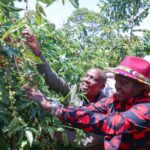
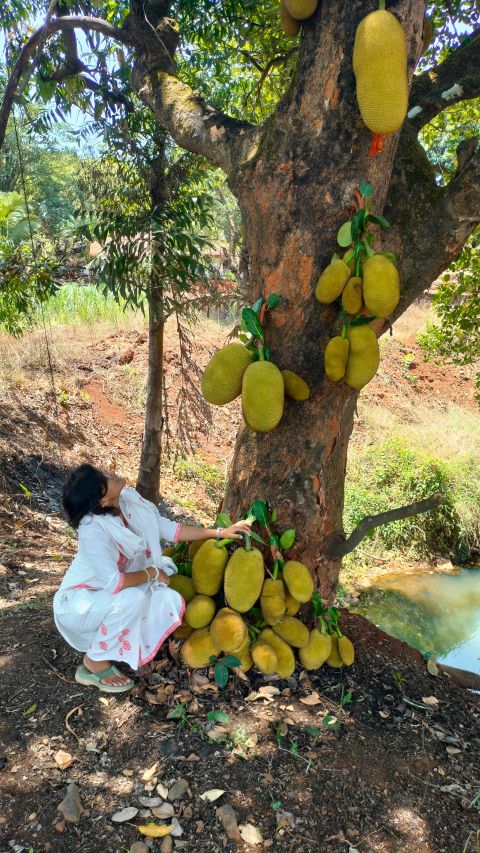 A farmer of Indian descent squats to harvest large jackfruits from a low-hanging branch on her productive farm, highlighting the diverse community engaged in jackfruit farming in Kenya.
Next Step
Jackfruit farming in Kenya offers one of the most profitable long-term opportunities in horticulture. Grafted trees fruit in three to four years. Yields increase annually, reaching 100 to 250 fruits per tree at maturity. Prices range from 300 to 1,000 shillings per fruit depending on size and market. The trees remain productive for 50 to 70 years.
The 2026 planting windows approach. March to May and October to November offer ideal conditions with the rains. Your seedlings are waiting at Farmers Trend nurseries. The online virtual agrovet platform makes ordering simple. Your land is ready for preparation.
Start with soil testing to know your pH and nutrient levels. Choose the right varieties for your market. Bangkok Lemon and Honey Gold suit fresh markets. Black Gold offers resilience for marginal areas. Orange-fleshed varieties command premium prices.
Prepare your land thoroughly. Dig holes 60 centimeters wide and 60 centimeters deep. Incorporate manure and allow holes to settle. Install irrigation before planting for consistent moisture through dry periods.
Order your certified seedlings from Farmers Trend Limited. Visit their online virtual agrovet platform or contact them directly. Buy grafted seedlings to ensure true-to-type trees and early production.
The farmers earning substantial incomes from jackfruit started exactly where you are now. They learned, they planned, and they took action. You can do the same.
Your jackfruit farming in Kenya journey begins today. The market is waiting. The profits are real. The time to act is now.
https://farmerstrend.co.ke/trending/jackfruit-farming-in-kenya-2026-profit-blueprint/https://farmerstrend.co.ke/wp-content/uploads/2026/03/jackfruit-tree-in-kenya-1024x512.jpeghttps://farmerstrend.co.ke/wp-content/uploads/2026/03/jackfruit-tree-in-kenya-150x150.jpeg# TrendingFruitsJackFruit FarmingJackfruit Farming in Kenya: The 2026 Guide to Profits and Sustainable Production Jackfruit farming in Kenya represents one of the most promising opportunities for farmers seeking long-term income with relatively low maintenance. Known locally as fenesi, this giant fruit has transformed from a backyard tree into a commercial crop fetching...FarmersTrendjohn doefarmerstrend@gmail.comAdministratorFarmers Trend Ltd.





Leave a Reply