Wheat Farming in Kenya 2026 – A Complete Profitable Guide to Large-Scale Commercial Production
Commercial Wheat Farming in Kenya 2026: The Millionaire’s Blueprint for Maximum Grain Yields
Wheat farming in Kenya is not a backyard activity. If you try to weed a commercial wheat field with a hand hoe, you will celebrate your next three birthdays out on the land before you finish. This crop demands scale, precision machinery, and serious capital investment. But the rewards for those who get it right are substantial.

Kenya produces only 400,000 metric tons of wheat annually, yet the country consumes over 2 million metric tons. This massive deficit of 1.6 million metric tons is filled by expensive imports from Russia, Ukraine, and Argentina. The government introduced the Wheat Purchase Program in 2026 to address this gap. Millers must now purchase local grain before they can apply for import permits, which forces flour millers to compete for Kenyan wheat and stabilises prices for local farmers.
For commercial growers, this policy shift is a direct financial incentive to expand wheat farming in Kenya. The demand is certain, the price floor is protected, and the only variable that determines your profit is your yield per acre. A farmer who achieves 25 to 30 bags per acre at 6,000 shillings per bag earns 150,000 to 180,000 shillings in revenue. After subtracting production costs of approximately 40,000 shillings per acre, the net profit reaches 110,000 to 140,000 shillings per acre.
This guide by Farmers Trend Limited provides a complete technical framework for achieving these yields. You will learn about variety selection, soil science, planting mechanics, nutrient management, pest control, and harvesting logistics. Every recommendation is based on field research from KALRO and practical experience from successful large-scale farmers in Narok, Nakuru, Uasin Gishu, Trans Nzoia, and Timau.
The 2026 Wheat Economy and the Food Security Gap
Wheat is the raw material for bread, chapati, biscuits, pasta, and many other staple foods that Kenyan households consume daily. The average Kenyan eats 30 kilograms of wheat products every year, and urbanisation continues to drive this demand higher. The national population grows steadily, and the appetite for wheat-based foods shows no sign of slowing, which creates a persistent and growing market for local wheat producers.
Current domestic production stands at approximately 400,000 metric tons of wheat annually, but national consumption exceeds 2 million metric tons. This shortfall of 1.6 million metric tons is covered by imports, which cost the country billions of shillings in foreign exchange every year. This dependency on foreign grain is both an economic vulnerability and a market opportunity for local farmers engaged in wheat farming in Kenya.
The 2026 Wheat Purchase Program changes the market dynamics in favour of local producers. Millers must now demonstrate that they have purchased local grain before the government will issue import permits. This requirement forces flour millers to compete for Kenyan wheat, which pushes prices upward. The program also requires millers to disclose their local purchases, creating transparency that was previously lacking in the wheat marketing system.
For commercial farmers, this policy shift is a direct financial incentive to expand wheat farming in Kenya. The market is no longer flooded with cheap imports during harvest season because millers are required to take local grain first. Local wheat now has a protected market window, and farmers who produce high-quality grain at competitive volumes will find ready buyers at stable prices. The risk of price collapse after harvest has been significantly reduced.
The payment structure for wheat deliveries has also improved. Millers now pay within 30 days of delivery, compared to the 90 to 120 day delays that were common before the program. This faster payment cycle helps farmers manage their cash flow and reinvest in the next season’s inputs. Some millers also offer bonuses for high-protein grain and for deliveries made during the peak harvest period when their storage is empty.
Premium Wheat Agro-Ecology and Geography for Wheat Farming in Kenya
Wheat production in Kenya is concentrated in specific regions known as the “wheat baskets” of the country. These are Narok, Nakuru, Uasin Gishu, Trans Nzoia, and Timau in Meru and Laikipia counties. These areas possess the right combination of altitude, temperature, and soil type that wheat requires for optimal growth. Successful wheat farming in Kenya depends on matching the crop to the right environment.
The altitude requirements for wheat are specific and must be respected by any farmer seeking high yields. Wheat thrives between 1,500 and 2,900 meters above sea level. Below 1,500 meters, temperatures are too high and grain filling is poor, resulting in shriveled kernels that receive lower prices from millers. Above 2,900 meters, frost becomes a serious risk and the growing season becomes too short for the crop to mature before cold weather damages it.
Narok County is the largest wheat producer in Kenya. The soils are rich volcanic loam derived from ancient volcanic activity in the Rift Valley. The altitude ranges from 1,800 to 2,200 meters, which is ideal for most wheat varieties. The rainfall pattern is reliable, with well-distributed precipitation during the growing season. Farmers in Narok typically achieve 20 to 25 bags per acre with good management.
Nakuru County, particularly the Mau Summit area, is also highly productive for wheat farming in Kenya. The soils are deep and fertile, and the altitude is similar to Narok. The Mau Summit area receives reliable rainfall from both the long and short rains, allowing farmers to plant two crops per year in some areas. However, the higher rainfall also increases disease pressure, requiring careful fungicide management.
Uasin Gishu and Trans Nzoia counties are known for large-scale commercial wheat farms that operate on thousands of hectares. These areas have deep, fertile soils and a well-established infrastructure for mechanised farming, including tractor hire services, custom combining, and grain storage facilities. The altitude ranges from 1,600 to 2,000 meters, which suits early-maturing varieties like Robin.
Timau, in Meru County, is a high-altitude zone that produces high-quality wheat with excellent grain characteristics. The cooler temperatures slow down the growth, allowing the grain to fill slowly and develop high protein content. Millers pay premium prices for Timau wheat because of its quality. However, yields are slightly lower than in other regions, typically 18 to 22 bags per acre.
Temperature plays a critical role in wheat development throughout the growing season. The optimal range for wheat farming in Kenya is 15 to 25 degrees Celsius. When temperatures exceed 30 degrees, the plant experiences heat stress that reduces grain size and weight. When temperatures drop below 10 degrees, growth slows dramatically and the crop takes longer to mature, which can push harvest into the rainy season and increase the risk of grain spoilage.
Deep, volcanic loam soils are a non-negotiable requirement for high-yielding wheat. The roots need to penetrate deep into the soil profile to access water and nutrients during dry periods. Shallow soils produce shallow root systems, which result in weak plants that are more susceptible to drought stress and lodging. The best wheat farming in Kenya occurs on these deep, fertile soils with good water-holding capacity.

Soil Science and Addressing Secondary Nutrient Deficiencies
Soil chemistry is the foundation of high wheat yields, yet many farmers ignore this critical factor. The ideal pH range for wheat is 6.0 to 7.0, which is slightly acidic to neutral. When the pH drops below 6.0, the soil becomes too acidic. Nutrients like phosphorus, calcium, and magnesium become unavailable to the plant, and aluminum toxicity can damage the roots. When the pH rises above 7.0, the soil becomes too alkaline, and micronutrients like iron, zinc, and manganese are locked up and cannot be absorbed.
Laboratory data from Cropnuts and CKL in 2026 reveals a widespread problem affecting wheat farming in Kenya. Kenyan highland soils are severely deficient in Sulphur, Zinc, and Boron. These are secondary nutrients, meaning plants need them in smaller quantities than Nitrogen or Phosphorus, but they are still essential for proper growth and grain development. Many farmers apply only NPK fertilizer and wonder why their yields remain low year after year.
Sulphur is directly involved in protein synthesis, which determines wheat grain protein content. Millers pay premium prices for high-protein grain because it produces better flour for bread making. Without adequate Sulphur, the plant cannot use Nitrogen efficiently, leading to wasted fertilizer applications and poor grain quality. Sulphur deficiency also causes yellowing of young leaves and stunted growth that is often mistaken for Nitrogen deficiency.
Zinc is a critical component of plant hormones that regulate growth and development. A Zinc deficiency causes stunted plants with yellowing between the leaf veins, a condition called interveinal chlorosis. The heads are small, and grain fill is poor. In severe cases, the plant may produce no grain at all. Zinc deficiency is common in alkaline soils and soils that have been heavily cropped without zinc replacement.
Boron is essential for flower development and pollination. A Boron deficiency causes empty heads, a condition where the plant flowers but the grain does not form. The yield loss can be 50 percent or more, and the farmer may not even realize the cause without a soil test. Boron deficiency is common in sandy soils and areas with high rainfall that leaches the nutrient from the root zone.
You must test your soil before planting wheat farming in Kenya. Do not rely on guesswork or previous years’ fertilizer programs. Soil nutrient levels change over time due to cropping intensity, rainfall, and previous fertilizer applications. A simple soil test costs 2,000 to 5,000 shillings and provides a detailed report of your soil’s pH, organic matter content, and available nutrients. This information allows you to apply exactly what your soil needs and avoid wasting money on unnecessary inputs.
Based on the soil test results, you can correct the specific deficiencies. Apply Sulphur at 20 to 30 kilograms per hectare using ammonium sulphate or gypsum. Apply Zinc at 5 to 10 kilograms per hectare using zinc sulphate. Apply Boron at 1 to 2 kilograms per hectare using borax or Solubor. These small investments in soil health pay large dividends at harvest, often increasing yields by 20 to 30 percent when deficiencies are corrected.
| Variety | Maturity (Days) | Rust Resistance | Ideal Altitude (m) | Yield Potential (bags/acre) |
|---|---|---|---|---|
| Njoro 2 | 110-120 | High (Stem Rust) | 1,800-2,400 | 20-28 |
| Robin | 100-110 | High (Stripe Rust) | 1,600-2,200 | 22-30 |
| Kwale | 120-130 | Medium | 1,500-2,000 | 18-25 |
| Hawk | 105-115 | Very High | 1,700-2,300 | 20-28 |
| Eagle 10 | 115-125 | High | 1,900-2,500 | 22-30 |

Advanced Variety Selection for Wheat Farming in Kenya
KALRO has released several wheat varieties suited to different growing conditions across the country. Each variety has distinct characteristics in terms of maturity period, disease resistance, altitude preference, and yield potential. Choosing the right variety for your specific location is the first step toward a profitable harvest in wheat farming in Kenya.
Njoro 2 matures in 110 to 120 days, making it a medium-maturing variety. It has high resistance to Stem Rust, which is the most dangerous wheat disease in Kenya. Stem Rust can destroy an entire field within days if the variety is susceptible, so resistance is a critical trait. Njoro 2 is best suited for high altitude areas above 1,800 meters, such as Timau and parts of Narok. It yields 20 to 28 bags per acre under rain-fed conditions and is a reliable choice for farmers in cooler regions. The grain has good test weight and moderate protein content.
Robin matures in 100 to 110 days, making it one of the faster varieties available for wheat farming in Kenya. It has high resistance to Stripe Rust, which is common in cooler, wetter areas like Nakuru and Uasin Gishu. Stripe Rust appears as yellow stripes on the leaves and can reduce yields significantly if not controlled. Robin responds very well to nitrogen fertilizer and can yield 22 to 30 bags per acre under good management, making it a top choice for commercial farmers. The grain quality is excellent, with high protein content that attracts premium prices from millers.
Kwale matures in 120 to 130 days and has a semi-dwarf growth habit that makes it resistant to lodging. It has medium rust resistance, meaning it requires careful fungicide management to protect the crop. However, Kwale performs exceptionally well under irrigation and is the best choice for farmers with center pivot irrigation systems in wheat farming in Kenya. It yields 18 to 25 bags per acre and produces high-quality grain with good protein content. The semi-dwarf stature also means it uses less water than taller varieties.
Hawk matures in 105 to 115 days and has very high resistance to both Stem Rust and Stripe Rust. This makes it a low-risk choice for farmers who may not be able to time their fungicide applications perfectly due to weather or labor constraints. Hawk is adaptable to many regions and yields 20 to 28 bags per acre, making it a versatile option for wheat farming in Kenya. It is particularly popular among large-scale farmers who cover thousands of acres and cannot scout every field daily.
Eagle 10 is a long-maturing variety that takes 115 to 125 days to reach harvest. It has high rust resistance and performs best in high altitude areas above 2,000 meters. Eagle 10 is known for its excellent grain quality, including high protein content and good test weight, which attracts premium prices from millers. It can yield 22 to 30 bags per acre under optimal conditions, but it requires careful management of Nitrogen to prevent lodging.
Stem Rust, caused by the fungus Puccinia graminis, appears as reddish-brown pustules on the stems and leaves of the wheat plant. The fungus destroys the plant’s vascular tissue, preventing water and nutrients from moving to the developing grain. The plant dies prematurely, and the grain shrivels. In severe epidemics, yield loss can reach 100 percent. Resistant varieties are the first line of defense, and fungicides provide additional protection when conditions favor disease development.
Stripe Rust, caused by Puccinia striiformis, appears as yellow stripes on the leaves. It is more common in cool, wet conditions and can spread rapidly through a field. The disease reduces the plant’s photosynthetic capacity, leading to smaller grain and lower yields. Robin has good resistance to Stripe Rust, but farmers in high-risk areas should still scout regularly and be prepared to apply fungicides.

Mechanics of Large-Scale Precision Planting for Wheat Farming in Kenya
Land preparation for wheat farming in Kenya must create a fine, uniform seedbed that allows for even germination and root development. Start with deep ploughing using a disc plough set to a depth of 20 to 25 centimeters. This breaks up compacted layers and allows roots to penetrate deep into the soil profile. After ploughing, use a disc harrow to break clods and level the surface. Two passes with the harrow are usually sufficient to create a seedbed that feels like breadcrumbs when you squeeze a handful.
The timing of land preparation is important. Plough well before the planting date to allow the soil to settle and for any weed seeds to germinate so they can be killed by a subsequent harrowing. This stale seedbed technique reduces weed pressure in the crop. In areas with heavy soils, plough after the first rains to make the soil easier to work.
The seeding rate for wheat farming in Kenya is 50 to 60 kilograms of certified seed per acre. Do not use saved seed from previous harvests. Saved seed has lower germination rates, often below 70 percent, and carries diseases from the previous crop. Certified seed is treated with fungicide and has germination rates above 90 percent. The higher cost of certified seed is justified by better stands and higher yields.
A mechanical seed drill is essential for large-scale wheat farming in Kenya. Broadcasting seeds by hand is not precise and results in uneven germination. Some areas become too thick, leading to competition and lodging. Other areas become too thin, wasting productive land. A seed drill places each seed at the correct depth and spacing, ensuring uniform emergence and optimal plant populations. The drill also places fertilizer in a band near the seed, making it available to the young roots.
The planting depth should be 2.5 to 5 centimeters, depending on soil moisture conditions. Plant shallower when the soil is moist and warmer, as the seed will germinate quickly. Plant deeper when the soil is dry or cool, as the seed needs to reach moisture. The seed drill must be calibrated correctly before planting, and the depth should be checked regularly during the operation. Uneven depth leads to uneven emergence, which creates a uneven crop canopy and makes weed control and spraying more difficult.
Row spacing for wheat farming in Kenya is typically 15 to 20 centimeters. This spacing gives each plant enough room to produce side shoots, called tillers, without competing excessively with neighbours. Each tiller can produce a head of grain, so more tillers mean more yield. The target plant population is 250 to 300 plants per square meter. In drier areas, wider row spacing of 25 centimeters may be used to reduce competition for water.
The planting window for wheat farming in Kenya is determined by the rainfall pattern. For the long rains, plant in March to April. For the short rains, plant in October to November. Delayed planting of just two weeks can reduce yields by 30 to 50 percent because the crop matures later and may be affected by drought or disease. Plan your land preparation and equipment availability to ensure you can plant at the optimal time.
| Input Activity | Cost per Acre (KSh) | Notes |
|---|---|---|
| Tractor ploughing | 2,500 | One pass with disc plough |
| Harrowing | 1,500 | Two passes with disc harrow |
| Seed drilling | 1,000 | Mechanical seed drill calibration |
| Certified seeds | 4,000 | 50-60 kg at 70 KSh/kg |
| DAP/Compound NPK | 6,500 | 100 kg at 65 KSh/kg |
| Urea/CAN top dressing | 5,000 | 100 kg at 50 KSh/kg |
| Sulphur + Zinc + Boron | 2,500 | Based on soil test results |
| Herbicides | 3,000 | Post-emergence selective |
| Fungicides (2 applications) | 6,000 | Booting and flowering stages |
| Pesticides | 2,000 | As needed for aphids or armyworms |
| Combine harvesting | 3,500 | Per acre, including transport to miller |
| Total Cost per Acre | 39,500 |
The Nitrogen and Phosphorus Nutrient Protocol for Wheat Farming in Kenya
Wheat farming in Kenya requires precise timing of nutrient applications to match the plant’s growth stages. The macronutrients Nitrogen, Phosphorus, and Potassium are all important, but Nitrogen and Phosphorus have the most significant impact on yield. Getting the timing and rates right for these two nutrients is essential for profitable production.
At planting, apply DAP or Compound NPK fertilizer. DAP contains 18 percent Nitrogen and 46 percent Phosphorus. Compound NPK 23:23:23 contains equal parts of Nitrogen, Phosphorus, and Potassium. Place the fertilizer in the seed furrow, but do not let it touch the seed directly because concentrated fertilizer can burn the young roots. The recommended rate is 100 kilograms per acre. In sandy soils, split the Phosphorus application, placing half at planting and half at tillering.
Phosphorus is critical for early root development in wheat farming in Kenya. Strong roots allow the plant to access water and nutrients deep in the soil profile. Strong roots also produce more tillers, which are side shoots that each produce a head of grain. More heads mean more yield. Phosphorus applied at planting is available to the young roots immediately. Without adequate Phosphorus, the plant will have a shallow root system and will be more susceptible to drought stress.
Nitrogen is for vegetative growth, making the plant tall and leafy. However, the timing of Nitrogen application is critical. Apply too much Nitrogen early, and the plant will become tall and weak, falling over in a process called lodging. Lodged wheat is difficult to harvest and yields less grain. Apply too little Nitrogen late, and the grain will be small and shriveled.
The first Nitrogen top dressing should be applied at the tillering stage, which occurs 4 to 6 weeks after planting. At this stage, the plant is producing side shoots. Apply Urea or CAN at 50 kilograms per acre. Urea contains 46 percent Nitrogen, while CAN contains 26 percent Nitrogen. CAN is safer to use because it is less likely to burn the leaves, but it is more expensive per unit of Nitrogen. On sandy soils, split the Nitrogen into three smaller applications to reduce leaching losses.
The second Nitrogen top dressing should be applied at the stem elongation stage, which occurs 8 to 10 weeks after planting. At this stage, the stems are growing tall rapidly. Apply another 50 kilograms per acre of Urea or CAN. The total Nitrogen applied should be 100 to 120 kilograms per acre, split into two applications to match the plant’s needs. In high-yield situations with irrigation, up to 150 kilograms of Nitrogen per acre may be used.
| Growth Stage | Timing (Days) | Intervention | Rate per Acre |
|---|---|---|---|
| Tillering | 20-30 | Urea/CAN top dressing | 50 kg |
| Jointing | 40-50 | Sulphur + Zinc + Boron | As per soil test |
| Booting | 55-65 | Fungicide (strobilurin + triazole) | Manufacturer’s rate |
| Flag leaf | 65-75 | Nitrogen top dressing (if needed) | 25 kg |
| Flowering | 75-85 | Fungicide (triazole) | Manufacturer’s rate |
Integrated Weed and Pest Management for Wheat Farming in Kenya
Weeds are a major threat to wheat yields because they compete with the crop for water, nutrients, and light. The main weed threats in wheat farming in Kenya are broadleaf weeds and wild oats. Broadleaf weeds have wide leaves and grow quickly, shading the young wheat plants. Wild oats are grasses that look similar to wheat and are difficult to distinguish, making them hard to control.

Post-emergence herbicides are the most effective solution for weed control. Apply them when the wheat is at the 3 to 5 leaf stage, which is typically 3 to 4 weeks after planting. At this stage, the weeds are small and vulnerable, and the wheat is large enough to tolerate the herbicide. Use a selective herbicide that kills broadleaf weeds but does not harm wheat. For wild oats, use a grass-selective herbicide like pinoxaden or clodinafop.
The timing of herbicide application is critical for wheat farming in Kenya. Apply too early, and some weeds may not have emerged yet, requiring a second application. Apply too late, and the weeds will be too large for the herbicide to kill effectively. The wheat canopy may also prevent the spray from reaching the weeds. Aim to spray when the weeds are at the 2 to 4 leaf stage for best results.
Russian Wheat Aphids are a serious pest that can cause significant yield loss. These small insects suck sap from the leaves and also inject a toxin that damages the plant tissue. The leaves turn white and die, and the plant may stop growing entirely. Scout your fields weekly, looking for aphids on the undersides of leaves. In high-risk areas, consider using an insecticide seed treatment that provides protection for the first 6 weeks of growth.
Armyworms are another pest that can devastate a wheat crop. The caterpillars eat the leaves, and large populations can defoliate a field in just a few days. Armyworms move in large groups, marching across the field and consuming everything in their path. Scout regularly, and spray when you see the first signs of damage. Early detection is critical because large armyworms are harder to kill.
Fungicide Strategy at Booting and Flowering
Fungal control at the booting and flowering stages is critical for protecting yield and grain quality in wheat farming in Kenya. The flag leaf is the most important leaf on the wheat plant. It is the top leaf below the head, and it provides 75 percent of the energy for grain filling. If the flag leaf becomes diseased, the grain will be shriveled and light, reducing both yield and market price.
The booting stage occurs when the head is inside the stem, just before it emerges. Apply a fungicide at this time to protect the developing head and the flag leaf. Use a combination product that contains both a strobilurin and a triazole. Strobilurin fungicides are preventative, stopping the fungus from infecting the plant. Triazole fungicides are curative, killing any fungus that has already infected the plant. Popular products include Amistar Top, Opera, and Prosaro.
The flowering stage occurs when the head is fully emerged and the flowers are open for pollination. Apply a second fungicide at this time to protect the head from Fusarium head blight. This disease causes the grain to be shriveled and contaminated with toxins called mycotoxins. Grain with high mycotoxin levels is rejected by millers and cannot be used for human consumption. Triazole fungicides applied at early flowering are most effective against Fusarium.
Rust diseases are the biggest fungal threat to wheat farming in Kenya. Stem Rust appears as reddish-brown pustules on the stems and leaves. Stripe Rust appears as yellow stripes on the leaves. Both diseases can spread rapidly under favorable conditions and cause significant yield loss. If you see rust in your field, spray immediately with a triazole fungicide. Do not wait for the disease to spread.
The health of the flag leaf directly dictates grain filling and weight. A healthy flag leaf is dark green, stands upright, and stays green until the grain is mature. A diseased flag leaf turns yellow, wilts, and dies early, stopping grain fill before the kernels reach full size. Protect the flag leaf with timely fungicide applications, and consider adding a foliar fertilizer to the spray to keep the leaf green longer.
Combine Harvesting Logistics and Post-Harvest Quality
The indicators of maturity are clear for wheat farming in Kenya. The leaves turn yellow, the stems become dry and brittle, and the grain is hard and cannot be dented with a fingernail. The moisture content should drop below 14 percent before you begin harvesting. You can test the moisture with a handheld moisture meter, which is a worthwhile investment for commercial farmers.
Harvesting too early is a common mistake. The grain will be soft and will shrink during drying, reducing your total yield. Harvesting too late is also problematic. The grain may shatter from the heads and fall to the ground, and the heads may break off and be lost. The loss from delayed harvesting can be 10 to 20 percent of your potential yield. Start checking moisture levels two weeks before the expected harvest date.
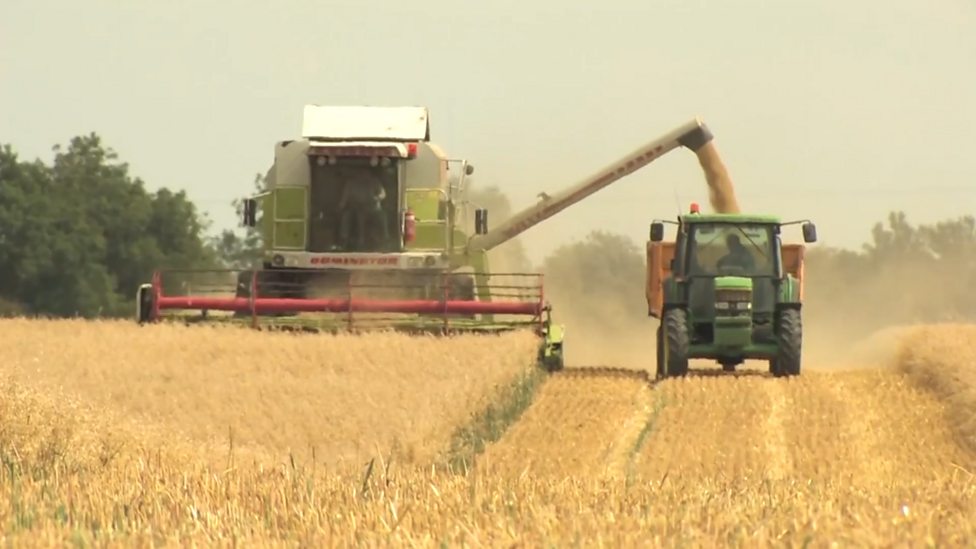
Combine harvesting is the only practical method for large-scale wheat farming in Kenya. The combine cuts the crop, threshes the grain, separates the chaff, and deposits the clean grain into a bin. The cost of contract combining is 3,000 to 4,000 shillings per acre, depending on the distance to your farm and the size of the field. Some contractors charge by the hour rather than by the acre, so get quotes from multiple contractors.
Logistical management is important for successful harvesting. Book your combine harvester well in advance of the harvest window, as all farmers want to harvest at the same time. If you wait, the grain may become overripe, and the yield will suffer. Have a plan for transporting the grain from the field to the storage facility or the miller. You will need trucks or tractors with trailers, and you should have them waiting at the field edge.
After harvest, the grain must be dried to a safe moisture content for storage. The target is below 13.5 percent. Grain stored at higher moisture levels will develop molds, which produce mycotoxins. Millers test for mycotoxins and will reject contaminated grain. You can sun dry the grain on tarpaulins or use mechanical dryers if you have them. Mechanical drying is faster but more expensive.
Store the grain in clean, dry bags or silos. Keep the storage area clean and free of rodents and insects. Treat the grain with a registered insecticide to prevent weevil infestation. Properly stored grain can be held for several months, allowing you to sell when prices are highest rather than immediately after harvest. Monitor stored grain regularly for signs of heating or insect activity.

The 1-Acre Financial Blueprint for Wheat Farming in Kenya
| Revenue Level | Bags per Acre (90kg) | Price per Bag (KSh) | Total Revenue (KSh) | Net Profit (KSh) |
|---|---|---|---|---|
| Poor management | 15 | 5,000 | 75,000 | 35,500 |
| Average management | 20 | 5,500 | 110,000 | 70,500 |
| Good management | 25 | 6,000 | 150,000 | 110,500 |
| Excellent management | 30 | 6,500 | 195,000 | 155,500 |
The cost of production per acre for wheat farming in Kenya is approximately 39,500 shillings. This includes land preparation, seeds, fertilizers, agrochemicals, labor, harvesting, and transport. The largest variable costs are fertilizer and seed, which together account for about 25 percent of the total budget. Fixed costs such as land rent and equipment depreciation are not included in this figure.
The pathway to achieving a net profit margin of over 40 percent is clear. Choose a high-yielding, rust-resistant variety suited to your region. Test your soil and correct Sulphur, Zinc, and Boron deficiencies. Prepare a fine seedbed and plant with a calibrated seed drill at 2.5 to 5 centimeters depth. Apply DAP or NPK at planting. Top dress with Urea or CAN at tillering and stem elongation. Control weeds with post-emergence herbicides. Scout for pests and apply insecticides when needed. Apply fungicides at booting and flowering. Harvest on time at moisture below 14 percent.
Your Next Step
Wheat farming in Kenya requires capital investment in land preparation, seeds, fertilizers, and harvesting equipment. It also requires technical knowledge of variety selection, nutrient management, pest control, and harvest logistics. However, the returns justify the investment, and the government’s Wheat Purchase Program provides a guaranteed market at stable prices.
The 2026 planting season is approaching. The long rains begin in March, and the short rains begin in October. Prepare your land now. Test your soil. Order certified seeds from KALRO or Kenya Seed Company. Calibrate your seed drill. Plan your fertilizer applications. Scout your fields weekly. Apply fungicides protectively.
What variety are you planning to plant this season, and which region are you farming in? Leave your answer in the comments below. Sharing your experience helps other farmers learn.
For certified wheat seeds, soil testing, and the 2026 Wheat Farming in Kenya PDF guide, contact Farmers Trend Ltd at 0790509684. The market is waiting for your grain. The policy supports your success. The time to plant is now.
https://farmerstrend.co.ke/crops/wheat-farming/wheat-farming-in-kenya-2026-guide/https://farmerstrend.co.ke/wp-content/uploads/2026/05/wheat-farming-in-kenya-2026-1024x768.webphttps://farmerstrend.co.ke/wp-content/uploads/2026/05/wheat-farming-in-kenya-2026-150x150.webpWheat Farming# TrendingCombine harvester cost Kenya,Farmers Trend wheat seeds,KALRO wheat varieties,Njoro 2 wheat,Robin wheat variety,Soil testing for wheat,Stem rust resistant wheat,Uasin Gishu wheat production,Wheat farming in Nakuru,wheat farming in narok,Wheat fertilizer schedule,Wheat fungicide booting stage,Wheat price per bag 2026,Wheat Purchase Program 2026,Wheat yield per acre KenyaCommercial Wheat Farming in Kenya 2026: The Millionaire's Blueprint for Maximum Grain Yields Wheat farming in Kenya is not a backyard activity. If you try to weed a commercial wheat field with a hand hoe, you will celebrate your next three birthdays out on the land before you finish. This...FarmersTrendjohn doefarmerstrend@gmail.comAdministratorFarmers Trend Ltd.


Leave a Reply