Tea Bonuses Fell From Sh20 to Sh13 a Kilo: How to Add Fruit Trees as a Second Income Without Uprooting Your Tea
Tea bonuses fell sharply in the latest payout round. Bomet farmers averaged Sh13 per kilo of green leaf against Sh20 the year before, according to the Kenya News Agency. Some farmers threatened to abandon tea or uproot their bushes.

Farmers Trend Limited advises you to keep your tea. A tea bush takes three to four years to reach full plucking. If you uproot and replant, you lose this income for years. You have a better option. Add fruit trees on your farm boundaries and spare land. The trees give you a second income from the same farm while your tea keeps paying.
This guide shows you how tea bonuses work, why they fell and what to ask your factory. You will see five fruit trees for tea zones in Mt Kenya and the Rift Valley. You will see a cost and return comparison, a five-year plan, a planting guide for the coming short rains, care steps for the first two years and ways to sell your fruit.
Why Tea Bonuses Fell
Your bonus is the money left after your factory pays all costs. KTDA directors say the rate differs by factory because each factory has different revenue and costs. Several pressures hit the latest round at the same time.
| Pressure | What happened | Effect on your bonus |
|---|---|---|
| Lower prices | The average price of made tea fell from Sh389 to Sh309 per kilo, according to KTDA directors | Less factory revenue to share |
| Lower volumes | Production dropped about 12 percent | Fewer kilos to sell and a higher cost per kilo |
| Export levy | A 0.8 percent levy on exported tea began in 2026 | KTDA’s chairman says the levy lowers expected earnings and bonuses. The Tea Board disputes this |
| Borrowing | A March 2026 Tea Board audit found borrowing of Sh24.01 billion against a Sh6.37 billion second payment requirement | Part of some bonuses came from loans, not tea sales |
You find the price and volume figures in the Capital FM report on KTDA directors. The borrowing figures come from a Nation investigation. Nation notes the audit does not show every shilling of the excess reached farmers.
Rates differ widely between factories. Rukuriri Tea Factory in Embu led with Sh57.50 per kilo in the Standard’s report on the previous payout. Bomet farmers averaged Sh13 in the Kenya News Agency report. Your factory’s rate is your own number.
How Your Tea Bonus Is Calculated
You earn tea income in two parts. The first part is the monthly green leaf payment. Your factory pays this each month for the kilos you deliver. The second part is the bonus, also called the second payment. Your factory declares the bonus after the financial year closes on 30 June.
The bonus is the balance left after costs. Factory income comes from made tea sold at the Mombasa auction and through direct sales. Costs include leaf transport, processing, energy, wages, loan repayments and management fees. When income falls or costs rise, the bonus falls first because the bonus is the final balance.
The Standard reports factory directors review auction revenue, direct sales and annual spending before they declare the bonus. Your factory board holds these details. Ask for them. You own a share of your factory, so you have the right to ask.
Ask your directors four questions. What was the total factory revenue for the year? What were the total costs? How much did the factory borrow for bonus payment? What is the loan balance now? Write down the answers and compare them with last year. This record shows you whether your bonus fell because of the market or because of factory costs and loans.
Keep Your Tea and Add a Second Income
Tea still pays you every month. A mature tea bush produces for decades. Uprooting removes income you already earn and costs you years of waiting for new bushes to mature.
Use your own numbers to see the size of the drop. Suppose you deliver 3,000 kg of green leaf a year. A bonus of Sh20 per kilo pays you Sh60,000. A bonus of Sh13 per kilo pays you Sh39,000. You lose Sh21,000 a year. You still earn Sh39,000 from the bonus plus your monthly leaf payments.
Uprooting tea gives up all of this. Fruit trees add to your income and take nothing away. They need land you do not use for tea. They also spread your risk. When tea bonuses fall, your fruit sales continue. When fruit prices fall, your tea continues.
Protect Your Tea While You Plant Trees
Your tea still earns most of your farm income. Protect your tea. Pluck two leaves and a bud. Pluck on the round your factory recommends. Fine plucking gives better quality leaf, and quality affects the price your factory earns at auction. Apply fertiliser as KTDA or your extension officer advises. Prune and skiff your bushes on time. Deliver your leaf on the day you pluck.
Do not take labour from your tea to plant trees. Plant trees on days between plucking rounds. Your tea is your base income, and the trees add to your income over time.
Where to Plant Fruit Trees on Your Tea Farm
Measure Your Land First
Walk your farm with a measuring tape. If you have no tape, count your steps. One adult step measures about 75 cm, so 11 steps cover about 8 m. Mark the boundary lines, the spare corners and the wet spots. Draw a simple map on paper. This map shows you how many trees your farm holds.
Plant Along Your Boundaries
Boundaries give you free space. A one-acre plot measures about 64 m by 64 m. The boundary runs about 255 m. At 8 m spacing, you plant about 30 Hass avocado trees around one acre. Smaller trees such as tree tomato need only 3 m spacing, so you plant more along the same line.
Keep each tree at least 3 m from the nearest tea bush. This gap protects your tea from shade and root competition.
Use Your Spare Land
Look at land your tea does not use. Check the area around your homestead, steep corners, the edges of terraces and the sides of farm tracks. A passion fruit vine grows well along a fence you already have. Plant avocado or plum trees on level corners with good drainage.
Avoid Wet Ground and Tea Rows
Do not plant inside tea rows. Do not plant in hollows where water stands after rain. Avoid river banks. Avocado roots rot in waterlogged soil, and the coming El Niño rains raise this risk.
Check Your Soil Before You Plant
Tea grows best in acid soil, often between pH 4.5 and 5.5. Hass avocado grows best between pH 5.5 and 6.5. Your tea soil is more acidic than the avocado prefers. Test your soil at a county laboratory or ask your extension officer for help. Follow the lime advice from the test result. Place lime only in the planting hole and keep lime away from your tea bushes.
Five Fruit Trees for Tea Zones
Most tea zones sit between 1,500 and 2,300 m above sea level. The table shows trees which suit these zones. Check the altitude of your farm with your county extension officer before you buy.
| Tree | Altitude range | First harvest | Spacing | Best use |
|---|---|---|---|---|
| Hass avocado | 1,500 to 2,100 m | 2 to 3 years (grafted) | 8 m by 8 m | Local and export markets |
| Tree tomato | 1,500 to 2,500 m | About 18 months | 3 m by 3 m | Fast income on small space |
| Purple passion fruit | 1,200 to 2,000 m | 6 to 9 months | 3 m along a fence or trellis | Fastest income |
| Plum | 1,500 to 2,500 m | 3 to 4 years | 5 m by 5 m | Highland markets |
| Macadamia | 1,000 to 1,700 m | 4 to 6 years | 8 m by 8 m | Lower tea zones |
Hass Avocado
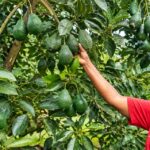
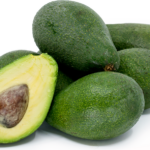
Hass avocado is the strongest long-term choice. The tree lives for decades and sells in local and export markets. Certified grafted seedlings bear fruit sooner than seedlings grown from seed. A mature tree gives 100 kg or more in a good year.
Plant Hass on deep, well-drained soil. Waterlogged soil causes root rot. Plant on a small mound if your boundary holds water. Feed the young tree with manure and phosphate at planting, then top-dress with nitrogen fertiliser every three months in the first two years.
Watch for fruit flies, thrips and fungal diseases such as anthracnose. Remove fallen fruit and dead branches. Ask your agrovet for approved products and follow the label. Pick mature fruit with clippers and leave a short stalk on each fruit. Hass ripens after you pick the fruit, so do not wait for the fruit to soften on the tree.
Tree Tomato
Tree tomato fruits in about 18 months. The tree stays small, so you plant the trees close along a boundary. The tree likes cool highland weather. The branches break in strong wind, so plant the trees where a hedge or building gives shelter. Frost damages young trees, so avoid low spots where cold air settles.
Keep the soil moist but not wet. Mulch around each tree. Watch for aphids and fruit flies. Buy clean seedlings from a registered nursery, because virus diseases pass from sick seedlings to your whole planting. Pick fruit when the skin shows full colour. Pick every one to two weeks. Replace the trees every few years as yields fall.
Purple Passion Fruit
Passion fruit pays fastest. You harvest within 6 to 9 months of planting. Train the vines along a wire fence or a simple trellis. Set posts about 2 m high and run two strands of wire along them. Space the plants 3 m apart.
The vines live only a few years, so plan to replant. Passion fruit suffers from wilt and virus diseases. Ask your nursery for grafted, disease-free seedlings. Collect ripe fruit from the ground each week, because ripe fruit falls from the vine. Prune the vines after each main harvest to keep new growth coming.
Plum
Plum suits the cooler, higher tea zones. Choose varieties recommended for your altitude. Many plum varieties set better fruit when you plant a second compatible variety nearby. Ask your nursery which two varieties work together.
The first harvest comes in 3 to 4 years. Plant plum on level, well-drained corners. Prune each year to keep the canopy open and to let light reach the fruit. Pick fruit when the skin colours fully and the flesh gives slightly under your thumb. Handle the fruit gently, because plums bruise easily.
Macadamia
Macadamia suits lower tea zones, such as parts of Embu, Kirinyaga and Meru. You wait 4 to 6 years for the first nuts. The tree then bears for many years. Plant macadamia only if your farm sits below about 1,700 m.
Buy grafted macadamia seedlings. Collect fallen nuts every week. Remove the green husk soon after collection and dry the nuts in the shell as your buyer instructs. Wet nuts spoil and lose value. Macadamia suits you if you have patience and space, because the tree rewards you slowly.
Cost and Return Comparison: Tea Bonuses Against Fruit Trees
The figures below are planning examples. Replace them with the seedling price, farm gate price and yield in your area.
First, the cost to establish 30 Hass avocado trees along one acre.
| Item | Cost per tree | Cost for 30 trees |
|---|---|---|
| Grafted seedling at Sh250 | Sh250 | Sh7,500 |
| Manure and phosphate fertiliser | Sh150 | Sh4,500 |
| Digging, planting and staking | Sh100 | Sh3,000 |
| Total | Sh500 | Sh15,000 |
Next, the income when the 30 trees mature. The example assumes 100 kg per tree, or 3,000 kg in total. At a farm gate price of Sh20 per kilo, you earn Sh60,000 a year. At Sh30 per kilo, you earn Sh90,000. At Sh40 per kilo, you earn Sh120,000.
Compare these figures with your tea bonuses. In the earlier example, the fall from Sh20 to Sh13 cost you Sh21,000 a year. Thirty mature Hass trees at Sh30 per kilo pay Sh90,000. This is more than four times your loss. The establishment cost of Sh15,000 returns in the first full harvest year.
Passion fruit shows a faster return. Suppose you plant 40 vines along your fence. Suppose each vine gives 8 kg a year and you sell at Sh60 per kilo. You earn 40 times 8 times 60, or Sh19,200 a year. You earn this within the first year after planting. These figures are assumptions, so check your local price before you plan.
Trees do not pay at once. Grafted Hass trees give small harvests in years 2 and 3. Yields rise each year until the trees reach full bearing. Passion fruit and tree tomato fill this gap because they fruit within 6 to 18 months. A mix of fast and slow trees gives you income across all the years.
Your Five-Year Plan
A plan keeps your spending small and your income steady. This plan suits a farm with one acre of tea and spare boundary land at 1,500 to 2,000 m altitude.
| Year | What you do | What you earn |
|---|---|---|
| Year 1 | Dig holes. Plant 20 to 30 Hass trees, 20 tree tomato trees and 40 passion fruit vines. Stake, mulch and water. | First passion fruit late in the year |
| Year 2 | Plant plum trees on a level corner. Replace failed seedlings. Prune and feed all trees. | Passion fruit income. First tree tomato fruit |
| Year 3 | Prune Hass for shape. Replant passion fruit if vines weaken. | Small Hass harvest. Steady tree tomato and passion fruit sales |
| Year 4 | Add more Hass trees along new boundary sections. Review costs and sales records. | Hass yields rise. First plum fruit |
| Year 5 | Replace old tree tomato trees. Plant macadamia if your altitude suits. | Hass income grows toward full bearing |
How to Plant Before the El Niño Short Rains
Forecasters have flagged an 81 percent chance of a strong El Niño, with above-average short rains from October into early 2027. Seedlings planted in the right way use this rain. Seedlings planted in the wrong place drown.
Dig and Fill Holes Early
Dig holes 60 cm wide, 60 cm long and 60 cm deep. Keep the topsoil and the subsoil in separate piles. Mix the topsoil with about 20 kg of well-rotted manure and 100 g of phosphate fertiliser. Fill the hole with this mix two to four weeks before planting.
Plant Into Steady Rain
Plant when the rains settle into a steady pattern. Do not plant during the heaviest downpours. Plant in the evening or on a cloudy day. Keep the graft union 10 cm above the soil. Firm the soil around the stem.
Protect Seedlings From Waterlogging
Plant on a mound about 20 cm high. Dig a shallow drainage trench on the uphill side of each row. The trench carries storm water away from the roots. Check the holes after each heavy rain.
Stake and Mulch
Tie each seedling to a stake. Wind and wet soil topple young trees. Spread 5 cm of mulch around the stem and keep the mulch 10 cm away from the bark. Weed the circle around each tree every month. Water the seedlings in dry spells.
Grow Beans or Vegetables Between Young Trees
Young Hass trees leave wide gaps for the first two years. Plant beans, kale or other short crops between the trees. Keep these crops at least 1 m from each stem. You earn from the crops while the trees grow. Do not plant tall crops such as maize between the trees, because maize shades the seedlings and competes for water.
Care for Your Trees in the First Two Years
Water
El Niño rains end, and a dry spell often follows. Water each seedling with 10 to 20 litres once a week when rain stops. Harvest roof water in tanks during the rains and use the stored water in the dry months. Mulch holds soil moisture and cuts your watering work.
Feed
Feed trees in small amounts every three months. Apply 50 g of calcium ammonium nitrate per tree in the first year and raise the amount each year. Spread the fertiliser in a ring 30 cm from the stem, not against the bark. Add manure once a year at the start of the rains. Follow the advice of your nursery or extension officer for your variety and soil.
Prune
Remove dead and crossing branches. Keep one strong central stem on Hass and plum. Prune after harvest, not during flowering. Cut passion fruit vines back after each main harvest. Use clean, sharp tools. Wash the tools between trees to stop disease spreading.
Watch for Pests and Disease
Walk through your trees once a week. Look for yellow leaves, wilting, spots on leaves and holes in fruit. Pull out and burn any sick passion fruit vine. Take a leaf or fruit sample to your agrovet or county office when you see an unfamiliar problem. Early action costs less than late action.
How to Sell Your Fruit
Sell in Local Markets
Tree tomato, passion fruit and plum sell fastest in local markets and to traders. Pick ripe fruit in the morning. Sort fruit by size and remove damaged pieces. Clean, graded fruit earns a higher price. Take a sample to your buyer and agree on a price before you pick a large lot.
Join a Farmer Group
A group sells larger volumes and negotiates better prices. A group also shares transport, which cuts your cost per kilo. Join a group in your area or form one with neighbours who plant the same trees. Choose one person to keep sales records and share the records with all members.
Sell Avocado to Exporters
Export buyers need traceable fruit and compliance with standards such as GlobalG.A.P. You meet these standards through an exporter or a large farmer group. Ask your county agriculture office which exporters buy in your area. Keep records of every spray and fertiliser you apply, because buyers ask for them.
Manage the Money From Your Tea and Your Trees
Open a separate account for tree income. Pay your tree costs from this account and add your fruit sales to this account. This shows you which trees earn money and which trees cost money.
Set aside a fixed amount from each monthly leaf payment. If you set aside Sh2,500 a month, you pay the full Sh500 cost of five trees each month. In six months you plant 30 trees. Spread the cost this way and you avoid a large payment at one time.
Record your bonus per kilo each year, your tree costs and your fruit sales. Compare the totals every season. When fruit income grows, reinvest part of the income in more trees or in tea care. When tea bonuses rise again, you hold two income streams instead of one.
Questions to Ask Your Nursery Before You Buy
A good seedling decides how well your tree performs for the next 20 years. Visit the nursery or ask for photos before you pay. Ask five questions.
First, ask whether the seedlings are certified and grafted. Grafted seedlings fruit earlier and carry the traits of the parent tree. Second, ask the age of the seedlings. Healthy avocado seedlings are usually 8 to 12 months old at sale. Third, ask which variety suits your altitude and which rootstock the nursery used. Fourth, ask how the nursery manages disease. Clean nurseries raise seedlings in sterile media off the ground. Fifth, ask for a written receipt with the variety, the number of seedlings and the date.
Check each seedling when you collect your order. Look for a straight stem, green leaves and a healthy graft union. Reject seedlings with yellow leaves, spots, wilting or roots circling the bag. Plant within a few days. Keep seedlings in light shade and water them until you plant.
Plan for the Dry Spell After the El Niño Rains
Heavy rains often end in a dry spell. Young trees need water in this period. Plan before the rains stop. Dig a small basin around each tree to hold water. Build or repair roof water tanks and fill them during the rains. Add mulch so the soil stays moist. Water young trees every week until they establish. Trees watered in their first dry season survive longer and fruit sooner.
Tea bushes also feel the change. Leaf yield drops in the dry months, and your factory pays less in the monthly payment. A second income from fruit trees fills part of this gap. This is one more reason to plant now.
Mistakes to Avoid
| Mistake | Result | Fix |
|---|---|---|
| Planting inside tea rows | Shade and root competition lower your leaf yield | Keep trees 3 m from tea bushes |
| Planting in waterlogged hollows | Root rot kills avocado seedlings | Choose well-drained ground and plant on mounds |
| Buying uncertified seedlings | Late fruiting and mixed fruit quality | Buy certified grafted seedlings from a registered nursery |
| Uprooting tea first | Years without leaf income | Keep your tea and add trees |
| Planting too many trees at once | Cash and labour run short | Start with 20 to 30 trees |
| Skipping staking and pruning | Wind damage and a crowded canopy | Stake in year one and prune every year |
| Placing lime near tea | Lime raises soil pH and weakens tea bushes | Place lime only in the planting hole |
Buy Certified Seedlings From Farmers Trend Limited
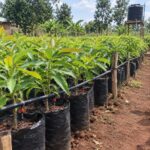
Farmers Trend Limited sells fruit tree seedlings from nurseries in Murang’a and Nairobi. Farmers Trend Limited delivers countrywide. Ask about Hass avocado, tree tomato, passion fruit and plum seedlings for your altitude.
Tell the team your county, your altitude and the space you have. The team recommends trees which suit your farm. Order early so your seedlings arrive before the rains settle.
Call or WhatsApp 0724 559 286 or 0790 509 684. Email info@farmerstrend.co.ke. Visit www.farmerstrend.co.ke.
Frequently Asked Questions
Should you uproot your tea?
No. Tea takes three to four years to reach full plucking, and you lose this income while the new bushes grow. Keep the tea and add fruit trees on land you do not use for tea.
Which fruit tree pays fastest?
Purple passion fruit pays fastest. You harvest within 6 to 9 months. Tree tomato follows at about 18 months. Hass avocado pays more over the long term.
Do fruit trees harm your tea?
Trees harm tea when you plant them too close. Keep each tree 3 m from the nearest tea bush and prune the canopy to keep shade off the rows.
How many trees should you plant first?
Plant 20 to 30 trees in your first season. This number keeps your cost near Sh10,000 to Sh15,000 and gives you time to learn. Add more trees as your income grows.
Will tea bonuses rise again?
Nobody knows. Bonuses depend on tea prices, volumes, costs and policy. A second income from fruit trees protects your farm whichever way tea bonuses move.
When should you plant?
Plant when the short rains settle into a steady pattern. Dig and fill your holes now so you are ready.
Where do you find your altitude?
Ask your county agriculture officer. You also find your altitude with a phone map application or a GPS reading taken on your farm.
Plant Your Second Income Before the Short Rains
Tea bonuses fell from Sh20 to Sh13 a kilo for Bomet farmers. Lower prices, lower volumes, a new levy and heavy factory borrowing all played a part. You do not control these pressures. You control your land.
Keep your tea. Tea pays every month. Add 20 to 30 fruit trees on your boundaries and spare land. Choose trees which suit your altitude. Mix fast trees such as passion fruit with long-term trees such as Hass avocado. Keep trees 3 m from your tea. Dig your holes now, plant into steady rain and protect your seedlings from waterlogging.
Track your numbers each season. Record your bonus per kilo, your tree costs and your fruit sales. Add more trees as your income grows. Contact Farmers Trend Limited on 0724 559 286 or 0790 509 684 to order your seedlings.
https://farmerstrend.co.ke/trending/tea-bonuses-fruit-trees-second-income/https://farmerstrend.co.ke/wp-content/uploads/2026/10/WhatsApp-Image-2026-10-12-at-13.36.17-1024x682.jpeghttps://farmerstrend.co.ke/wp-content/uploads/2026/10/WhatsApp-Image-2026-10-12-at-13.36.17-150x150.jpeg# TrendingAvocado FarmingCropsFruitsIn cropsIn FruitsMacadamia FarmingPassion fruit farmingPlums farmingTea FarmingTree tomato farmingBomet tea farmers,boundary planting,El Niño planting,extra income for farmers,Farmers Trend Limited,fruit farming Kenya,grafted hass avocado seedlings,green leaf price,KTDA bonus,KTDA second payment,macadamia farming Kenya,Mombasa tea auction,Mt Kenya farmers,plum farming Kenya,purple passion fruit,Rift Valley farmers,short rains 2026,tea farmers diversification,tea farming Kenya,tea levy KenyaTea bonuses fell sharply in the latest payout round. Bomet farmers averaged Sh13 per kilo of green leaf against Sh20 the year before, according to the Kenya News Agency. Some farmers threatened to abandon tea or uproot their bushes.Farmers Trend Limited advises you to keep your tea. A tea...FarmersTrendjohn doefarmerstrend@gmail.comAdministratorFarmers Trend Ltd.









Leave a Reply