Kenya’s Avocado Expansion: One Million Trees Campaign and 42,000 Seedlings for Migori Farmers as Kenya Eyes China, Japan Markets
Kenya’s avocado sector is experiencing an unprecedented transformation in 2026. The government has launched aggressive expansion campaigns to position Kenya as a global avocado powerhouse. The Principal Secretary for Forestry, Gitonga Mugambi, launched a campaign in Mitunguu/Nkuene Sub-County in Meru County to encourage residents to plant one million avocado trees to enhance their economic well-being . This expansion is driven by access to lucrative markets in China and Japan secured through trade engagements spearheaded by President William Ruto’s government . Kenya’s avocado expansion is creating new opportunities for farmers across the country.
The One Million Avocado Tree Campaign in Meru
The Launch
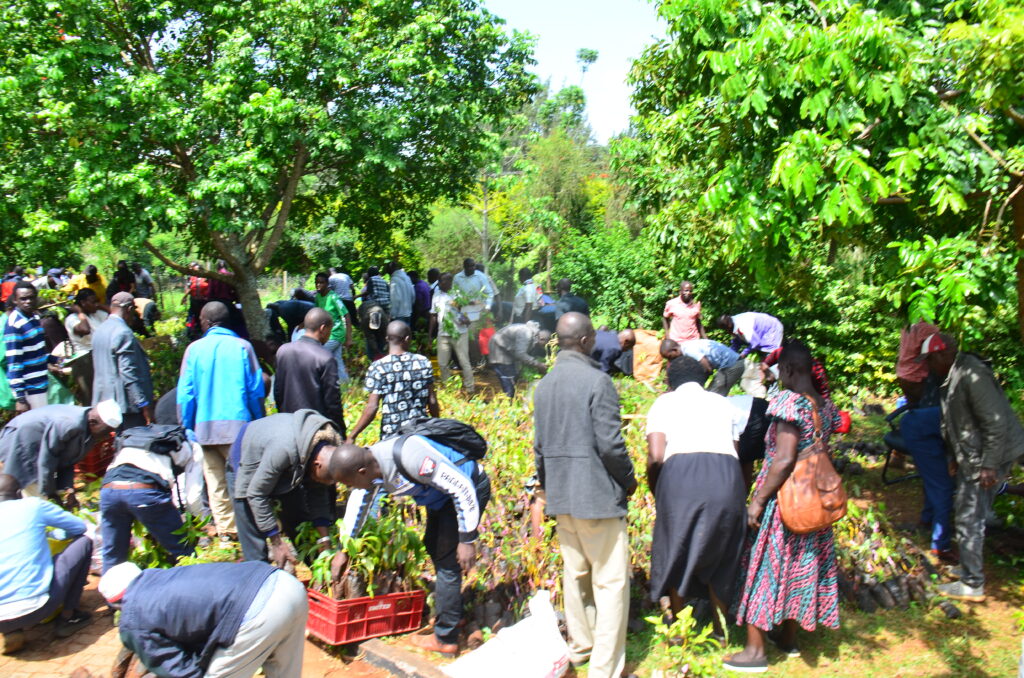
The Principal Secretary for Forestry, Gitonga Mugambi, launched a campaign in Mitunguu/Nkuene Sub-County in Meru County to encourage residents to plant one million avocado trees to enhance their economic well-being . He called on farmers in the region and across the country to embrace avocado farming, describing the crop as a major avenue for wealth creation due to the growing demand in international markets . The campaign is part of broader government efforts to promote climate-smart agriculture, increase tree cover, and enhance rural economic empowerment through sustainable farming practices .
The Market Opportunity
Speaking during the seedlings distribution exercise, the PS said Kenya had secured access to lucrative avocado markets in China and Japan through trade engagements spearheaded by President William Ruto’s government and locals should have a share in this . “We want avocado farming to create more wealth for our farmers. When President Ruto and I visited China and Japan, we secured access to huge markets for our produce. We now need to increase production to take advantage of those opportunities,” said Mugambi .
“This is a game-changer for our farmers. The Chinese market is among the world’s largest consumer markets, and Kenyan avocados now enter it without tariffs. That gives us a competitive edge against suppliers from Latin America and other regions,” Mugambi said .
The Seedlings Distribution
True to his word, the PS kick-started the initiative by distributing 3,000 avocado seedlings to farmers in Uruku and Ukuu locations . He said other areas would be covered soon. He noted that increasing avocado production would enable farmers to meet market demand, attract more buyers, and support the establishment of value-added industries in the region .
“Many buyers are forced to leave because farmers harvest small quantities that cannot even fill a single pickup. Our task is to plant more trees, increase production, and eventually establish more industries here to create employment opportunities,” he said . He exuded confidence that farmers in the area could surpass the one-million-tree target, thereby strengthening their economic capacity .
Green Wealth Drive
The government has intensified efforts to promote commercial tree farming as a key pillar of rural wealth creation . The PS emphasized that his office would take responsibility for sourcing high-quality avocado seedlings, while farmers would focus on planting and nurturing the trees to maturity . The PS challenged the community to plant more than one million avocado trees as part of efforts to boost production and household earnings . He expressed confidence that the region could plant over 10 million avocado trees in the coming years, creating a foundation for processing industries, jobs, and expanded income opportunities .
42,000 Seedlings for Migori Farmers
The Distribution
The National Government, in collaboration with the Migori County Government, has distributed 42,000 grafted Hass avocado seedlings to farmers across Migori county . This move aims at boosting household incomes, expanding export-oriented agriculture and supporting the government’s 15 billion trees growing initiative .
The Investment
Speaking during the distribution held at the Migori County Commissioner’s residence, County Commissioner, Kisilu Mutua, said the county had received 42,000 avocado seedlings and 100,000 coffee seedlings from the Ministry of Agriculture, with additional macadamia seedlings expected in the near future . He added that each seedling costs approximately Sh444, translating to nearly Sh20 million invested by the government in the project .
Farmer Training
Mutua noted that each farmer would receive ten grafted avocado seedlings and that farmers had already undergone training by crop officers on proper planting, management and access to extension services . “Every farmer has been taught how to plant these seedlings and how to reach extension officers who can assist them in managing the crop,” said Mutua .
Income Potential
The administrator assured farmers that if properly managed, each avocado tree could generate up to Sh10,000 annually after five years, significantly improving household livelihoods .
The Market Opportunity
Migori County Executive Committee (CEC) Member for Agriculture, Livestock, Fisheries and Blue Economy, Mr. Lucas Mosenda, said avocado farming had become one of Kenya’s major export opportunities and the county was keen on ensuring local farmers benefit from the growing international demand . “We are looking at crop diversification so that farmers from Migori can tap into export opportunities and improve their incomes,” said Mosenda . He observed that Migori currently has about 300 acres under avocado farming, with an estimated 600 to 700 farmers actively practicing the crop across the county .
The Challenge
The official regretted that most farmers still grow traditional avocado varieties which fetch lower returns and have limited export value . “Unfortunately, most farmers have been growing the local varieties which are important but have low market value internationally. Hass avocado targets the export market and offers better returns to farmers,” he explained . He noted that the county government plans to substantially increase acreage under avocado farming and later focus on value addition to further enhance farmers’ earnings .
Farmer Voices
Mr. Samson Ochieng Migeni, a farmer from God Jope Ward in Suna East Sub County, welcomed the initiative, saying avocado farming had transformed livelihoods in the area . He stated that Suna East currently produces over 213 tonnes of avocados weekly, most of which are transported to Nairobi for oil processing, while grafted varieties are destined for export markets .
Peter Chacha, Chairman of Migori County Farmers, lauded both the national and county governments for supporting farmers through the seedling distribution program . Chacha noted that avocado farming had helped many farmers educate their children, improve household incomes and reduce poverty levels in the county .
Kenya’s Avocado Production and Export Growth
Record Production
Kenya’s avocado production is forecast to expand by 4.8% to approximately 727,000 metric tonnes in 2026, up from a record 694,000 metric tonnes in 2025 . The surge is due to the continued expansion of area harvested and improved productivity . Production rose by 34% from 632,953 tonnes in 2023 to 848,122 tonnes in 2024, driven by expansion into new regions and sustained international demand .
Area Under Cultivation
The area under avocado cultivation is projected to increase by 5.6% to about 37,600 hectares, as more farmers switch from traditional crops such as maize and tea to avocados, which offer higher returns . The expansion has been supported by efforts from both national and county governments to improve avocado farming, which includes initiatives for subsidizing seedlings and fertilizers and recognizing avocados as a priority export crop . Since 2020, the area under avocado cultivation in Kenya has expanded at a compound annual growth rate of about 6% .
Export Recovery
Exports are forecasted to recover to 130,000 tons in 2026, up 7.4% from 2025, following disruptions caused by stricter export controls and maritime transport issues . In 2025, exports decreased to 121 TMT due to disruptions in the Red Sea and export controls put in place by the Kenyan Agriculture and Food Authority (AFA) . The sector faced disruption in 2025 when the government temporarily suspended sea exports to curb the shipment of immature fruit that had raised quality concerns among international buyers .
Export Destinations
The European Union remains Kenya’s largest market, followed by the Middle East and China, where exports have steadily increased since market access was granted in 2022 . Kenya, Africa’s largest avocado exporter, ships more than 60 per cent of its produce to Europe and the Middle East, with sea transport accounting for the bulk of exports due to its cost efficiency for large volumes .
The Netherlands receives 24% of exports as a European redistribution hub, followed by the UAE at 19%, with Spain, France, Türkiye, and Germany taking the balance . China is rapidly becoming an increasingly important market .
Smallholder Dominance
Approximately 80% of Kenya’s avocado farmers are smallholder producers . This fragmented structure has a direct social impact on Kenya’s rural areas. Nearly 50% of the total value generated by exports returns to rural communities, meaning that of the KES 25 billion generated in 2025, between KES 12.5 billion and KES 13 billion flowed directly to farming families . This dynamic makes avocado production a primary source of employment and income, stimulating local economies and strengthening food security in producing areas .
The China and Japan Market Opportunity
China Zero-Tariff Policy
China’s zero-tariff policy, effective May 1, 2026, has been the most significant market-access development for Kenyan avocado exporters. The policy provides duty-free access for 98.2% of Kenya’s agricultural exports, eliminating the 7-20% tariffs that previously applied . Kenyan avocados were among the first African products to enter the Chinese market tariff-free following Beijing’s implementation of the sweeping zero-tariff policy .
The first consignment under the new policy arrived at Guangzhou Port on May 1, 2026, with 6.9 tonnes of fresh Kenyan avocados entering China, followed by 320 tonnes of crude avocado oil at Dalian Port on 9 May 2026 . The shipments form part of the inaugural exports flagged off on March 24 at the Standard Gauge Railway terminus in Nairobi by Chinese Vice President Han Zheng and Kenya’s Deputy President Kithure Kindiki .
Kenya is among the first African countries to benefit from the zero-tariff arrangement, which is expected to boost access for Kenyan products into the vast Chinese market . Chinese Ambassador to Kenya Guo Haiyan noted that the initiative is expected to deepen trade cooperation between the two countries while increasing earnings for Kenyan farmers and exporters .
Export Market Potential
The export potential to China is significant. China is the second-largest avocado importer in Asia, and its demand for avocados continues to grow. The tariff elimination, combined with rising consumer demand, could see China take in more than 40% of Kenya’s avocado produce . With tariffs now removed, Kenyan avocados could gain a stronger pricing advantage, potentially increasing demand among Chinese consumers .
Japan Market Access
Kenya has also secured access to the Japanese market for avocados through trade engagements spearheaded by President William Ruto’s government . The Japanese market offers significant opportunities for Kenyan avocado farmers due to its high demand for premium quality produce .
Export Challenges
While tariffs may have been removed, exporters must still overcome challenges related to shipping costs, product certification and supply consistency . Kenya’s avocado sector still faces challenges such as limited cold chain infrastructure, increased freight costs due to longer sea routes, and regulatory measures aimed at maintaining product quality .
The 2026 Export Season: Stricter Rules and Enforcement
Harvesting Season Opens
Kenya officially opened its avocado export season for the 2025/2026 fiscal year on April 2, 2026 . The decision followed field surveys by the Agriculture and Food Authority (AFA) that confirmed improved fruit maturity across major production zones .
Key Regulations
The AFA has implemented stricter quality controls and traceability measures to protect Kenya’s reputation in premium markets and prevent the export of immature fruit. These regulations are currently active and include mandatory packhouse inspections for all fresh avocados for export, effective from April 7, 2026 . Exporters are required to apply for inspection at least three days before their shipment.
Exporters had to submit lists of registered Horticultural Produce Marketing Agents (HPMAs) or suppliers by March 30, 2026, to ensure traceability from farm to export . Fruit must be transported in crates. Using open trucks, pickups, or Probox vehicles is prohibited and risks license revocation .
At the Jomo Kenyatta International Airport (JKIA) cargo terminal, inspectors are verifying oil content and dry matter (20-24% required). Harvesting or processing immature fruit is prohibited. Exporters or processors caught doing so face immediate license revocation .
Maturity Standards
The Horticultural Crops Directorate (HCD) has reviewed the minimum avocado dry matter percentage (DM%) post-harvest to 24 per cent for Hass and Fuerte avocados meant for export. This revision was made “in lieu of the numerous complaints received on the quality of avocados imported to the European Union and the United Arab Emirates.” Fruit harvested with low oil content fails to ripen to the required standards, leading to rejection in export markets .
Consequences of Non-Compliance
Kenya exported approximately 110,000 metric tons of avocados in the 2024-2025 period, valued at over KES 25 billion (US$190 million). Rejection rates for immature fruit in premium markets can reach 30 per cent, resulting in losses exceeding KES 7.5 billion (US$57 million) annually. Licence revocation for non-compliant exporters has increased by 40 per cent year-on-year .
Avocado Oil Processing: A Growing Sector
Processing Growth
Avocado oil processing increased significantly between 2024 and 2025 from 3,326 metric tonnes to 10,188 metric tonnes, driven by rising demand in high-income markets . This represents a 206% increase in just one year and indicates strong and growing demand for value-added products .
The Processing Channel
The rapid expansion of domestic avocado oil processing functions as an essential economic shock absorber. By absorbing fruit that fails export-grade specifications or cannot withstand extended transit, the processing sector stabilises grower revenues against volatile fresh-market logistics . Oil processors are concentrated around Nairobi, Thika, and Murang’a, converting exporter-rejected fruit into oils .
The Impact of Red Sea Disruptions
Logistical disruptions in the Red Sea have dampened export growth despite record production . The mandatory diversion around the Cape of Good Hope threatens the viability of perishable supply chains by extending transit beyond standard physiological thresholds for fresh avocados . The longer sea routes have increased freight costs, creating headwinds for Kenyan avocado exporters . The processing channel is becoming a key outlet for lower-grade fruit, helping stabilize farm revenues even as fresh exports face volatility .
The Bigger Picture: Why This Matters
A Decade of Transformation
Over the past decade, Kenya has evolved from an emerging player into one of the origins that has gained prominence most rapidly in the international avocado market . The sector has shown steady and sustained growth: while the country recorded avocado exports of approximately 31,000 tons in 2015, by 2025 that figure had exceeded 128,000 tons . This progress reflects a consistent annual volume growth rate of approximately 15% .
National Strategy
Kenya’s growth is not solely the result of an increase in cultivated area or the dynamism of global demand. Behind this evolution lies a national strategy combining public policies, infrastructure development, support for smallholder farmers, and a strong emphasis on quality as its main competitive advantage .
Quality as a Strategic Demand Driver
The origin faced serious challenges in international markets years ago due to the export of immature or defective fruit, but the strict regulations implemented by the AFA are beginning to improve the origin’s reputation . The main lesson learned as a sector is that better quality directly generates greater demand in the international market .
Government Support
To support avocado production, the government promotes strategic incentives through the National Value Chain Development Program, funding the free distribution of certified plants and seedlings in high-potential areas . At the same time, with the aim of reducing post-harvest losses, the government currently operates eight public packhouses equipped with cold-chain facilities and is constructing a ninth center, with plans to add new facilities each year through public-private partnerships .
Ambition
Kenya aims to become the world’s third largest exporter of avocados . With improved regulation, expanding markets and rising farmer interest, Kenya’s avocado sector is poised for sustained growth, reinforcing its position as a key player in the global horticulture trade .
Contact Farmers Trend for Avocado Seedlings
Grafted Hass Avocado Seedlings – KSh 250 each
Grafted Fuerte Avocado Seedlings:
2-3 Months — KSh 150
8-9 Months — KSh 250
Contact Us:
Call/WhatsApp: 0724 559 286 | 0790 509 684
Website: www.farmerstrend.co.ke
Email: info@farmerstrend.co.ke
We Offer:
Countrywide Delivery
Export Arrangements
Free Agronomy Support upon purchase







Leave a Reply