Fresh Avocado vs Avocado Oil: Which Offers Better Returns?
The decision between selling fresh avocados and processing them into oil is a critical one for Kenyan farmers and agribusinesses. To make the right choice, you must understand the key question: fresh avocado vs avocado oil returns. Both paths offer significant opportunities, but they come with different risks, rewards, and requirements.
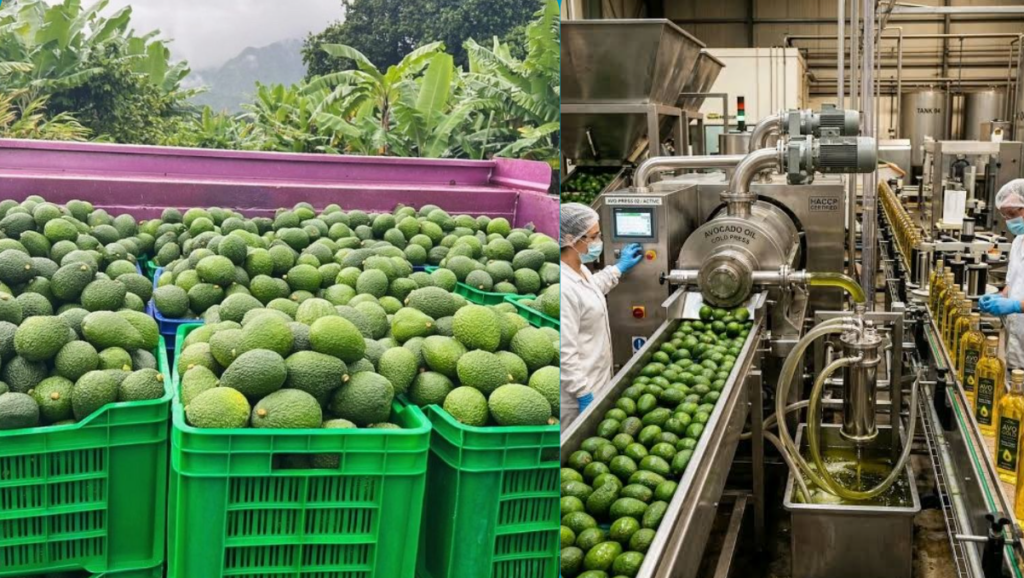
The avocado oil processing sector in Kenya has grown dramatically, rising from 3,326 metric tonnes in 2024 to 10,188 metric tonnes in 2025, driven by rising demand in high-income markets . The number of avocado oil processors in Kenya has risen from just three to over 70 in the last three years.
Kenya is now the largest avocado producer in Africa, with output hitting a record 694,000 metric tonnes in 2025 . Despite this production boom, fresh fruit exports have faced challenges due to the Red Sea crisis and shipping disruptions. This has created a golden opportunity for value addition through avocado oil processing . This guide will provide a data-driven comparison of fresh avocado vs avocado oil returns to help you decide.
The Numbers: Fresh Avocado Exports
Fresh avocado exports remain Kenya’s primary path to international markets. Europe is the primary destination, with demand from the Middle East and Asia growing steadily. Kenya’s projected export recovery suggests that current bottlenecks are temporary and that both shipping disruptions and regulatory adjustments will ease .
Export Volume and Value:
In 2025, Kenya exported approximately 121,000 metric tonnes of fresh avocados. The market is projected to expand by 7.4% to 130,000 metric tonnes in 2026 . The contradiction between record production of 694,000 tonnes and declining exports underscores the importance of market diversification .
Farm-Gate Prices:
The farm-gate price of avocados has been a point of contention for farmers. For years, growers have sold avocados to local brokers for as little as KSh 5–10 per fruit, equivalent to just US$0.04–0.08, while the same fruit fetches between KSh 300 and KSh 500 (US$2.36–3.93) in export markets . This sharp disparity has squeezed farmers’ margins despite their bearing the full cost of planting, maintaining, and harvesting orchards .
At the farm gate, an avocado averages KSh 6. At a collection and grading facility, it reaches roughly KSh 16. In UK or EU wholesale channels, medium-grade Hass avocados trade between $1.20–$2.00 per fruit depending on size and season — retail equivalents often crossing KSh 150–250 . The fruit did not change. The layer of value did.
Hass vs. Fuerte Pricing:
Kenya’s two leading avocado varieties, Hass and Fuerte, have significantly different farm-gate prices. For Hass, this usually ranges between Sh10 and Sh17 per fruit. Fuerte, on the other hand, fetches a much lower price, often around Sh3 per fruit . By the time the fruit reaches market stalls or supermarkets, the cost to the consumer has risen sharply.
The difference between what the farmer earns and what the buyer pays is driven by sorting, transportation, packaging, storage and retail markups. Even at higher retail prices, the farmer takes home just a small portion of the final cost, highlighting the wide gap between farm and fork .
Export Destinations:
The Netherlands remains the top destination, taking 24% of Kenya’s avocado exports in 2025 and serving as a redistribution hub into the wider European Union. The United Arab Emirates ranks second with a 19% share, highlighting the Middle East’s growing role as a premium market.
The contradiction between record production and declining exports underscores the importance of market diversification . While European markets remain primary destinations, Kenyan exporters are exploring opportunities in Asia and the Middle East, where demand for both fresh avocados and avocado oil continues to rise .
Post-Harvest Challenges:
Post-harvest losses remain a significant challenge for fresh avocado exports. In Laikipia County, farmers are estimated to lose KES 3 billion (about US$19.7 million) in avocados annually due to limited cold-chain capacity . This is a massive loss of potential income and a driver for value addition through processing.
Export Regulations:
Kenya enforces strict avocado export rules. The Agriculture and Food Authority (AFA) has implemented stricter quality enforcement, including packhouse inspections and crate requirements, which has reduced the volume of fruit leaving the country . The controls focus on dry matter content, with avocados required to meet 20% to 24%, depending on variety, before export clearance.
The Numbers: Avocado Oil Processing
Avocado oil processing is the fastest-growing segment of Kenya’s avocado industry. The sector has grown dramatically, rising from 3,326 metric tonnes in 2024 to 10,188 metric tonnes in 2025 . This represents a 206% increase in just one year. Driven by rising demand in high-income markets, this growth shows no signs of slowing . For investors, this outlook signals that Kenya’s avocado sector remains on a strong growth trajectory, with both fresh fruit and processed goods offering viable entry points .
Processing Volume:
Kenya’s avocado oil processors now produce over 10,000 metric tonnes annually. The number of avocado oil processors in Kenya has risen from just three to over 70 in the last three years . Investment in processing infrastructure, including extraction equipment, refining capacity, and bottling lines, could capture value from Kenya’s record production while bypassing fresh fruit export bottlenecks .
Sanmark Limited: A Case Study
A Chinese-owned avocado oil processing company located in the Athi River Export Processing Zone, Sanmark Limited, has state-of-the-art machinery for processing and testing avocado oil to ensure it attains the required standards for export to China and other overseas markets such as Europe and the United States . The facility aims to collect up to 100 tons of avocados weekly and bridge the interaction gap between the processing factory and farmers .
Sanmark Industrial’s state-of-the-art avocado oil production facility officially commenced operations in August 2025. This modern oil processing hub in East Africa targets an annual capacity of 20,000 tons of premium avocado oil. The Phase I development established a robust 30 metric ton daily processing capability, built to stringent GMP standards . Phase II development (through 2027) is now underway, designed to scale daily processing capacity to 80 metric tons, establish integrated oil refining capabilities, and install fully automated bottling lines for finished products .
Virginia Mbatha, the chief executive officer of Virginia Orchards, an aggregator, said that her company has been supplying Sanmark with different avocado varieties for processing into oil. With nearly 10,000 farmers in her network, Mbatha said they are getting higher price margins thanks to the ready market provided by the Chinese avocado oil processor . Jeff Ngigi Mburu, a young farmer in Murang’a County, told Xinhua, “We have been having some challenges in the past, but the avocado oil processors have come to our rescue, providing us with a steady market for our fruits and better prices” .
Oil Prices:
Avocado oil can cost anywhere from Sh200 to Sh400 a liter, depending on the raw materials used and method of extraction . Virgin oil is more expensive as it is costlier to make. Depending on the raw materials used, and method of extraction it can cost anywhere from Sh200 to Sh400 a liter. Virgin oil is more expensive as it’s costlier to make . In international markets, avocado oil wholesales at premium prices, with retail multiples significantly higher .
Extraction Ratio:
On average, four kilos of avocado yield one liter of oil . However, this hinges on the raw material. Avocados growing in areas with abundant rains such as Kisii and Murang’a have more moisture content and will require about three kilograms, while those cultivated in more arid regions such as Machakos or Makueni may require seven kilograms to yield one litre of oil .
The Equipment:
The Kenya Agricultural and Livestock Research Organisation (KALRO) has developed an electric oil extractor. With this machine, farmers can press 15 to 20 liters an hour depending on the quality and source of raw material as well as the expertise of the machine operator . The machine runs on a single-phase two-horsepower motor. It is also fitted with a spiral auger mechanism that ensures continuous feeding .
The avocado is first cut and fed into a hopper. It is then picked by an auger and pulverised in a compression chamber. From there the oil is released and the cake remains extruded . The waste can be used as biomass for biogas, making soaps, cosmetics, window pane putty, and many other products .
The electrical oil extractor is now priced at Sh75,000 but its price shifts depending on the cost of materials such as the stainless material, gearbox, and motor . This represents a clear entry point for small to medium-scale processors.
Fresh Avocado vs Avocado Oil: A Direct Comparison of Returns
| Factor | Fresh Avocado | Avocado Oil |
|---|---|---|
| Investment Required | Lower (trees, orchard management, certification) | Higher (processing equipment, facilities, power) |
| Time to Return | 2-3 years (tree maturity) | Immediate (processing can be done year-round) |
| Perishability | High (days of shelf life) | Low (months to years) |
| Shipping Constraints | High (cold chain, speed required) | Low (can be shipped via standard logistics) |
| Market Access | Established (EU, Middle East, Asia) | Growing (cosmetics, pharmaceuticals, gourmet) |
| Price Volatility | High (seasonal fluctuations) | Lower (stable premium market) |
| Value Per Kilogram | $1.20-$2.00 per fruit wholesale | Sh200-Sh400 per liter retail |
| Waste Utilization | Limited (rejects are discarded) | High (lower grade fruit can be processed) |
This table provides a direct comparison of the key factors that influence fresh avocado vs avocado oil returns, including investment, perishability, and value.
The Case for Fresh Avocado Exports
Fresh avocado exports remain a viable and profitable path. Here are the key advantages.
Lower Barrier to Entry:
You do not need expensive processing equipment. You need trees, good management, and access to a packhouse and exporter. This makes fresh export accessible to smallholder farmers.
Established Market:
The global market for fresh avocados is well understood. The Netherlands remains the top destination, taking 24% of Kenya’s avocado exports in 2025 . The market is projected to recover and grow. The USDA projects exports will increase 7.4% to 130,000 metric tonnes in 2026 .
Strong Demand in New Markets:
The UAE ranks second overall with a 19% share of Kenyan avocado exports, highlighting the Middle East’s growing role as a premium market . Kenyan exporters are also exploring opportunities in Asia .
Market Growth:
Kenya’s production is forecast to expand by 4.8% to approximately 727,000 metric tonnes in 2026, with exports increasing by 7.4% to 130,000 metric tonnes . This signals that the sector remains on a strong growth trajectory .
Collective Action:
In response to the challenges of low farm-gate prices, growers are organizing under the Ashindi Kiambu Community Association, a community-driven platform designed to strengthen coordination, improve bargaining power, and foster greater transparency in the avocado value chain .
The association is laying the groundwork to form a corporate society that will consolidate avocado sales, minimize the influence of intermediaries, and help stabilize producer prices . As part of a long-term strategy, the group has launched a large-scale seedling-planting campaign aimed at increasing production volumes and preparing the region for potential agro-processing investment.
The Case for Avocado Oil Processing
Avocado oil processing offers significant advantages for farmers and investors willing to make the investment.
Premium Returns:
Avocado oil can cost anywhere from Sh200 to Sh400 a liter, depending on the raw materials used and method of extraction . Virgin oil is more expensive as it is costlier to make . Oil can be sold to cosmetics, pharmaceuticals, and gourmet cooking markets at higher margins .
Reduced Perishability:
Unlike fresh avocados, processed oil has a longer shelf life, minimizing losses from delayed shipments . This is a critical advantage during shipping disruptions .
Diversified Markets:
Processed oil opens access to industries like cosmetics, pharmaceuticals, and gourmet cooking . This diversifies your customer base.
Sustainability:
Processing supports waste reduction by utilizing lower-grade avocados that may not meet export standards . The oil processing channel is becoming a key outlet for lower-grade fruit, helping stabilize farm revenues even as fresh exports face volatility.
The Sector’s Growth:
The sector grew from 3,326 metric tonnes in 2024 to 10,188 metric tonnes in 2025 . This indicates strong and growing demand. For food industry stakeholders across Africa and the Gulf, Kenya’s expanding avocado oil industry offers a reliable supply source for a high-value ingredient used in cooking, cosmetics, and nutritional products .
Solar-Powered Processing:
Kenya is advancing sustainable processing solutions. A solar-powered avocado processing facility planned for Rumuruti, Kenya, has secured full financing. The project, developed by AAAS Energy, raised US$174,000 from 97 investors through the crowdfunding platform Bettervest . The plant will operate on a 200 kWp solar system that is expected to save around 256 tons of CO₂ each year.
The processing hub will include cooling and storage units, sorting and packaging lines, and an avocado-oil extraction plant . The facility is expected to initially support around 400 households and potentially benefit up to 64,000 people over time. Estimates indicate the project could generate as many as 6,400 direct and indirect jobs .
Farmer Empowerment:
Japhet Kabesa in Vihiga County has organized a group of 300 farmers with over 2,000 trees to set up an avocado cooking oil business. “For years we’ve been lamenting about a lack of market for our fruits, the bulk of which rot on our farms while we continue paying ever-rising prices for cooking oil,” he said .
The China Zero-Tariff Advantage:
China’s zero-tariff policy, which was implemented on May 1, 2026, promises better times for all players in the avocado value chain, including farmers, aggregators, processors, and exporters . Mohamed Khan, the operations manager at Sanmark Ltd., noted, “We are already enjoying the zero tariff. It encourages Chinese investors to come in droves and set up ICT centers for training local farmers” . “Before the zero tariff, we had limited resources in terms of funding that we could give to farmers, but with that tariff gone, there is extra funding left for the investor, which can then be passed on to the farmer. It empowers the farmer,” he added .
The New War for Fruit: Exporters vs. Processors
There is currently a fight for fruit between the two sectors. Processors are offering prices higher than exporters can afford. The farm-gate price of avocados rose to around Sh60 a kg in 2025, from Sh32 a kg a year earlier .
Why Processors Pay More:
Oil processors require far greater quantities of fruit than exporters. A single processor typically needs between 10,000 and 15,000 metric tonnes of avocados per year, nearly three times the demand of a fresh exporter. This demand has led to a scramble for supply, driving up prices.
The Impact on Exporters:
The rising farm-gate price squeezes exporters’ margins. Some exporters have been forced to reduce purchases, leading to a decline in fresh fruit exports despite record production .
The Impact on Processors:
The shortage has also encouraged premature harvesting, which has reduced oil extraction yields. National yields now average around 4.5%, where with proper harvesting, they reach about 8% . Premature harvesting has reduced oil extraction yields by an average of 25% per year. Imara Avocado Factory highlighted this challenge, noting that “harvesting fruit before maturity affects yield, oil quality, and Kenya’s image in global markets” .
Quality Challenges:
Processors report that sourcing avocados is extremely challenging. Over the past 3-4 years, increased competition for fresh avocados, both from other oil producers and fresh fruit exporters, has caused serious challenges in avocado pricing, availability, and quality. If a farmer is well trained on maturity and harvesting, the yield of avocado oil can almost double, from the average 4.5% to 8%.
Which Offers Better Returns?
The answer depends on your situation. Here is a breakdown.
If You Are a Smallholder Farmer:
Fresh avocado exports are likely your best path. The barrier to entry is lower, and you can start earning income within 2-3 years. You do not need to invest in expensive processing equipment. Your focus should be on producing high-quality fruit for the export market.
The projected export recovery suggests that current bottlenecks are temporary and that both shipping disruptions and regulatory adjustments will ease . The Hass variety’s post-harvest resilience is central to maintaining quality under extended transit times. Joining a farmer association like the Ashindi Kiambu Community Association can help you access better prices and market access .
If You Are a Farmer with a Large Orchard:
You may benefit from a hybrid approach. Sell your premium-grade fruit for the fresh export market and process your lower-grade or excess fruit into oil. This maximizes your income from every fruit. You could also consider partnering with a processor or forming a cooperative to build a shared processing facility. A KALRO-engineered electric oil extractor is priced at Sh75,000 and can press 15 to 20 liters of oil per hour, offering a clear entry point for small to medium-scale processors .
If You Are an Investor or Entrepreneur:
Avocado oil processing offers the highest returns for those willing to make the investment. The sector is growing rapidly, and demand is strong. Investment in processing infrastructure, including extraction equipment, refining capacity, and bottling lines, could capture value from Kenya’s record production while bypassing fresh fruit export bottlenecks . As processing capacity grows and logistics disruptions ease, Kenya is positioned to strengthen its status as a global avocado powerhouse .
If You Want to Diversify:
Processing offers a way to diversify your revenue streams. You are not dependent on a single market or export channel. Avocado oil opens access to industries like cosmetics, pharmaceuticals, and gourmet cooking, which offer more stable, higher margins . Experts project that the country could double its avocado value-addition revenue by 2030 if current investments continue .
Frequently Asked Questions
How much does avocado oil processing equipment cost?
A KALRO-engineered electric oil extractor is priced at Sh75,000 . More sophisticated equipment costs more. The cost depends on your desired capacity and output.
How much oil can I get from one kilogram of avocados?
On average, four kilos of avocado yield one liter of oil . However, this hinges on the raw material. Avocados growing in areas with abundant rains such as Kisii and Murang’a have more moisture content and will require about three kilograms, while those cultivated in more arid regions such as Machakos or Makueni may require seven kilograms to yield one litre of oil .
What is the current farm-gate price for avocados?
The farm-gate price of avocados rose to around Sh60 a kg in 2025, from Sh32 a kg a year earlier . For Hass, the farm-gate price usually ranges between Sh10 and Sh17 per fruit. Fuerte, on the other hand, fetches a much lower price, often around Sh3 per fruit .
Is avocado oil profitable?
Yes. Avocado oil can cost anywhere from Sh200 to Sh400 a liter, depending on the raw materials used and method of extraction . Virgin oil is more expensive as it is costlier to make .
What is the difference between fresh and processed avocado exports?
Fresh avocados require cold chain logistics and are highly perishable. Processed goods like oil have longer shelf lives and can be transported via alternative logistics channels, which is a significant advantage during shipping disruptions .
Where are the export markets for avocado oil?
Avocado oil is in demand in Europe, North America, China, and the Middle East for cosmetics, pharmaceuticals, and gourmet cooking. The Netherlands, UAE, Spain, and France are key markets for Kenyan avocados .
What is the retail price of cooking oil?
The retail price of one liter of cooking oil has risen to over Sh350, an almost 50% jump from last year . This creates an opportunity for avocado oil producers to capture the cooking oil market.
What are the challenges facing avocado oil processors?
Processors face challenges including shortages of raw materials, rising farm-gate prices, premature harvesting reducing oil yields, and farmers selling to the highest bidder, breaking contracts .
Conclusion
The choice between fresh exports and oil processing depends on your goals, resources, and risk tolerance. By carefully evaluating the fresh avocado vs avocado oil returns and the specific advantages of each path, you can make a confident decision for a profitable future.
Kenya’s avocado sector is at a crossroads. Record production of 694,000 metric tonnes in 2025 has been met with export challenges due to the Red Sea crisis and regulatory controls . This has created a golden opportunity for value addition through avocado oil processing, which grew by 206% in just one year .
The arithmetic is clear: at farm gate, an avocado averages KSh 6. At a collection and grading facility, it reaches roughly KSh 16. In UK or EU wholesale channels, medium-grade Hass avocados trade between $1.20–$2.00 per fruit . Roughly 10 kilograms of fruit can yield about 1 liter of oil. Even after processing, filtration, labor, packaging, and energy, export-grade avocado oil wholesales internationally between $8–$15 per liter, with retail multiples higher .
The market is ready. The demand is growing. The opportunity exists for Kenyan farmers and entrepreneurs to capture more of the value in the avocado value chain. Whether you choose fresh exports or oil processing, the key is to make an informed decision and take action.
Contact Farmers Trend for Hass Avocado Seedlings
KSh 250 per seedling
Contact Us:
- Call/WhatsApp: 0724 559 286 | 0790 509 684
- Website: www.farmerstrend.co.ke
- Email: info@farmerstrend.co.ke
We Offer:
- Countrywide Delivery
- Export Arrangements
- Free Agronomy Support upon purchase
To get started with quality planting material, explore the range of grafted Hass avocado seedlings available for your orchard.
https://farmerstrend.co.ke/trending/fresh-avocado-vs-avocado-oil-returns-kenya/https://farmerstrend.co.ke/wp-content/uploads/2026/08/Screenshot-2026-08-28-135356-1024x578.pnghttps://farmerstrend.co.ke/wp-content/uploads/2026/08/Screenshot-2026-08-28-135356-150x150.png# TrendingAvocado FarmingFarming Business PlanFruitsIn Fruitsavocado export destinations,Avocado export regulations,avocado farming business,avocado farming investment,avocado farming Kenya,Avocado market 2026,avocado oil export,Avocado oil extraction,Avocado oil extraction ratio,avocado oil market,Avocado oil price Kenya,Avocado oil price per liter,avocado oil processing,Avocado oil processors Kenya,Avocado oil profitability,Avocado oil Sh200,Avocado oil Sh400,Avocado oil vs fresh,avocado post-harvest losses,Avocado processing equipment,avocado processing Kenya,avocado supply chain,avocado value addition,Avocado Value Chain,Farm-gate price avocado,Fresh avocado export,hass avocado,KALRO avocado oil machine,Kenya avocado industry,Kenya avocado productionThe decision between selling fresh avocados and processing them into oil is a critical one for Kenyan farmers and agribusinesses. To make the right choice, you must understand the key question: fresh avocado vs avocado oil returns. Both paths offer significant opportunities, but they come with different risks, rewards,...FarmersTrendjohn doefarmerstrend@gmail.comAdministratorFarmers Trend Ltd.







Leave a Reply