Women Dairy Farmers Credit Access in Kenya Blocked by Collateral Limits, Report Finds
Women dairy farmers credit access in Kenya is blocked by collateral limits. The Kenya National Women in Dairy Report 2026 shows 65% of women cite lack of collateral as the biggest obstacle.
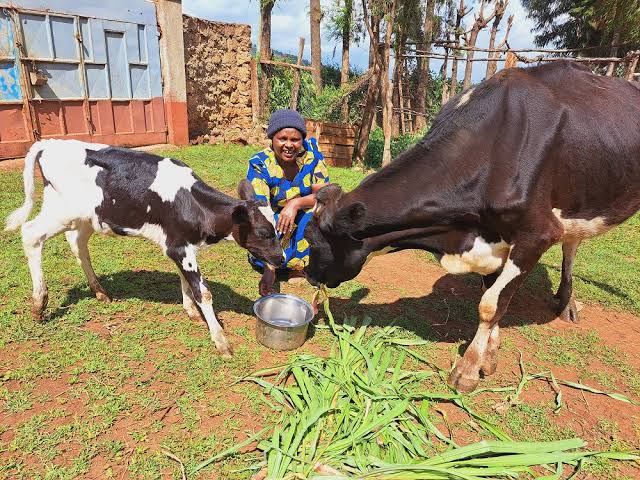
Thousands of women driving Kenya’s dairy industry remain locked out of formal financing. This is due to limited ownership of land and productive assets. The problem hinders investment and growth in one of the country’s most important agricultural value chains, a new report has found.
The Kenya National Women in Dairy Report 2026 shows that 65 per cent of women dairy farmers identify lack of collateral as the biggest obstacle to accessing credit. This is despite their central role in milk production and household food security. The study was commissioned by the Kenya National Farmers’ Federation (KENAFF). It covered five leading dairy counties: Nakuru, Meru, Nyandarua, Uasin Gishu, and Kiambu.
According to the report, only 23 per cent of surveyed women own titled land. Just 19 per cent have documented ownership of cattle. This limits their ability to secure loans from banks and other formal lenders. Without land titles or livestock registration, women cannot meet the collateral requirements that most financial institutions demand.
Nancy Rapando is lead expert at the Africa Centre for Climate, Agri-Food and Nature (AfriCCLAN). She said conventional lending requirements continue to exclude women. This is despite their strong repayment records and growing contribution to the dairy economy.
“Rather than requesting land as collateral, financial institutions should explore alternatives such as registered livestock, insurance records and cooperative milk delivery histories to assess creditworthiness,” she said.
“Women are actively producing, earning and managing dairy enterprises, but many lack formal ownership documents required by lenders. We need financing models that reflect the realities of rural dairy farming.”
The contradiction in the dairy sector
The report highlights a striking contradiction within the sector. While women account for the majority of labour in dairy farming, they are excluded from ownership of key productive assets. Women also comprise 86 per cent of cooperative membership in surveyed areas, yet they hold few leadership positions.
“Women increasingly play a very critical role in the dairy sector, something that is not well appreciated,” said KENAFF CEO Daniel Mwendah.
Researchers found that women control an average of 82 per cent of dairy income within their households. Dairy earnings contribute significantly to improved nutrition, healthcare and food security. Women are managing the money, but they cannot access the credit they need to grow their businesses.
However, limited access to finance prevents many from investing in improved breeds, feeds, veterinary services and climate-resilient production systems. A farmer who cannot get a loan cannot buy a better cow. A farmer who cannot borrow cannot install a solar-powered milking machine. The cycle of low productivity continues.
The study identifies several additional barriers. High upfront investment costs discourage women from applying for loans. There is low awareness of financial products that might be available to them. Financial institutions remain reluctant to lend to women. Digital literacy gaps also prevent women from accessing online lending platforms.
A model county shows the way forward
Nakuru County emerged as a notable example of how targeted support can improve women’s financial inclusion. It recorded the highest level of female land ownership among the five counties surveyed. Researchers linked this to stronger empowerment outcomes and better access to finance.
Rapando noted that supportive county policies and specialised financing windows have helped increase women’s participation in the dairy economy. When women own land, they can use it as collateral. When they can access credit, they can invest in their farms. When they invest, they produce more milk. The cycle becomes positive instead of negative.
Recommendations for change
The report makes several recommendations. Banks, Saccos and cooperatives should adopt more flexible lending models. They should recognise livestock, milk delivery records and group guarantees as acceptable forms of collateral. A woman who delivers 50 litres of milk to a cooperative every day should be able to use that delivery record to prove her creditworthiness.
The report also calls for the creation of a national Women in Dairy Credit Guarantee Fund. This fund would reduce the risk for lenders who extend credit to women farmers. It would make lending more attractive and accessible.
Another recommendation is to reform Kenya’s financial system to formally recognise livestock as collateral. In many other countries, farmers can use their animals as security for loans. Kenya should adopt this practice.
Why this matters for Kenya
Kenya’s dairy sector contributes about 14 per cent of agricultural GDP. It supports more than 1.8 million smallholder households. The sector has enormous potential to grow and create jobs. But that growth will not happen if half of the workforce cannot access credit.
Researchers argue that unlocking women’s access to finance could significantly boost productivity. It would strengthen food security. It would accelerate inclusive growth across the entire value chain. When women farmers thrive, families thrive. When families thrive, communities thrive. When communities thrive, the nation thrives.
The women dairy farmers credit access in Kenya report is a wake-up call. The evidence is clear. Women are the backbone of the dairy sector, but they are being held back by outdated lending practices. The solutions are known. The technology exists. The farmers are ready. What is needed is the will to change.
Financial institutions must adapt. Policymakers must act. The Kenya National Women in Dairy Report 2026 provides a roadmap. It is now up to the government, the private sector, and development partners to follow it. Kenya cannot afford to leave its women farmers behind. The future of the dairy sector depends on their success.
Read original article here
https://farmerstrend.co.ke/trending/women-dairy-farmers-credit-access-in-kenya/https://farmerstrend.co.ke/wp-content/uploads/2026/06/Women-Dairy-Farmers-Credit-Access-in-Kenya-Blocked-by-Collateral-Limits.jpeghttps://farmerstrend.co.ke/wp-content/uploads/2026/06/Women-Dairy-Farmers-Credit-Access-in-Kenya-Blocked-by-Collateral-Limits-150x150.jpeg# TrendingDairy FarmingWomen dairy farmers credit access in Kenya is blocked by collateral limits. The Kenya National Women in Dairy Report 2026 shows 65% of women cite lack of collateral as the biggest obstacle.Thousands of women driving Kenya's dairy industry remain locked out of formal financing. This is due to limited...FarmersTrendjohn doefarmerstrend@gmail.comAdministratorFarmers Trend Ltd.










Leave a Reply