Kenyan Delegation Studies Natural Farming in Andhra Pradesh to Learn Climate-Resilient Practices
A Kenyan delegation visited Andhra Pradesh to study natural farming practices. The team observed climate-resilient techniques including Pre-Monsoon Dry Sowing and integrated natural farming.
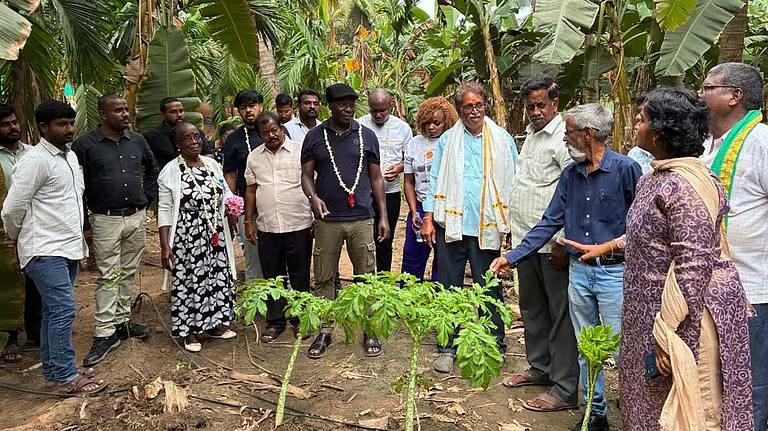
A high-level delegation from Kenya visited Eluru district in India to study the successful implementation of Andhra Pradesh Community Managed Natural Farming (APCNF). The team expressed appreciation for the climate-resilient practices adopted by local farmers.
The delegation was led by Wanjama Njoroge Daniel, Seed Saver Network Coordinator. It included John Kariuki Mwangi, Head of Slow Food Kenya; farmers Oddah Friday Ochomo and Zipporah Nyambura Kuria; Prasiddha Sapkota, an intern from New York University-Abu Dhabi; and Reddi Gowtham from RySS-APCNF. District Project Manager B Venkatesh briefed them on initiatives across the district.
At Gunampalli village in Dwaraka Tirumala mandal, the team observed Pre-Monsoon Dry Sowing (PMDS) using Navadhanyalu at the farm of Venkata Subba Reddy. Officials explained how the practice improves soil fertility, conserves moisture, enhances biodiversity and strengthens resilience to climate change.
The delegation also visited U Ramachandra Rao’s seven-acre integrated Natural Farming model at Agokavaram village in Unguturu mandal. They saw a 14-acre paddy compact block at Venkatapuram village, where desi paddy is cultivated without chemical inputs. The farmers explained the natural farming methods they use.
Impressed by the healthy crops and systematic implementation by Rythu Sadhikara Samstha (RySS), the delegation said the practices offered valuable lessons. They expressed interest in promoting similar models in Kenya.
The visit is part of growing global interest in natural farming as a solution to climate challenges. Andhra Pradesh has become a reference point for natural farming, with its model being studied by governments and organizations from around the world.
The Kenyan delegation’s interest in natural farming reflects the country’s search for solutions to its own agricultural challenges. Kenya faces similar issues: declining soil fertility, rising input costs, and the impacts of climate change. Natural farming offers a way to address these challenges without relying on expensive chemical inputs.
The delegation’s visit was not just about learning. It was about building connections that could lead to knowledge exchange and collaboration. The team expressed hope that the lessons learned in Andhra Pradesh could be adapted to the Kenyan context.
Natural farming is gaining traction across Africa as farmers look for ways to reduce costs and build resilience. The Kenyan delegation’s visit to Andhra Pradesh is part of this broader trend. It shows that African farmers are looking beyond the continent for solutions and are willing to learn from successful models elsewhere.
BY: Andhra Pradesh
https://farmerstrend.co.ke/trending/kenyan-delegation-natural-farming-andhra-pradesh/https://farmerstrend.co.ke/wp-content/uploads/2026/07/Kenyan-Delegation-Studies-Natural-Farming-in-Andhra-Pradesh-to-Learn-Climate-Resilient-Practices.avifhttps://farmerstrend.co.ke/wp-content/uploads/2026/07/Kenyan-Delegation-Studies-Natural-Farming-in-Andhra-Pradesh-to-Learn-Climate-Resilient-Practices-150x150.jpg# TrendingA Kenyan delegation visited Andhra Pradesh to study natural farming practices. The team observed climate-resilient techniques including Pre-Monsoon Dry Sowing and integrated natural farming.A high-level delegation from Kenya visited Eluru district in India to study the successful implementation of Andhra Pradesh Community Managed Natural Farming (APCNF). The team expressed...FarmersTrendjohn doefarmerstrend@gmail.comAdministratorFarmers Trend Ltd.








Leave a Reply