Nectarine Farming in Kenya 2026: The Complete Commercial Guide to Earning KSh 5 Million Profits Per Acre
Nectarine Farming in Kenya: The 2026 Commercial Guide to High-Value Stone Fruit Production
Nectarine farming in Kenya is emerging as one of the most profitable opportunities in high-value fruit farming. The smooth-skinned stone fruit commands premium prices in Nairobi supermarkets, with a single fruit selling for 80 to 150 shillings during peak season. A kilogram of quality nectarines fetches 400 to 600 shillings. The demand from health-conscious consumers, hotels, and juice processors is growing faster than local production.

A well-managed acre with 250 grafted nectarine trees yields 7,500 to 12,500 kilograms annually at full production. At 400 shillings per kilogram, gross revenue reaches 3 to 5 million shillings per acre. With production costs of 1.2 to 1.8 million shillings over the first three years, net profit exceeds 1.5 million shillings annually from year five onward.
This guide by Farmers Trend provides everything you need for commercial success in nectarine farming in Kenya. You will learn about variety selection, chilling requirements, orchard establishment, nutrition, pest management, harvesting, and marketing. The information comes from successful stone fruit growers and agricultural research stations across the country.

The 2026 Nectarine Farming in Kenya Economic Landscape
Nectarine farming in Kenya is outperforming apple farming in the 2026 Nairobi market. Consumers prefer the smooth skin, intense sweetness, and nutritional profile of nectarines. The fruit is rich in vitamins A and C, fiber, and antioxidants. Health-conscious buyers in urban centers seek out nectarines as premium snacks and ingredients.
The profit-per-acre comparison between nectarines and other temperate fruits favors nectarines. Apple orchards generate 800,000 to 1.2 million shillings per acre annually. Nectarine orchards generate 3 to 5 million shillings per acre. The higher returns reflect the premium pricing and growing demand.
Kenya imports significant quantities of nectarines from South Africa and Egypt. The import gap creates opportunity for local farmers. Supermarkets prefer locally grown fruit for freshness and reduced transport time. A locally grown nectarine moves from tree to shelf in 24 to 48 hours. Imported fruit takes 7 to 14 days.
The 2026 market outlook is strong. The middle class continues to expand. Hotel chains are adding exotic fruits to their menus. Juice processors are experimenting with stone fruit blends. Farmers who enter now will establish themselves before the market becomes crowded.
Ecological Requirements on Nectarine farming in Kenya: The Chilling Hour Factor
Can nectarines grow in Kenya? Yes, but only in specific highland areas with adequate winter chilling. Nectarines require a period of cold temperatures to break dormancy and set fruit. This requirement is measured in chilling hours—the number of hours between 0°C and 7°C during the winter months.
Low-chill varieties require 200 to 400 chilling hours. These varieties thrive in Kenyan highlands at altitudes above 1,800 meters. Suitable areas include Limuru, Timau, Molo, Nyandarua, parts of Meru, and the higher slopes of Mount Kenya. Farmers in these regions can successfully establish commercial nectarine orchards.
Altitude is non-negotiable. Nectarine trees planted below 1,800 meters may not receive adequate chilling. Without sufficient chilling, trees break dormancy unevenly. Flowering is erratic. Fruit set is poor. The investment fails.
Temperature monitoring is essential before planting. Install a minimum-maximum thermometer at the site. Record temperatures through the winter months. Calculate the accumulated chilling hours. Choose varieties that match your site’s chilling profile.

Variety Selection and Grafting Standards on Nectarine farming in Kenya
Which variety of nectarine is best for Kenya? Low-chill varieties developed for subtropical and highland tropical conditions are the only viable options. Three varieties dominate commercial production in Kenya.
SunLite is a low-chill yellow-fleshed nectarine. It requires 200 to 300 chilling hours. The fruit is medium to large with bright red skin and firm yellow flesh. SunLite ripens in November to December in Kenyan highlands. The variety has excellent flavor and good shelf life. It is the top choice for fresh market sales.
Fantasia is another low-chill variety requiring 300 to 400 chilling hours. The fruit is large with red-blushed skin and yellow flesh. Fantasia ripens in December to January. The flavor is sweet with a slight tang. This variety performs well in slightly cooler areas with higher chilling accumulation.
Flavortop is a low-chill yellow-fleshed variety requiring 250 to 350 chilling hours. The fruit is large and firm with good shipping quality. Flavortop ripens in late December to January. This variety is preferred by exporters for its durability.
Grafted nectarine seedlings price in Kenya ranges from 800 to 1,500 shillings per tree depending on variety and nursery. SunLite and Fantasia seedlings cost 800 to 1,200 shillings. Flavortop and premium varieties cost 1,200 to 1,500 shillings. Grafting onto Nemaguard rootstock is essential. Nemaguard rootstock provides resistance to root-knot nematodes, which are common in Kenyan soils. The rootstock also improves tree vigor and anchorage.
| Variety | Chill Hours | Skin Color | Flesh Color | Maturity Month | Seedling Price |
|---|---|---|---|---|---|
| SunLite | 200-300 | Bright red | Yellow | November-December | 800-1,200 KSh |
| Fantasia | 300-400 | Red-blushed | Yellow | December-January | 800-1,200 KSh |
| Flavortop | 250-350 | Red | Yellow | December-January | 1,200-1,500 KSh |
Orchard Establishment and Precision Spacing
How many nectarine trees per acre? The standard spacing for commercial nectarine orchards is 4 meters by 4 meters. This gives 250 trees per acre. This spacing allows each tree to develop a full canopy. Sunlight reaches all parts of the tree. Air circulates freely. Access for pruning, spraying, and harvesting is easy.
Prepare planting holes 60 centimeters wide and 60 centimeters deep. This size allows roots to establish without encountering compacted soil. Mix the topsoil with 20 kilograms of well-decomposed manure. Add 200 grams of DAP fertilizer. Refill the holes and allow them to settle for 2 weeks before planting.
Plant at the start of rains. March to May for the long rains. October to November for the short rains. With irrigation, you can plant year-round. Water immediately after planting. Apply 20 liters per tree. Mulch heavily around the base, keeping it away from the trunk.
How Long Does a Nectarine Tree Take to Fruit
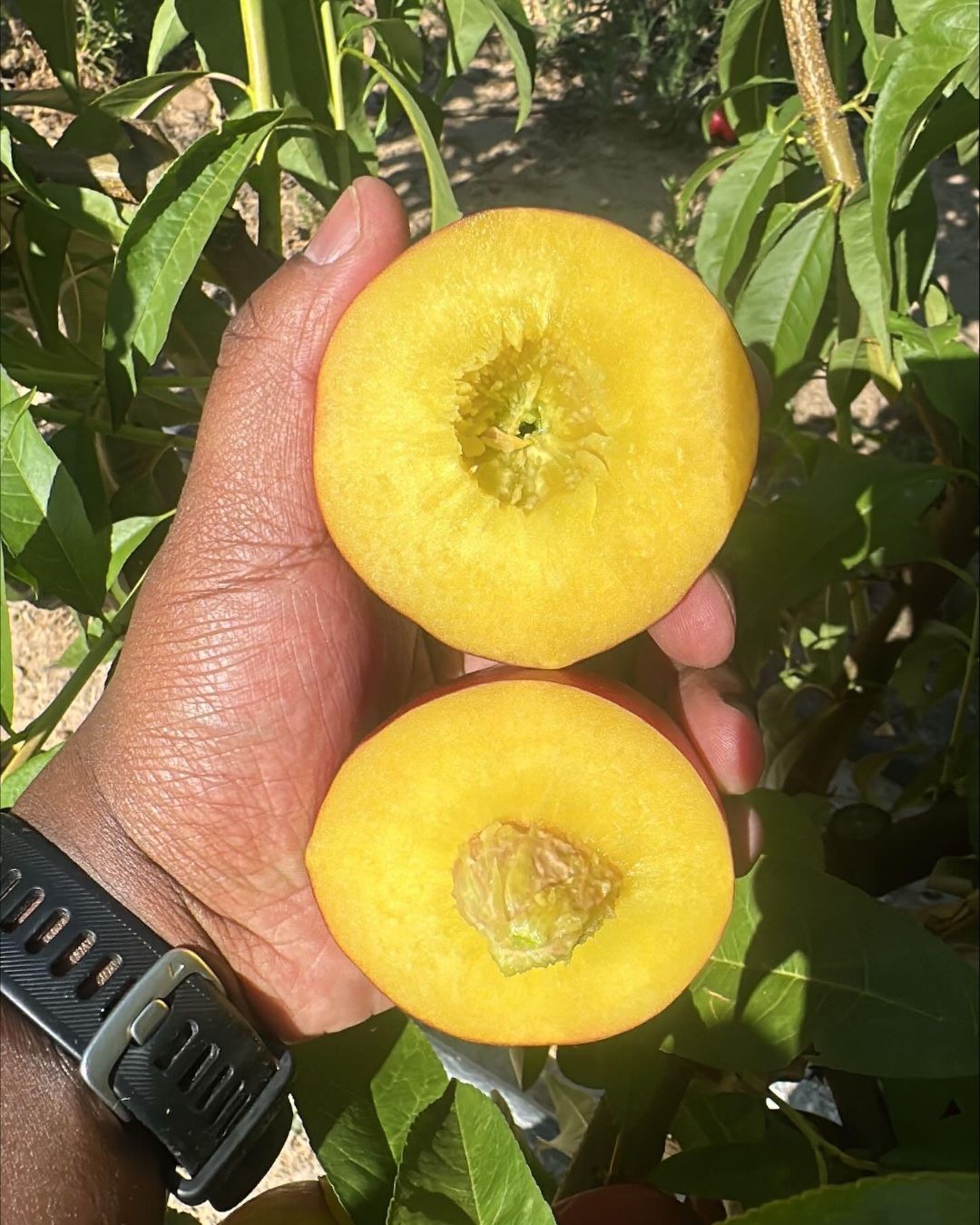
How long does a nectarine tree take to fruit? Grafted trees begin flowering in 2 to 3 years. The first small crop appears in year 3. By year 4, you have a commercial harvest. By year 5, the tree is in full production. Seed-grown trees take 5 to 7 years to fruit. The fruit quality is unpredictable. Commercial growers never use seeds.
The yield progression follows a predictable pattern. Year 3 yields 5 to 10 kilograms per tree. Year 4 yields 15 to 25 kilograms per tree. Year 5 and beyond yields 30 to 50 kilograms per tree. A well-managed orchard achieves these targets.
How many kg of nectarines per tree? Mature trees produce 30 to 50 kilograms annually. With 250 trees per acre, total yield reaches 7,500 to 12,500 kilograms per acre.
Nutrition Strategy: The NPK and Micronutrient Balance
Nectarine trees require balanced nutrition for optimal growth and fruit production. The fertilizer program has two phases.
During the vegetative stage, apply NPK 17:17:17. This balanced fertilizer supports canopy development. Apply 200 grams per tree at the start of rains. Repeat after 3 months.
During fruit development, switch to potassium-rich formulations. Potassium improves fruit size, sweetness, and color. Apply potassium nitrate or potassium sulfate at 200 grams per tree. Apply 6 to 8 weeks before harvest.
Calcium is critical for fruit quality. Calcium deficiency causes blossom end rot and soft fruit. Apply calcium nitrate foliar sprays every 2 weeks during fruit development.
Boron and zinc are essential micronutrients. Deficiencies cause poor fruit set and misshapen fruit. Apply foliar sprays containing boron and zinc at flowering and fruit set.
| Growth Stage | Fertilizer | Rate per Tree | Timing |
|---|---|---|---|
| Vegetative | NPK 17:17:17 | 200 g | Start of rains |
| Vegetative | NPK 17:17:17 | 200 g | 3 months later |
| Fruit development | Potassium nitrate | 200 g | 6-8 weeks pre-harvest |
| Throughout | Calcium nitrate | Foliar | Every 2 weeks |
| Flowering | Boron/zinc | Foliar | At flowering and fruit set |

Pest and Disease Management 2.0
Fruit flies are the most destructive pest in nectarine farming in Kenya. Bactrocera dorsalis, the invasive fruit fly, lays eggs inside developing fruit. The larvae feed on the flesh. The fruit rots and drops. A single infested fruit can ruin the entire harvest.
Control begins with pheromone traps. Place one trap per acre. Check traps weekly. Replace lures every 2 months. Use protein bait sprays mixed with insecticide when populations are high. Maintain orchard hygiene by removing fallen fruit.
Powdery mildew appears as white powder on leaves and fruit. It thrives in dry conditions with cool nights. The disease reduces photosynthesis and fruit quality. Control with sulfur-based fungicides. Apply every 2 weeks during the growing season. Improve air circulation through proper spacing and pruning.
Aphids cluster on new growth. They suck sap and transmit viruses. Control with neem oil or insecticidal soap. Encourage natural predators like ladybugs.
Scale insects attach to branches and trunks. Heavy infestations weaken trees. Control with horticultural oil during the dormant season. Prune out heavily infested branches.
Pruning and Canopy Management
Pruning shapes the tree and directs energy. Nectarines fruit on one-year-old wood. Pruning encourages new growth for the next season.
Perform dormant pruning in July to August after leaf fall. Remove dead, diseased, and crossing branches. Open the center of the tree to allow light penetration. Shorten long branches to encourage lateral growth.
Summer pruning controls tree size. Remove water sprouts and vigorous shoots. This improves light distribution and fruit color.

Harvest, Grading, and Post-Harvest Cooling
Harvest when fruit reaches full color and firmness. The “firm-ripe” stage is ideal for market. The fruit should yield slightly to gentle pressure. Overripe fruit bruises easily. Underripe fruit lacks sweetness.
Harvest in the morning when temperatures are cool. Handle fruit gently. Place in single layers in picking crates. Do not stack more than two layers deep.
Grading ensures consistent quality. Sort fruit by size, color, and blemishes. Export and supermarket fruit must meet strict grade standards. Reject damaged or misshapen fruit.
Cold chain is essential for nectarine farming in Kenya. Fruit continues to ripen after harvest. Refrigerate immediately to 0°C to 2°C. This slows ripening and extends shelf life to 2 to 3 weeks. Transport in refrigerated vehicles to maintain quality.
2026 Nectarine Variety Comparison Table
| Variety | Chill Hours | Skin Color | Flesh Color | Maturity | Seedling Price | Market Price |
|---|---|---|---|---|---|---|
| SunLite | 200-300 | Bright red | Yellow | Nov-Dec | 800-1,200 KSh | 400-500 KSh/kg |
| Fantasia | 300-400 | Red-blushed | Yellow | Dec-Jan | 800-1,200 KSh | 400-500 KSh/kg |
| Flavortop | 250-350 | Red | Yellow | Dec-Jan | 1,200-1,500 KSh | 450-550 KSh/kg |
Commercial 1-Acre Nectarine Farming in Kenya Investment Guide
| Cost Item | Year 1 | Year 2 | Year 3 | Total |
|---|---|---|---|---|
| Grafted seedlings (250 at KSh 1,000 average) | 250,000 | 0 | 0 | 250,000 |
| Land preparation | 30,000 | 0 | 0 | 30,000 |
| Drip irrigation system | 80,000 | 0 | 0 | 80,000 |
| Manure and fertilizers | 50,000 | 35,000 | 35,000 | 120,000 |
| Labor (planting, pruning, harvest) | 60,000 | 50,000 | 70,000 | 180,000 |
| Pest control | 20,000 | 25,000 | 30,000 | 75,000 |
| Total | 490,000 | 110,000 | 135,000 | 735,000 |
Yield and Revenue Projection Table on Nectarine Farming in Kenya
| Year | Yield per Tree (kg) | Total Yield (kg) | Price per kg | Gross Revenue | Net Profit |
|---|---|---|---|---|---|
| 1-2 | 0 | 0 | 400 | 0 | -490,000 |
| 3 | 5 | 1,250 | 400 | 500,000 | -260,000 |
| 4 | 20 | 5,000 | 450 | 2,250,000 | 1,300,000 |
| 5+ | 40 | 10,000 | 500 | 5,000,000 | 4,200,000 |

Next Step
Nectarine farming in Kenya offers exceptional returns for investors with access to highland areas. Grafted nectarine trees fruit in 2 to 3 years. Yields reach 30 to 50 kilograms per tree at maturity. Prices range from 400 to 600 shillings per kilogram. Net profit exceeds 1.5 million shillings per acre annually from year five onward.
The 2026 planting windows are March to May and October to November. Prepare your land now. Order certified low-chill seedlings from Virtual Agrovet. Choose SunLite, Fantasia, or Flavortop based on your chilling hour accumulation.
Grafted nectarine seedlings cost 800 to 1,500 shillings each. This is a significant investment, but the returns justify the cost. A single mature tree produces 30 to 50 kilograms of fruit annually. At 500 shillings per kilogram, one tree generates 15,000 to 25,000 shillings per year. The seedling cost is recovered within the first two years of full production.
Install drip irrigation before planting. Mulch heavily. Apply NPK during vegetative growth and potassium during fruit development. Use pheromone traps for fruit fly control. Harvest at firm-ripe stage. Refrigerate immediately.
For orchard planning and stone-fruit export consultancy, contact Farmers Trend Ltd at 0790509684. The time to invest in nectarines is now. The market is waiting. The returns are real. The window is open.
https://farmerstrend.co.ke/fruits/nectarine-farming/nectarine-farming-in-kenya-guide/https://farmerstrend.co.ke/wp-content/uploads/2026/04/nectarine-fruits-on-nectarine-farming-in-kenya-1024x804.jpghttps://farmerstrend.co.ke/wp-content/uploads/2026/04/nectarine-fruits-on-nectarine-farming-in-kenya-150x150.jpgNectarine Farming# TrendingFruitsbest nectarine varieties for kenya,Chilling hours for nectarines,Fantasia nectarine variety,Farmers Trend nectarine farming,Flavortop nectarine variety,Fruit fly control nectarines,Grafted nectarine seedlings price Kenya,Low-chill nectarine varieties,Nectarine cold chain Kenya,Nectarine farming profit per acre,Nectarine fertilizer program,Nectarine spacing per acre,Nectarine yield per tree,Stone fruit orchard management Kenya,SunLite nectarine variety,Virtual Agrovet nectarine seedlingsNectarine Farming in Kenya: The 2026 Commercial Guide to High-Value Stone Fruit Production Nectarine farming in Kenya is emerging as one of the most profitable opportunities in high-value fruit farming. The smooth-skinned stone fruit commands premium prices in Nairobi supermarkets, with a single fruit selling for 80 to 150 shillings...FarmersTrendjohn doefarmerstrend@gmail.comAdministratorFarmers Trend Ltd.


I would like to farm nectarine in nyandarua,where can I get seedlings
Contact us via 0790509684