Avocado Root Rot: 4 Warning Signs in Hass and Fuerte Trees During the Short Rains
Avocado root rot kills Hass and Fuerte trees from the roots up. You see the damage in the leaves weeks after the roots start to fail. By then, the tree has lost most of the fine roots which feed the tree.
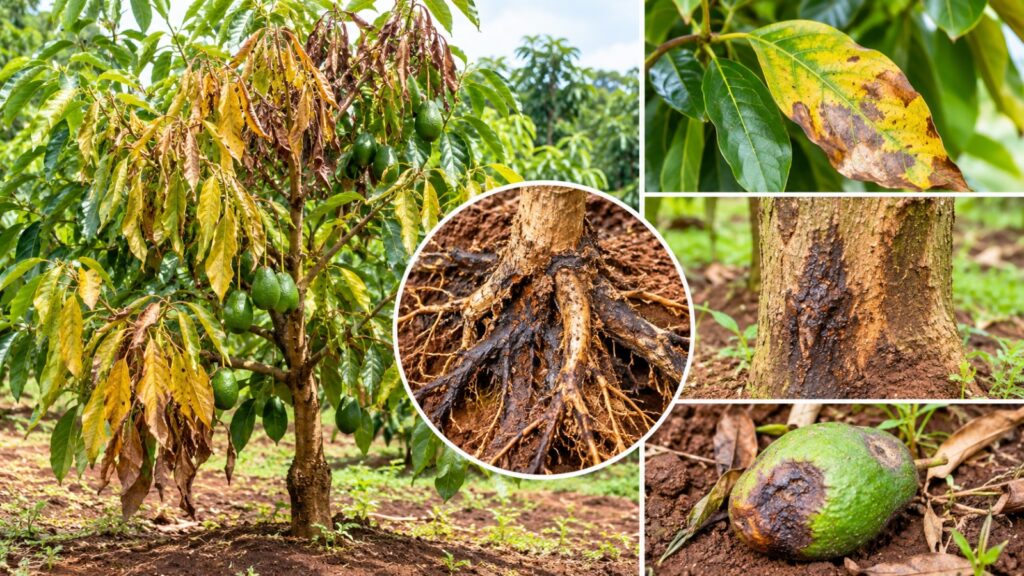
The 2026 short rains raise your risk. Kenya Met expects above-average rainfall over about 80 percent of the country, with prolonged wet spells and isolated storms. Wet soil is the condition the disease needs.
This article shows you four warning signs of avocado root rot. You learn what each sign looks like, how to confirm the cause and what to do this week. You also learn how to protect new trees before you plant.
What Avocado Root Rot Is and Why the Disease Matters
Avocado root rot is a disease caused by Phytophthora cinnamomi. The organism is a water mold, not a true fungus. The University of California Integrated Pest Management Program calls avocado root rot the most serious disease of avocado worldwide. You find the full guideline at UC IPM Pest Management Guidelines on Phytophthora root rot and the Kenya Met seasonal outlook at Kenya Met October to December 2026 seasonal outlook.
The organism attacks the fine feeder roots. These roots take up water and nutrients. When they die, the tree starves and wilts, even when the soil around the tree is wet.
| Item | Fact |
|---|---|
| Cause | Phytophthora cinnamomi, a water mold |
| Favoured by | Excess soil moisture and poor drainage |
| Host range | More than 1,000 plant species |
| Survival in soil | Resting spores persist for years |
| Part of the tree attacked | Fine feeder roots |
| Cure | None. Management continues for the life of the tree |
| Highly resistant plants | Citrus, persimmon, cherimoya and macadamia |
Why Hass and Fuerte Trees Both Suffer From Avocado Root Rot
The variety above the graft does not decide how a tree handles avocado root rot. The rootstock below the graft decides. Hass and Fuerte trees show the same signs and carry the same risk.
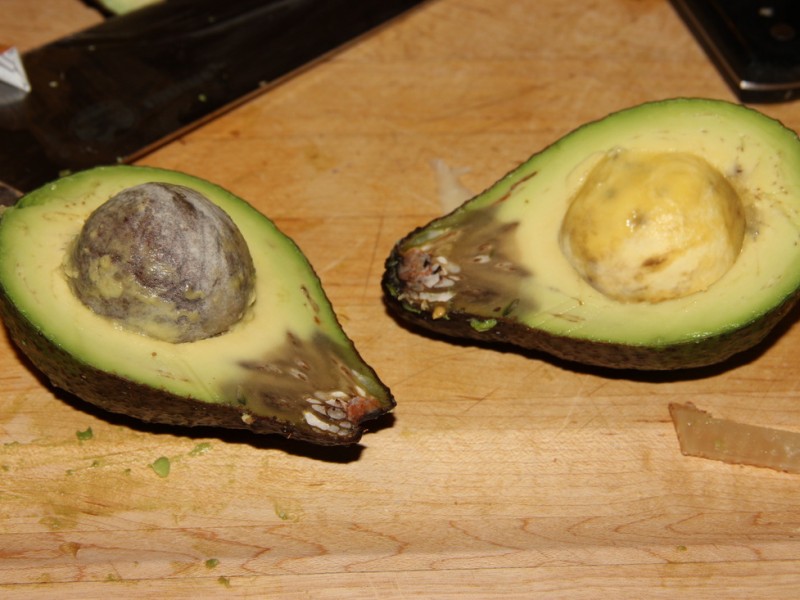
UC IPM advises growers to choose rootstocks produced by the clonal method. Clones of recommended cultivars resist the disease better than rootstocks grown from seed. Ask your nursery which rootstock carries your seedling.
How the Disease Spreads Through Your Orchard
The organism moves in water. Rain runoff carries spores from one tree to the next, and downhill trees get hit first. Mud on boots, tools and vehicle tyres moves spores between blocks. Infected nursery stock brings the disease onto clean land.
Resting spores survive in infested soil for years. A hole where an infected tree stood stays risky long after the tree is gone. The organism infects more than 1,000 plant species, so weeds and other crops also host the disease.
Why the 2026 Short Rains Raise Your Avocado Root Rot Risk
The Kenya Meteorological Service Authority issued the October to December 2026 outlook on August 26. The outlook expects above-average rainfall across about 80 percent of the country, with prolonged wet spells and occasional isolated storms. El Niño drives the forecast.
For Nyandarua, Laikipia, Nyeri, Kirinyaga, Murang’a, Kiambu, Meru, Embu, Tharaka-Nithi and Nairobi, the outlook gives a start in the second to third week of October. The rains continue into January. Many of these counties grow Hass and Fuerte avocados.
A long wet season keeps soil saturated for weeks. UC IPM states avocado root rot thrives in excess soil moisture and poor drainage. Your trees face the exact conditions the disease prefers.
What Waterlogging Does to Your Avocado Roots
Roots need air. Water fills the spaces between soil particles and pushes the air out. Roots in saturated soil weaken within days. Weak roots lose their defence, and the organism swims through the water film to reach them.
Avocado roots are shallow and fine. They sit in the top layer of soil, where water collects first. Heavy rain on a compacted or clay soil hurts them most.
Which Parts of Your Orchard Face the Highest Risk
| Location | Risk in Heavy Rain | Action |
|---|---|---|
| Valley bottoms and low spots | Highest | Dig drains and divert runoff |
| Flat land with heavy clay | High | Add drains and plant on mounds |
| Spots near a leaking tank or pipe | High | Repair the leak this week |
| Holes filled with fresh manure | High | Mix soil in new holes and avoid fresh manure |
| Slopes with good drainage | Lower | Keep mulch and check drains after storms |
The 4 Warning Signs of Avocado Root Rot in Hass and Fuerte Trees
Walk your orchard once a week during the short rains to catch avocado root rot early. Look at the leaves first, then the canopy, then the roots. The four signs below appear in this order on most trees.
Warning Sign 1 of Avocado Root Rot: Small, Pale Leaves With Brown Tips
Healthy leaves are large and dark green. Leaves on a tree with avocado root rot turn small, pale green or yellowish. The tips turn brown and dry. The leaves wilt in the heat of the day.
Look at the soil under the tree. In many cases the soil is wet. UC IPM notes the wilting and brown tips appear even when the soil under the tree is well irrigated and wet. A tree which wilts in wet soil points to the roots, not to thirst.
What you do this week: tie a ribbon on each tree with pale leaves. Photograph the leaves. Compare them with a healthy tree next to the tree. Record the date. These records show you how fast the problem moves.
Warning Sign 2: A Thin Canopy With No New Growth
A healthy avocado tree pushes new flushes of growth through the year. A tree with avocado root rot stops. The canopy thins. Leaves drop. Twigs at the top of the tree die back.
Check the ground under the tree. A healthy tree drops leaves and builds a layer of leaf litter. UC IPM notes diseased trees often show little leaf litter, because they carry few leaves. Dying branches also leave other branches without shade, and sun burns the bark and fruit.
What you do this week: stop all heavy feeding on the tree. Do not prune hard. A tree with weak roots needs the leaves the tree still has. Remove only dead twigs.
Warning Sign 3: Black, Brittle Roots
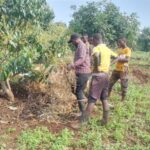
The roots tell you the truth. Dig a small hole at the edge of the canopy, 20 to 30 centimetres deep. Use your hands near the roots. Look at the fine feeder roots.
Healthy feeder roots are light coloured and firm. Roots with avocado root rot are dark brown to black and brittle. UC IPM describes small roots which are blackish to brown and brittle, and feeder roots which are absent or dead. Few fine roots remain on a tree in advanced decline.
What you do this week: dig on two sides of the tree. Dig the same way on a healthy tree and compare. Take photographs. Send them to your extension officer. Cover the holes after the check so roots do not dry out.
Warning Sign 4: Decline in Wet Spots, Small Fruit and Falling Yield
Avocado root rot rarely stays on one tree. The disease moves through wet ground, and trees in low spots fail first. Then neighbouring trees show the first two signs. Look for a patch of weak trees which grows larger from month to month.
Fruit also gives warnings. Trees with avocado root rot carry fewer fruit, and the fruit stays small. A tree which crops well one year and drops to little the next, with pale leaves, needs a root check.
What you do this week: draw a map of your orchard. Mark each tree with signs. Mark the wet spots. Where the marks match the wet spots, you have a drainage problem and likely avocado root rot.
| Warning Sign | Where You See the Sign | First Action |
|---|---|---|
| 1. Small, pale leaves with brown tips | Leaves, even in wet soil | Mark the tree and photograph the leaves |
| 2. Thin canopy, no new growth | Canopy and leaf litter | Stop heavy feeding and hard pruning |
| 3. Black, brittle roots | Roots at the canopy edge | Dig, compare and send photographs |
| 4. Decline in wet spots, small fruit | Orchard map and fruit | Map trees and fix drainage |
How to Run a Weekly Orchard Walk
Walk the same route each week. Start at the lowest point of the orchard, where water collects, and move uphill. Look at ten trees in each block. Check the leaf colour, the canopy and the soil around the trunk. Dig a root check on any tree which shows a sign.
Keep a simple record. Write the date, the block, the tree number and what you see. Add the weather for the week. After a month, you see which blocks decline and which trees hold steady. Your records also help your extension officer give you better advice.
| Record Item | What You Write |
|---|---|
| Date and weather | Day, rainfall and whether the soil is wet or dry |
| Block and tree number | Where the tree stands and the variety |
| Leaf and canopy signs | Leaf colour, brown tips, thin canopy, new growth |
| Root check | Colour and firmness of feeder roots |
| Action taken | Drain dug, irrigation stopped, sample sent |
How to Confirm Avocado Root Rot Before You Spend Money
Other problems copy these signs. Drought stress, nutrient shortage and fertiliser burn also cause pale leaves and dieback. The difference is the soil. Leaf signs from avocado root rot appear when the soil is wet. Leaf signs from drought appear when the soil is dry.
Check soil moisture by hand. Dig 30 centimetres down and squeeze a handful. Wet soil which holds together and leaves water on your hand means saturation. Then check the roots, as Sign 3 shows.
Heavy manure also harms avocado roots. UC IPM warns avocado roots are sensitive to ammonia and salts, and large amounts of animal manure raise both. A tree planted in a hole packed with fresh manure shows root damage which looks like root rot.
Ask your county agriculture officer or a plant disease laboratory to test a root sample. A laboratory result removes the guess.
How Root Rot Differs From Other Orchard Problems
| Problem | Soil Condition | Leaf Signs | Root Signs |
|---|---|---|---|
| Avocado root rot | Wet or saturated | Pale, small, brown tips, wilting | Dark, brittle, few fine roots |
| Drought stress | Dry | Wilting, leaf curl, leaf drop | Roots firm and light coloured |
| Manure or salt burn | Often fresh manure nearby | Brown tips and leaf edges | Roots near manure look scorched |
| Nutrient shortage | Moist and poor in nutrients | Yellow leaves, slow growth | Roots firm and light coloured |
Use the table as a guide, not a final answer. Two problems sometimes affect the same tree. A tree with avocado root rot also shows drought signs when the roots fail to supply water. A laboratory test settles the question.
The Cost of Guessing Wrong
A farmer sees wilting and adds water. The wilting came from avocado root rot. The extra water feeds the disease and kills more roots. This is the most common mistake. Check the soil and the roots for avocado root rot before you irrigate a wilting tree.
What to Do About Avocado Root Rot During the Short Rains
No treatment cures a tree with advanced avocado root rot. UC IPM states phosphonates do not eradicate the organism and avocado root rot needs ongoing management through the life of the trees. Your goal is to protect healthy trees and slow the spread.
Fix Drainage First
Dig drains along the upper edge of the orchard to divert runoff. Dig drains between rows on flat ground. Clear blocked drains after every storm. Fix leaking tanks and pipes. Water which stands for more than a day around trees causes damage.
Map Where Water Flows and Pools
Water follows the slope. Walk your orchard in the rain with a raincoat and boots. Note where water runs fast, where water pools and where water stays after the rain stops. Mark these spots on your orchard map. Trees in pooling spots face the highest risk.
Dig a drain at the upper edge of each block to catch runoff before the water reaches the trees. A drain 30 centimetres wide and 30 centimetres deep carries the flow from a small block. Larger blocks need wider and deeper drains. Plant grass along the drain walls to slow erosion. Lead each drain to a lower point away from your trees.
Do not pile the soil from the drain against tree trunks. Spread the soil away from the trees. Clear drains of mud and plant debris after each storm.
Protect Trees From Water Coming From Roads and Neighbours
Water from a road, a roof or a neighbouring farm adds to the load on your land. Build a cut-off drain along the boundary where this water enters. Check culverts and keep the culverts clear. Talk to your neighbours about shared drains. A blocked drain upstream floods your orchard downstream.
Stop Irrigating When Rain Falls
UC IPM calls careful irrigation the single most important practice for preventing and managing avocado root rot. Switch off drip lines and sprinklers during the short rains. Check soil moisture before you restart. Irrigate by need, not by calendar.
Mulch Your Avocado Trees Well
Spread coarse mulch such as dry grass, leaves or wood chips 10 centimetres thick under the canopy. Keep the mulch a hand’s width away from the trunk. Mulch protects the shallow roots, feeds soil life and slows runoff.
Feed With Care
Moderate nitrogen promotes good growth and helps trees tolerate avocado root rot. Excess fertiliser harms the roots. UC IPM advises you to avoid large amounts of animal manure and other products high in ammonia or salts. Use well decomposed manure in small amounts. Do not pile fresh manure against the trunk.
Apply Gypsum Under the Canopy
UC IPM suggests gypsum under the canopy to create soil conditions which suppress the disease. The guideline gives about 25 pounds, or 11 kilograms, under a medium-sized tree. Reapply as the gypsum and mulch break down. Ask your agronomist for the right rate for your soil.
Use Registered Products Through a Trained Applicator
Phosphonate products injected into the trunk and metalaxyl products applied to the soil slow the disease, according to University of California research. These products control the disease. They do not cure the disease. Hire a trained applicator. Use only products registered by the Pest Control Products Board. Follow the label.
UC IPM does not recommend soil fumigation. The organism often returns to fumigated soil, and the disease turns worse than before.
Remove Dead Trees and Replant With Care
Remove trees which died from avocado root rot or lie beyond recovery. Do not plant another avocado in the same hole straight away. UC IPM advises replanting infested soil with resistant crops for at least several years. Citrus, persimmon and cherimoya resist the organism well. UC guidelines also rate macadamia as highly resistant.
Farmers Trend Limited sells Grafted Macadamia Seedlings (MRG20) at KSh 350 per seedling. They suit wet corners of your farm where avocado trees failed. Order at Grafted Macadamia Seedlings (MRG20)
Stop Spreading the Disease Across Your Farm
Work in healthy blocks first and affected blocks last. Wash boots, tools and wheelbarrows after you leave a wet or infected area. Keep vehicles out of wet orchard ground. Do not move soil, plant debris or seedlings from an infected block to a clean block.
Example: What One Wet Month Does to a Young Orchard
This example uses planning figures, not field data. The example shows how a drainage problem grows into a loss.
Take a one-acre orchard with 63 Hass trees planted a year ago. A low corner holds 12 of the trees. After a week of storms, water stands in the corner for 10 days. The trees look fine at first.
In week three, leaves on 4 trees turn pale. In week six, 7 trees show thin canopies and brown leaf tips. A root check on two trees finds dark, brittle roots. By month three, 5 trees are dead. The orchard has lost 5 of 63 trees, or 7.9 percent. Replacement at KSh 250 per seedling costs KSh 1,250.
The larger cost sits in the soil. The low corner now carries the organism. New seedlings planted in the same spot meet the disease on day one. The farmer who digs a drain in week one and mounds the soil around the low trees protects the other 7 trees in the corner.
The lesson is simple. Act at the first sign. A drain dug in week one costs a few hours of labour. A dead tree costs years.
How to Prevent Avocado Root Rot Before You Plant
Prevention of avocado root rot costs far less than a cure. Every step below happens before a seedling goes into the ground.
Choose a Well Drained Site
Pick land where water drains within hours after heavy rain. Avoid hollows and the bottom of slopes. Dig a test hole 60 centimetres deep, fill the hole with water and time how long the water takes to drain. Water which stays after a day shows poor drainage.
Plant on a Raised Mound
Where the soil drains slowly, plant each tree on a mound of topsoil. The mound lifts the root zone above standing water. Use soil from the planting area, not heavy subsoil. Build the mound before the rains.
Keep the Graft Union Above the Soil
Plant the seedling so the graft union sits above the soil line. Do not bury the union. A buried union exposes the scion to soil organisms. Water the seedling after planting and then water by need.
Avoid Fresh Manure in Planting Holes
Mix topsoil with well decomposed compost in small amounts. Fresh manure releases ammonia and salts, and avocado roots dislike both. A seedling in a manure-packed hole starts life with damaged roots.
Buy Healthy, Certified Seedlings
Infected nursery stock carries avocado root rot into new orchards. Buy only from a nursery you trust. Inspect the root ball. Ask which rootstock the seedling carries. Ask how the nursery raises the seedlings.
Hass and Fuerte Seedlings From Farmers Trend Limited
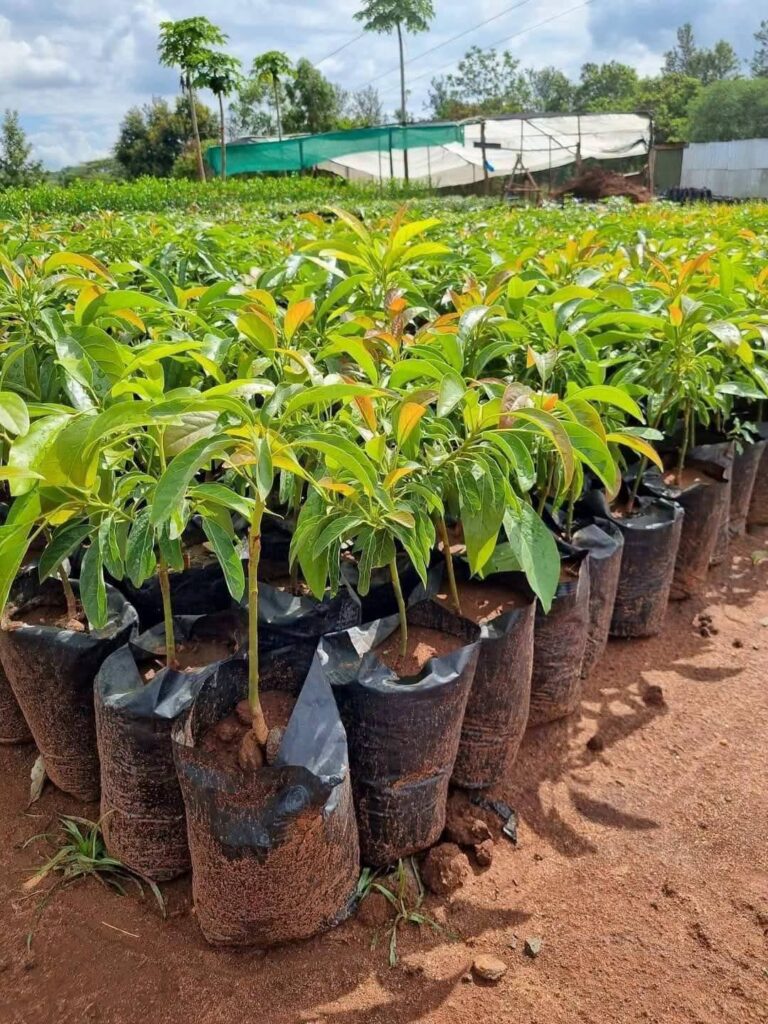
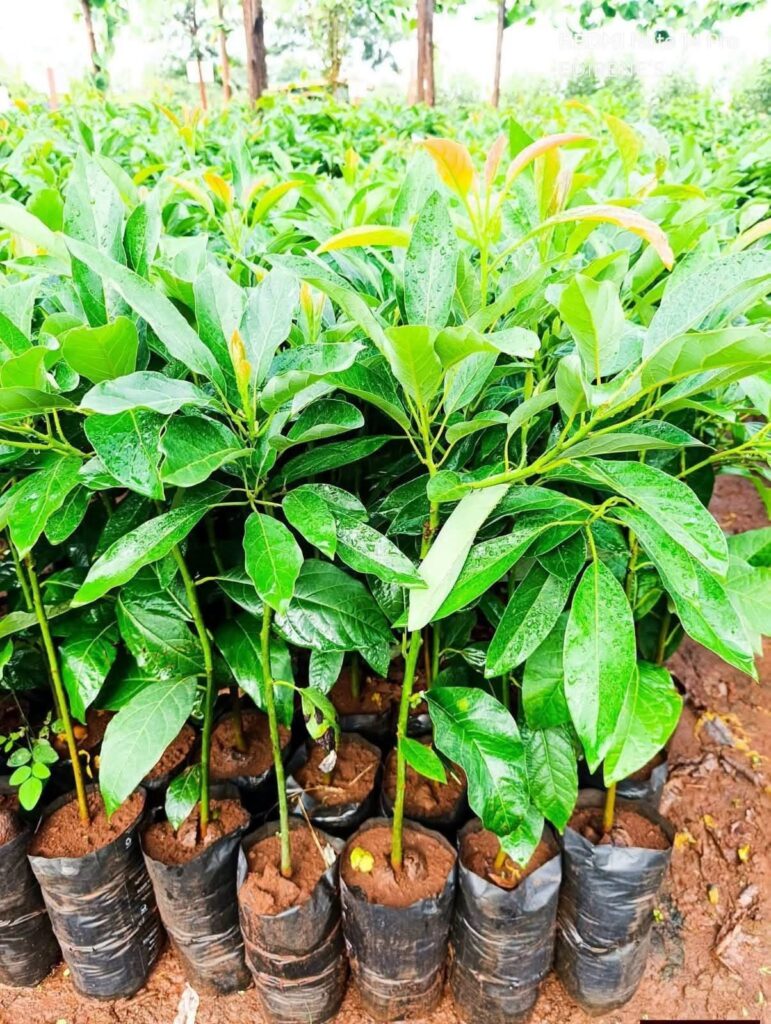
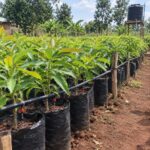
Farmers Trend Limited sells Certified Grafted Hass Avocado Seedlings at KSh 250 each. Farmers Trend Limited also sells Grafted Fuerte Avocado Seedlings at KSh 250 each. The nurseries are in Muranga and Nairobi. Order the Hass seedlings at Certified Grafted Hass Avocado Seedlings
What Farmers Trend Limited Recommends You Check Before You Pay
Farmers Trend Limited recommends seedlings at least 6 to 8 months old. Look for a well developed, healthy root system and avoid damaged or stunted roots. Choose seedlings with vibrant green leaves and no yellow or brown leaves. Compare the height with the size of the pot. Pick a trunk which is sturdy and straight, with no signs of damage. Check the graft union is fully healed.
Buy from a reputable nursery which sells healthy, disease-free plants. No seedling is immune to avocado root rot. Healthy stock, good drainage and careful irrigation work together.
Seedling Cost Per Acre at KSh 250
| Spacing | Trees per Acre | Seedling Cost at KSh 250 |
|---|---|---|
| 8 m by 8 m | 63 | KSh 15,750 |
| 9 m by 9 m | 50 | KSh 12,500 |
| 10 m by 10 m | 40 | KSh 10,000 |
Tree numbers come from dividing an acre of 4,047 square metres by the area each tree occupies. Check the spacing advice for your area with your extension officer.
Now look at the loss. An orchard with 63 trees loses 15.9 percent of the stand when 10 trees die. Replacing 10 seedlings at KSh 250 costs KSh 2,500. The real loss is time. A replacement tree starts again from a seedling and needs years to fruit. Healthy drainage protects this time.
What Tree Losses Cost You on One Acre
| Trees Lost on 63 | Share of Orchard | Replacement Cost at KSh 250 |
|---|---|---|
| 5 trees | 7.9 percent | KSh 1,250 |
| 10 trees | 15.9 percent | KSh 2,500 |
| 15 trees | 23.8 percent | KSh 3,750 |
Replacement cost is the smallest part of the loss. Each replacement tree starts again from a seedling. The neighbours stand years ahead. Uneven trees also make spraying, pruning and harvesting harder. Protect the trees you have first.
Nursery Practices Which Protect Your Seedlings
Ask the nursery to show you the seedlings before you pay. Look at the bags. Seedlings in bags standing in water carry a higher risk. Ask how long the seedlings have been hardened. Reject seedlings with coiled or circling roots at the bottom of the bag.
Keep your seedlings in shade after you collect them. Plant within a few days. Do not leave seedlings standing in water at your farm. Water them lightly until you plant.
How Rain Timing Changes Your Planting Plan
Many farmers plant avocado seedlings at the start of the short rains. The practice works on well drained soil. This season carries extra risk. The outlook expects prolonged wet spells in much of the country, and rains continue into January in the central highlands.
If your land drains well, plant on mounds and keep drains open. If your land holds water, wait until the soil drains between storms. Prepare the holes and the mounds now. Plant when you see soil which crumbles in your hand and stays free of standing water.
Planting into saturated soil gives avocado root rot a head start on young roots. A delay of two or three weeks costs less than the loss of a seedling.
Build a Long-Term Defence Plan for Your Orchard
The short rains pass. Avocado root rot stays in the soil. Plan your defence for every season.
Check your drains before each rainy season. Clear mud, repair banks and fix new erosion. Top up mulch once a year. Pick five sample trees in each block and run a root check on the same trees each year. Compare the results with your records. Early change in root colour gives you time to act.
Keep your irrigation schedule tied to soil moisture. Dig a small hole near a sample tree before each irrigation. Irrigate only when the soil is dry at 20 centimetres. Review your feeding programme each year and keep manure rates low.
When you replant, rotate with a resistant crop for several years. Plan new blocks on well drained land and use mounds. Buy healthy, certified seedlings every time. These habits protect your investment for the full life of the orchard.
What to Tell Your Extension Officer
Give your officer clear facts. Share your orchard map, your weekly records and your photographs of leaves and roots. Say when the first sign appeared, what the weather did and what you changed. Say whether you used fresh manure, and which seedlings and rootstock you planted. Clear facts speed up the diagnosis and cut the cost of advice.
A Four-Week Short Rains Plan for Your Avocado Orchard
| Week | Action |
|---|---|
| Week 1 | Walk the orchard, mark trees with signs, map wet spots and clear drains |
| Week 2 | Dig root checks on marked trees, stop irrigation and spread mulch |
| Week 3 | Send samples to your extension officer, apply gypsum and fix leaks |
| Week 4 | Remove dead trees, plan replanting with resistant crops and order seedlings for the next season |
Repeat the walk every week until the rains end. Rains in many counties continue into January, so keep your checks going.
Common Avocado Root Rot Mistakes Farmers Make
| Mistake | Fix |
|---|---|
| Irrigating a wilting tree in wet soil | Check soil moisture and roots first |
| Packing fresh manure into planting holes | Use small amounts of well decomposed compost |
| Planting in low spots | Choose well drained land or plant on mounds |
| Burying the graft union | Keep the union above the soil line |
| Replanting avocado straight into a dead tree’s hole | Rotate with resistant crops for several years |
| Carrying soil on boots between blocks | Wash boots and tools and work healthy blocks first |
| Ignoring early leaf signs | Walk the orchard weekly and record changes |
Frequently Asked Questions About Avocado Root Rot
What causes the disease in avocado trees?
Phytophthora cinnamomi causes avocado root rot. The organism lives in soil and spreads in water. Wet soil and poor drainage favour the disease.
What are the warning signs of avocado root rot?
Look for small, pale leaves with brown tips, a thin canopy with no new growth, black and brittle roots, and decline which spreads from wet spots. Small fruit and falling yield also appear.
Does an avocado tree recover from root rot?
Trees with advanced avocado root rot rarely recover. Trees caught early recover better when you fix drainage, cut irrigation and use registered products through a trained applicator. UC IPM notes avocado root rot needs ongoing management through the life of the tree.
What do avocado roots look like with root rot?
Feeder roots turn dark brown to black and become brittle. Fine roots are few or absent. Healthy feeder roots are light coloured and firm.
Does Hass resist root rot better than Fuerte?
Neither variety resists the disease alone. The rootstock decides resistance. UC IPM advises clonal rootstocks, which resist avocado root rot better than rootstocks grown from seed. Ask your nursery about the rootstock.
How long does the root rot organism stay in the soil?
Resting spores persist in infested soil for years. Rotate with resistant crops such as citrus, persimmon, cherimoya or macadamia for several years before you replant avocado.
How much do Hass and Fuerte seedlings cost?
Farmers Trend Limited sells Certified Grafted Hass Avocado Seedlings at KSh 250 each and Grafted Fuerte Avocado Seedlings at KSh 250 each.
When should I plant avocado seedlings to avoid root rot?
Plant when the soil drains between storms. Use mounds on slow draining land. Avoid planting into saturated soil during the wettest weeks of the short rains.
Which crops are safe to plant where avocado trees died of root rot?
UC IPM names citrus, persimmon and cherimoya as highly resistant, and rates macadamia as highly resistant. Rotate with one of these crops for several years before you replant avocado.
How wet is too wet for an avocado tree?
Avocado roots weaken when water stands around the tree for a day or more. Soil which stays saturated for several days after rain needs drains or mounds. Dig a 30 centimetre hole near the tree and check whether water collects at the bottom.
Do I spray the whole orchard when one tree shows root rot?
No. Confirm the cause first. Fix drainage across the whole orchard, because water moves the disease. Use registered products through a trained applicator only on trees which your extension officer advises you to treat.
Your Next Step Against Avocado Root Rot This Short Rains Season
Avocado root rot starts in wet soil and shows in four signs: small, pale leaves with brown tips, a thin canopy with no new growth, black and brittle roots, and decline which spreads from wet spots. Kenya Met expects above-average rainfall across about 80 percent of the country this season, so the risk is high.
Act this week. Walk your orchard. Dig two root checks. Clear your drains. Stop irrigation when rain falls. Mulch your trees. Avoid heavy manure. Remove dead trees and replant the hole with a resistant crop.
When you plant new trees, start with healthy stock on a well drained site. Farmers Trend Limited sells Certified Grafted Hass Avocado Seedlings and Grafted Fuerte Avocado Seedlings at KSh 250 each from nurseries in Muranga and Nairobi.
|
|
Call or WhatsApp 0724 559 286 or 0790 509 684. Email info@farmerstrend.co.ke. Visit www.farmerstrend.co.ke.
https://farmerstrend.co.ke/trending/avocado-root-rot-hass-fuerte-rains/https://farmerstrend.co.ke/wp-content/uploads/2026/11/WhatsApp-Image-2026-11-04-at-13.07.16-1024x576.jpeghttps://farmerstrend.co.ke/wp-content/uploads/2026/11/WhatsApp-Image-2026-11-04-at-13.07.16-150x150.jpeg# TrendingAvocado FarmingFruitsavocado diseases in Kenya,avocado farming in Kenya 2026,avocado farming tips,avocado irrigation management,avocado leaves brown tips,avocado leaves turning yellow,avocado manure mistakes,avocado mulching,avocado orchard drainage,avocado orchard management,avocado planting holes,avocado planting mounds,avocado root rot,avocado root rot Kenya,avocado root rot prevention,avocado root rot symptoms,avocado root rot treatment,avocado rootstock,avocado seedlings Kenya,avocado seedlings Muranga,avocado seedlings Nairobi,avocado seedlings price Kenya,avocado tree dieback,avocado tree diseases,avocado tree dying,avocado tree wilting,avocado waterlogging,certified grafted avocado seedlings,clonal avocado rootstock,El Niño 2026 Kenya farming,Farmers Trend Limited,fruit tree diseases Kenya,Fuerte avocado farming in Kenya,Fuerte avocado root rot,grafted Fuerte avocado seedlings,grafted hass avocado seedlings,gypsum for avocado trees,Hass and Fuerte avocado,hass avocado farming in kenya,Hass avocado root rot,how to save an avocado tree from root rot,Kenya Met short rains forecast,macadamia after avocado,orchard crop rotation,Phytophthora cinnamomi,Phytophthora root rot,root rot in avocado trees,short rains 2026,short rains farming tips,signs of root rot in avocado trees,wet season orchard careAvocado root rot kills Hass and Fuerte trees from the roots up. You see the damage in the leaves weeks after the roots start to fail. By then, the tree has lost most of the fine roots which feed the tree.The 2026 short rains raise your risk. Kenya Met...FarmersTrendjohn doefarmerstrend@gmail.comAdministratorFarmers Trend Ltd.



Leave a Reply