Yacon Spacing and Planting: 3 Layouts Which Give Bigger Tubers
Yacon spacing and planting decide how big your tubers grow. Plants set too close compete for light, water and nutrients. Plants set too far apart waste your land. The right distance gives you large tubers, a steady yield and a crop you sell at a good price.
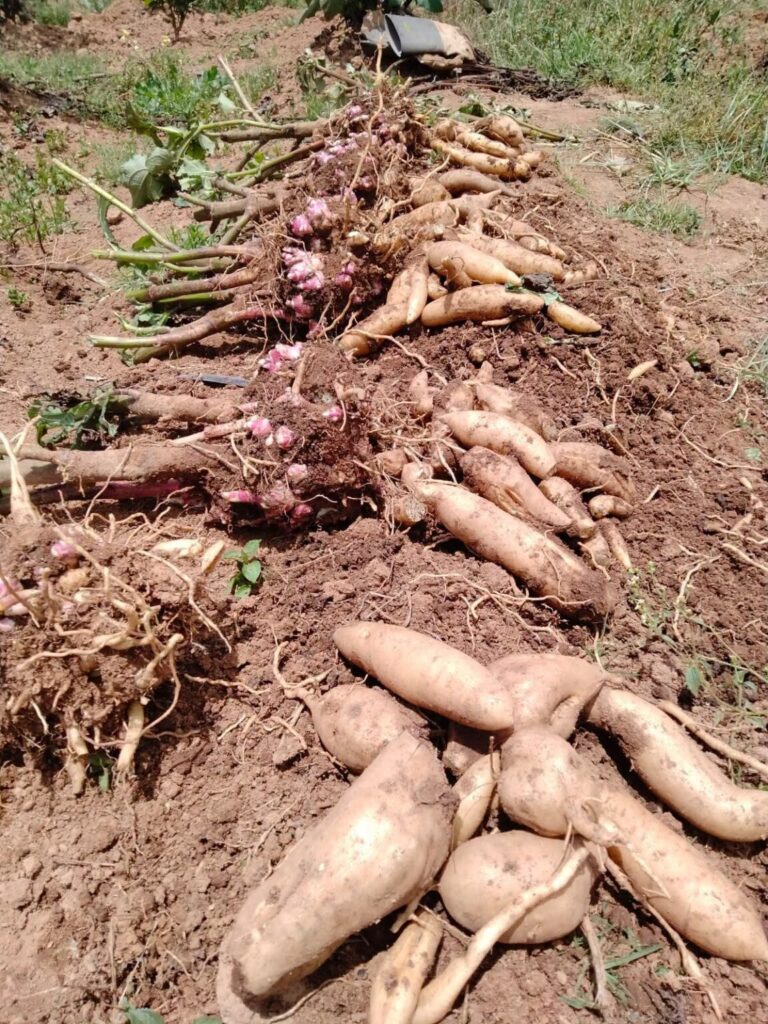
This guide on yacon spacing and planting gives you three layouts with exact distances, plants per acre and seedling numbers. You will see what research from Brazil, South Korea, Japan and Peru reports. You will learn how to prepare the soil, plant seedlings, mulch, feed and protect your crop in Kenyan conditions.
The rains are on. Soil moisture is favourable for healthy establishment right now. Prepare your beds this week and plant while the soil holds water. Farmers Trend Limited sells yacon seedlings at KSh 500 each. Read more about yacon farming in Kenya from Farmers Trend Limited.
Why Yacon Spacing and Planting Decide Your Tuber Size
Each yacon plant forms a crown with a cluster of storage roots below the soil. Farmers call these storage roots tubers. Every plant draws water and nutrients from the soil around its crown. Plants set close together share the same soil. Each plant receives less.
Yacon spacing and planting change two numbers. The first is the number of plants per acre. The second is the weight of tubers per plant. Close spacing raises the first number and lowers the second.
A South Korean trial tested six planting densities on yacon. Wide planting gave fewer tubers per plant, and those tubers weighed more. The share of tubers heavier than 200 g fell significantly as density rose.
What Research Says About Yacon Spacing and Planting
Researchers in several countries tested yacon spacing and planting. The table lists each study with the distances tested and the main result.
| Study location | Spacing tested | Main result |
|---|---|---|
| Brazil, tropical highland site | Rows 0.8, 1.0 and 1.2 m. Plants 0.4, 0.5 and 0.6 m | Best yield of 31.5 tonnes per hectare at 1.0 m by 0.4 m, with a benefit-cost ratio of 2.51 |
| Brazil, same spacing range | Rows 0.8, 1.0 and 1.2 m. Plants 0.4, 0.5 and 0.6 m | At 0.8 m rows, 0.4 m between plants gave more large roots. At 1.2 m rows, 0.4 m gave fewer large roots |
| South Korea | Six densities from 80 by 60 cm to 60 by 45 cm | 31.42 tonnes per hectare at 70 by 50 cm. Heavier tubers fell as density rose |
| Japan | 70 cm rows. 30, 50 and 70 cm between plants | 70 by 70 cm gave the most useful density |
| Brazil, São Paulo | Rows 1.0, 1.2 and 1.4 m. Plants 0.8 and 1.0 m | The widest spacings gave the highest profit |
| Brazil, coffee intercrop | 20, 40 and 60 cm between plants | 20 cm gave 4,687.75 kg per hectare and 0.281 kg per plant |
| Peru, germplasm trial | 0.9 m rows. 0.5 m between plants | 22,220 plants per hectare |
No single spacing wins at every site. Results shift with soil, altitude, rainfall and planting material. The studies agree on one point. Spacing changes tuber weight, and you choose spacing to match your goal. Read the Brazilian spacing trial summary and the full paper in the Australian Journal of Crop Science for the detail.
What Bigger Tubers Mean for You
Kenyan reports describe tubers of up to four kilograms after about seven months. Large tubers cut your washing, peeling and handling time per kilogram. Large tubers also look better on a market table. Yacon spacing and planting give you this size when each plant has room to feed.

Yacon Spacing and Planting in Kenya: Know Your Conditions
Kenyan farmers grow yacon on the slopes of Mt Kenya in Nyeri, in Tharaka Nithi and in Elburgon in Nakuru County. A Bizna Kenya report advises planting at the onset of the rains. The crop needs steady moisture through the growing season. Moisture matters most during tuber formation.
Tubers mature in six to seven months. Leaves turn yellow when the crop is ready. Your yacon spacing and planting date fix your harvest date, so you plan both before you buy seedlings.
Choose a site with loose, well-drained soil. The Brazilian trial ran on a tropical highland site. Yacon rots in waterlogged ground, and Kenyan growers list root rot among their main threats. Avoid hollows where water stands after rain.
Plant Yacon Now While the Rains Hold Soil Moisture
The ongoing rains give you what seedlings need most. Moist soil helps roots take hold in the first two weeks. Seedlings planted in dry soil wilt, stall and often die. Seedlings planted in moist soil grow into the rains.
Use this week to do three things. Measure your plot and choose your layout. Loosen the soil and mark your rows. Order your seedlings so they reach you before the soil dries. Farmers Trend Limited sells yacon seedlings at KSh 500 each. Call or WhatsApp 0724 559 286 or 0790 509 684 to place your order.
Yacon spacing and planting now also set your harvest. A crop planted in the current rains reaches maturity about six to seven months later. You then sell tubers or make syrup when your buyers are ready.
3 Yacon Spacing and Planting Layouts Which Give Bigger Tubers
Each layout for yacon spacing and planting uses 1.0 m between rows. The row distance gives you room to walk, weed and mulch. The difference lies in the distance between plants within the row.
| Layout | Row spacing | Plant spacing | Plants per acre | Plants per hectare | Best for |
|---|---|---|---|---|---|
| Layout 1: Balanced | 1.0 m | 0.5 m | 8,094 | 20,000 | Steady yield and good tuber size |
| Layout 2: High yield | 1.0 m | 0.4 m | 10,117 | 25,000 | Most tonnes per acre |
| Layout 3: Wide | 1.0 m | 0.8 m | 5,059 | 12,500 | Largest single tubers |
Layout 1: Balanced Yacon Spacing and Planting at 1.0 m by 0.5 m
Layout 1 puts 8,094 plants on one acre. Each plant owns 0.5 square metres. This layout sits between the Brazilian high yield spacing and the Korean wide spacing. The Peruvian germplasm trial used a close match of 0.9 m by 0.5 m.
Choose Layout 1 when you want a safe start. Your tubers grow to a good size, your plant count stays manageable and your seedling cost stays lower than in Layout 2. Measure the row distance with a 1 m stick. Measure the plant distance with a 50 cm stick.
Layout 2: High Yield at 1.0 m by 0.4 m
Layout 2 puts 10,117 plants on one acre. This spacing gave the highest yield in the Brazilian trial. The yield reached 31.5 tonnes per hectare. The benefit-cost ratio reached 2.51. One acre equals 0.4047 hectare, so the yield converts to about 12.7 tonnes per acre.
Pick Layout 2 when you want the most tonnes. Expect more tubers of medium size. The Korean study found the share of tubers above 200 g fell as density rose. Layout 2 also needs the most seedlings, so your planting cost is the highest of the three layouts.
Layout 3: Wide Spacing at 1.0 m by 0.8 m for Large Tubers
Layout 3 puts 5,059 plants on one acre. Each plant owns 0.8 square metres. Wide planting gave fewer but heavier tubers in the Korean study. The Brazilian profit trial found the widest spacings gave the highest profit.
Pick Layout 3 when you sell by tuber size or when seedlings cost you money. You plant about half the seedlings of Layout 2. Each plant has more soil, more water and more light. The trade-off is a lower total yield per acre.
How to Choose Between the Three Layouts
| Your goal | Choose | Reason |
|---|---|---|
| Safe first crop | Layout 1 | Balanced plant count and tuber size |
| Most tonnes per acre | Layout 2 | Highest yield in the Brazilian trial |
| Biggest single tubers | Layout 3 | Fewer, heavier tubers per plant |
| Limited seedling budget | Layout 3 | Fewest plants per acre |
| Syrup or powder processing | Layout 2 | Total weight matters more than size |
Test two layouts side by side on your own farm. Plant one row block in Layout 1 and another in Layout 3. Weigh the tubers at harvest. Your own soil gives you the final answer for yacon spacing and planting.
Match Your Yacon Spacing and Planting to Your Soil and Water
Your site decides which layout works. Use these rules before you buy seedlings.
Choose Layout 3 on thin or stony soil. Each plant then draws from more soil. Choose Layout 3 when you cannot water through dry spells. Fewer plants share the moisture in the soil. Choose Layout 1 or Layout 2 on deep, loose soil with reliable rain or irrigation. Plants in deep soil keep growing through a short dry week.
Check your soil with a simple test. Dig a hole 40 cm deep after the rains. Look for hard layers, standing water and roots from other plants. Loose, crumbly soil to the full depth suits dense layouts. Hard layers call for wider yacon spacing and planting, plus deeper loosening.
Check your water next. Count the weeks without rain in a normal season on your farm. A farm with long dry spells needs mulch and a wide layout. A farm with irrigation uses any layout. Your soil and water tests make yacon spacing and planting a decision with evidence.
How to Count Plants and Seedlings for Your Plot
Use one formula for any plot. Divide the plot area in square metres by the row spacing times the plant spacing. The answer gives you the number of plants. Take a plot of 20 m by 10 m, which measures 200 square metres. Layout 1 gives 400 plants. Layout 2 gives 500 plants. Layout 3 gives 250 plants.
The table scales the numbers to common plot sizes.
| Plot size | Layout 1 plants | Layout 2 plants | Layout 3 plants |
|---|---|---|---|
| Quarter acre | 2,023 | 2,529 | 1,265 |
| Half acre | 4,047 | 5,058 | 2,529 |
| One acre | 8,094 | 10,117 | 5,059 |
Order 5 percent more seedlings than your count. The extra plants replace losses in the first two weeks. For a 100 plant plot, order 105 seedlings. Yacon spacing and planting stay even when you fill gaps early.
Yacon Spacing and Planting on Slopes and Small Farms
Many Kenyan yacon farms sit on slopes. Mark your contour line first. Plant the first row along the contour. Space the next rows 1.0 m above and below the first row. Keep the same plant distance in every row.
Small plots work well. The Nation reports a Nakuru farmer who grows yacon on a small scale and calls the work labour-intensive. A kitchen garden of 16 square metres takes 20 plants in Layout 3. Set them in two rows of 10 plants, with 0.8 m between plants and 1.0 m between rows. This plot costs KSh 10,000 in seedlings at KSh 500 each.
Use the small plot as a trial. Record tuber weights at harvest. Then plan your acre with your own numbers.
How Spacing Affects Syrup and Value Addition
A Farmbiz Africa report states 10 kilograms of yacon tubers give about 625 millilitres of syrup. Apply this figure to Layout 2. At 1.26 kg per plant, 100 plants give about 126 kg of tubers. This gives about 7.9 litres of syrup.
Processors care about total weight more than single tuber size. Layout 2 gives the most tubers per acre. Layout 3 gives larger tubers which wash and peel faster. Match your layout to your market before you plant.
Gap Filling in the First Month
Walk your rows two weeks after planting. Count missing plants. Replace each missing plant with a spare seedling at the same distance. Water the new plant at once. Plants set after week four lag behind their neighbours and give smaller tubers.
Record Sheet for Your Spacing Trial
Keep one row per layout. Fill the sheet at planting and at harvest.
| Record | What to write |
|---|---|
| Layout and distances | Layout number, row spacing and plant spacing |
| Planting date | Day the seedlings went in |
| Plants alive at week 2 | Count after gap filling |
| Harvest date | Day you lifted the plants |
| Total tuber weight | Weight in kilograms for the row block |
| Average tuber weight | Total weight divided by tuber count |
Compare average tuber weight across layouts. This number tells you which yacon spacing and planting layout gives your buyers the tuber size they want.
Ridges, Beds and Row Direction
Raise ridges or beds before you plant. Good ridges support yacon spacing and planting by keeping each crown dry. Yacon roots rot in waterlogged soil, so raised ground drains water away from the crowns. Build ridges 25 to 30 cm high. Set the row distance from the centre of one ridge to the centre of the next.
On sloping land, run your rows along the contour. Rows which follow the slope carry soil and water downhill. Rows along the contour slow the water and keep soil moisture near your plants. Many yacon farms on the slopes of Mt Kenya follow this rule.
Loosen the soil to a depth of about 40 cm before you plant. A New Zealand grower guide gives this depth for yacon. Loose soil lets tubers swell without hitting hard layers. Hard soil makes forked and small tubers.
Yacon Planting Material: Seedlings, Crowns and Buds
Yacon spacing and planting start with good planting material. Growers use three types.
| Material | Description | Use |
|---|---|---|
| Seedlings | Young plants grown in a nursery | Quick, even establishment in your field |
| Crown pieces | Sections of the crown with buds | Multiplication of your own planting stock |
| Axillary buds | Buds cut from stems | Compared with crown pieces in Brazilian research |
The Korean trial planted plug seedlings. A Brazilian trial compared propagation from rhizophores and from axillary buds. A New Zealand supplier notes the crowns grow larger each season and growers divide them for more plants.
Buy planting material from a supplier you trust. Check for firm, white or cream roots, green leaves and no black spots. Reject soft crowns and wilted plants.
Seedling Numbers and Costs for Your Plot
Farmers Trend Limited sells yacon seedlings at KSh 500 each. Use the table to plan your first plot. The area columns show the land each layout needs for the same number of plants.
| Plants | Layout 1 area | Layout 2 area | Layout 3 area | Seedling cost at KSh 500 |
|---|---|---|---|---|
| 50 | 25 square metres | 20 square metres | 40 square metres | KSh 25,000 |
| 100 | 50 square metres | 40 square metres | 80 square metres | KSh 50,000 |
| 200 | 100 square metres | 80 square metres | 160 square metres | KSh 100,000 |
| 500 | 250 square metres | 200 square metres | 400 square metres | KSh 250,000 |
A plot of 10 m by 5 m in Layout 1 gives you five rows. Each row holds 20 plants at 0.5 m. The plot takes 100 seedlings and costs KSh 50,000 in seedlings.
Plan Your Seedling Cost Against Yield
Work out what one plant returns. The Brazilian result of 31.5 tonnes per hectare at 25,000 plants gives about 1.26 kg of tubers per plant. Kenyan reports give prices from Sh200 to Sh500 per kilogram. One plant then returns about KSh 252 to KSh 630 from its first crop.
The numbers explain why many growers buy a starter lot and multiply their own crowns. Plant your first seedlings in Layout 2 for multiplication. Divide the crowns after harvest. Plant the new pieces in your main field. This way you buy fewer seedlings for each new acre.
Step by Step Yacon Spacing and Planting for Your Seedlings
Step 1: Prepare the Soil
Clear weeds and loosen the soil to 40 cm. Spread well decomposed manure over the plot. A Nakuru farmer featured in the Nation applied decomposed manure from his livestock before planting. Build ridges after you add manure.
Step 2: Mark Your Rows and Plant Positions
Stretch a string along each ridge. Mark planting spots with a stick cut to your plant distance. Use 50 cm for Layout 1, 40 cm for Layout 2 and 80 cm for Layout 3. Accurate marks give you even plants and even tubers.
Step 3: Dig Planting Holes
Dig each hole wide enough for the root ball. A depth of about 10 cm suits crowns, according to the New Zealand grower guide. Mix one to two kilograms of decomposed manure into the soil at the base of each hole.
Step 4: Set the Seedling
Remove the seedling from its bag or tray without breaking the root ball. Set the seedling at the same depth as in the bag. Keep the crown buds directly below the soil surface. Firm the soil around the stem with your hands. Plant on a cloudy day or in the late afternoon. Cool hours protect new leaves from wilting, and your yacon spacing and planting work starts well.
Step 5: Water Well
Water each plant after planting, even in the rains. Water settles the soil around the roots and removes air pockets. Repeat in the first two weeks if rain stops for several days.
Step 6: Mulch Right Away
Spread dry grass or crop residue 5 to 10 cm thick between the plants. Mulching holds moisture and suppresses weeds, as Kenyan growers advise. Keep mulch a few centimetres away from the stem base to avoid rot.
Step 7: Label and Record
Write the layout, planting date and seedling source on a label at the end of each row. You then compare layouts at harvest with real numbers.
Care After Planting: Water, Weeds and Feeding
Good care protects the work you put into yacon spacing and planting. Keep soil moisture steady from planting to tuber formation. Water when the top 5 cm of soil dries out. Pay extra attention in months three to five, when tubers swell. A dry spell in this period shrinks the tubers you worked to grow.
Weed by hand in the first month. Deep hoeing cuts roots and damages crowns. Mulch cuts your weeding work after the first month.
Feed your plants with decomposed manure at planting. Add a second dose of manure beside each row two months later. Keep manure away from the stem. Wide spacing in Layout 3 gives each plant more soil to feed from, so these plants respond well to manure.
Intercropping Between Yacon Rows
A Nakuru farmer planted cabbages between his yacon rows, as reported in the Nation. A Brazilian study grew yacon between coffee rows. The final yield depended on the spacing between yacon plants. The trial used 20, 40 and 60 cm between plants. The closest spacing gave the highest yield per hectare and the lowest weight per plant.
Intercropping changes yacon spacing and planting, so follow three rules. Choose short crops which do not shade yacon leaves. Keep the intercrop at least 30 cm away from yacon stems. Harvest the intercrop before yacon starts tuber formation, so both crops get water.
Pests and Diseases at Different Spacings
Kenyan reports list aphids, cutworms, whiteflies, root rot and powdery mildew as the main threats. Yacon spacing and planting affect each one. Close plants hold humidity between leaves. Wet leaf surfaces favour powdery mildew. Wide plants dry faster after rain.
Walk your rows twice a week. Check leaf undersides for aphids and whiteflies. Check stem bases for cutworm damage. Remove and burn plants with root rot. Keep tools clean between rows.
Layout 2 needs more frequent scouting than Layout 3, because the plants grow close together and leaves touch. Layout 3 leaves a gap for air and for your hands.
Harvest Timing and Realistic Yield Targets
Harvest six to seven months after planting. Leaves turn yellow as the crop matures. Lift the plant with a fork, 20 cm away from the stem to avoid cutting tubers. Separate the tubers from the crown. Keep the crown for replanting.
Set realistic targets for your yacon spacing and planting results. Media reports estimate 24 tonnes per acre for a well-managed Kenyan crop. This equals about 59 tonnes per hectare. The best trial result in this article reaches 31.5 tonnes per hectare, or 12.7 tonnes per acre. Use trial data for your first plan of yacon spacing and planting. Raise your target only after your own records support the figure.
Plan your market before harvest. A Nakuru farmer told the Nation his main challenge is finding buyers, because few farmers in his area know yacon. Join a yacon farmers group, test local buyers early and consider syrup or powder for tubers you cannot sell fresh.
7 Yacon Spacing and Planting Mistakes Which Cost You Yield
1. Planting Too Close for Large Tubers
Plants at 30 cm or less between plants give small tubers. Use 40 cm for yield or 50 cm to 80 cm for size.
2. Guessing Distances
Uneven plant spacing gives uneven tubers. Cut a measuring stick and use the stick for every plant.
3. Planting in Dry Soil
Dry soil stalls seedlings. Plant while the rains keep the soil moist.
4. Skipping Ridges
Flat beds hold water around crowns. Raised ridges drain the soil and cut root rot risk.
5. Burying Crowns Too Deep or Too Shallow
Deep crowns rot. Shallow crowns dry out. Follow the planting depth in the steps above.
6. Leaving the Soil Bare
Bare soil loses water and grows weeds. Mulch the day you plant.
7. Buying Weak Planting Material
Weak seedlings establish slowly and yield less. Inspect every seedling before you pay.
Season Calendar From Planting Day to Harvest
| Stage | Action |
|---|---|
| This week | Choose your layout, measure the plot, loosen the soil and order seedlings |
| Planting day | Build ridges, mark rows, plant, water and mulch |
| Weeks 1 to 2 | Check establishment and replace dead plants |
| Weeks 3 to 4 | Weed by hand and check for aphids and cutworms |
| Month 2 | Add manure beside the rows and top up mulch |
| Months 3 to 5 | Keep soil moisture steady while tubers swell |
| Months 6 to 7 | Harvest when the leaves turn yellow, then record weights by layout |
Your Yacon Spacing and Planting Plan for This Season
You now have a complete plan for yacon spacing and planting. Choose Layout 1 for a safe start, Layout 2 for the most tonnes or Layout 3 for the largest tubers. Loosen the soil to 40 cm, build ridges, mark your rows and plant while the rains keep the soil moist.
The research backs your choice. The Brazilian trial reached 31.5 tonnes per hectare at 1.0 m by 0.4 m. The Korean trial found wide planting gives heavier tubers. Your own records at harvest will show which layout wins on your farm.
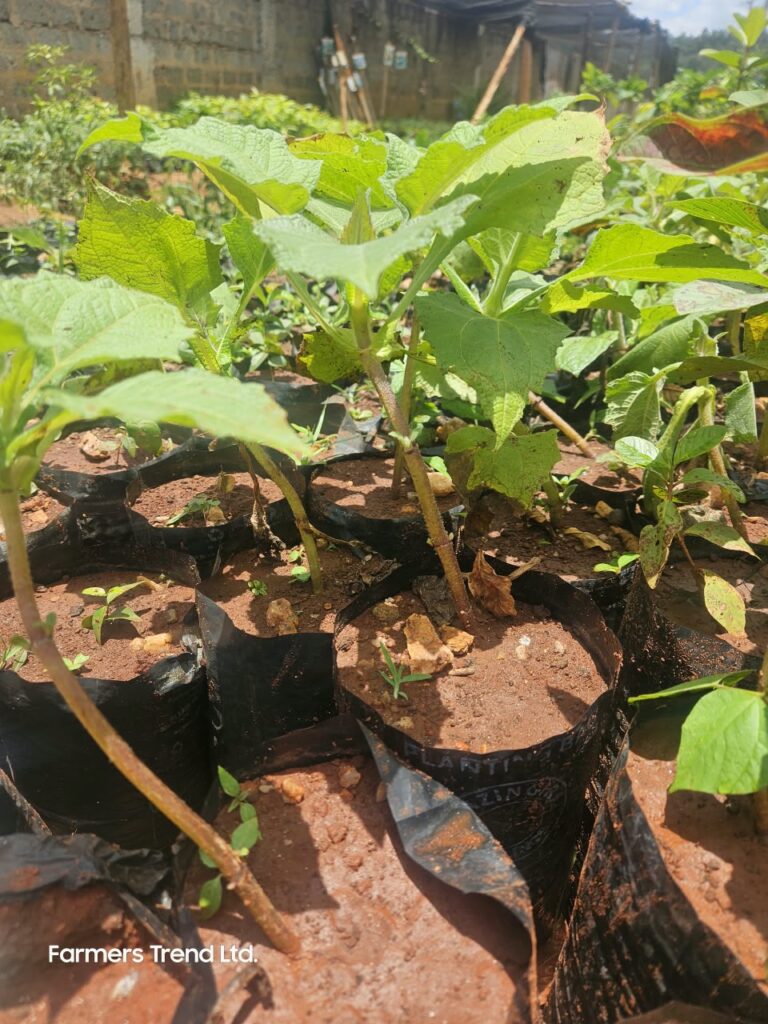
Farmers Trend Limited sells yacon seedlings at KSh 500 each. Order now and plant before the soil dries. Call or WhatsApp 0724 559 286 or 0790 509 684. Email info@farmerstrend.co.ke. Visit www.farmerstrend.co.ke and read more on yacon farming in Kenya.
https://farmerstrend.co.ke/trending/yacon-spacing-and-planting/https://farmerstrend.co.ke/wp-content/uploads/2026/10/795664579_1878116823167570_806430389407380439_n-1024x578.jpghttps://farmerstrend.co.ke/wp-content/uploads/2026/10/795664579_1878116823167570_806430389407380439_n-150x150.jpg# TrendingFruitsIn FruitsYacon Farmingbigger yacon tubers,Farmers Trend Limited,how to plant yacon,plant yacon in the rains,yacon crowns,yacon farming in Kenya,yacon harvest time,yacon intercropping,yacon layouts,yacon mulching,yacon pests and diseases,yacon planting distance,yacon planting steps,yacon plants per acre,yacon propagation,yacon ridges,yacon row spacing,yacon seedlings Kenya,yacon seedlings KSh 500,yacon spacing and planting,yacon spacing per acre,yacon syrup,yacon tuber size,yacon yield per acreYacon spacing and planting decide how big your tubers grow. Plants set too close compete for light, water and nutrients. Plants set too far apart waste your land. The right distance gives you large tubers, a steady yield and a crop you sell at a good price.This guide on...FarmersTrendjohn doefarmerstrend@gmail.comAdministratorFarmers Trend Ltd.












Leave a Reply