Why Many Kenyan Tea Bonuses Fell Despite 3% Higher Prices, A Rise That Normally Means More Pay
EBC Financial Group highlights that less leaf, fuel costs, and earlier monthly payments are likelier causes, despite a flat shilling. A smaller bonus that does not always mean less pay, because more was paid monthly, although costs may cut both.
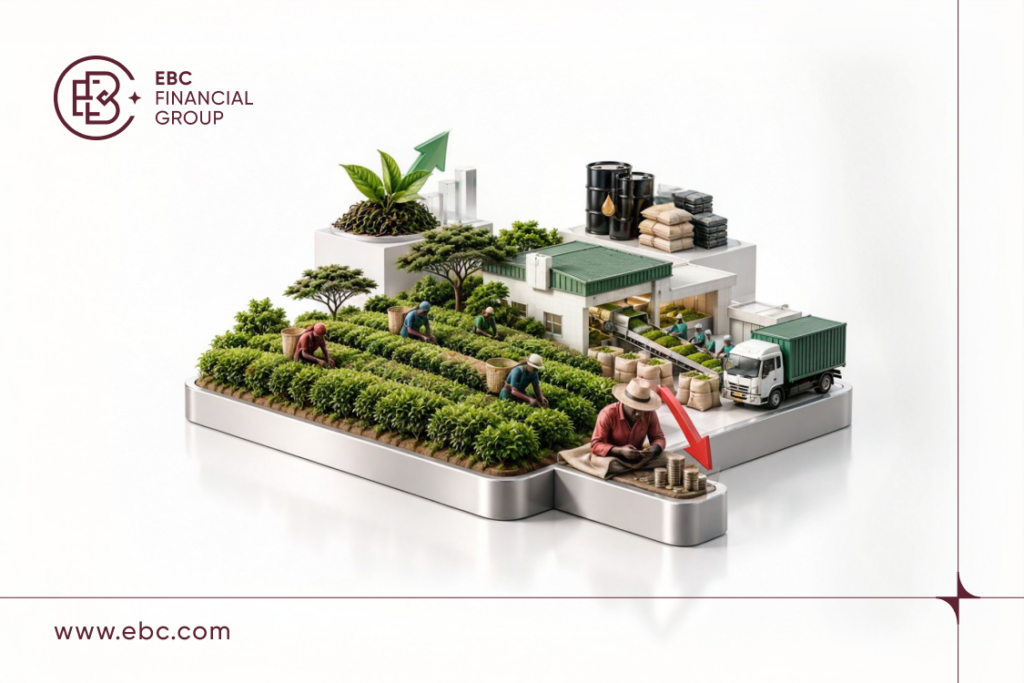
NAIROBI, 28 OCTOBER 2026 — At the Mombasa Tea Auction, where Kenya sells its tea in bulk, the average price of Kenyan tea rose about 3% in US dollars (USD) in 2025/26, the bonus year from July 2025 to June 2026. Buyers took a bigger share of the tea on offer and the shilling moved under 1%, yet many factories paid smaller bonuses. That makes prices and the exchange rate less likely explanations. Tea is sold in USD, but farmers are paid in Kenyan shillings (KES), so lower prices or fewer shillings per dollar can shrink bonuses, which is how the Kenya Tea Development Agency (KTDA) explained last year’s fall. EBC Financial Group (EBC) highlights that the likelier contributors are 4.34% less leaf, fuel costs that rose after the Middle East war began and higher monthly payments that moved money to farmers earlier. Rukuriri, last year’s top payer, cut its bonus from KES 57.50 to KES 50 as its monthly rate rose from KES 25 to KES 30. Fuel and monthly payments came late in 2025/26 and may apply all of 2026/27.
David Precious, Senior Market Analyst at EBC Financial Group, said, “On KTDA’s formula, a bonus is what remains after costs and monthly payments, so when sales hold, every extra shilling paid out during the year comes off the bonus. Part of this year’s fall may have reached farmers earlier through monthly payments.”

Auction Prices Averaged USD 2.23 In 2025/26 and the Shilling Averaged KES 129.26
Both explanations KTDA gave for last year’s fall improved or held steady this year. Tea Board of Kenya (TBK) data show auction prices averaging USD2.23 a kilogramme in 2025/26 against 2.16 in 2024/25, 73% of tea offered sold in 2025 against 55% in 2024, and 74% for KTDA factories in Sale 24 against 60%. Daily exchange rates show the shilling within 1% of its average.
Dry Weather Cut Leaf Deliveries Before Rains Returned in March
Leaf supply sets how many kilogrammes a factory has to sell. KTDA farmers delivered 4.34% less green leaf, the freshly picked leaf that factories process, in the first 11 months of the 2025/26 financial year, with national output down 5.76% in January and 16.27% in February, which TBK tied to dry weather. Output then ran above 2025 levels each month from March to June.
Diesel Peaked at KES 242.92 A Litre in May and Was Still KES 217.86 In September
Fuel raises the cost of collecting leaf and moving tea, and the war reached pump prices only in mid-April. The Energy and Petroleum Regulatory Authority held Nairobi diesel at KES 166.54 until 14 April; diesel then peaked at KES 242.92 in May and rose to KES 227.76 from 15 October after KES 217.86 in September.
Higher Monthly Payments Moved Part of the Bonus Forward
Monthly payments come out of sales before the bonus is worked out, so a higher monthly rate leaves a smaller bonus even if a farmer’s total holds. Embu and Nyeri boards, Rukuriri’s included, raised it from KES 25 to KES 30 from February. If deliveries were even through the year, five or six months at KES 5 more adds about KES 2 to KES 2.50 a kilogramme, between a quarter and a third of Rukuriri’s KES 7.50 bonus cut, and the effect may be larger because output ran above last year from March to June.
All Five of Last Year’s Top Payers Cut Their Rates
Every factory faced the same exchange rate, so differences may reflect each factory’s own leaf, costs and monthly rates. Rukuriri, Mununga, Gathuthi, Imenti and Ngere all paid less than a year earlier, while Gianchore rose from KES 13 to KES 18. The spread from highest to lowest bonus fell from nearly six times, KES 10 to KES 57.50, to four times, KES 12.50 to KES 50.
Fuel, Wages and A Full Year of Higher Monthly Payments May Shape The 2026/27 Bonus
Previously, EBC has noted that Kenya’s managed exchange rate has kept the shilling in a narrow band, which may leave leaf supply and costs as the source of change. The Central Bank of Kenya (CBK) quoted KES 129.89 per US dollar on 26 October, still inside that band. July’s auction average was USD 2.24 a kilogramme, against USD 2.05 a year earlier. Fuel and a 15% rise in agricultural minimum wages backdated to 1 May are costs that may cut the bonus and total pay in 2026/27, while a full year at the higher monthly rate may mean a smaller bonus even if total pay holds. Electricity adds to factory costs too: the energy regulator’s October adjustments add about KES 4.10 per unit, mostly a KES 3.22 fuel charge. KTDA says the 0.8% export levy has cut demand, while the Tea Board says its effect on price is negligible. KTDA says unpaid fertiliser subsidy is accruing interest, which may weigh on the bonus, while the Agriculture Ministry’s KES 2,000 price lowers farmers’ fertiliser deductions.
For more analysis from EBC, visit: www.ebc.com.
###
Disclaimer: This material is for information only and does not constitute a recommendation or advice from EBC Financial Group and all its entities (“EBC”). Trading Forex and Contracts for Difference (CFDs) on margin carries a high level of risk and may not be suitable for all investors. Losses can exceed your deposits. Before trading, you should carefully consider your trading objectives, level of experience, and risk appetite, and consult an independent financial advisor if necessary. Statistics or past investment performance are not a guarantee of future performance. EBC is not liable for any damages arising from reliance on this information.
About EBC Financial Group
EBC Financial Group, headquartered in London, UK, is a comprehensive financial services group licensed and operating in multiple key jurisdictions worldwide. The group offers over 200 Contracts for Difference (CFDs) products, including foreign exchange, precious metals, energy, stock indices, US stocks, ETFs, and digital currency. With branches in major global financial centres such as Tokyo, Sydney, Singapore, and Hong Kong, its service network covers over 100 countries and regions.
Regulation is the cornerstone of trust in the financial industry. EBC’s various operating entities hold financial regulatory licenses issued by the UK’s Financial Conduct Authority (FCA), Australia’s Securities and Investments Commission (ASIC), the Cayman Islands Monetary Authority (CIMA), and South Africa’s Financial Sector Conduct Authority (FSCA), strictly adhering to local regulatory rules in their operations.
Leveraging its FCA-regulated liquidity access, EBC has established long-term and stable partnerships with over 50 leading banks and non-bank liquidity providers globally. By integrating clearing-grade liquidity quotes, EBC provides clients with direct access to the primary liquidity market, delivering highly competitive institutional-grade liquidity depth and bank-level spreads, allowing clients to easily enjoy extremely low transaction costs. All clients within the group can enjoy top-tier liquidity access through its FCA licence; even for offshore accounts, quotes and orders are ultimately processed by a UK company. Combining big data and AI algorithms to optimise order matching mechanisms, EBC achieves over 87.6% of its orders executed at more favourable prices. For high-frequency and high-volume traders, EBC offers the customised EBC Private Room, a dedicated segregated trading channel that conceals trading orders and avoids market order manipulation. EBC is also one of the few licensed brokers in the industry capable of providing qualified professional investors with FCA liquidity clearing accounts with leverage up to 100x.
The Group’s core management team has over 30 years of experience working in large global financial institutions, having gone through multiple complete financial cycles. They have held core management positions in institutions regulated by the FCA, SEC, and CFTC, and their expertise covers key areas such as brokerage business, operations management, compliance and governance, and corporate risk management.
EBC has been named World Finance’s “Best Broker in the World” for four consecutive years, earning the trust of over 5 million registered users worldwide. Upholding a long-term perspective, the Group actively fulfils its social responsibilities: as an official partner of FC Barcelona, it collaborates with the University of Oxford’s Department of Economics to promote financial education, supports the UN Foundation’s “United to Beat Malaria” project, and partners with the World Association of Girl Guides and Girl Scouts (WAGGGS) to advance women’s empowerment and social equity.
EBC firmly believes that everyone who trades seriously deserves to be treated seriously.
https://farmerstrend.co.ke/trending/why-many-kenyan-tea-bonuses-fell-despite-3-higher-prices-a-rise-that-normally-means-more-pay/https://farmerstrend.co.ke/wp-content/uploads/2026/10/EBC-Why-Many-Kenyan-Tea-Bonuses-Fell-Despite-3-Higher-Prices-A-Rise-That-Normally-Means-More-Pay-1024x683.pnghttps://farmerstrend.co.ke/wp-content/uploads/2026/10/EBC-Why-Many-Kenyan-Tea-Bonuses-Fell-Despite-3-Higher-Prices-A-Rise-That-Normally-Means-More-Pay-150x150.png# TrendingEBC Financial Group highlights that less leaf, fuel costs, and earlier monthly payments are likelier causes, despite a flat shilling. A smaller bonus that does not always mean less pay, because more was paid monthly, although costs may cut both.NAIROBI, 28 OCTOBER 2026 — At the Mombasa Tea Auction,...FarmersTrendjohn doefarmerstrend@gmail.comAdministratorFarmers Trend Ltd.











Leave a Reply