Kenya Coffee 2025/2026 Season: The Year the Calendar Broke and Farmers Paid the Price
- Kenya’s 2025/2026 coffee season broke every rule farmers knew. Failed short rains, shifted long rains and a collapsed fly crop left smallholders struggling. Here is the full story of how the weather changed, who gained, who lost and what comes next.
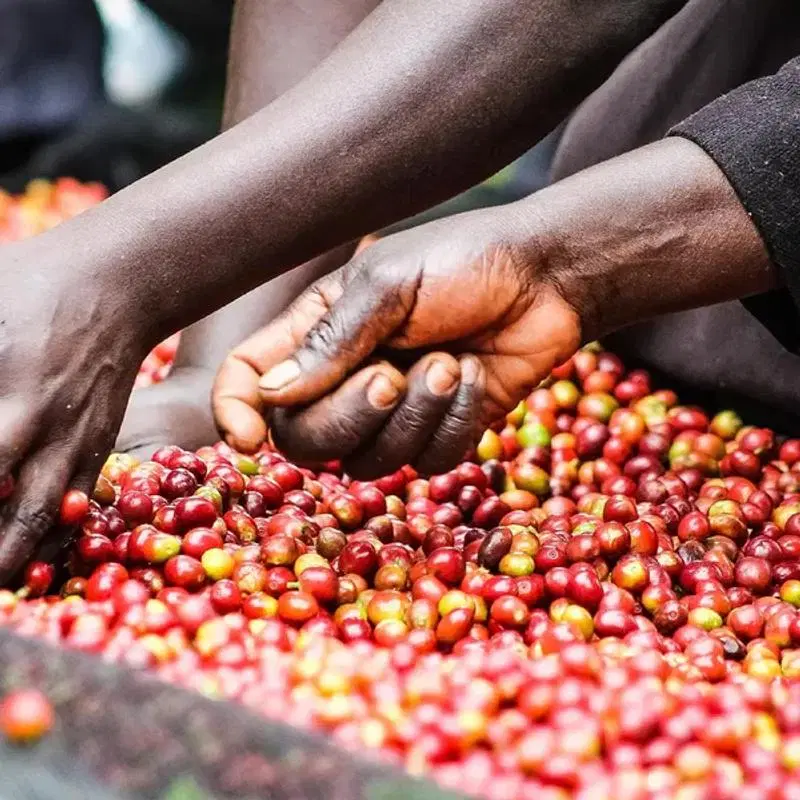
Kenya Coffee 2025/2026 Season: The Year the Calendar Broke and Farmers Paid the Price
The coffee year in Kenya runs from October 1 to September 30. For as long as anyone in the trade can remember, that year has followed a rhythm. Two rainy seasons. Two crops. Two paydays. Farmers, millers, marketers and buyers have built their working lives around that rhythm. They plan weddings around it. They pay school fees around it. They take loans around it. They hire labour around it.
The 2025/2026 season did not follow that rhythm.
The short rains failed. Not delayed. Not reduced. They simply never came. The long rains then moved, starting as early as January instead of March. Flowering followed in January. Harvesting peaked in August and September, months that are usually cold and dry. What should have been two separate crops became one long, stretched-out season that pushed the entire supply chain into unfamiliar territory.
For the smallholder farmers who grow about 70 percent of Kenya’s coffee, this was not a weather story on the evening news. It was the year their income disappeared.
The Calendar Farmers Have Always Trusted
A normal Kenyan coffee year depends on two wet periods. The long rains come in March and run through May. The short rains come in late October and run through December. Between them sit two dry spells. January and February are hot and dry. June through September is cold and dry.
These two rainy seasons produce two crops. The short rains trigger flowering for the fly crop, which gives about 30 percent of annual production. It is harvested from April to July and reaches the market in August and September. For smallholders, this crop is the bridge. It pays school fees. It buys food. It covers farm costs while the main crop is still developing.
The main crop comes from long rains flowering. It is harvested from October through December and gives about 70 percent of total production. It reaches the market from January through March and normally earns better prices because the beans are better.
Everything in Kenyan coffee is built on this rhythm. Mills hire staff around it. Cooperatives plan payments around it. Buyers book shipping slots around it. Banks structure credit around it. When the rhythm breaks, everything breaks with it.
The fly crop is not just a smaller version of the main crop. It plays a specific role in the economics of smallholder farming. Most smallholders have less than two hectares. They do not have reserves to draw on when a season fails. The fly crop gives them cash at a time when the main crop is still months away from harvest. That cash is used for weeding, for buying fertiliser, for paying pickers, for meeting household needs. Without it, farmers are forced to borrow, to sell assets, or to neglect their farms.
The main crop is the big one. It is what farmers wait for all year. It is what pays the larger bills. It is what determines whether a family can invest in their farm or simply survive. When the main crop is compromised, the effects last longer than a single season.
What Made 2025/2026 Different
Two things happened in 2025/2026 that had not happened in living memory for most farmers.
First, the short rains failed completely. There was no fly crop. Farmers who had come to depend on that August and September money had nothing to fall back on. No harvest. No payment. No bridge.
Second, the long rains shifted. Instead of arriving in March, they started in January. This triggered main flowering in January. The harvest then landed in August and September, which are cold and dry months. Coffee cherries do not ripen well in those conditions. The sugars and flavours that give Kenyan coffee its famous brightness and complexity do not develop properly when there is little moisture and little warmth.
For farmers with irrigation, there was something they could do. For the vast majority of smallholders who depend entirely on rain, there was nothing. They watched their crop mature under the wrong conditions and knew the market would punish them for it.
The Famine Early Warning Systems Network had already warned in March 2026 that the October to December 2025 rains had been extremely poor. A negative Indian Ocean Dipole and La Niña conditions were behind it. Poor crop production was expected across bimodal regions. Pasture and water were below average. For coffee, this meant a season where the usual signals that guide flowering, ripening and harvesting could not be trusted.
A negative Indian Ocean Dipole is a climate pattern that affects rainfall across East Africa. When it is strong, it can bring drought to the region. La Niña, which involves cooler than normal sea surface temperatures in the central and eastern Pacific, can also influence rainfall patterns. When these two patterns combine, the effects on rainfall can be severe. That is what happened in late 2025. The short rains that farmers were counting on never arrived.
One Long Season Instead of Two
The shift from two seasons to one long season has stretched the supply chain in ways that are still being felt.
Mills were built for two processing periods. The fly crop gave them smaller volumes to handle while keeping equipment and staff working. The main crop was the peak. With everything now arriving in one compressed window, mills face capacity problems, processing delays and the risk that cherries waiting too long will lose quality.
The marketing calendar has also been thrown off. Buyers who count on Kenyan coffee to fill specific positions in their offerings now face a different pattern of availability. The predictable arrival of fly crop coffee in August and September and main crop coffee in January through March has been one of Kenya’s selling points to international buyers. That predictability is now gone. Some buyers have responded by buying forward to secure supply. Others have looked at other origins to reduce their dependence on Kenya.
The auction numbers tell the story of the disruption. January 2026 exports hit an all-time high of 231,561 bags. That was four times higher than the previous year. But by March 2026, the average price had fallen to USD 287.70 per 50-kilogram bag, down 16.5 percent from USD 344.57 the year before. The weighted average for the third quarter of the season was USD 331.73 per bag, compared to USD 352.07 the previous year. Volume was there. Prices were not.
The auction itself has seen a major geographic shift. By the close of the reporting period, 36.36 million kilograms of clean coffee valued at USD 247.6 million had been traded. That surpassed the entire 2024/2025 season’s 31.33 million kilograms.
Kericho’s Rise and Central Kenya’s Slide
Kericho County has never been the first name that comes to mind when people talk about Kenyan coffee. Kirinyaga, Nyeri and Murang’a have carried the country’s reputation for premium Arabica for generations. But the numbers from the Nairobi Coffee Exchange for 2025/2026 tell a different story.
Kericho sat at the top. The county nearly doubled its auction volumes from 3.03 million kilograms to 6.00 million, overtaking Kirinyaga in both volume and value. County officials point to improved farmer participation, stronger cooperative structures, better market access and enhanced extension services, backed by deliberate investment in seedlings, pulping machines and solar dryers.
Western Kenya as a whole emerged as the fastest-growing coffee region. Nandi increased auction volumes by 92 percent. Bungoma increased by 97 percent. Kisii more than quadrupled its deliveries. Nyamira recorded nearly six-fold growth. Together, Kericho, Nandi, Bungoma, Kisii, Nyamira and Trans Nzoia contributed 12.44 million kilograms, accounting for 34 percent of total exchange volume, up from 19 percent the previous season.
The traditional Central Kenya bloc of Murang’a, Nyeri, Kirinyaga and Kiambu saw its share decline from 62 percent to 51 percent. Machakos recorded a 58 percent decline in auction volumes. Busia, Vihiga, Kajiado, Taita Taveta and Siaya registered no auction sales at all.
This geographic spread is not necessarily bad news. It spreads production risk and brings new farmers into the sector. But it raises questions about quality consistency. The traditional growing regions have decades of institutional knowledge, established processing infrastructure and proven reputations. Emerging regions are still building those foundations. Kirinyaga coffee continued to command the highest average price at USD 7.25 per kilogram, compared to the national average of USD 6.81. That premium reflects the value of a reputation built over generations.
The rise of Kericho and other Western Kenya counties is worth examining more closely. For years, these regions were seen as marginal for coffee. They did not have the altitude, the soil or the rainfall of Central Kenya. But as climate patterns shift, some of these assumptions are being tested. Parts of Western Kenya may become more suitable for coffee as temperatures rise in traditional growing areas. The challenge is building the infrastructure and knowledge base to take advantage of that shift.
The Quality Problem Nobody Wants to Talk About
Quality has always been Kenya’s strongest card in the global coffee market. Kenyan Arabica is prized for its bright acidity, complex flavour and distinctive character. Buyers pay premiums for it. The country’s reputation rests on consistency and excellence. The 2025/2026 season has put that reputation under pressure.
Harvesting in August and September, during cold and dry conditions, is not ideal for cherry development. Without proper ripening, the beans inside the cherry do not achieve the sugar content and flavour complexity that define Kenyan coffee. For smallholder farmers with no irrigation, there was no way to compensate.
Disease pressure has also been a concern. Climate change has already been increasing the prevalence of Coffee Berry Disease and Coffee Leaf Rust across Kenya’s growing regions. The unusual weather patterns of 2025/2026, with moisture stress followed by unseasonable conditions, created an environment conducive to outbreaks. Weather reports from June 2026 noted that widespread and significantly above-average rainfall in key growing regions posed high risk to the main crop outlook, particularly during critical early development stages.
An investigation into the impact of climate change on Kenyan coffee farmers found that 93 percent of growers had experienced effects in the form of more erratic rainfall and an increase in pests and diseases. The survey, conducted in Nyeri, Kirinyaga and Embu counties, noted that extreme weather caused losses in yield and income, threatening farmers’ ability to continue growing coffee.
The full quality implications of the 2025/2026 season may not be apparent for months or years. International buyers who experience quality inconsistencies may reduce their purchases or seek alternative origins. The consequences would extend well beyond a single season.
Coffee quality is not just about the bean. It is about the entire chain of events that leads from flower to cup. When flowering happens at the wrong time, when cherries ripen under stress, when processing is delayed because mills are overwhelmed, when drying happens in cold and damp conditions, the cumulative effect is a product that does not meet the standards buyers expect. Kenyan coffee has built its name on meeting those standards. Every season that falls short erodes that name a little more.
Farmers Caught Between Weather and Wallet
For smallholder farmers, the disruption of 2025/2026 has been felt most acutely in their pocketbooks. The fly crop, which normally provides income during the August and September period, simply did not exist. Farmers faced an extended stretch without revenue while still incurring the costs of maintaining their farms, paying for labour and managing household expenses.
The financial pressure has been compounded by challenges with government support mechanisms. The Cherry Advance Fund, intended to streamline payments to farmers, has not delivered as promised for many. Reports from the sector indicate that some farmers did not receive the advance payments they were expecting, leaving them unable to meet essential obligations.
The debt burden on coffee cooperatives has been another drag. The government has been working to address this. An audit established genuine cooperative debts at Sh6.8 billion, down from an initial estimate of Sh11 billion. About Sh2 billion owed to state institutions has been cleared. A further Sh2 billion has been allocated to settle loans owed to commercial banks. The Coffee Cherry Advance Revolving Fund has been established with Sh8 billion to enable farmers to access credit at three percent interest.
These are meaningful interventions. But their impact on the ground has been uneven. What has been missing, according to voices within the sector, is consistent and accessible extension support. One coffee agronomist noted that field days for farmers had been absent for much of the year, creating a significant information gap. When farmers do not have access to timely advice on how to manage their crops under unusual conditions, they are left to rely on habit and intuition. That may not serve them well when the weather no longer follows familiar patterns.
The information gap is not a small matter. Coffee farming is knowledge-intensive. Farmers need to know when to prune, when to apply fertiliser, when to spray for pests and diseases, when to harvest. Under normal conditions, this knowledge is passed down through generations and reinforced through extension services. When conditions change, the old knowledge may not apply. Farmers need new information to adapt. If they do not get it, they fall back on what they know, which may make things worse.
What the Government Is Betting On
The government has responded to the sector’s challenges with an ambitious reform agenda. The Coffee Act of 2026, signed into law in March, establishes a new Coffee Board of Kenya and a Coffee Research and Training Institute. The Act gives the board a mandate to regulate the industry, promote development and strengthen research and training. It covers licensing, traceability, quality assurance and dispute resolution. It is a comprehensive piece of legislation that aims to address many of the structural weaknesses that have held the sector back.
The government’s stated target is to increase annual coffee production from the current 50,000 metric tonnes to 150,000 metric tonnes by 2028 or 2029. The strategy includes distributing high-yielding, disease-resistant seedlings. A total of Sh500 million has been allocated to propagate 10 million seedlings annually. Plans also include expanding research centres, strengthening cooperatives and implementing market reforms to secure fairer returns for farmers.
The Coffee Research Institute is focusing on developing climate-resilient coffee varieties. It is screening new varieties and exploring the integration of Arabica and Robusta coffee to develop varieties adaptable to different regions and resistant to pests and diseases. This work is critical. Climate scientists predict that Kenya’s average maximum temperature will increase from 27°C to 31.2°C by 2050. Rainfall is predicted to increase from 1,405mm to 1,575mm but with a distribution that is not favourable for coffee. The optimal coffee-producing zones are expected to shift from the current 1,600m above sea level to higher altitudes of 1,700m. That could reduce regions suitable for coffee production from 50 to 70 percent down to just 30 to 60 percent.
The government has also confirmed plans for Coffee Training Centres across the country to strengthen extension services, accelerate technology adoption and support youth-led agricultural initiatives. The Principal Secretary for Agriculture has engaged Ward Coffee Champions trainees, promoting climate-smart and precision farming. UNIDO has launched an Executive Programme in Coffee Innovation and Business, bringing together 25 Kenyan coffee companies for intensive training and mentoring designed to strengthen innovation, climate resilience and value addition.
These are all necessary steps. But they will take time to bear fruit. Farmers who are struggling now cannot wait for 2030 to see the benefits of new varieties or expanded extension services. They need support today. The gap between policy and practice is where many farmers live. They hear about reforms in Nairobi. They read about new initiatives in the newspaper. But on their farms, nothing has changed. The rains still fail. The prices are still low. The debts are still mounting.
What Buyers Are Watching
International buyers who depend on Kenyan coffee have faced their own challenges this season. The compressed availability of Kenyan coffee, particularly during periods when supply is typically limited, has required adjustments to sourcing strategies. Some buyers have increased their forward purchasing to secure supply. Others have diversified their origins to reduce dependence on Kenyan coffee.
The quality concerns associated with the 2025/2026 crop have also influenced buyer behaviour. Buyers who prioritise consistency have had to conduct more rigorous quality assessment, potentially rejecting more lots than in typical seasons.
The market has responded in predictable ways. When quality is uncertain, prices soften. The fall in average auction prices from USD 344.57 per bag to USD 287.70 per bag between March 2025 and March 2026 reflects this. The market is not punishing Kenyan coffee. It is pricing in uncertainty.
For Kenya, the risk is longer term. If buyers come to see Kenyan coffee as less reliable, they may reduce their purchases or shift their loyalty to other origins. Rebuilding that trust takes years. Losing it takes one bad season.
Buyers are not just looking at price. They are looking at consistency. A buyer who orders a container of Kenyan coffee expects it to taste a certain way. If it does not, they have a problem with their customers. Their customers may not know or care about Kenyan weather patterns. They just know the coffee they bought last time was better. That is how reputations are lost.
Some buyers have been understanding. They know that weather affects crops. They know that Kenya is not the only origin facing climate challenges. But understanding has limits. If the quality issues persist for multiple seasons, buyers will start to look elsewhere. There are plenty of origins competing for the specialty coffee market. Kenya is not the only country that can produce bright, complex Arabica.

What Farmers Are Doing Without Waiting for Policy
While policy makers debate and draft, farmers are already adapting in whatever ways they can.
Some have invested in irrigation where feasible. This option remains out of reach for most smallholders, but those who can afford it are using it to buffer against erratic rainfall. A farmer with a small dam or a borehole can keep their trees alive during dry spells and can trigger flowering when they choose, rather than waiting for rain that may not come.
Others have adjusted their harvesting and processing practices to mitigate quality losses. Some are picking cherries earlier than they would like, hoping to capture what quality remains. Others are investing in better drying beds and storage to protect what they have. Some have simply absorbed the losses and hoped for better conditions in future seasons.
There is growing momentum behind regenerative agriculture approaches that restore soil health, conserve water, improve biodiversity and build resilience. The Rainforest Alliance, working with partners including Coffee Management Services and Kiganda Estate, has been promoting these practices. Kiganda Estate became the first farm in Africa to receive certification under the Rainforest Alliance Regenerative Agriculture Standard.
Research supports the effectiveness of such approaches. A study evaluating eco-friendly coffee farming among smallholder farmers in Embu County found that eco-friendly management significantly increased coffee yield, with an average gain of 1.12 kilograms per tree compared to conventional plots. Disease suppression was substantial, with Coffee Berry Disease incidence reduced by 89 percent and Coffee Leaf Rust by 93 percent. Input costs were comparable between the two systems, indicating that productivity and plant-health improvements were achieved without increasing production expenses.
These findings matter because they suggest that farmers do not have to choose between productivity and sustainability. They can pursue both, and in doing so, build resilience against the kind of weather shocks that defined the 2025/2026 season.
Regenerative agriculture is not a quick fix. It takes time to rebuild soil health. It takes time to see the benefits of better water retention and improved biodiversity. But for farmers who are thinking about the long term, it offers a path forward that does not depend on government support or favourable weather. It depends on practices that farmers can implement themselves, with the right knowledge and support.
Some farmers have also started to diversify their income. They are planting other crops alongside coffee, keeping livestock, or finding off-farm work. This is not a sign that they are giving up on coffee. It is a sign that they are being realistic about the risks. When one crop fails, they need something else to fall back on. Diversification is a form of insurance, and for many smallholders, it is the only insurance they have.
The Financial Stress on Cooperatives
Coffee cooperatives are the backbone of the smallholder sector. They collect cherries, process them, market the coffee and pay farmers. When the season goes wrong, cooperatives feel the pressure alongside their members.
The debt burden on cooperatives has been a long-standing problem. Many cooperatives have carried loans for years, sometimes decades, that they have been unable to repay. The government has been working to address this through audits and debt restructuring. An audit established genuine cooperative debts at Sh6.8 billion, down from an initial estimate of Sh11 billion. About Sh2 billion owed to state institutions has been cleared. A further Sh2 billion has been allocated to settle loans owed to commercial banks.
But debt relief is not a solution on its own. Cooperatives need to be able to operate profitably if they are to serve their members. The 2025/2026 season made that harder. With lower volumes and lower prices, cooperatives had less money coming in. They still had to pay for processing, for staff, for maintenance. Some cooperatives have had to delay payments to farmers, adding to the financial strain on households.
The Coffee Cherry Advance Revolving Fund, established with Sh8 billion, is intended to help cooperatives pay farmers more quickly. The fund allows cooperatives to access credit at three percent interest, which they can use to pay farmers as soon as cherries are delivered. This helps farmers get money when they need it, rather than waiting months for the cooperative to sell the coffee and receive payment.
The fund is a good idea, but its impact depends on how well it is implemented. Cooperatives need to know how to access it. They need to be able to manage the credit responsibly. Farmers need to understand how it works and what it means for their payments. If the fund is not accessible or not understood, it will not achieve its purpose.
The Role of County Governments
County governments have a role to play in supporting coffee farmers, and some are taking it more seriously than others.
In Kericho, the county government has invested in seedlings, pulping machines and solar dryers. It has supported cooperatives and strengthened extension services. These investments have helped Kericho become the leading coffee producer in the country for the 2025/2026 season.
Other counties are following suit. Some are investing in irrigation infrastructure. Others are supporting farmer training and cooperative development. Still others are working to attract private investment in processing and marketing.
But not all counties have the resources or the political will to support coffee. In some areas, coffee is not a priority. Farmers are left to fend for themselves, relying on their own knowledge and whatever support they can find from private companies or non-governmental organisations.
The disparity between counties is one reason why the geographic shift in production is happening. Farmers in counties that support coffee are more likely to stay in the sector and invest in their farms. Farmers in counties that do not support coffee may abandon it altogether, or switch to other crops that offer better returns with less risk.
What the 2026/2027 Season Might Look Like
It is too early to say with certainty what the 2026/2027 season will bring. Weather patterns are unpredictable, and the climate conditions that caused the disruption of 2025/2026 may or may not repeat themselves.
Some forecasters are predicting a return to more normal rainfall patterns. Others are warning that the unusual conditions could persist. The negative Indian Ocean Dipole and La Niña conditions that contributed to the failed short rains may weaken or strengthen. There is no way to know for sure.
What is clear is that farmers cannot afford to assume that things will return to normal. The old assumptions about when to plant, when to expect rain, when to harvest, are no longer reliable. Farmers need to be prepared for the possibility that the 2026/2027 season will bring more of the same disruption.
This means planning for uncertainty. It means having contingency plans for when rain does not come. It means investing in irrigation where possible, in drought-resistant varieties, in soil and water conservation. It means diversifying income sources so that a failure in one crop does not mean a failure for the whole household.
It also means that the institutions that support coffee farming need to be more flexible. Extension services need to be able to respond to changing conditions, not just deliver the same advice year after year. Research institutions need to prioritise climate resilience. Marketing systems need to be able to handle variable volumes and quality.
Voices from the Ground
To understand what the 2025/2026 season meant for farmers, it helps to hear from them directly.
A smallholder in Nyeri, who has been growing coffee for over thirty years, said that the failure of the short rains was unlike anything she had seen before. She had come to depend on the fly crop to pay school fees for her grandchildren. Without it, she had to borrow money from a neighbour. She was able to repay it after the main crop, but the cost of the loan ate into her profits. She worries about what will happen if the short rains fail again next year. She is not sure if she can borrow again.
A cooperative manager in Kirinyaga said that the compressed harvesting season put enormous pressure on the factory. Cherries that would normally arrive over several months all came at once. The factory could not process them all quickly enough. Some cherries had to wait longer than they should have, which affected quality. He is proud that his cooperative was able to get the coffee to market, but he knows that the quality was not what it could have been. He is worried about the reputation of his cooperative, which has taken decades to build.
A young farmer in Kericho, who has been growing coffee for five years, said that the 2025/2026 season was a mixed blessing. The volume was good, and the prices, while not as high as he had hoped, were better than he had feared. He has been investing in his farm, planting new trees and improving his processing. He sees coffee as a long-term investment, not a get-rich-quick scheme. He is optimistic about the future, but he knows that he is taking a risk. If the weather continues to be unpredictable, his investment could be wiped out.
A buyer from Europe, who has been sourcing Kenyan coffee for over a decade, said that the 2025/2026 season was challenging. The quality was inconsistent, and he had to reject several lots that did not meet his standards. He understands that farmers are facing difficult conditions, but he has his own customers to think about. He has started sourcing more coffee from other origins to reduce his risk. He still loves Kenyan coffee, but he cannot afford to take chances with quality.
These voices reflect the range of experiences in the 2025/2026 season. Some farmers and cooperatives managed better than others. Some buyers are sticking with Kenya, while others are looking elsewhere. The common thread is uncertainty. No one knows what the next season will bring, and everyone is trying to prepare for the worst while hoping for the best.
The Long-Term Outlook
The challenges facing Kenyan coffee are not going away. Climate change is already affecting weather patterns, and the effects are expected to intensify in the coming decades. Temperatures are rising. Rainfall is becoming more erratic. Pests and diseases are spreading. The zones suitable for coffee production are shifting.
This does not mean that Kenyan coffee is doomed. The country has significant advantages. It has a reputation for quality that is unmatched in many origins. It has a well-established research institution in the Coffee Research Institute. It has a network of cooperatives and marketing channels. It has farmers who are skilled and committed.
But maintaining those advantages will require sustained effort. It will require investment in research and development. It will require strengthening extension services so that farmers get the information they need. It will require improving infrastructure so that coffee can be processed and marketed efficiently. It will require addressing the financial challenges that have held back cooperatives and farmers.
It will also require a shift in mindset. For too long, Kenyan coffee has been seen as a commodity to be sold at whatever price the market offers. The future lies in treating it as a premium product that deserves premium prices. That means investing in quality, not just quantity. It means building direct relationships with buyers who value what Kenya has to offer. It means telling the story of Kenyan coffee in a way that resonates with consumers.
What Needs to Change
If the 2025/2026 season has taught the industry anything, it is that business as usual is no longer an option. The old assumptions about weather, about markets, about government support, no longer hold. Farmers and everyone else in the supply chain need to adapt.
Some of the changes needed are technical. Farmers need access to better varieties, better practices, better tools. They need irrigation where feasible, drought-resistant trees, and improved processing methods. Research institutions need to prioritise the challenges that farmers are facing now, not the challenges of the past.
Some of the changes needed are financial. Farmers need access to credit that is affordable and flexible. They need insurance that protects them against weather shocks. They need payment systems that get money into their hands quickly. Cooperatives need to be financially viable so that they can serve their members effectively.
Some of the changes needed are institutional. Extension services need to be strengthened so that farmers get timely, relevant advice. Cooperatives need to be governed well, with transparency and accountability. Marketing systems need to be efficient and fair, so that farmers get a decent share of the final price.
Some of the changes needed are political. The government needs to prioritise coffee as a strategic sector. It needs to invest in research, infrastructure and extension. It needs to create an enabling environment for private sector investment. It needs to ensure that reforms are implemented, not just announced.
None of these changes will happen overnight. They will require sustained effort over years, perhaps decades. But the alternative is to watch Kenyan coffee decline, as farmers abandon the crop and buyers turn to other origins. That would be a loss not just for farmers but for the country as a whole.
What Happens If Nothing Changes
It is worth pausing to consider what Kenyan coffee looks like if the current trajectory continues unchanged. The picture is not a happy one.
Farmers who have grown coffee for generations will continue to face unpredictable weather. Some will adapt. They will invest in irrigation, in better varieties, in soil conservation. They will find ways to cope. But many will not. They will lack the resources, the knowledge or the support. They will watch their harvests shrink and their incomes fall. Eventually, they will give up. They will cut down their coffee trees and plant something else, or they will sell their land and move to the city.
The cooperatives that serve these farmers will struggle. With fewer members and lower volumes, they will find it harder to cover their costs. Some will collapse. Others will limp along, unable to invest in the equipment and infrastructure they need to compete. The services they provide, from processing to marketing to extension, will deteriorate. Farmers who remain will have fewer options and less bargaining power.
The mills and marketing agents that depend on coffee will also feel the squeeze. With lower volumes, they will have less work. Some will close. Others will consolidate. The infrastructure that has been built up over decades will fall into disuse. The knowledge and skills that have been accumulated will be lost.
Buyers who have sourced Kenyan coffee for years will look elsewhere. They will find other origins that can offer consistency and reliability. They will build relationships with farmers and cooperatives in those countries. They will invest in those supply chains. Kenyan coffee will become a niche product, sought after by a few enthusiasts but no longer a major player in the global market.
The communities that depend on coffee will suffer. Coffee supports more than six million people in Kenya directly and indirectly. When coffee declines, those people lose their livelihoods. Schools lose their funding. Health clinics lose their patients. Local economies contract. The social fabric that holds these communities together begins to fray.
This is not a prediction. It is a possibility. It is what happens if nothing changes. The 2025/2026 season has shown what the future could look like if the challenges facing Kenyan coffee are not addressed. It is a warning, and warnings are only useful if they are heeded.
The Case for Optimism
But there is another possibility. There is a version of the future where Kenyan coffee not only survives but thrives.
This version depends on action. It depends on farmers, cooperatives, government, researchers, buyers and everyone else in the supply chain working together. It depends on recognising that the challenges are real and that they require sustained effort to overcome. It depends on investing in the future rather than just managing the present.
The signs of hope are there. The rise of Kericho and other Western Kenya counties shows that coffee can be grown successfully in new areas. The research into climate-resilient varieties shows that science can help farmers adapt. The interest in regenerative agriculture shows that there is a market for sustainably produced coffee. The commitment of young farmers shows that there is a future in coffee for the next generation.
Kenyan coffee has faced challenges before. It survived the collapse of the coffee agreement in the 1980s. It survived the liberalisation of the 1990s, which brought new competition and new pressures. It survived the debt crises and the governance problems that have plagued cooperatives for decades. Each time, it has found a way to adapt and continue. There is no reason to believe that it cannot do so again.
The 2025/2026 season was difficult. It exposed weaknesses that have been ignored for too long. It showed what happens when the weather does not follow the rules. But it also showed the resilience of farmers, the commitment of cooperatives, the ingenuity of researchers and the determination of everyone who cares about Kenyan coffee. That resilience is the foundation on which the future can be built.
What Farmers Need Most
If there is one message that comes through clearly from the 2025/2026 season, it is that farmers need support. Not handouts. Not sympathy. Support that helps them adapt to the changing conditions they face.
The most important support is information. Farmers need to know what is happening with the weather. They need to know what they can do to protect their crops. They need to know what varieties to plant, when to prune, when to apply fertiliser, when to harvest. They need this information in a form they can understand and act on. They need it in time to make a difference.
The second most important support is finance. Farmers need access to credit that is affordable and flexible. They need insurance that protects them against weather shocks. They need payment systems that get money into their hands quickly. They need help managing the debts that many of them carry from previous seasons.
The third most important support is infrastructure. Farmers need roads that connect them to markets. They need processing facilities that are efficient and well-maintained. They need storage facilities that protect their coffee from spoilage. They need irrigation systems that can supplement rainfall when the rains fail.
These are not new needs. They have been identified many times before. The difference now is that the consequences of failing to meet them are more serious than ever. The 2025/2026 season has shown what happens when farmers are left to fend for themselves. It is not a pretty picture.
The Role of the Private Sector
The private sector has a role to play in the future of Kenyan coffee. Some companies are already investing in the sector, providing training, inputs and market access to farmers. Others are exploring new models of partnership that share risk and reward more equitably.
These efforts are welcome. They bring resources, expertise and market connections that the sector needs. But they are not a substitute for public investment. The private sector will invest where it sees a return. It will not invest in the roads, the research, the extension services that benefit everyone. Those are the responsibility of government.
The best model is one where public and private investment complement each other. Government provides the enabling environment, the infrastructure, the research. The private sector provides the market linkages, the processing capacity, the innovation. Farmers benefit from both.
This model is not easy to achieve. It requires coordination, trust and a shared vision. It requires government to be effective and accountable. It requires the private sector to be responsible and transparent. It requires farmers to be organised and empowered. But it is the model that offers the best hope for the future.
The Importance of Cooperatives
Cooperatives have been the backbone of Kenyan coffee for generations. They collect cherries from smallholders, process them, market the coffee and pay farmers. They provide services that individual farmers could not access on their own. They give farmers a collective voice in a market that is often dominated by large buyers.
But cooperatives have their problems. Many are burdened by debt. Some are poorly managed. A few have been plagued by corruption. These problems have undermined the trust that farmers have in cooperatives and have limited their effectiveness.
Strengthening cooperatives is essential to the future of Kenyan coffee. This means improving governance, increasing transparency and building management capacity. It means addressing the debt burden that holds many cooperatives back. It means giving farmers a real voice in how their cooperatives are run.
Some cooperatives are already doing this. They are investing in training for their boards and managers. They are adopting new technologies to improve efficiency and transparency. They are building relationships with buyers who value what they have to offer. These cooperatives are showing what is possible when the will and the resources are there.
The Next Generation
The future of Kenyan coffee depends on the next generation of farmers. If young people see no future in coffee, the sector will decline. If they see opportunity, it will thrive.
Attracting young people to coffee is not easy. It is hard work. It is risky. It does not offer the quick returns that young people often seek. But it can be rewarding, both financially and personally. Coffee farming can provide a decent living for those who are willing to invest the time and effort.
Making coffee attractive to young people requires making it profitable. It requires showing that there is a future in it. It requires providing the training, the finance and the market access that young farmers need to succeed. It requires celebrating the success stories of young farmers who are already making a go of it.
Some organisations are already working on this. They are running programmes to train young people in coffee farming, processing and marketing. They are providing grants and loans to help young farmers get started. They are connecting young farmers with mentors and with buyers. These efforts are small in scale but they are important. They are planting the seeds of the future.
What Buyers Can Do
Buyers have a role to play too. They can support Kenyan coffee by paying fair prices, by investing in the supply chain, by working with farmers to improve quality. They can recognise that the challenges facing Kenyan coffee are not the fault of farmers and that farmers need support to overcome them.
Some buyers are already doing this. They are building long-term relationships with cooperatives. They are providing advance payments to help farmers manage their cash flow. They are investing in training and infrastructure. They are paying premiums for quality and sustainability. These buyers are not just taking from Kenyan coffee. They are giving back.
Other buyers are not. They are focused on getting the lowest price possible. They are quick to abandon Kenyan coffee when quality or supply is uncertain. They do not invest in the supply chain. They do not build relationships. They are part of the problem, not the solution.
The choice is clear. Buyers who want to continue sourcing Kenyan coffee in the future need to invest in that future. They need to recognise that their success depends on the success of the farmers who grow the coffee. They need to be partners, not just customers.
What the Government Must Deliver
The government has made many promises to the coffee sector. The Coffee Act of 2026 is a comprehensive piece of legislation. The reforms it introduces are necessary. But legislation is not enough. Implementation is what matters.
The government must deliver on its promises. It must invest in research and extension. It must strengthen cooperatives and address their debt problems. It must improve infrastructure. It must create an enabling environment for private sector investment. It must ensure that farmers get a fair share of the final price.
This will require resources. It will require political will. It will require sustained effort over many years. It will not be easy. But it is necessary. The future of Kenyan coffee depends on it.
The government must also be accountable. Farmers need to know that the promises made to them are being kept. They need to see results on the ground, not just hear about them in speeches. They need to be able to hold their leaders to account if the promises are not kept.
A Season That Changed Everything
The 2025/2026 coffee year will be remembered as the season when the calendar broke. The short rains failed. The long rains shifted. The fly crop disappeared. Harvesting landed in the wrong months. Quality suffered. Prices softened. Farmers went without income for longer than they could comfortably manage.
But the season also revealed something about the resilience of Kenya’s coffee sector. Farmers adapted. Millers adjusted. Marketers recalibrated. Buyers changed their strategies. The government pushed through reforms. Research institutions continued their work. New growing regions emerged to fill the gap left by traditional ones.
The disruption of 2025/2026 is not a one-off event to be endured and forgotten. It is a warning of what is coming. Climate change is not a future problem for Kenyan coffee. It is a present reality. The farmers who lost their fly crop this season know that better than anyone.
The question now is whether the industry can turn this disruption into an opportunity for fundamental change. Can it build a coffee sector that is more resilient, more sustainable and more equitable for the millions of Kenyans who depend on it? Can it prepare for a future where the rains do not come when they are supposed to, where the dry months are hotter, and where the zones suitable for coffee growing shrink year by year?
The answer will determine not only the future of Kenyan coffee but the livelihoods of the communities that have cultivated it for generations. The 2025/2026 season has shown what happens when the old rules stop working. The work of building new ones has already begun.
What Farmers Are Saying Now
As the 2025/2026 season draws to a close, farmers across the country are looking back and looking ahead. Their feelings are mixed.
A farmer in Murang’a said that she is grateful that the main crop was not a complete failure. The volume was lower than she had hoped, and the prices were disappointing, but she was able to sell enough to cover her costs and have something left over. She is worried about next season but she is not giving up. She has been growing coffee for too long to stop now.
A farmer in Nyeri said that he is considering cutting down his coffee trees and planting avocado. The returns from coffee have been declining for years, and the 2025/2026 season made things worse. He has heard that avocado prices are good and that the trees are easier to manage. He is not sure if he will go through with it, but he is thinking about it.
A farmer in Kericho said that he is more optimistic than he has been in years. The prices were decent, and the county government has been supporting farmers. He has planted new trees and is investing in better processing. He believes that coffee has a future in Kericho, and he wants to be part of it.
A farmer in Kirinyaga said that she is worried about the future. The weather is becoming more unpredictable, and she does not know what to expect from one season to the next. She has been farming coffee for forty years and she has never seen anything like the 2025/2026 season. She is not sure how much longer she can continue.
These voices reflect the diversity of experiences in the 2025/2026 season. Some farmers are optimistic. Some are pessimistic. Most are somewhere in between. They are all trying to figure out what comes next.
The Road Ahead
The road ahead for Kenyan coffee is not an easy one. The challenges are real and they are growing. Climate change is making weather patterns more unpredictable. Pests and diseases are spreading. Competition from other origins is intensifying. The costs of production are rising.
But the road ahead is not without hope. There are farmers who are adapting and thriving. There are cooperatives that are well-managed and profitable. There are researchers who are developing new varieties and new practices. There are buyers who value Kenyan coffee and are willing to invest in its future. There is a government that has made coffee a priority and has committed resources to its development.
The future of Kenyan coffee will be determined by what happens next. If the industry continues on its current path, it will decline. If it makes the changes that are needed, it can thrive. The choice is not an easy one, but it is a clear one.
The 2025/2026 season was a wake-up call. It showed what happens when the weather does not follow the rules. It showed the vulnerability of farmers who depend on rainfall. It showed the fragility of a supply chain built on assumptions that no longer hold. But it also showed the resilience of a sector that has faced challenges before and overcome them.
The work of building a better future for Kenyan coffee has already begun. Farmers are planting new trees. Cooperatives are improving their governance. Researchers are developing new varieties. Buyers are building relationships. Government is implementing reforms. The foundation is being laid.
But there is much more to do. The challenges are urgent and the time for action is now. The farmers who lost their fly crop this season cannot wait for the next reform. The cooperatives that are struggling with debt need help today. The buyers who are losing confidence in Kenyan coffee need reassurance now.
The future of Kenyan coffee depends on what happens in the next few years. It depends on whether the promises made are kept. It depends on whether the investments needed are made. It depends on whether the farmers who grow the coffee are supported to adapt to the changing conditions they face.
The 2025/2026 season was a test. It tested the resilience of farmers, the effectiveness of institutions, the commitment of buyers and the will of government. The results were mixed. Some passed. Some failed. But the test is not over. The next season will bring new challenges. The season after that will bring more. The only way to pass is to learn from what happened and to do better next time.
Kenyan coffee has been grown for over a century. It has survived droughts, diseases, market crashes and political upheaval. It has adapted to changing circumstances and found new ways to thrive. There is no reason to believe that it cannot do so again. The 2025/2026 season was difficult, but it was not the end. It was a beginning. The beginning of a new chapter in the story of Kenyan coffee.
https://farmerstrend.co.ke/trending/kenya-coffee-2025-2026-season-broken-calendar-farmers/https://farmerstrend.co.ke/wp-content/uploads/2026/09/Kenya-Coffee.webphttps://farmerstrend.co.ke/wp-content/uploads/2026/09/Kenya-Coffee-150x150.webp# TrendingCoffee FarmingKenya Coffee 2025/2026 SeasonKenya's 2025/2026 coffee season broke every rule farmers knew. Failed short rains, shifted long rains and a collapsed fly crop left smallholders struggling. Here is the full story of how the weather changed, who gained, who lost and what comes next.Kenya Coffee 2025/2026 Season: The Year the Calendar...FarmersTrendjohn doefarmerstrend@gmail.comAdministratorFarmers Trend Ltd.

Leave a Reply