Sweet Potato Farming in Kenya and Its Origin, Flowers, Pests and Position in Africa
- Sweet potato farming in Kenya supports food security and rural incomes. Learn about the crop’s origin, botanical classification, flowers, major pests and Kenya’s position in African production.
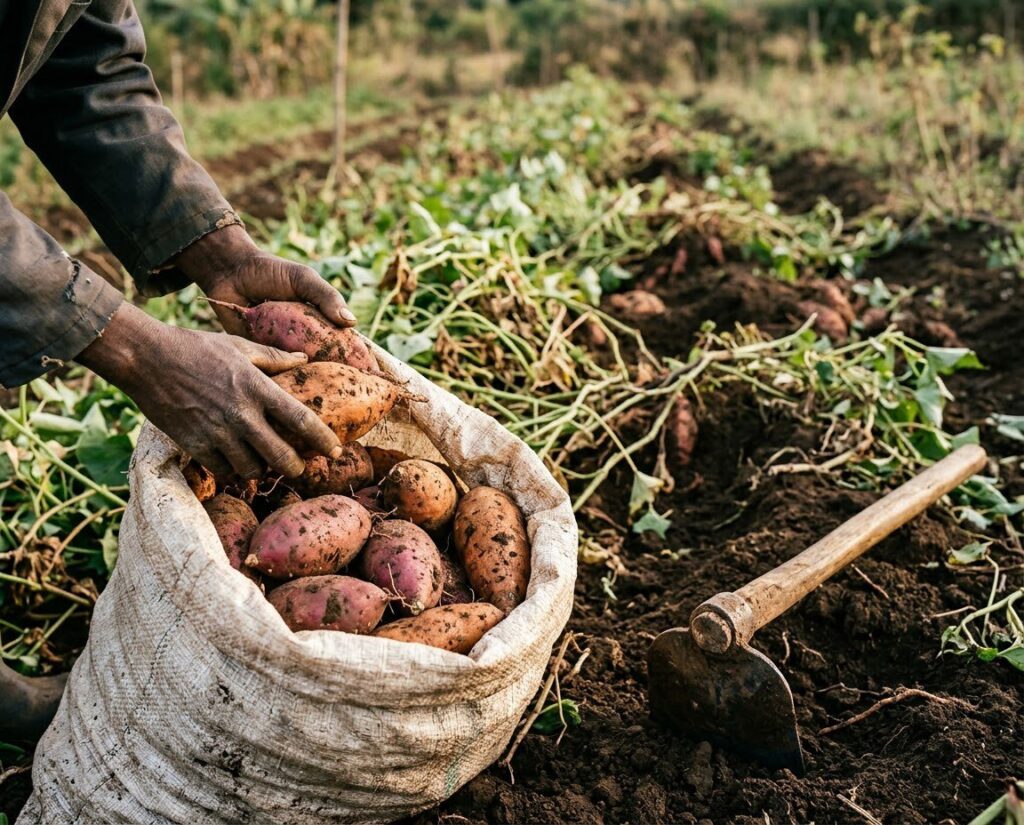
Sweet Potato Farming in Kenya and Its Origin, Flowers, Pests and Position in Africa
Sweet potato is an important food crop in Kenya, particularly in western Kenya and areas around Lake Victoria, where many farming households grow it for home consumption and sale. The crop provides edible roots and can fit into farming systems where farmers need a food source that matures relatively quickly. Its vines can also be used as livestock feed, making it useful beyond the harvest sold in local markets.
Although sweet potato is familiar to many Kenyan households, its history, botanical characteristics and production challenges are less widely understood. The crop originated in the tropical Americas before spreading to other parts of the world through trade and cultivation. Today, it is grown across several African countries, with production levels varying according to growing conditions, varieties, farming practices and market demand.
Where sweet potato originated
Sweet potato, scientifically known as Ipomoea batatas, originated in the tropical Americas, where Indigenous communities cultivated it long before European arrival. It subsequently spread to other continents through trade and exploration, reaching Africa during the period of European maritime expansion.
Portuguese traders were among those involved in moving crops between continents during the 1500s. Sweet potato gradually became established in different parts of Africa, including regions where its ability to produce edible roots made it a useful food crop.
In Kenya, sweet potato is particularly associated with western counties and areas around Lake Victoria. It is grown by smallholder farmers who may plant it in dedicated plots or incorporate it into wider crop production systems. Its importance varies by location, but it contributes to household food supplies and provides roots that can be sold in local markets.
Sweet potato botanical classification
Sweet potato belongs to the morning glory family, Convolvulaceae. Its botanical classification distinguishes it from the Irish potato, which belongs to an entirely different plant family.
| Classification | Name |
|---|---|
| Kingdom | Plantae |
| Division | Magnoliophyta |
| Class | Magnoliopsida |
| Order | Solanales |
| Family | Convolvulaceae |
| Genus | Ipomoea |
| Species | Ipomoea batatas |
The Irish potato is known scientifically as Solanum tuberosum and belongs to the family Solanaceae. Although sweet potato and Irish potato are both grown for their underground edible parts, they are not close botanical relatives. Their similarities in common names and food use can be misleading.
Sweet potato develops swollen storage roots, while the edible part of Irish potato is a stem tuber. This distinction matters when understanding how the crops grow and how they should be propagated.
How sweet potato grows and produces edible roots
Unlike crops commonly established from botanical seed, sweet potato is usually propagated vegetatively using vine cuttings. Farmers select healthy vines from suitable planting material, cut them into sections and plant them in prepared soil. The cuttings develop roots and shoots, allowing a new crop to establish.
As the plant grows, some of its roots enlarge and store energy, forming the fleshy roots harvested for food. The shape, size, skin colour and flesh colour depend on the variety. Depending on the variety and growing conditions, harvested roots may have white, cream, yellow, orange or purple flesh.
Sweet potato can spread along the soil surface, with vines covering the ground as the crop develops. This growth habit can help shade the soil and reduce the space available for some weeds after the crop has established. However, early weed control remains important because weeds can compete with young plants for water, nutrients and sunlight.
Farmers should obtain healthy planting vines from reliable sources. Repeatedly using vines from diseased fields can carry pests and diseases into a new crop, reducing plant vigour and harvest quality.
Does sweet potato produce flowers?
Yes. Sweet potato plants can produce flowers, although flowering varies considerably with variety, day length, temperature and other growing conditions. The flowers are generally funnel-shaped and may be pink, purple or pale in colour, resembling those of other plants in the morning glory family.
Sweet potato can produce botanical seeds after successful flowering and pollination. These seeds are mainly important in breeding programmes, where researchers use them to develop and evaluate new varieties. Commercial farmers generally do not depend on botanical seeds to establish ordinary sweet potato crops because vine cuttings provide a more practical way to maintain the characteristics of selected varieties.
For farmers, the priority is usually healthy vine establishment, suitable soil conditions and good management through to root development and harvest.
Kenya’s position in African sweet potato production
Sweet potato is cultivated in many African countries and contributes to food supplies, farm incomes and livestock feeding. Production is especially significant in countries where the crop is well adapted to local farming systems and forms part of the regular diet.
Kenya’s sweet potato production is at approximately 863,000 tonnes in 2024, equivalent to around 0.6% of reported global output and a global position of about 17th. The same figures place Kenya around ninth in Africa, behind major producers including Malawi, Nigeria, Tanzania and Uganda.
Malawi is a major sweet potato producer, while Nigeria, Tanzania and Uganda also have substantial production. Differences in output reflect the area under cultivation, crop productivity, local consumption and the role of sweet potato in national farming systems.
Kenya’s production shows that the crop already has an established place in the country’s agriculture. Opportunities to improve output include better access to suitable varieties, healthier planting vines, stronger pest and disease management, improved agronomic advice and more reliable markets. Raising production is not simply a matter of planting more land. Farmers also need to harvest quality roots that meet the needs of consumers and traders.
Major sweet potato pests and diseases in Kenya
Sweet potato can be affected by several pests and diseases that reduce root quality, weaken vines or lower yields. Their impact depends on the variety, local conditions, planting material and crop management.
Sweet potato weevil
The sweet potato weevil is one of the most damaging insect pests of the crop. Its larvae tunnel into roots and vines, causing physical damage and reducing the market value of harvested roots. Infested roots can develop a bitter taste, making them unsuitable for normal consumption or sale.
Damage can be particularly serious where cracked soil exposes roots or where crops remain in the ground for too long. Farmers can reduce risk by using healthy planting material, practising crop rotation, removing infested roots and crop residues, and harvesting at the recommended time. Field sanitation and the use of suitable varieties can also form part of an integrated management programme.
Root-knot nematodes
Root-knot nematodes are microscopic organisms that attack plant roots. They can cause swelling, distortion and other damage below ground, interfering with water and nutrient uptake. Affected plants may grow poorly, and root quality can decline.
Because the damage occurs underground, farmers may not identify the problem until plants become weak or roots are harvested. Using clean planting vines, rotating crops with suitable non-host species and selecting varieties with appropriate resistance can help reduce losses. Where nematodes are suspected, advice from an agricultural extension officer or plant health specialist can help distinguish them from other root problems.
Whiteflies and aphids
Whiteflies and aphids feed on plant sap and can weaken sweet potato vines when populations become high. Some species can also transmit viruses that affect plant growth and reduce root production.
Farmers should inspect crops regularly for insects, unusual leaf symptoms, stunted growth and changes in vine development. Starting with healthy planting material and removing plants confirmed to be infected can help limit the spread of some diseases. Insect management should be based on field observations and local extension recommendations rather than routine spraying without confirming the problem.
Sweet potato viruses
Viral diseases can cause symptoms such as leaf mottling, distortion, yellowing and stunted growth. Infected planting vines may carry viruses from one crop to the next, allowing problems to persist even when a farmer changes fields.
Using healthy vines from dependable sources is therefore an important preventive measure. Farmers should avoid selecting planting material from visibly diseased crops and should seek local guidance where symptoms are widespread. Resistant varieties, where available and suitable for the area, can provide an additional line of protection.
Practical ways farmers can improve sweet potato yields
Good crop management starts before planting. Farmers should select varieties suited to their area, intended use and market. Some consumers prefer particular flesh colours, textures or root sizes, so checking what local traders and households demand can help farmers choose wisely.
Planting vines should be healthy and vigorous. Land preparation should provide a suitable rooting environment, while planting at the right time helps the crop establish when moisture conditions are favourable. Farmers should control weeds while plants are young and maintain appropriate soil fertility without applying fertiliser blindly.
Regular field inspections help farmers identify pest and disease problems early. Crop rotation, removal of heavily infested plant material and good field hygiene can reduce the carryover of some pests and diseases. Harvesting should be timed to the variety and local growing conditions, with care taken to minimise bruising and cuts that shorten storage life.
Market planning is also important. Before expanding production, farmers should consider expected yields, labour costs, transport, seasonal prices and the availability of buyers. A good harvest does not automatically translate into high profits if many farmers supply the market at the same time or if roots are damaged during handling.
The role of sweet potato in Kenyan farming
Sweet potato offers Kenyan farmers a way to produce food and earn income from a crop that can fit into different smallholder farming systems. Its edible roots support household diets, while surplus production can be sold. The vines may also contribute to livestock feeding, although farmers need to manage the crop and feed resources carefully.
The crop’s potential depends on more than its ability to grow in a particular area. Healthy planting material, appropriate varieties, effective pest and disease management, sound agronomic practices and access to markets all influence what farmers harvest and earn.
Kenya already has an established sweet potato sector, but there is scope to improve productivity and root quality. Better planting-vine systems and more consistent farmer access to suitable varieties could help address avoidable losses and strengthen the crop’s contribution to food security.
For farmers, the starting point is straightforward: plant healthy vines, choose varieties suited to local conditions, monitor the crop regularly and understand the market before expanding production. These steps can help turn sweet potato’s potential into more dependable harvests and better returns.
https://farmerstrend.co.ke/trending/sweet-potato-farming-in-kenya-origin/https://farmerstrend.co.ke/wp-content/uploads/2026/10/Sweet-potato-farming-in-Kenya-1024x825.jpeghttps://farmerstrend.co.ke/wp-content/uploads/2026/10/Sweet-potato-farming-in-Kenya-150x150.jpeg# TrendingDiseasesIn cropsSweet PotatoesSweet potato farming in Kenya supports food security and rural incomes. Learn about the crop's origin, botanical classification, flowers, major pests and Kenya's position in African production.Sweet Potato Farming in Kenya and Its Origin, Flowers, Pests and Position in Africa Sweet potato is an important food crop in Kenya,...FarmersTrendjohn doefarmerstrend@gmail.comAdministratorFarmers Trend Ltd.







Leave a Reply