Persimmon Farming in Kenya: 12 Steps from Seedling to Harvest (Plus 4 Signs Your Fruit Is Ready)
Persimmon farming in Kenya rewards patience and careful planning. Grafted trees flower two to three years after planting and give a first harvest in three to four years. Mature trees keep producing for decades. You earn from this crop only when you follow each step in the right order.
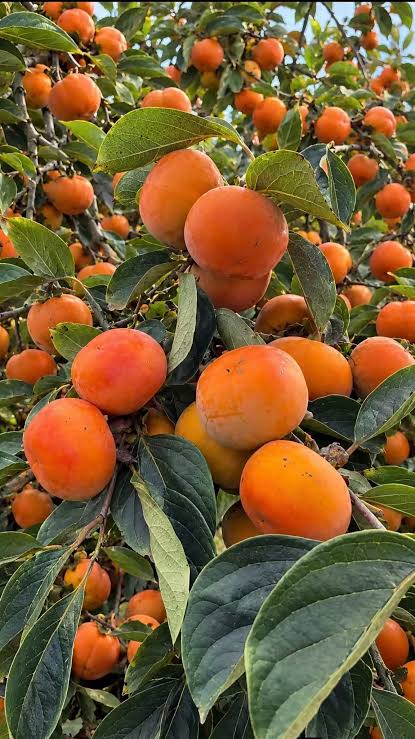
This guide to persimmon farming in Kenya gives you 12 steps from seedling to harvest and 4 signs your fruit is ready to pick. You will see figures from Kenyan growers and from university research in Hawaii, Florida, California and North Carolina. Each step tells you what to do, how much to use and which mistakes to avoid.
Start with the right crop. Persimmon (Diospyros kaki) grows as a tree. Check every seller’s botanical name before you pay. Farmers Trend Limited publishes more on persimmon farming in Kenya at farmerstrend.co.ke
What You Are Growing in Persimmon Farming in Kenya
Persimmon, also called kaki or Sharon fruit, belongs to the genus Diospyros. The orange fruit comes in two types. Non-astringent types, such as Fuyu, are ready to eat when you harvest them. Astringent types, such as Hachiya, taste dry and bitter until the fruit softens, because of tannins. The University of Hawaii describes this contrast in its persimmon fact sheet at core.ac.uk
Kenyan media reports create confusion. A Nation article describes a persimmon shrub which matures in three months and gives up to 800 fruits per year (Nation article). A letter in The Standard calls persimmon farming in Nyeri another farming hoax and asks where the huge market is (The Standard letter).
Compare these reports with university sources. Diospyros kaki is a tree. Kenyan nurseries and extension sources report a first harvest three to four years after planting. Ask every seller for the botanical name Diospyros kaki. Ask for grafted trees from a registered nursery. Ask to see a fruiting tree. Walk away from any offer of seeds which promise fruit in three months.
Is Persimmon Farming in Kenya Profitable? Check the Numbers
Income claims for persimmon farming in Kenya vary widely. Kenyans.co.ke reports a consultant projection of up to Ksh29 million per acre, based on 500 trees and an average price of Ksh100 per fruit (Kenyans.co.ke report). Farmers trend lists a mature tree at 25 to 50 kg per year and an acre at 4,000 to 12,500 kg, sold at KSh 100 to KSh 200 per kg.
Do the arithmetic. 4,000 kg at KSh 100 gives KSh 400,000. 12,500 kg at KSh 200 gives KSh 2.5 million. The Farmers Trend range follows from its tree numbers. 160 trees at 25 kg give 4,000 kg. 250 trees at 50 kg give 12,500 kg. The Ksh29 million claim needs 500 trees per acre. Standard spacing of 5 m by 5 m holds about 160 trees. Check every projection against your own spacing.
Bizna Kenya cites Farmers Trend Limited at Sh180,000 to Sh350,000 in production cost per acre and reports fruit prices of Sh80 to Sh120 per piece (Bizna Kenya report). Plan persimmon farming in Kenya with the lower income numbers. Your first income arrives in year three or four. Fund your orchard care through this period.
Budget for One Acre of Persimmon Farming in Kenya
Budget before you buy seedlings. Take one acre at 5 m by 5 m spacing, which holds about 160 trees.
Seedlings come first. At KSh 1,000 each from Farmers Trend Limited, 160 grafted seedlings cost KSh 160,000. Order persimmon seedlings here. Planting holes need manure. At 20 to 25 kg per hole, you need 3,200 to 4,000 kg of well-rotted manure. At about 200 g of DAP per hole, you need 32 kg of fertiliser, which is less than one 50 kg bag.
Annual feeding follows. At 10 to 15 kg of compost or manure per tree, a full acre takes 1,600 to 2,400 kg each year. In the first two years, 200 g of NPK 10-10-10 per tree gives 32 kg per round across 160 trees. Three rounds use 96 kg, and four rounds use 128 kg.
Add labour for weeding, pruning, irrigation and harvest. Add your water cost. Compare your total with the Bizna Kenya figure of Sh180,000 to Sh350,000 per acre. Seedlings alone take a large share of this range, so persimmon farming in Kenya rewards the grower who plans cash flow before planting.
Persimmon Farming in Kenya by Region: What to Check in Each Zone
Farmers Trend groups suitable counties into four zones. Each zone needs a different check before you plant.
Central Kenya covers Kiambu, Murang’a, Nyeri and Kirinyaga. Check frost on higher ground and wind on open ridges. Rift Valley covers Nakuru, Kericho, Uasin Gishu and parts of Laikipia. Check night temperatures and soil drainage. Eastern highlands cover Meru and Embu. Check slope and water access for irrigation. Western highlands cover Kakamega and Bungoma. Check waterlogging in the long rains, because wet soil rots roots.
Visit a neighbouring orchard of any fruit tree in your zone. Ask the owner about frost, hail, wind and water in the past three years. Local experience tells you more than any map. Then match your layout and variety to your zone and start your persimmon farming in Kenya with this knowledge.
12 Steps for Persimmon Farming in Kenya From Seedling to Harvest
Follow the steps in order. Each step builds on the one before.
Step 1: Confirm Your Market Before You Plant
Persimmon remains a niche fruit in Kenya. Farmers Trend lists urban fresh fruit markets, supermarkets and specialty grocers as your main buyers. Kenyans.co.ke names Germany as the largest international market for locally grown fruit. Visit three supermarkets and two fruit wholesalers. Ask what they pay per kilogram and which variety they stock. Write down every price. Ask for a written order before you plant a large block. Start with a trial block of 50 trees if buyers hesitate. Persimmon farming in Kenya pays only when buyers exist. Record buyer names and phone numbers in one notebook. Check payment terms. Ask whether buyers collect at your farm or expect delivery. These answers change your price per kilogram.
Step 2: Choose a Site for Persimmon Farming in Kenya
Farmers trend gives the best climate as 15 to 30 degrees Celsius with 800 to 1,500 mm of rain per year. Counties listed for persimmon include Kiambu, Murang’a, Nyeri, Kirinyaga, Nakuru, Kericho, Uasin Gishu, Meru, Embu, Kakamega and Bungoma. Choose a spot with at least eight hours of sun each day. Young trees suffer in frost and strong wind, and the fruit skin is thin. Avoid frost pockets and hollows where water stands. Walk your site in the rains and in the dry season. Note where water runs and where wind hits. Plant windbreak trees on the windward side if wind is strong. Check road access, because ripe fruit travels badly on rough tracks.
Step 3: Test and Prepare Your Soil
Persimmon grows on many soils. The University of Hawaii and North Carolina State University prefer a soil pH of 6.0 to 6.5. The University of Florida gives a range of 6 to 7 and warns the tree is sensitive to salt. Bizna Kenya gives 6.0 to 7.5 on sandy or loamy soil. Take a soil sample before you plant and send the sample to a laboratory.
If your test shows low pH, apply lime and mix the lime into the soil. North Carolina State University advises incorporating lime to a depth of 12 to 18 inches, which equals 30 to 45 cm. Good soil preparation sets up your persimmon farming in Kenya for decades.
Choose deep, well-drained ground. Hawaii extension staff report the tree tolerates heavy clay if drainage is not badly blocked. Plant on raised beds or slopes if your soil drains poorly. Clear weeds and crop residue. Loosen the soil so roots go deep.
Step 4: Choose Your Variety
Fuyu is the most popular non-astringent variety for fresh markets, according to Seed Farm. Hachiya is the best known astringent variety. The University of Florida lists Jiro and Matsumoto Wase Fuyu as other non-astringent types, which ripen in mid season. Nursery descriptions call Fuyu self-fruiting, which means one tree sets fruit without a partner.
Pick one main variety for your first block. Match the variety to your buyer. Fresh fruit buyers want firm Fuyu fruit. Buyers who want soft, sweet pulp take astringent types. Add a second variety later when you know your market. Plant a few trees of a second variety in one corner of your block. Track fruit size, color and buyer response. Your variety sets your market in persimmon farming in Kenya, so expand the variety which sells best.
Step 5: Buy Grafted Seedlings From Farmers Trend Nurseries in Murang’a and Nairobi
Farmers Trend Nurseries produce grafted trees by attaching a cutting from a proven mother tree to a hardy rootstock. Every tree then carries the same genetics and gives consistent fruit. Seed Farm reports grafted trees fruit in two to three years, while seed-grown trees take three to five years.
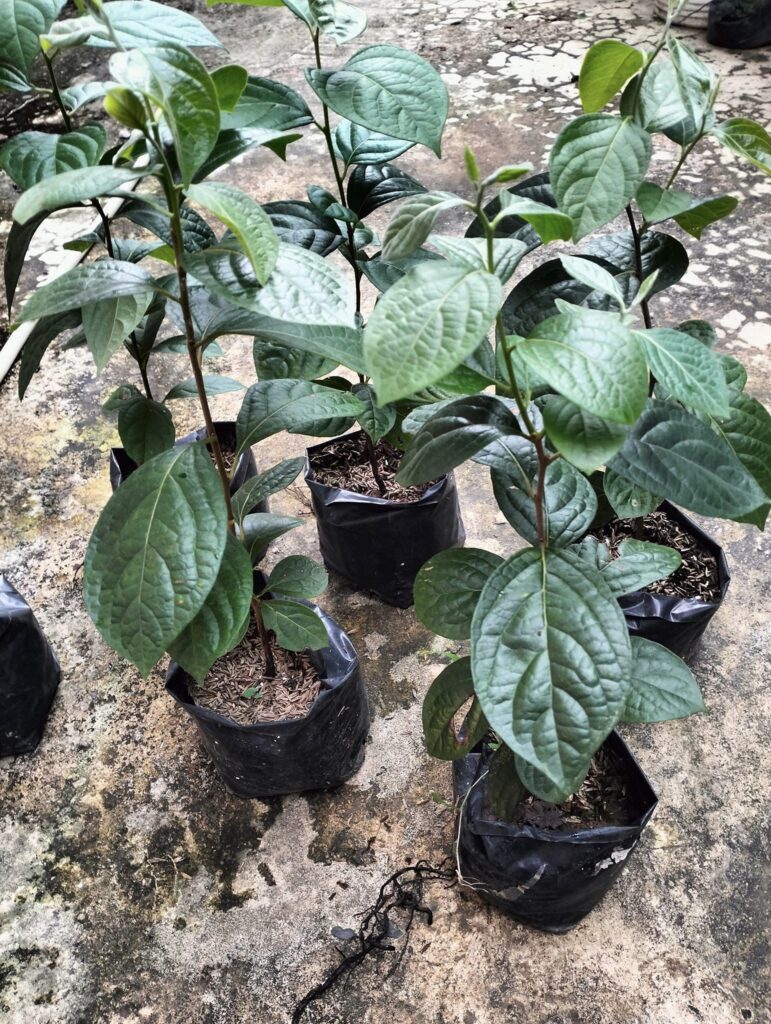
Inspect each seedling before you pay. Look for green leaves, a healthy graft union and a firm root ball. Reject wilted plants. Persimmon roots are fragile and dry out fast, according to Hawaii and North Carolina extension staff. Our persimmon seedlings costs KSh 1,000 each. Farmers Trend Limited supplies certified grafted persimmon fruit seedlings. Call/ WhatsApp 0790 509684, or email us at info@farmerstrend.co.ke. to confirm persimmon availability and price. Collect seedlings in the early morning and keep seedlings in shade. Water the bags before transport. Carry seedlings upright in a covered vehicle so wind does not dry the leaves. Plant within two days. Ask the nursery for a receipt showing variety, rootstock and date. Grafted trees give persimmon farming in Kenya a faster start.
Step 6: Set Your Spacing and Dig Holes
Wider spacing gives each tree light and air. Seed Farm recommends 5 m by 5 m for a standard commercial orchard. The University of Florida gives 4.5 m between trees and 6 m between rows. Hawaii gives 4.6 to 6.1 m. The table shows your options.
| Spacing | Trees per acre | Best for |
|---|---|---|
| 5 m x 5 m | About 160 | Standard commercial orchard |
| 4 m x 5 m | About 200 | Higher density, more care |
| 4 m x 4 m | About 250 | Maximum density, experienced growers |
Dig each hole 60 cm wide, 60 cm long and 60 cm deep. Keep the topsoil apart from the subsoil. Mix the topsoil with 20 to 25 kg of well-rotted manure and about 200 g of DAP or another phosphate fertiliser. Leave the holes open for two weeks before planting to improve air in the soil.
Mark the plot with pegs and string before you dig. On slopes, dig along the contour. Count your pegs, since the number equals your seedling order. Order 5 percent extra to replace early losses. For 160 trees, order 168. Spacing decisions in persimmon farming in Kenya last for decades, so measure with care.
Step 7: Plant at the Start of the Rains
Plant when the first good rains moisten the soil. Remove the seedling from its bag without breaking the root ball. Set the tree so the graft union stays above the soil. Backfill with the soil and manure mix and firm the soil gently. Water the tree immediately and thoroughly, as Seed Farm advises.
Spread dry grass or crop residue 5 to 10 cm thick around the tree. Keep the mulch a few centimetres from the trunk. Stake the tree in windy sites. Tie a label to each tree with the variety and the planting date. Plant on a cloudy day or in the late afternoon, when cool hours protect new leaves from wilting. Good planting protects your investment in persimmon farming in Kenya.
Step 8: Water Your Trees Through the First Years
Young trees need constant moisture without waterlogging. Farmers Trend names drip irrigation as the most efficient method. Extreme drought and long waterlogging both cut fruit production. North Carolina extension staff note the tree withstands drought, but fruit size and yield suffer.
Check the soil weekly in dry spells. Push a finger 5 cm into the soil beside the tree. Water when the soil feels dry at this depth. Drain any pit where water collects after rain. Water in the early morning to reduce loss. Build a shallow basin around each trunk to hold water. Water management keeps your persimmon farming in Kenya on schedule.
Step 9: Feed Your Trees on a Schedule
Farmers Trend advises 10 to 15 kg of compost or manure per tree every year. In the first two years, apply 200 g of NPK 10-10-10 per tree every three to four months. For mature trees, switch to NPK 10-20-20 to support fruit size and quality. Apply fertiliser and manure around the canopy edge at the start of the rains.
Do not overfeed nitrogen. North Carolina State University warns excess nitrogen causes heavy premature fruit drop. Its rule of thumb gives one ounce of actual nitrogen for each year of tree age, adjusted for soil fertility. A soil test gives you exact numbers. Place manure in a ring beneath the canopy edge and cover the ring with soil. Keep manure 30 cm from the trunk. Write each feeding date in a notebook. Feeding supports yield in persimmon farming in Kenya.
Step 10: Weed, Prune and Train
Persimmon roots lie shallow. Weed by hand around the trunk and avoid deep hoeing. Regular weeding in the first one to two years builds strong trees.
Train young trees to a modified central leader, as Hawaii and North Carolina extension staff advise. The University of California Master Gardeners state persimmons bear mainly on new shoots near the tips of one-year-old branches, so avoid heading cuts. Remove dead, diseased and crossing branches each year. Thin heavy fruit loads. Persimmon wood is brittle and breaks under a heavy crop. Prune in the dry season, when trees grow slowly. Remove water sprouts and root suckers, as North Carolina extension staff advise. Keep the canopy open so light reaches the center. Pruning keeps persimmon farming in Kenya manageable as trees grow.
Step 11: Protect Your Orchard From Pests and Diseases
The University of Florida lists scales, persimmon psylla, stinkbugs and tree borers as the main insects. Its disease list includes Botryosphaeria canker, leaf and fruit spots, and persimmon wilt. Seed Farm adds fruit flies and fungal problems to the Kenyan list and suggests neem oil. North Carolina State University warns of a trunk borer which tunnels near the soil line of young trees.
Walk your rows once a week. Check trunk bases for fresh sawdust. Check leaf undersides for scales and psylla. Collect and bury fallen fruit. Clean your pruning tools between trees. Early detection costs you a few minutes. Late detection costs you trees. Keep a notebook of pests by date and row. Send photos to your county extension officer. Follow the label when you use neem oil, and avoid spraying while trees flower. Pest control protects your persimmon farming in Kenya.
Step 12: Harvest, Handle and Sell Your Fruit
Persimmon skin is thin and bruises easily. Cut the stem with hand shears and leave the green calyx attached, as the University of California Master Gardeners advise. Pick in the cool morning. Place fruit in shallow, padded crates. Sort by size and color. Keep crates in shade and move fruit to market quickly. Wash your hands and tools before picking. Handle each fruit once. Stack crates no more than two layers deep. Harvest is where persimmon farming in Kenya pays you.
Sell to the buyers you lined up in step 1. Record every sale by date, kilograms and price. These records tell you which variety, spacing and market earn you the most.
4 Signs Your Persimmon Fruit Is Ready for Harvest
Harvest timing decides fruit quality. Mark each block on your farm map with the date of the first ripe fruit. Check these four signs before you pick. They protect your income from persimmon farming in Kenya.
Sign 1: The Skin Shows Full, Even Color
The University of California Master Gardeners state Fuyu fruit is harvested when the fruit develops full color. Look for deep, even orange across the whole fruit. Green patches near the stem mean the fruit needs more time.
Sign 2: The Fruit Has the Right Firmness for Its Type
Fuyu ripens on the tree and is ready to eat when you harvest, according to the University of Hawaii. Seed Farm says non-astringent types are harvested firm and ripen off the tree. Astringent types need more care. Hawaii extension staff say Hachiya is picked firm and ripened at room temperature until soft. Seed Farm advises harvesting astringent types fully ripe and soft. Ask your buyer which stage they want and follow the order.
Sign 3: A Test Fruit Tastes Sweet Without Dryness
Pick one Fuyu fruit and cut the fruit open. Ripe Fuyu tastes sweet and crisp with no dry, furry feeling on your tongue. A dry feeling means tannins remain, and you wait longer. Never taste test an astringent type while the fruit is firm.
Sign 4: Color Spreads Across the Tree in Stages
Fruit on the outer, sunlit canopy colors first. Begin picking when those fruits meet signs 1 to 3. Return every three to four days and pick each round as fruit reaches the same stage. Pick in rounds and your fruit reaches the market at the same quality.
How to Sell Persimmon in Kenya: Grading, Packing and Pricing
Selling decides the result of persimmon farming in Kenya. Prepare your fruit the way buyers expect.
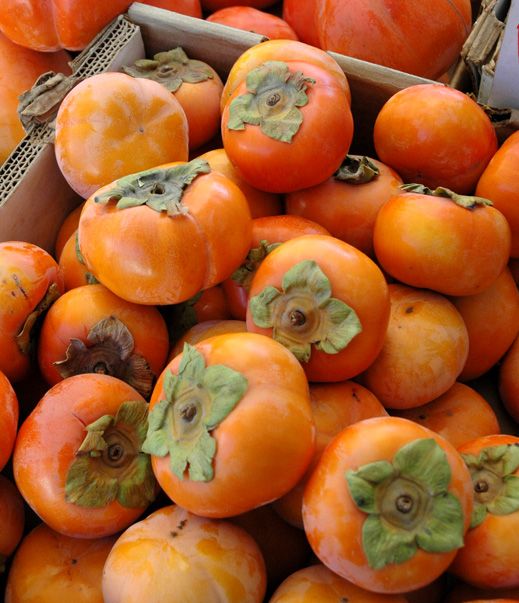
Sort fruit into three grades by size and color. Offer your best grade to supermarkets and specialty grocers. Offer the second grade to hotels and open markets. Keep the third grade for processing. Seed Farm lists salads, desserts and smoothies among the culinary uses of persimmon, so processors and restaurants form a second market.
Pack fruit in shallow crates in one or two layers with soft padding. Label each crate with your name, variety and picking date. Weigh every crate. Ask buyers to quote in kilograms. Reports quote Sh80 to Sh120 per piece and KSh 100 to KSh 200 per kilogram, and per-piece and per-kilogram quotes are hard to compare. A kilogram quote lets you compare offers.
Join other growers to supply a supermarket with steady volume. A group delivers more fruit each week than one farm does. Record every sale by date, buyer, kilograms and price.
Persimmon Farming in Kenya: Orchard Timeline From Planting to Harvest
Plan your cash flow around the timeline. Persimmon farming in Kenya needs steady care for three to four years before the first harvest.
| Stage | Action | What you see |
|---|---|---|
| Year 0 | Choose site, test soil, plant at the start of the rains | Young grafted trees |
| Year 1 | Water, mulch, weed and feed every 3 to 4 months | Strong new shoots |
| Year 2 | Train and prune, protect from pests | First flowers in year 2 or 3 |
| Year 3 to 4 | Thin fruit and harvest in rounds | First harvest |
| Year 5 onward | Feed yearly, prune and record yields | 25 to 50 kg per mature tree |
Earn Between Rows While Your Persimmon Trees Grow
Your first persimmon income arrives in year three or four. Rows 5 m apart leave a wide strip between young trees. Grow beans or leafy vegetables in this strip during years one and two. Keep a clear circle of 1 m around each trunk. Do not plant tall crops which shade young trees. Stop intercropping when the tree canopies close. This approach lets persimmon farming in Kenya pay your bills while the orchard matures.
Dry Season and Wet Season Tasks for Persimmon Farming in Kenya
Match your work to the season. In the dry season, prune trees, dig planting holes, apply lime and irrigate young trees. In the wet season, plant seedlings, apply manure and fertiliser, drain standing water and scout for fungal spots on leaves and fruit. Write each task on a wall calendar in your store. Season planning keeps persimmon farming in Kenya on schedule.
Common Mistakes in Persimmon Farming in Kenya
These six mistakes cost growers in persimmon farming in Kenya yield and money.
Buying seeds instead of grafted trees. Seed-grown trees fruit later and give uneven fruit. Buy grafted trees from Farmers Trend nurseries in Murang’a or Nairobi at KSh 1,000 per seedling.
Planting in waterlogged soil. Roots rot where water stands. Choose well-drained ground or build raised beds.
Overfeeding nitrogen. Excess nitrogen drops fruit early. Follow the feeding schedule and test your soil.
Heading cuts on young branches. Persimmons fruit on new shoots near the tips of one-year-old branches. Heading cuts remove your fruiting wood.
Picking astringent fruit too early. Firm astringent fruit tastes dry and bitter. Wait for the stage your variety needs.
Skipping the market check. A good crop without a buyer earns you nothing. Confirm your buyers in step 1.
Keep Records for Persimmon Farming in Kenya
Keep one record sheet per tree from day one. Write the variety, planting date, feeding dates, pruning date, pest notes and harvest weight. After three seasons, your sheets show which trees earn you the most. Then propagate and expand from your best performers.
Your Persimmon Farming in Kenya Plan for This Season
You now have the full path for persimmon farming in Kenya. Confirm your market. Test your soil. Choose Fuyu or another variety to match your buyer. Buy grafted seedlings, dig 60 cm holes and plant at the start of the rains. Water, mulch, feed and prune on schedule. Check the four signs before every harvest.
The numbers support a careful start. Farmers trend gives 25 to 50 kg per mature tree and 160 to 250 trees per acre, which means 4,000 to 12,500 kg per acre in a full orchard. Bizna Kenya reports production cost of Sh180,000 to Sh350,000 per acre. Use your own records to replace every estimate in this guide.
Farmers Trend Limited supplies certified grafted fruit seedlings and publishes more on persimmon farming in Kenya. Call or WhatsApp 0724 559 286 or 0790 509 684 to make an order. Email info@farmerstrend.co.ke or visit www.farmerstrend.co.ke
https://farmerstrend.co.ke/trending/persimmon-farming-in-kenya-2/https://farmerstrend.co.ke/wp-content/uploads/2026/11/WhatsApp-Image-2026-11-02-at-14.19.43-1024x768.jpeghttps://farmerstrend.co.ke/wp-content/uploads/2026/11/WhatsApp-Image-2026-11-02-at-14.19.43-150x150.jpeg# TrendingFruitsIn FruitsPersimmon Fruit Farmingastringent vs non-astringent persimmon,Diospyros kaki,Farmers Trend Limited,Fuyu persimmon,grafted persimmon seedlings,Hachiya persimmon,how to grow persimmon in Kenya,kaki fruit,persimmon buyers Kenya,persimmon cost per acre,persimmon farming guide,persimmon farming in Kenya,persimmon farming scams,persimmon fertilizer,persimmon harvest signs,persimmon pests and diseases,persimmon planting,persimmon price in Kenya,persimmon profit per acre,persimmon pruning,persimmon seedlings Kenya,persimmon spacing,Sharon fruit,when to harvest persimmonPersimmon farming in Kenya rewards patience and careful planning. Grafted trees flower two to three years after planting and give a first harvest in three to four years. Mature trees keep producing for decades. You earn from this crop only when you follow each step in the right order.This...FarmersTrendjohn doefarmerstrend@gmail.comAdministratorFarmers Trend Ltd.





Leave a Reply