Avocado Trees and Bees: Best Proven Ways on How 2 Hives Per Acre Raise Your Fruit Set
Avocado trees and bees decide how many fruits your orchard carries each season. Your trees open hundreds of thousands of flowers. Most of those flowers drop without setting fruit. Bees move pollen from flower to flower, and pollen turns a flower into a fruit.
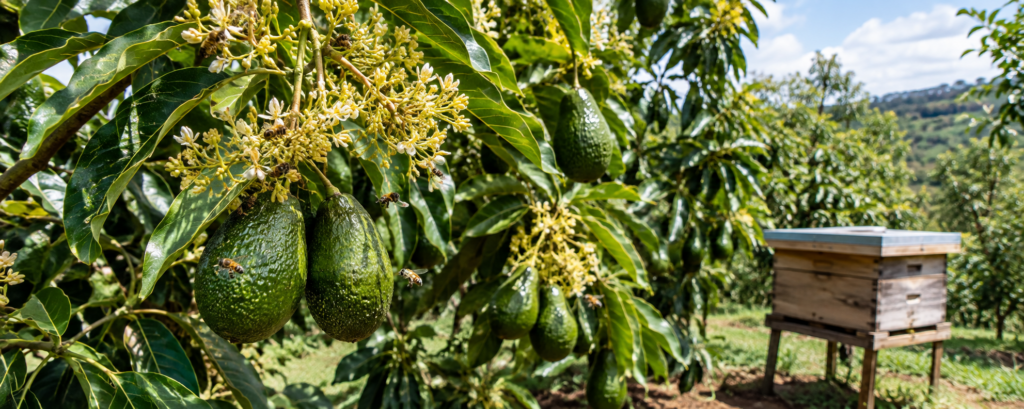
This guide shows you how avocado trees and bees work together, and how two hives per acre raise fruit set in your orchard. You will see what Kenyan and international research reports. You will learn when to bring hives in, where to place them, how to protect them from sprays, and how to work out the money for one acre.
Two hives per acre equal about five hives per hectare. Research recommendations range from 2 to 10 hives per hectare, and growers commonly use 5 to 8. Two hives per acre sits at the lower end of the common range. Start there. Count bees on your trees during bloom. Add hives if bee counts stay low. Avocado trees and bees respond to small changes in hive number, timing and placement.
Why Avocado Trees and Bees Depend on Each Other
An avocado fruit holds one seed. Even so, Bee Aware Australia reports each flower needs more than 20 pollen grains on the stigma before the flower sets fruit. Insects move most of this pollen. The Kenya Agricultural and Livestock Research Organization (KALRO) names bees as the main pollinators of avocado.
Your tree does not lack flowers. Your tree lacks pollination. In the Colombian trial covered below, Hass trees visited by bees carried 231 fruits each. The trial recorded a final fruit set of 0.058 percent. Divide 231 by 0.00058 and you reach close to 400,000 flowers on one tree. Almost every flower fails. Better pollination moves a few more of those flowers to harvest.
Fruit Set Explained for Avocado Trees and Bees
Fruit set is the share of flowers which become mature fruits. The flower count is so large, a small change in fruit set means a large change in fruit count per tree. In the Colombian trial, a fruit set of 0.058 percent gave 231 fruits per tree. A fruit set of 0.028 percent gave 137 fruits per tree.
| Source | Location | Figure reported |
|---|---|---|
| Hass fruit set study | New Zealand | Typical fruit set below 0.3 percent |
| Hand pollination trials | New Zealand and Spain | Fruit set raised from under 0.3 percent to over 5 percent |
| Hive density trial on Hass | Colombia | Final fruit set of 0.058 percent with 6 hives per hectare and 0.028 percent with no hives |
| Smallholder farm study | Murang’a County, Kenya | Hand pollinated flowers produced 20.7 percent more fruits than open flowers before fruit drop |
What a Pollination Deficit Costs You
A pollination deficit is the gap between the pollination your trees need and the pollination they receive. Researchers from the International Centre of Insect Physiology and Ecology (ICIPE) found a significant deficit across smallholder farms in Murang’a County. You find the abstract on the ICIPE research portal.
Weak links between avocado trees and bees also hurt fruit quality. Studies link pollination deficits to deformed and undeveloped fruits, which lower marketability. In Murang’a farms, insect pollination gave heavier seeds and higher oil content, according to a study in Arthropod-Plant Interactions. Your buyers pay for size, shape and oil content. Pollination affects all three.
How Avocado Flowers Work: Type A and Type B Trees
Each avocado flower opens twice. The first opening is female. The flower receives pollen but sheds none. The flower then closes and reopens the next day as a male flower, which sheds pollen. Scientists call this pattern protogynous dichogamy.
Trees fall into two groups, Type A and Type B, based on the timing of the two openings.
|
|
| Flower type | Female phase | Male phase | Cultivar examples |
|---|---|---|---|
| Type A | Morning of day one | Afternoon of day two | Hass, Gwen, Lamb Hass, Pinkerton, Reed |
| Type B | Afternoon of day one | Morning of day two | Bacon, Fuerte, Zutano, Ettinger |
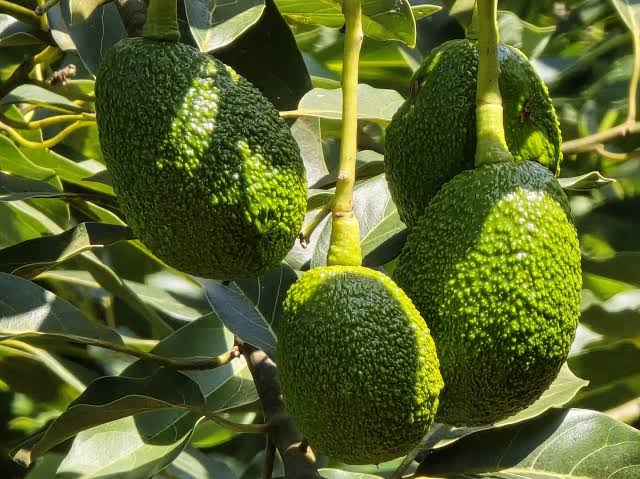
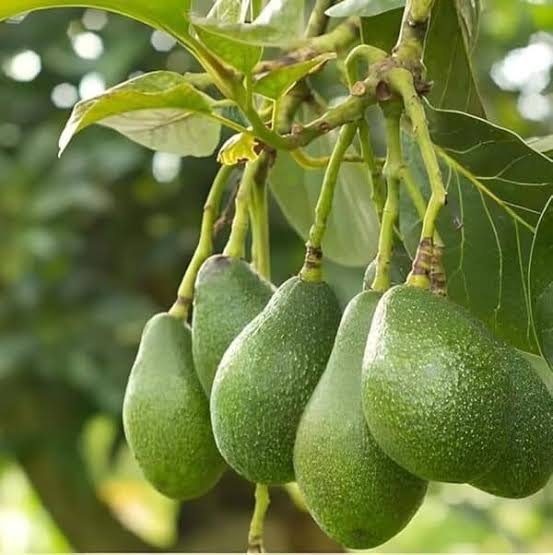
Hass is Type A. Its female flowers open in the morning, when Type B trees shed pollen. Its male flowers shed pollen in the afternoon, when Type B female flowers open. Each type feeds the other. A block of Hass alone leaves your female flowers waiting for pollen from a few trees.
Cross pollination raises yield. KALRO states cross pollination leads to higher yields than self pollination. The Agricultural Research Council of South Africa reports an average fruit set of 1 percent on flowers without pollen from a pollinizer and 10 percent on flowers with pollen from a pollinizer, measured 40 days after flowering. Read the ARC pollination research page for the full list of findings.
Why Wind Does Not Pollinate Your Avocado Flowers
Murang’a researchers compared flowers by pollination type. Flowers open to insects showed 89.5 percent fruit set. Flowers limited to self and wind pollination showed 17.4 percent. Flowers limited to self pollination showed 6.4 percent. These counts came before fruit drop, so final harvest percentages are lower.
The gap between 89.5 and 17.4 shows why avocado trees and bees matter to your yield. Wind stays out of your control. Insects do not. Avocado trees and bees work as a pair. Hives put a known number of pollinators in your orchard during the days when your flowers are open.
What Research Says About Avocado Trees and Bees
Avocado Trees and Bees in Kenya: Two Colonies on Murang’a Farms
ICIPE tested honey bee colonies on smallholder avocado farms in Murang’a County. The farms measured 0.2 to 0.4 hectares, or about 0.5 to 1 acre. Two colonies per farm reversed the pollination deficit. According to ICIPE’s summary on Agrilinks, yield rose by 180 percent and income rose by US$168 per farmer per season.
Do the conversion. Two colonies on 0.5 to 1 acre equal 2 to 4 colonies per acre. Your plan of two hives per acre for avocado trees and bees sits at the lower end of what Kenyan farmers tested. A related doctoral study on avocado trees and bees from the same research programme found honey bees were the most frequent flower visitors, followed by flies.
Avocado Trees and Bees in Colombia: Hive Density Trial on Hass
A trial in Popayan, Colombia tested three one-hectare orchards of six-year-old Hass trees. One orchard had 4 hives, one had 6 hives and one had none. Researchers counted bees on trees, measured pollination, and recorded fruit numbers and weights. The study gives you hard numbers on avocado trees and bees.
| Measure | No hives | 4 hives per hectare (1.6 per acre) | 6 hives per hectare (2.4 per acre) |
|---|---|---|---|
| Bees per tree | 2.72 | 6.04 | 7.72 |
| Pollination rate | 50 percent | 55 percent | 60 percent |
| Fruits per tree | 137 | 212 | 231 |
| Fruit weight per tree | 21.6 kg | 38.2 kg | 46.2 kg |
Four hives per hectare raised fruit count per tree by 55 percent and fruit weight by 77 percent. Six hives per hectare raised fruit count by 69 percent and fruit weight by 114 percent. Look at the steps. Going from 0 to 4 hives added 75 fruits per tree. Going from 4 to 6 hives added 19 more. The first hives deliver the largest gain, so avocado trees and bees respond fastest to the first two hives per acre.
South Africa, Australia and New Zealand: Stocking Rates
Growers in other countries use a wide range of hive numbers. The table converts each figure to hives per acre.
| Source | Hives per hectare | Hives per acre |
|---|---|---|
| ARC South Africa, good pollination | 2 to 5 | 0.8 to 2.0 |
| ARC South Africa, at 50 percent bloom | 5 to 8 | 2.0 to 3.2 |
| Bee Aware Australia, common rate | 5 to 8 | 2.0 to 3.2 |
| Bee Aware Australia, upper rate | 10 | 4.0 |
| New Zealand Hass orchards, upper rate | Up to 10 | Up to 4.0 |
What the Research Does Not Promise
Results for avocado trees and bees differ between farms. A 2022 study in Kenya in Entomologia Generalis combined honey bee introduction with integrated pest management. The combination did not raise final avocado yield beyond each practice alone. The study did show lower pest numbers and extra income from beekeeping products. Your yield gain depends on your local bee numbers, your surrounding vegetation, your cultivars and your weather during bloom.
Avocado flowers also rank low in bee preference. Bee Aware Australia states avocado flowers are not highly attractive to honey bees. The brochure from Plant Health Australia adds honey bees often prefer other flowers. This is why hive timing and placement matter as much as hive count.
Why 2 Hives Per Acre Is a Sound Start for Avocado Trees and Bees
One acre equals 0.4047 hectare. Two hives per acre equal 4.9 hives per hectare. Round this to 5 hives per hectare. Three facts support this rate for avocado trees and bees.
First, Australian guidance lists 5 to 8 hives per hectare as common. Second, ICIPE placed two colonies on Kenyan farms of 0.5 to 1 acre and recorded a 180 percent yield gain. Third, the Colombian orchard with 1.6 hives per acre set 55 percent more fruits per tree than the orchard with no hives.
| Orchard size | Hives at 2 per acre | Hives at 3 per acre |
|---|---|---|
| 1 acre | 2 | 3 |
| 2 acres | 4 | 6 |
| 5 acres | 10 | 15 |
| 10 acres | 20 | 30 |
| 25 acres | 50 | 75 |
When to Use 3 or 4 Hives Per Acre
Raise your rate to 3 or 4 hives per acre in these cases. Your orchard sits far from natural vegetation, so wild bees are few. Your block holds one cultivar only. Your trees are mature and carry heavy bloom. Your bee counts stay near the Colombian no-hive figure of under 3 bees per tree. Cold or windy weather cuts bee flight during bloom.
Check your results before you add hives. The Colombian trial shows diminishing returns past 4 hives per hectare. A second season of records tells you whether an extra hive pays.
When 2 Hives Per Acre Is Enough
Two hives per acre suit small orchards near forest, hedges or farms with many flowering plants. They also suit blocks which mix Type A and Type B trees. Wild bees and flies add to your hives in these settings. Avocado trees and bees in these orchards need fewer hives.
How to Place Hives Among Your Avocado Trees
Hive placement decides how well avocado trees and bees meet during bloom. Follow the four steps below.
Time the Move to Your First Flowers
Bee Aware Australia advises growers to place hives when flowering reaches 5 to 10 percent. Bees then learn the avocado bloom and keep visiting the flowers. The ARC in South Africa places hives when both the main cultivar and the pollinizer reach 50 percent flower. Choose the earlier timing. Bees which learn avocado flowers early keep working them. Early arrival helps avocado trees and bees connect before other bloom competes.
Plant Health Australia urges growers to order hives early. Book your beekeeper at least eight weeks before your expected bloom. Hives in short supply go to the farms which ask first.
Place Hives in Groups of 2 to 4
Plant Health Australia recommends groups of 2 to 4 hives, spread across the block. For two hives per acre, a five-acre orchard needs ten hives. Set them in three or four groups rather than one corner. Every tree then sits close to a hive.
Put each group where morning sun reaches the entrances. Bees warm up and start flying earlier. Face entrances away from the prevailing wind. Raise hives on stands. Keep ants off stands with grease or oil on the legs.
Give Your Bees Water
Honey bees need water. Set a shallow container with stones or floating sticks near each hive group. Refill the container daily. Bees without water in the orchard fly to neighbours, streams and troughs, and often stay away from your flowers.
Move Hives at Night
Close the entrances with mesh after dark, when all bees are inside. Move the hives and set them down gently. Open the entrances before sunrise. Do not shake the hives on rough tracks. Keep movement short and smooth.
Avocado Trees and Bees in Cool, Wet or Windy Bloom Weather
Weather decides how many hours avocado trees and bees spend together during bloom. Your bees work fewer hours in poor weather. Honey bees fly less in cold, rain and strong wind. A cool, wet week during peak bloom cuts visits to your flowers.
KALRO reports avocado performs best between 1,500 and 2,100 metres above sea level. Nights stay cool at this altitude. Published research links low overnight temperatures to delayed opening of Hass female flowers, which leads to flowering at night. Bees do not forage at night, so those flowers miss visits.
Use three steps. Place hives where morning sun reaches the entrances and wind does not. Add one extra hive per acre on cold, exposed blocks. Check the forecast each evening during bloom and log the cold or wet days, so you know which bloom days gave your bees little chance to work.
Weather also changes your count method. A bee count on a cold morning tells you little. Count in sunny, calm hours and note the weather beside each count. Compare only counts taken in similar conditions.
Hives for Avocado Pollination in Kenya: Buy, Hire or Borrow
You have three routes to bring avocado trees and bees together. You buy hives and colonies, you hire colonies from a local beekeeper, or you partner with a beekeeper group. Most avocado growers in Kenya hire, because hire avoids hive upkeep during the months without bloom.
Movable frame hives, such as Langstroth hives and Kenya Top Bar hives, allow easy inspection and moving. Log hives hang in trees and do not move well. Choose a hive type your beekeeper manages with confidence.
Ask the beekeeper to open a hive before you pay. A strong colony covers most frames with bees and holds brood on several frames. A weak colony wastes your fee. Write the terms down so both sides know the plan for your avocado trees and bees.
| Contract item | What to agree |
|---|---|
| Number of hives | Two per acre, set in groups of 2 to 4 |
| Colony strength | Frames covered with bees and brood, checked on delivery |
| Delivery date | At 5 to 10 percent flowering |
| Removal date | After petal fall, when the bloom ends |
| Spray rules | No insecticide during bloom, with dates shared in advance |
| Losses | Who pays if colonies die from sprays or theft |
| Honey | Who owns the honey from your orchard |
Honey adds income. ICIPE’s integrated pest and pollinator management work notes beekeeping products give farmers extra earnings. If you own the hives, plan for honey sales alongside your avocado sales.
Protect Your Bees From Spray Damage
KALRO advises avocado farmers to avoid chemicals harmful to bees. Follow this rule from first flower to petal fall. One spray at the wrong hour kills foragers and weakens the whole colony.
Plan your pest control around the bloom, because avocado trees and bees share the same weeks. Spray insecticides before the first flowers open, or after petal fall. Read each label for bee hazard. If a pest forces action during bloom, spray after dark and tell your beekeeper first. Close the hives if your beekeeper advises closure. Never spray flowering weeds in your orchard while bees work them.
Pest control and pollination work together. A Kenyan study from ICIPE and the University of Pretoria found integrated pest management reduced pest numbers, raised fruit weight and did not harm avocado pollinators. The pests studied were the Oriental fruit fly (Bactrocera dorsalis) and the false codling moth (Thaumatotibia leucotreta). Use traps, clean up fallen fruit and spray only on need.
Plant Pollinizers and Bee Forage Around Your Orchard
Avocado trees and bees both depend on the plants around them. Cultivar mix and bee food affect fruit set.
Mix Type A and Type B Trees
Plant Type B pollinizers, such as Fuerte or Ettinger, among your Hass rows. Hass trees then sit close to a pollen source in the hours when their flowers open. Ask your seedling supplier which Type B cultivars suit your altitude. KALRO reports avocado performs best between 1,500 and 2,100 metres above sea level.
Manage Competing Bloom
The ARC notes competing bee plants lure bees away from avocado. Cut flowering weeds on your orchard floor before bloom starts. Keep them low until petal fall. Bees then find avocado flowers first.
Feed Your Bees After Bloom
Colonies need food when avocado bloom ends. ICIPE tested flower strips in a commercial avocado orchard in Kenya to support pollinators and natural pest enemies. Plant flowering strips along borders and boundaries. Choose plants which flower after your avocado bloom. Your hives then stay strong for the next season.
Avocado Trees and Bees: The Money Math for One Acre
Use the Colombian results to estimate your gain from avocado trees and bees. KALRO lists a standard Hass spacing of 9 by 9 metres. This gives about 50 trees per acre. The Colombian trial added 16.6 kg per tree at 4 hives per hectare and 24.6 kg per tree at 6 hives per hectare.
| Hive density | Extra fruit per acre | At KSh 20 per kg | At KSh 30 per kg | At KSh 40 per kg |
|---|---|---|---|---|
| 1.6 hives per acre | 830 kg | KSh 16,600 | KSh 24,900 | KSh 33,200 |
| 2.4 hives per acre | 1,230 kg | KSh 24,600 | KSh 36,900 | KSh 49,200 |
Treat the prices as examples. Replace them with the price your buyer pays you per kilogram. Subtract your hive hire or hive purchase cost. Subtract your transport cost. The Colombian trees were six years old, so your own tree age and yield will change the numbers.
The Kenyan figure comes from ICIPE. Two colonies added US$168 per farmer per season on farms of 0.5 to 1 acre. Your own gain depends on your tree age, your cultivar mix and your market price. Keep records from the first season so you know your numbers. Records turn avocado trees and bees from a guess into a plan.
Seven Mistakes Which Waste Your Hive Investment
Farmers who manage avocado trees and bees well avoid the same seven mistakes. Check your plan against each one.
1. Bringing Hives Too Late
Hives which arrive at full bloom meet bees with no avocado habit. Move them in at 5 to 10 percent flowering.
2. Placing All Hives in One Corner
Trees far from hives receive few visits. Spread groups of 2 to 4 hives across the block.
3. Spraying During Bloom
Insecticide kills foragers and weakens colonies. Spray before bloom or after petal fall.
4. Hiring Weak Colonies
A hive with few bees delivers few visits. Inspect frames before you pay.
5. Planting One Cultivar
A block of Hass alone limits cross pollination. Mix in Type B trees.
6. Leaving Strong Weed Bloom Under Your Trees
Flowering weeds pull bees away from avocado. Cut them before bloom starts.
7. Skipping Water and Records
Bees without water leave. Farmers without records cannot tell whether hives paid. Set up water on day one and count bees on tagged trees.
Season Calendar for Hive Placement and Bloom
This calendar fits avocado trees and bees into one season. Adjust the dates to your own bloom, which shifts with altitude and weather.
| Stage | Action |
|---|---|
| 8 weeks before bloom | Book your beekeeper, agree the contract and choose hive sites |
| 4 weeks before bloom | Stop insecticides, cut flowering weeds, set up water points and clear tracks |
| 5 to 10 percent flowering | Move hives in at night and open the entrances before sunrise |
| Peak bloom | Count bees on tagged trees, refill water daily and avoid all sprays |
| Petal fall | Remove hives or move them to forage areas and resume pest control |
| 4 weeks after flowering | Count young fruits on tagged trees |
| Harvest, about 40 weeks after flowering | Record fruit count and fruit weight per tree |
The Colombian researchers recorded initial fruit set four weeks after the end of flowering. They recorded fruit count and weight per tree 40 weeks after the end of flowering. Copy this schedule.
How to Check Whether Your Bees Are Working
To test avocado trees and bees on your farm, pick ten trees spread across the block. Tag them. On a sunny bloom day, stand at each tree for one minute and count the bees on the flowers. Repeat at 9 am, noon and 3 pm. Write down every count.
The Colombian researchers counted bees per tree for one minute at each check. Orchards with hives averaged 6.04 and 7.72 bees per tree. The orchard without hives averaged 2.72. Your counts near 6 or higher tell you the hives work. Counts near 3 tell you to add hives or fix placement.
Check your results at harvest. Weigh the fruit from your tagged trees and record the count. Avocado trees bear heavily in one season and lightly in another, so compare three seasons before you judge. Keep the same tagged trees each year.
Use one record sheet for every tagged tree. Fill in one row per visit.
| Record | What to write |
|---|---|
| Date and time | Day, hour and the stage of bloom |
| Tree tag | Tag number and cultivar |
| Bee count | Bees seen on the tree in one minute |
| Weather | Sun, cloud, rain or wind |
| Young fruits | Count at four weeks after flowering |
| Harvest | Fruit count and total weight for the tree |
Start With Strong Trees Before You Add Hives
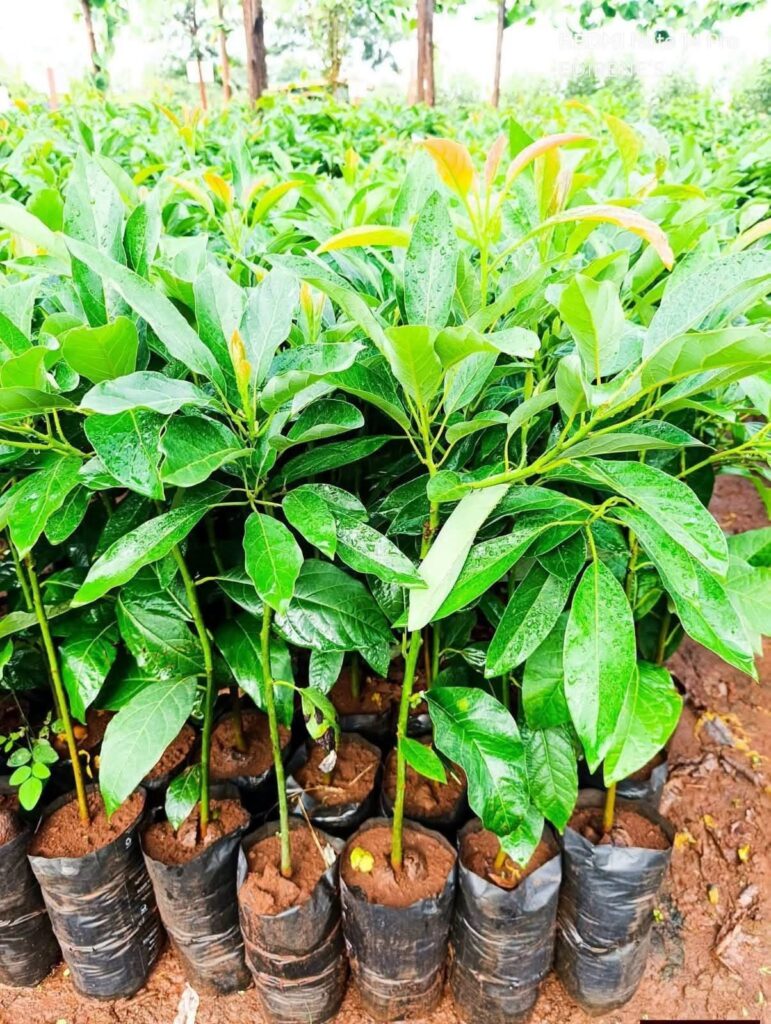
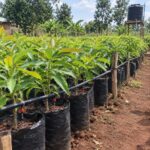
Avocado trees and bees deliver the best results on trees which are healthy and well planted. Farmers Trend Limited sells certified grafted Hass avocado seedlings and grafted Fuerte avocado seedlings from nurseries in Murang’a and Nairobi. Fuerte is a Type B cultivar. A few Fuerte trees among your Hass rows supply pollen when Hass female flowers open.
| Seedling | Detail | Price per seedling |
|---|---|---|
| Certified grafted Hass avocado seedlings | Type A cultivar | KSh 250 |
| Grafted Fuerte avocado seedlings | 2 to 3 months old | KSh 150 |
| Grafted Fuerte avocado seedlings | 8 to 9 months old | KSh 250 |
Order your certified grafted Hass avocado seedlings online and ask Farmers Trend Limited for the Hass to Fuerte ratio which suits your region.
KALRO states avocado starts bearing within three years after transplanting. Plan your hive hire for the year your trees carry their first heavy bloom. Plant at 9 by 9 metres, which gives about 50 trees per acre.
Worked Example: Avocado Trees and Bees on a 5-Acre Orchard
This example puts the numbers for avocado trees and bees together. Your orchard measures 5 acres at 9 by 9 metres, which gives about 250 trees. You plant 200 Hass trees and 50 Fuerte trees. The ratio is an example to show the arithmetic.
| Item | Quantity | Cost |
|---|---|---|
| Certified grafted Hass seedlings at KSh 250 | 200 | KSh 50,000 |
| Grafted Fuerte seedlings, 2 to 3 months, at KSh 150 | 50 | KSh 7,500 |
| Total for seedlings | 250 | KSh 57,500 |
| Hives at 2 per acre | 10 | Hire price from your beekeeper |
| Hive groups | 4 groups: 3, 3, 2 and 2 hives | Placed across the block |
| Water points | 4, one per group | Shallow containers with stones |
| Tagged trees for bee counts | 10 | Two or three near each group |
Choose Fuerte seedlings at 8 to 9 months and the Fuerte line rises to KSh 12,500. The seedling total then reaches KSh 62,500.
|
|
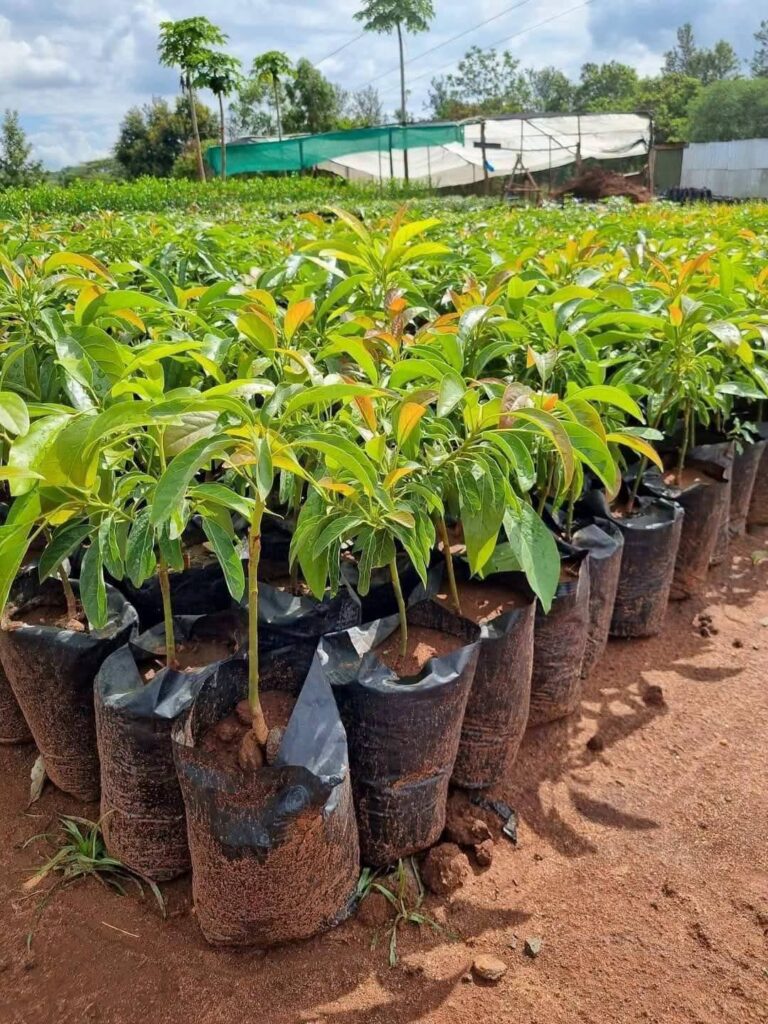
Your trees need no hive fees in the first years. Budget for hive hire from the year of your first heavy bloom. Eight weeks before your first heavy bloom, book ten hives and agree the contract terms from the table earlier in this article. Tag your ten trees and start your record sheets in the same season.
Pre-Bloom Checklist for Your Hive Setup
Run through this table four weeks before bloom to prepare avocado trees and bees.
| Check | Done when |
|---|---|
| Beekeeper booked | Contract signed and delivery date fixed |
| Colonies inspected | Frames covered with bees and brood on several frames |
| Insecticides stopped | No insecticide applied from four weeks before bloom |
| Flowering weeds cut | Orchard floor cut low before the first flowers open |
| Water points ready | One shallow container per hive group, filled |
| Hive sites cleared | Tracks open and stands in place |
| Trees tagged | Ten trees marked across the block |
| Record sheets printed | One sheet per tagged tree |
Your Plan for Avocado Trees and Bees This Season
You now have a working plan for avocado trees and bees. Calculate your hive number at two hives per acre. Book a beekeeper eight weeks before bloom. Stop insecticides four weeks before bloom. Move hives in at 5 to 10 percent flowering. Count bees on ten tagged trees, and record your fruit numbers at harvest.
The research on avocado trees and bees backs the plan. ICIPE recorded a 180 percent yield gain from two colonies on Murang’a farms. The Colombian trial recorded 55 percent more fruits per tree at 1.6 hives per acre. Your own records will show your result.
Farmers Trend Limited sells certified grafted Hass avocado seedlings at KSh 250 each and grafted Fuerte avocado seedlings from KSh 150 each. Call or WhatsApp 0724 559 286 or 0790 509 684. Email info@farmerstrend.co.ke. Visit www.farmerstrend.co.ke.
https://farmerstrend.co.ke/trending/avocado-trees-and-bees/https://farmerstrend.co.ke/wp-content/uploads/2026/10/avocado-nice-farm.pnghttps://farmerstrend.co.ke/wp-content/uploads/2026/10/avocado-nice-farm-150x150.png# TrendingAvocado FarmingFruitsIn Fruitsavocado beekeeping,avocado farming in kenya,avocado flowering,avocado fruit drop,avocado fruit set,avocado orchard management,avocado pests and bees,avocado pollination,avocado pollination hives,avocado trees and bees,avocado yield,bee friendly farming,Beekeeping In Kenya,bees in avocado orchards,certified avocado seedlings Kenya,Farmers Trend Limited,Fuerte avocado pollinizer,grafted Fuerte avocado seedlings,grafted hass avocado seedlings,hass avocado farming,Hass avocado pollination,hive placement,hives per acre,hives per hectare,honey bees and avocado,increase avocado yield,integrated pest and pollinator management,Murang’a avocado farmers,pollination deficit,Type A and Type B avocadoAvocado trees and bees decide how many fruits your orchard carries each season. Your trees open hundreds of thousands of flowers. Most of those flowers drop without setting fruit. Bees move pollen from flower to flower, and pollen turns a flower into a fruit.This guide shows you how avocado...FarmersTrendjohn doefarmerstrend@gmail.comAdministratorFarmers Trend Ltd.


Leave a Reply