Kenya’s Macadamia Minimum Price and the Raw Nut Export Debate: Does the US$0.75/kg Floor Protect Farmers or Feed the Theft Crisis?
The macadamia minimum price of KSh 100 per kilogram, about US$0.75, is the most disputed rule in Kenya’s nut sector. Agriculture Cabinet Secretary Mutahi Kagwe set the floor on April 23, 2026 in Nyeri and told processors to buy all locally produced nuts at or above the figure. On November 13, the Agriculture and Food Authority (AFA) extended the controlled export window for raw nuts by six months. More than 30,000 tonnes of nuts still sit in farm and processor stores.
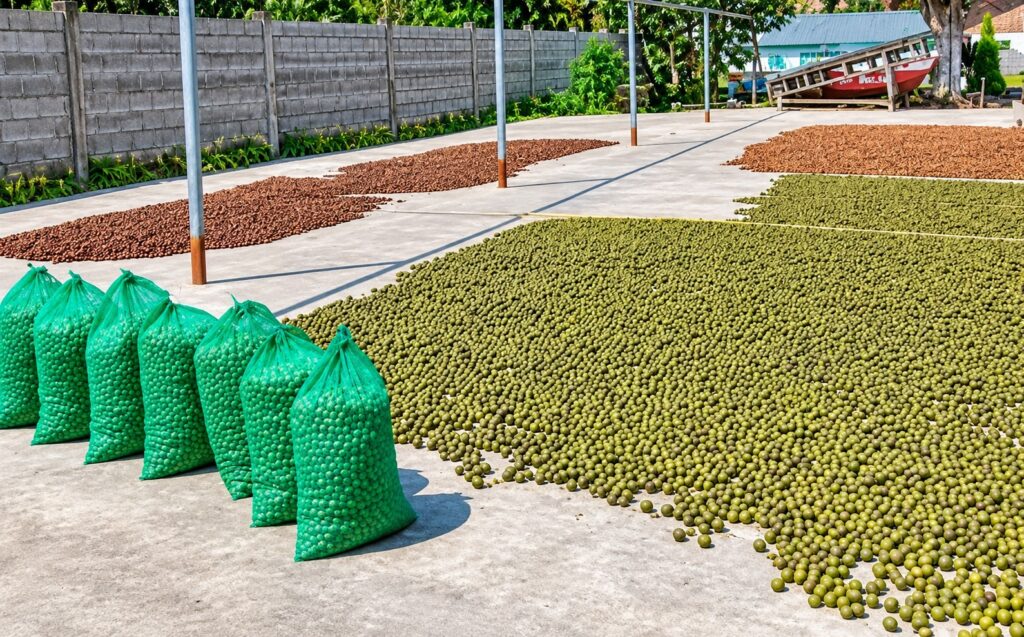
Farmers ask a direct question. Does the floor protect your income, or does a gap between the floor and the export price feed the theft and smuggling you see around your orchard? This article sets out the evidence from both sides. You see what the rule says, what farmers and processors report, what research shows on theft and what you do this season.
The figures come from news reports and one KALRO and KEPHIS study. Prices differ by county and buyer, so confirm every offer in writing before you deliver nuts.
What the Macadamia Minimum Price Says and Who Set It
Kagwe spoke to farmers in Nyeri. He directed processors to buy all locally produced nuts at KSh 100 per kilogram. He warned that failure to comply could lead the government to reopen raw nut exports. He said brokers bought nuts at KSh 30 per kilogram and resold them at higher prices. In his words, the intention is not to punish processors. He urged farmers to form cooperatives to gain bargaining power. He also called the theft of avocado and macadamia economic sabotage. FreshPlaza reported the directive.
The MacNut Association of Kenya, which represents processors, responded in late April. The association said it remains committed to the KSh 100 price and called any lower price exploitative. The association also linked some brokers to the smuggling of raw nuts, according to Breaking Kenya News.
| Date | Event |
|---|---|
| 2009 | The ministry bans export of in-shell nuts to build local processing and jobs |
| November 2023 | The ban lifts for one year. The farm-gate price rises from KSh 20 to KSh 100 and over 1,000 tonnes leave in two months |
| November 2024 | The government reverses. A harvest ban runs from November 2, 2024 to March 1, 2025 and the raw export ban returns |
| February 1, 2026 | AFA reopens harvesting. Its own surveillance found nuts in higher-altitude zones largely immature |
| April 23, 2026 | Kagwe directs processors to pay KSh 100 per kilogram |
| July to October 2026 | A controlled export window runs. Reports put shipments at 700 to 1,500 tonnes against a 14,000 tonne target |
| November 13, 2026 | AFA extends the controlled export window by six months |
Why Kenya Restricts Raw Macadamia Exports
Section 43 of the AFA Act, 2013 prohibits the export of raw macadamia unless the Agriculture Cabinet Secretary approves in writing. The ministry first banned raw exports in 2009 to build local processing and create jobs. In 2024, then Cabinet Secretary Andrew Karanja said Kenya earns more from kernels than from raw nuts. He said 41 processors held capacity above 120,000 tonnes.
Business Daily reports the restrictions also aim to stop premature harvesting. Farmers who rush to sell raw nuts pick immature fruit. Immature nuts give poor kernel recovery and weaken the reputation of Kenya in export markets.
Exceptions exist. The government lifted the ban for six months in 2016 and for one year in November 2023. After the 2023 lift, the farm-gate price rose from KSh 20 to KSh 100 and more than 1,000 tonnes of raw nuts left the country in two months, according to the Nation. The government then reversed course. Thousands of farmers and aggregators held millions of kilograms of unsold nuts, the Nation reported in 2024.
What Farmers Say About the Macadamia Minimum Price
Farmers in Embu, Murang’a, Kirinyaga, Nyeri and Meru told the Nation weeks after the directive that processors paid KSh 50 to KSh 80 per kilogram. Export buyers offered up to KSh 200. A Nyeri farmer said 10 tonnes of his nuts were rotting in storage. He argued that processors set their own prices and ignore the KSh 100 figure. Kirinyaga Senator Kamau Murango called the law insensitive to millions of Kenyans who depend on nuts.
Their core claim is simple. A floor which buyers ignore is not a floor. Exporters pay more, so open the market. In November, Business Daily and The Standard reported the same gap between processor offers of KSh 50 to KSh 80 and export offers of up to KSh 200. The Nut Traders Association of Kenya and the Kenya Macadamia Growers Association warned that part of the 30,000 tonnes in store was starting to rot.
Research supports the price-taker complaint. The study surveyed 148 farmers in Murang’a, Embu and Bungoma. Farmers sold mainly to brokers and reported that brokers and companies set the price. Poor prices, including exclusion from price setting, ranked as the main challenge for 25.7 percent of responses.
What Processors Say About the Raw Nut Export Debate
MacNut argues that the problem sits with brokers and smugglers, not with the floor. The association says brokers paid as little as KSh 30 per kilogram in several counties. It asked the government to prosecute smuggling cartels and says illegal exports distort local prices and weaken compliant processors.
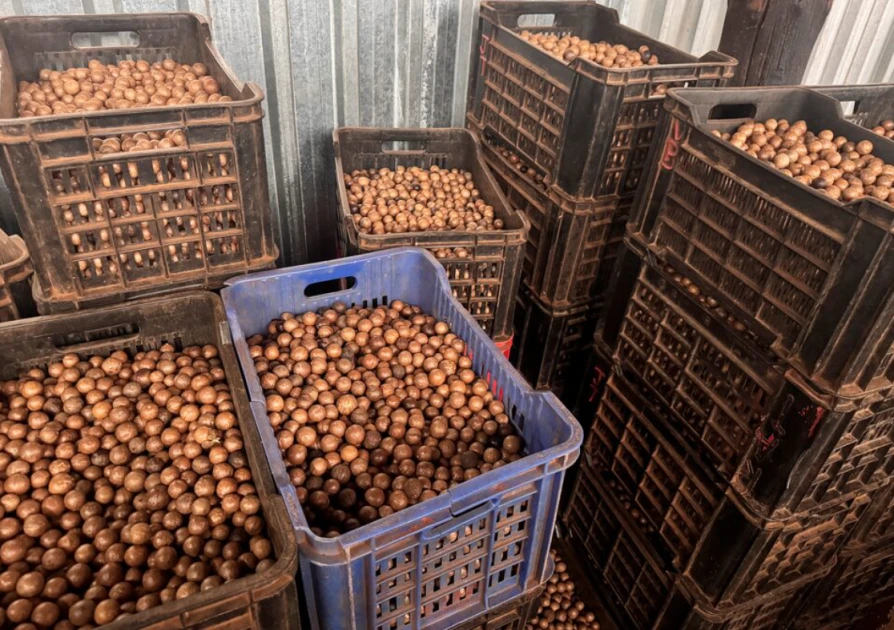
The association also warns about dependence on raw exports to China. It says price manipulation, sudden order cancellations and rejected consignments would hurt Kenyan farmers if Chinese output meets demand. It says nuts should earn different prices by quality, with grafted and organically certified nuts earning premiums.
Quality is the processors’ second argument. An industry voice quoted by The Standard in March said more than 60 percent of nuts delivered to processors fail global quality standards. The same source said Kenyan processors need nearly eight kilograms of raw nuts to make one kilogram of export-ready kernel. AFA surveillance found nuts in higher-altitude tea zones largely immature when harvesting reopened on February 1. Immature nuts weigh less, give less kernel and lower the price for every farmer.
Does the Macadamia Minimum Price Feed the Theft Crisis?
Theft is real, and the evidence is stronger than the policy argument. In the KALRO and KEPHIS study, theft ranked first among farmer challenges, at 29.1 percent of responses. Farmers said they ignored official harvest dates to avoid losing nuts to thieves. The authors concluded that stealing of nuts on the tree pushes premature nuts into the market and cuts farmer income.
Other reports point the same way. A June 2026 report described organized groups in Kirinyaga using vehicles to strip avocado and macadamia trees, damaging the trees. Reports on the AFA crackdown in 14 producing counties say officials link unlicensed buying to the theft of immature nuts. Kagwe described the theft of high-value crops as economic sabotage.
What the Evidence Shows About Theft and the Floor
First, theft predates the floor. The study appeared in 2025, before the KSh 100 directive, and already ranked theft first. The floor did not create the problem.
Second, a price gap argument exists. Critics say that when licensed processors pay KSh 50 to KSh 80 and other buyers pay more, buyers who ask no questions about origin attract stolen nuts. This is an argument, not a measured result. I found no study which tests whether the floor raised theft.
Third, high-value crops attract theft everywhere. Kagwe lists coffee, avocado and macadamia together. Value, not a price rule, draws thieves. A floor does not stop theft on its own, and no source shows the floor causes theft.
| Claim | What supports the claim | What is missing |
|---|---|---|
| The floor feeds theft | Price gaps between buyers reward buying without questions | No study tests the link, and theft led the 2025 problem list |
| The floor stops broker undercutting | Kagwe and MacNut both back KSh 100 | Farmers report offers of KSh 30 to KSh 80 after the directive |
| Raw exports lift farmer income | Export buyers offer up to KSh 200 and 2023 prices rose to KSh 100 | Only 700 to 1,500 tonnes shipped against 14,000 in the 2026 window |
| Processors cannot absorb the crop | More than 30,000 tonnes sit in stores | The stock includes nuts in processor stores and the causes are disputed |
5 Gaps in the Macadamia Minimum Price
The sources describe five gaps between the rule and your farm gate. Each gap shows where the floor works and where the floor stops.
Gap 1: Enforcement
Kagwe and MacNut both back KSh 100. Farmers report offers of KSh 30 to KSh 80. A price on paper needs a way to check the price at the weighbridge. Ask your buyer for the weight and price on a written receipt every delivery.
Gap 2: Coverage
The directive tells processors to buy all local nuts. More than 30,000 tonnes remain in store. Stock sits in farmer and processor stores, so the data do not show where the nuts wait or why.
Gap 3: The Spread to Export Buyers
Export buyers offer up to KSh 200. The figure is a top offer, not an average. Grade, moisture and delivery terms decide the final price. The spread of KSh 100 or more per kilogram explains why you hear the call to open exports.
Gap 4: Export Window Uptake
A window allows exports. A window does not ship nuts. Business Daily reports 700 tonnes shipped against a 14,000 tonne allocation. Sacco Review reports 1,500 tonnes against a 14,000 tonne target. The reports differ by 800 tonnes, and both show a small fraction. The reasons are not published in the sources. Dealers told The Standard they received licenses with no quota.
Gap 5: Traceability and Theft
The study recommends a market model where only macadamia farmers sell nuts in shell. The model would make theft harder to profit from. Today, buyers rarely trace nuts to a farm, and thieves sell to buyers who do not ask.
The floor does one thing well. The floor gives you a number to quote when a broker offers KSh 30. Processors, officials and the association all name KSh 100 in public. Quote the number, ask for the receipt and sell through a group.
What the Extended Export Window Means for You
AFA Acting Director Calistus Kundu signed a circular dated November 13 extending the controlled export window for raw nuts by six months. The circular says an industry forum in Gatanga, Murang’a recommended the extension on November 5. Agriculture Cabinet Secretary Kagwe granted permission. The aim is to move the remaining stock and add market opportunities.
A window gives you a choice of buyer. A choice does not guarantee a better price. Check each buyer before you deliver.
Check the Buyer Before You Deliver
Ask for the AFA licence number of the buyer. Ask for the price per kilogram in writing, the grade standard, the moisture limit and the payment date. Ask who weighs the nuts and who issues the receipt. Refuse a verbal offer. Refuse payment terms with no date.
Compare Offers on the Same Basis
A processor offer of KSh 80 paid in seven days and an export offer of KSh 200 paid in 90 days are not the same offer. Compare price, payment date, rejection risk and transport cost. Write each offer in your notebook with the date and the name of the buyer.
Deliver Only Mature Nuts
Immature nuts lose weight, kernel and grade. Pick nuts which have fallen to the ground or fall with a light shake. Mature nuts earn the higher offers, and immature nuts lower the reputation of every Kenyan farmer in the market.
Protect Your Macadamia Nuts From Theft and Price Cuts
You control more than you think. Use the steps below this season.
Organize Your Neighbors
Agree on harvest days with the farmers beside your orchard. Report strangers and unmarked vehicles to each other the same day. Share a watch roster during the weeks nuts mature. Theft thrives where each farmer works alone.
Harvest and Store in a Planned Order
Harvest mature nuts in small, frequent rounds. Dry nuts well before storage and keep the nuts off the floor in a closed room. Wet nuts rot and fail grade. Keep a count of sacks in and out each week so you notice losses early.
Sell Through a Group or Cooperative
Kagwe urged cooperatives to raise bargaining power. A group delivers larger volumes and negotiates as one. A group also keeps shared records of weights and prices. Pick leaders you trust and agree on a written rule for price and payment.
Keep a Price Record
| Date | Buyer and licence | Offer per kg | Weight delivered | Payment date | Receipt |
|---|---|---|---|---|---|
| Week 1 | Processor A, licence number | KSh 80 | 200 kg | 7 days | Yes |
| Week 2 | Export buyer B, licence number | KSh 150 | 200 kg | 30 days | Yes |
| Week 3 | Broker C, no licence | KSh 30 | Refused | None | No |
The sample lines are examples. The record shows you which buyer pays on time, which buyer rejects nuts and which buyer offers prices below the KSh 100 figure. Show the record to your officer if a buyer pays less than the floor.
Report Theft and Illegal Buyers
Report theft to the police and to AFA. Record the date, the place, the vehicle description and the number of sacks. AFA licenses every buyer and trader of macadamia, so report any buyer who has no licence. Keep your report numbers.
Four Fixes Proposed for the Macadamia Minimum Price
The sources name four fixes. Each fix comes from a different group, and each fix addresses a different gap.
Cooperatives. Kagwe says cooperatives raise bargaining power and cut broker influence. The fix helps farmers who organize, and asks cooperatives to show clean accounts and strong leaders.
Farmer-only selling. The KALRO and KEPHIS study recommends a market model where only macadamia farmers sell nuts in shell. The model aims at theft and premature nuts. The study does not describe how to build the system.
Licence enforcement and prosecution. AFA targets unlicensed dealers in 14 counties. MacNut asks the government to prosecute smuggling cartels. This fix targets brokers and smugglers, and the effect depends on how many cases reach court.
Export access. Growers and traders ask for open exports so farmers reach more buyers. The fix asks the sector to turn permission into shipments, as the 2026 window shows.
Two Ways to Read the Evidence
If you believe the floor protects farmers, your best evidence is the shared public commitment to KSh 100 and the reported price of KSh 30 from brokers, which the floor lets farmers challenge. Your weakest point is the farmer reports of KSh 50 to KSh 80 after the directive.
If you believe the floor fails farmers, your best evidence is the gap between processor and export offers and the 30,000 tonnes in store. Your weakest point is the small volume the 2026 window shipped, which shows exports alone did not clear stock. No source proves the floor feeds theft, and the 2025 study ranked theft first before the floor existed.
Both sides agree on three things. Brokers paying KSh 30 hurt farmers. Theft cuts income and pushes immature nuts to market. Farmers gain when they organize and keep records.
Macadamia Minimum Price Questions Farmers Ask
What is the macadamia minimum price in Kenya?
Kagwe directed processors on April 23, 2026 to buy all locally produced nuts at KSh 100 per kilogram, about US$0.75.
Can farmers export raw macadamia now?
AFA extended the controlled export window by six months in a circular dated November 13. Section 43 of the AFA Act still prohibits raw exports without written approval. Traders need an AFA licence, and the window applies to licensed dealers.
Does the macadamia minimum price cause theft?
No source shows this. Theft ranked first among farmer challenges in a study published before the floor. Value attracts theft, and traceability gaps help thieves sell.
What price should you accept for macadamia?
Quote KSh 100 as the public floor. Compare offers on price, grade, payment date and transport. Refuse written or verbal offers with no receipt.
Your Action Plan for the Macadamia Minimum Price
The macadamia minimum price gives you a number to quote, and a number does not enforce itself. The evidence shows brokers paying KSh 30, processors paying KSh 50 to KSh 80, export buyers offering up to KSh 200 and 30,000 tonnes of nuts in store. The evidence also shows theft as the top farmer challenge before the floor existed.
Act on what you control. Quote KSh 100. Demand a receipt. Check each buyer licence. Compare offers on the same terms. Deliver mature nuts only. Organize your neighbors, join a group and keep a price record. Report theft and unlicensed buyers.
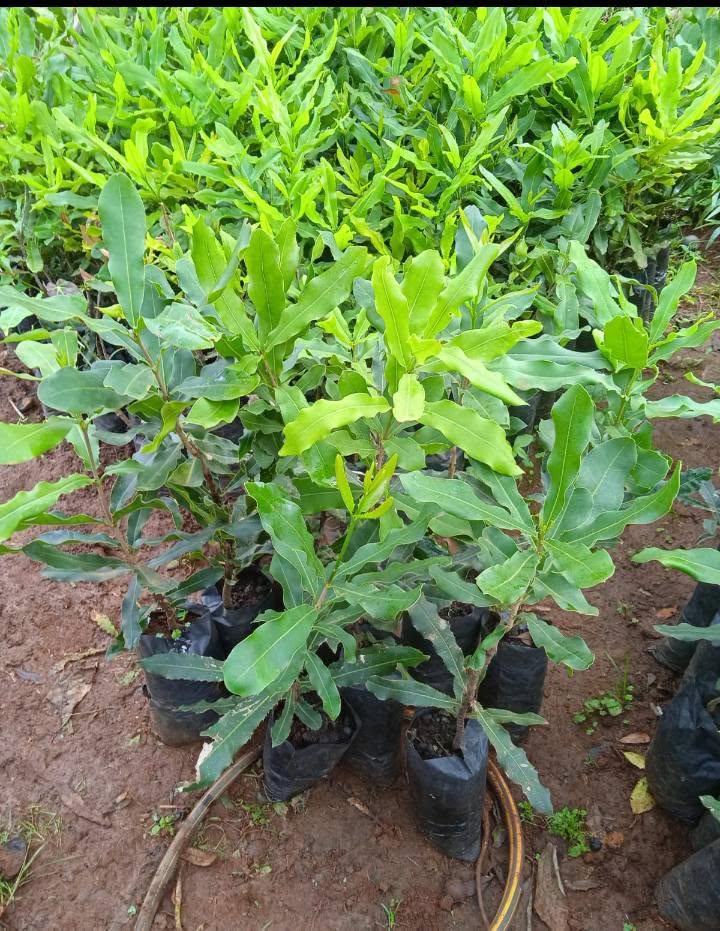
If you plan new trees, plant a grafted variety. Farmers Trend Limited sells grafted macadamia seedlings of the MRG20 variety, also called Murang’a 20, at KSh 350 each. See the grafted macadamia seedlings from Farmers Trend Limited. Call or WhatsApp 0790 509 684 or email info@farmerstrend.co.ke.
https://farmerstrend.co.ke/trending/kenya-macadamia-minimum-price/https://farmerstrend.co.ke/wp-content/uploads/2026/11/WhatsApp-Image-2026-11-17-at-12.56.40-1024x637.jpeghttps://farmerstrend.co.ke/wp-content/uploads/2026/11/WhatsApp-Image-2026-11-17-at-12.56.40-150x150.jpeg# TrendingCropsIn cropsMacadamia FarmingAgriculture and Food Authority (AFA),farmers trend,Kenya macadamia farming,KSh 100 macadamia price,macadamia cooperatives,macadamia export ban Kenya,Macadamia farmers,macadamia farming profitability,macadamia market prices,macadamia minimum price,macadamia processors,macadamia raw nut exports,macadamia seedlings,macadamia theft in Kenya,MacNut Association of Kenya,MRG20 macadamia,Murang'a 20,US$0.75/kg macadamiaThe macadamia minimum price of KSh 100 per kilogram, about US$0.75, is the most disputed rule in Kenya's nut sector. Agriculture Cabinet Secretary Mutahi Kagwe set the floor on April 23, 2026 in Nyeri and told processors to buy all locally produced nuts at or above the figure. On...FarmersTrendjohn doefarmerstrend@gmail.comAdministratorFarmers Trend Ltd.





Leave a Reply