Giant Cavendish Tissue Culture Banana in Taveta: How 476,035 Seedlings Turned Struggling Farms Into a Premium Organic Market
Giant Cavendish tissue culture banana plantlets gave Taveta farmers a way out of low prices and failing suckers. A five-year programme put 476,035 tissue culture seedlings in the soil of Taita Taveta County. Yields rose 27 percent. Post-harvest losses fell 85 percent. Annual net income from banana sales rose 62 percent.
The farmers also built Africa’s first organic banana cooperative. The organic cluster has supplied more than 28,000 tons of bananas under a premium export deal which runs until 2034.
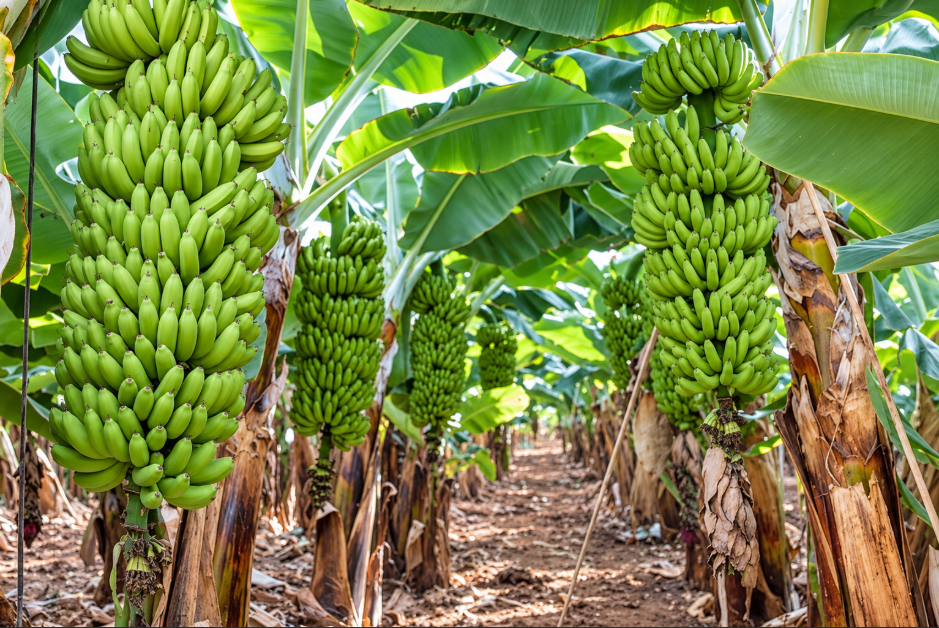
The project planted mostly Grand Nain, which belongs to the Cavendish group of bananas, like Giant Cavendish. The lessons carry over to your Giant Cavendish tissue culture banana farm. This article gives you the numbers, the model and a plan to follow, whether you grow one acre or ten.
The Taveta Story Behind 476,035 Tissue Culture Banana Seedlings
For years, Taveta farmers watched bananas ripen on the stem and rot in the field. Brokers set the price or disappeared without paying. Rose Dawa, a banana farmer from Kitobo, said buyers dictated the price and farmers took whatever they offered.
Poor planting material made the problem worse. Penina Mshabaha, a lead farmer in the project, said farmers planted suckers from their old farms and had no knowledge of tissue culture seedlings. Productivity fell year after year. Farmers lost up to 32.4 metric tons of bananas a year to poor handling and the lack of aggregation centres. Bad roads, weak power and unreliable water added to the damage.
Many farmers left their land idle. Children dropped out of school and debts grew. The Kenya News Agency told the story, and The Star published the report on October 25, 2025. You find the full report at The Star report on Taveta banana farmers.
The Programme Behind the Giant Cavendish Tissue Culture Banana Push
The Micro-Enterprise Support Programme Trust (MESPT) worked with the Danish development agency Danida and the commercial partners Orana A/S and Wanda Agriculture Group. Together they launched the five-year Danida Market Development Partnership (DMDP) in 2020. The goal was to transform the banana sub-sector in Taita Taveta County and create income and jobs.
The programme distributed 476,035 tissue culture seedlings through JKUAT Enterprises, Maua Mazuri and local nurseries. About 96.6 percent were Grand Nain, a high-yielding variety with resistance to disease. My arithmetic puts the Grand Nain share at about 459,850 seedlings. More than 2,000 smallholder farmers took part, and a close-out event in Taveta marked the end of the programme.
The Results at a Glance
| Measure | Before | At Close-Out | Change |
|---|---|---|---|
| Annual yield per acre | 18.59 tons | 23.56 tons | Up 27 percent |
| Post-harvest loss | 32.4 tons | 0.48 tons | Down 85 percent |
| Monthly household income | KSh 22,925 | KSh 30,858 | Up 35 percent |
| Annual net income from banana sales | KSh 137,750 | KSh 223,136 | Up 62 percent |
| Adoption of good agricultural practices | 57 percent | 82 percent | Up 25 points |
| Weekly cooperative aggregation | 20 tons | 48 tons | Up 140 percent |
Farmers who intercropped bananas with beans, maize and vegetables earned an extra 45 percent from those sales. Farmers sold 29,488 metric tons of bananas through the programme, which met 97 percent of the target. The programme also created 398 jobs, with women taking 39 percent and youth 36 percent.
Why Giant Cavendish Tissue Culture Banana Plantlets Outperform Suckers
Taveta farmers had planted suckers from old farms. Suckers carry pests and disease from the parent plant, and each generation of suckers passes the problem on. Giant Cavendish tissue culture banana plantlets start from clean mother plants grown in a laboratory, so every plantlet starts free of pests and disease.
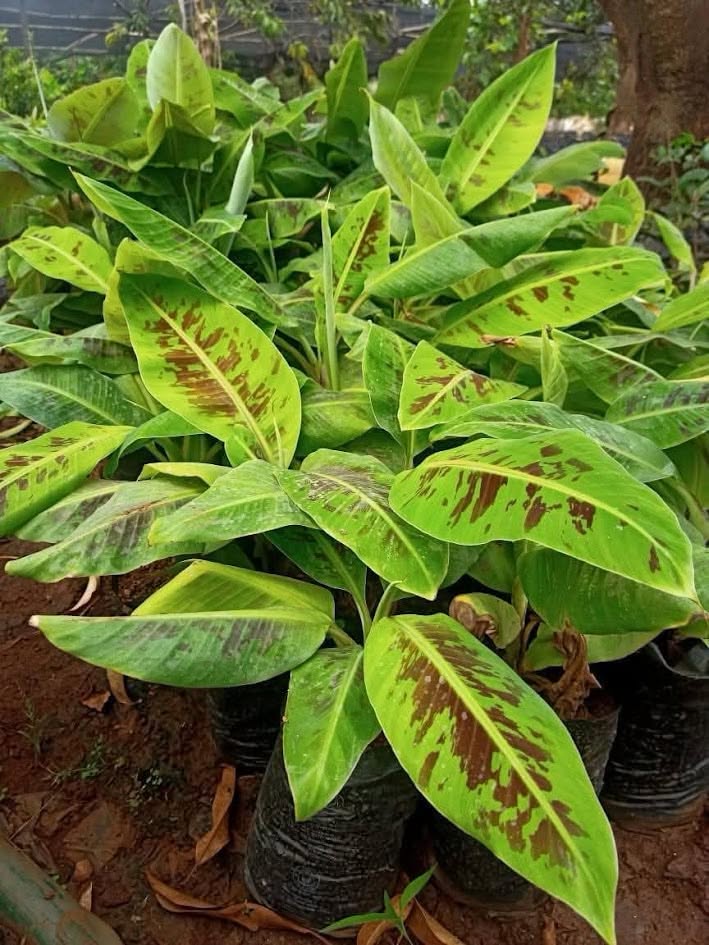
Kenya’s SHEP PLUS training material lists the benefits of tissue culture banana seedlings. They remove the risk of pests and disease, produce a uniform crop and give higher yields. Suckers work only when farmers use disease-free sword suckers and treat them with hot water against nematodes and weevils.
Grand Nain and Giant Cavendish: Same Banana Group
Both varieties belong to the Cavendish group. Giant Cavendish is a tall variety, and the SHEP PLUS training material lists the variety as resistant to Fusarium wilt, also called Panama disease. Resistance covers the older race 1 and race 2 strains.
The newer race TR4 threatens Cavendish bananas in other parts of the world. Ask the Kenya Plant Health Inspectorate Service (KEPHIS) for the current status in Kenya before you plant. Buy only certified plantlets, and keep people, tools and soil from infected farms out of your plantation.
Certified Seedlings From a Registered Nursery
Emmanuel Lomwatu, a nursery operator in Taveta, said MESPT connected him with the KEPHIS Horticultural Crops Directorate. The link let him produce certified seedlings, and he now supplies more than 10,000 seedlings to farmers. A certified nursery gives you plantlets which meet a quality standard.
Ask your nursery whether KEPHIS registers the nursery. Ask how the nursery hardened the plantlets. Look at the roots and the leaves before you pay.
The Credit Model Which Removed the Cost Barrier
The price of plantlets keeps many farmers on suckers. Research on banana seed systems in Eastern and Central Kenya links low adoption of tissue culture to the cost of plantlets. A study of banana production trends found about 60 percent of respondents in Kisii, Nyamira and Embu had limited knowledge of tissue culture bananas. You find the study at banana production study by Wahome and colleagues.
The Taveta programme solved the cost problem with credit. Farmers received certified seedlings on credit and repaid after harvest. The model removed the upfront cost. The model also tied the seedlings to a buyer, so farmers knew where the bananas would go.
You copy the logic on your farm. Plan the cost of Giant Cavendish tissue culture banana plantlets before you plant. Join a group which buys seedlings in bulk. Sign a buyer agreement before the first bunch is ready, so the sale pays back the seedling cost.
How Training Lifted Yields on Giant Cavendish Tissue Culture Banana Farms
The programme trained 2,167 farmers on good agricultural practices and climate-smart agriculture. Adoption of the practices rose from 57 percent to 82 percent. Eighty-three percent of farmers now use mulch, and 56 percent keep compost pits which turn residues into organic manure. Farmers also planted about 242,000 trees through agroforestry.
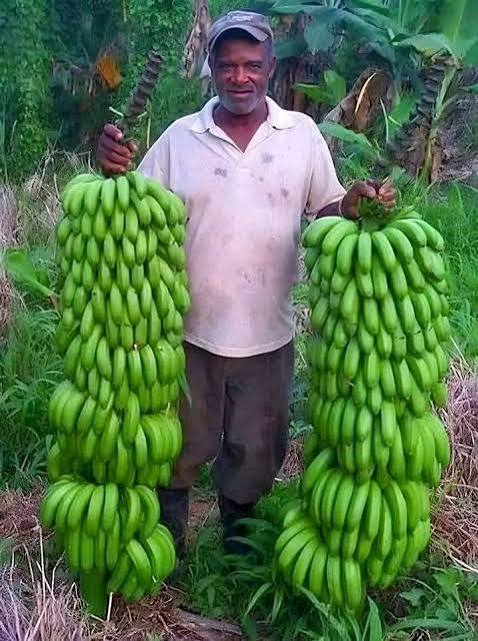
Training explains much of the 27 percent gain in yield from tissue culture banana. A plantlet delivers the potential of the variety only when you plant the plantlet well and care for the plantlet. Good seedlings in poor soil without mulch, water or feed give poor bunches.
Practices Which Lift Your Yield
Use mulch to hold moisture and suppress weeds. Make compost from banana residues and manure. Feed the plants on a schedule. Remove extra suckers and leave two or three healthy ones to replace the mother plant. Prop the plants at fruiting so wind does not topple them. Intercrop with beans or vegetables in the early months.
How Taveta Cut Post-Harvest Losses by 85 Percent
Post-harvest loss fell from 32.4 tons to 0.48 tons. Three changes drove the drop. Farmers learned proper harvesting techniques. Aggregation centres gave bananas a place to go straight from the field. Cooperative buyers collected fruit on a schedule, so bananas did not wait in the sun.
A banana bunch bruises easily. Cut the bunch with a sharp knife and leave part of the stalk on the bunch. Handle the fruit gently and never drop a bunch. Carry bunches to a shaded point. Use padded crates or clean trays. Agree a pick-up time with the buyer before you cut.
Take your own farm. A yield of 23.56 tons per acre with a 5 percent loss leaves you about 22.4 tons to sell. A loss of 20 percent leaves about 18.8 tons. The difference is 3.6 tons, which at KSh 30 per kilogram equals KSh 108,000 per acre. These are planning figures. Replace the price with the figure your buyer quotes.
The Premium Organic Market: Africa’s First Organic Banana Cooperative
The most historic result came from organic production. MESPT chief executive Rebecca Amukhoye suggested splitting the project into an organic part and a conventional part. Niels Osterberg, director of Orana A/S, said global demand is higher for organic produce. Denmark, where Orana A/S has the company headquarters, has the world’s highest per capita spending on organic food.
The organic cluster in Taveta achieved full certification. The cluster has supplied more than 28,000 tons of organic bananas under a premium export deal which runs until 2034. Amukhoye said the region is the first in Kenya and in Eastern and Central Africa to produce organic bananas, and farmers are happy with the premium prices.
What the Cooperative Does for Farmers
The Taita Taveta Banana Cooperative (TATABA) raised weekly aggregation from 20 to 48 tons. Vice Chair Rozina Mrutu said the cooperative trains farmers, distributes seedlings and runs market surveys to keep prices fair. Together, 2,197 farmers linked to commercial buyers and sold 29,488 metric tons of bananas.
A cooperative gives you three things. Volume attracts buyers. A price based on market surveys replaces a broker’s mood. Training and seedlings come in one place.
Organic Certification Asks for Records and Discipline
Organic certification sets rules on inputs and records. The Taveta cluster completed the process and now ships to a premium market. If you want to follow, start with the practices which the programme taught. Mulch, compost, record keeping and clean handling form the base. Ask a certifier or your cooperative about the rules before you change your inputs.
Value From Banana Trunks: Fibre, Flour and Compost
The commercial partners Orana A/S and Wanda Agriculture Group invested over KSh 502 million in circular economy innovations. These include fibre extraction from banana trunks, composting and eco-packaging. Commercial farms reached 100 percent waste conversion. Ziada Solutions processes about 100 trunks a day into fibre, slurry and banana flour.
A banana plant leaves a trunk after each harvest. Most farmers cut the trunk and leave the trunk to rot. Taveta shows an alternative. Use trunks as mulch and compost on your farm. Ask a local processor whether the processor buys trunks or fibre.
What the Taveta Story Means for Your Giant Cavendish Tissue Culture Banana Farm
Five lessons stand out. Each lesson links to a result in the programme.
Start With Clean, Certified Plantlets
Clean plantlets removed the disease carried by old suckers. Buy certified Giant Cavendish tissue culture banana seedlings from a registered nursery, and ask for the variety name on the receipt. Keep the receipt and the variety name.
Fix the Market Before the Harvest
The programme linked 2,197 farmers to commercial buyers. Do the same with your Giant Cavendish tissue culture banana crop. Sign a buyer agreement or join a cooperative before the first bunch is ready. Agree the grade, the price and the pick-up day.
Train Your Crew and Keep Records
Training lifted adoption of good practices from 57 percent to 82 percent. Learn the practices of Giant Cavendish tissue culture banana farming, teach your workers and write down what you do. Record planting dates, feed rounds, harvest weights and sales.
Protect Quality After You Cut
Handling cut losses by 85 percent. Plan harvest days, crates, shade and transport for your Giant Cavendish tissue culture banana bunches as carefully as you plan planting.
Add Income From Intercrops and Waste
Intercrops added 45 percent to sales for farmers who grew beans, maize and vegetables between the bananas. Trunks gave fibre, slurry and flour for processors. Use both ideas on your Giant Cavendish tissue culture banana farm.
Giant Cavendish Tissue Culture Banana Seedlings From Farmers Trend Limited
Farmers Trend Limited sells Giant Cavendish tissue culture banana seedlings at KSh 250 each from the Murang’a and Nairobi nurseries. The seedlings are propagated in a tissue culture laboratory in Kenya. Order at Tissue Culture Banana Seedlings.
Farmers Trend Limited delivers to your doorstep anywhere in the country. You also get free agronomy support with your purchase.
Varieties Farmers Trend Limited Sells
| Variety | Type |
|---|---|
| Giant Cavendish | Cooking banana |
| Uganda Green (Ndizi Kisukari) | Cooking banana |
| Ng’ombe | Cooking banana |
| Williams Hybrid | Ripening banana |
| Grand Nain | Ripening banana |
| Dwarf Cavendish | Ripening banana |
| FHIA-17 | Ripening banana |
| FHIA-18 | Ripening banana |
Choose the variety by your market. Ask your buyer what the buyer wants before you order, and ask Farmers Trend Limited whether Giant Cavendish tissue culture banana suits your area. Ask Farmers Trend Limited for advice on varieties which suit your area.
Seedling Cost Per Acre at KSh 250
Farmers Trend Limited recommends a spacing of 2.5 metres by 2.5 metres for high-density planting. Adjust the spacing by variety and soil fertility. At 2.5 metres by 2.5 metres, an acre holds about 650 plants. At 3 metres by 3 metres, an acre holds about 450 plants.
| Spacing | Plants per Acre | Seedling Cost at KSh 250 |
|---|---|---|
| 2.5 m by 2.5 m | About 650 | KSh 162,500 |
| 3 m by 3 m | About 450 | KSh 112,500 |
Plant numbers come from dividing an acre of 4,047 square metres by the area each plant occupies. Buy a few extra seedlings to replace losses in the first month.
Conditions Your Banana Farm Needs
Giant Cavendish tissue culture banana grows best where temperatures reach 26 to 30 degrees Celsius by day and 20 to 25 degrees by night, as Farmers Trend Limited recommends. Growth slows below 14 degrees, and frost damages plants. Plan for rainfall of 1,500 to 2,500 millimetres a year, well distributed. Use irrigation where rain is lower.
Choose well drained loamy soil with a pH between 5.5 and 7.5. Pick a site with six to eight hours of full sun a day. Protect the plants from wind, because large leaves and shallow roots make bananas easy to topple. Avoid waterlogged ground.
How to Plant Your Seedlings
Prepare the land and mark your spacing. Dig holes 60 centimetres wide, long and deep. Mix well decomposed manure or compost with the topsoil. Add 200 grams of DAP or a balanced NPK fertiliser to each hole and mix well.
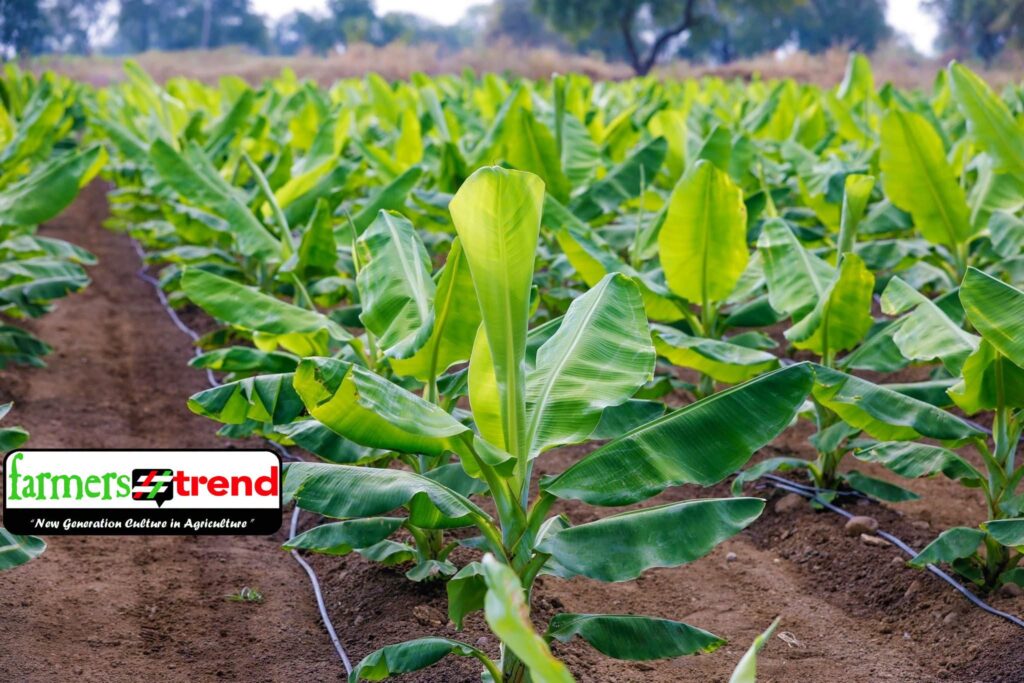
Water the seedlings before you move them. Place each seedling in the centre of the hole with the base below the soil surface and the roots spread out. Fill the hole with topsoil and press gently to remove air pockets. Do not bury the plant too deep. Mulch thickly around the base and water straight away. Farmers Trend Limited recommends drip irrigation for efficient water use.
How to Care for Your Plants
Keep the area weed free. Apply balanced NPK fertiliser every two to three months, and adjust by soil test and plant growth. Scout for pests and disease and use integrated pest management. Remove unwanted suckers and leave two or three healthy ones. Prop the plants at the fruiting stage.
Bananas are ready for harvest eight to twelve months after planting, depending on variety and conditions. Harvest when fingers are plump and the angles are rounded. Cut the bunch with a sharp knife and leave part of the stalk attached. Handle the fruit carefully to avoid bruising.
Income Planning Example for One Acre of Giant Cavendish Tissue Culture Banana
This example for Giant Cavendish tissue culture banana uses planning figures from Taveta, not a promise. Take the close-out yield of 23.56 tons per acre. Assume a farm gate price of KSh 20, KSh 30 or KSh 40 per kilogram.
At KSh 20 per kilogram, 23,560 kilograms bring KSh 471,200. At KSh 30, the acre brings KSh 706,800. At KSh 40, the acre brings KSh 942,400. Seedlings for the acre cost KSh 162,500 at 2.5 metres by 2.5 metres. Labour, fertiliser, water and transport also apply.
The Taveta average net income from banana sales was KSh 223,136 per farmer per year at close-out. Farmers hold different acreages and sell at different prices, so your result will differ. Use your own price, your own yield and your own costs.
The sums show why quality and market matter. A price of KSh 40 instead of KSh 20 doubles the income from the same bananas. Cooperative sales, good grading and buyer agreements push you toward the higher price.
How a Giant Cavendish Tissue Culture Banana Plantlet Grows From Laboratory to Field
A plantlet begins as a small piece of tissue from a selected, clean mother plant. A laboratory grows the tissue in sterile conditions and multiplies the tissue into many identical plantlets. Each plantlet carries the traits of the mother plant, including the variety and the health.
The plantlets then move to a hardening nursery. Kenya’s SHEP PLUS material says farmers should buy from registered hardening nurseries. Hardening teaches the young plant to live outside the laboratory. The plant develops leaves and roots which survive sun, wind and soil.
You receive the plantlet in a bag. You plant the Giant Cavendish tissue culture banana in a prepared hole. The plant then grows through a vegetative stage, flowers and fruits eight to twelve months after planting, according to Farmers Trend Limited. Each step needs water, feed and care.
What the Yield Gain Means in Shillings Per Acre
Take the Taveta numbers. Yield rose from 18.59 tons to 23.56 tons per acre. The gain is 4.97 tons per acre each year. At a farm gate price of KSh 30 per kilogram, 4,970 kilograms bring KSh 149,100 per acre.
The seedlings for an acre at 2.5 metres by 2.5 metres cost about KSh 162,500 at KSh 250 each. The yield gain alone repays the seedling cost in a little over a year. The calculation is a planning example. Prices move, and the gain depends on your care, your soil and your buyer.
Giant Cavendish tissue culture banana plantlets also lift the quality of the bunch. A uniform crop grades better and sells to buyers who want even fruit. Better grades earn better prices, so your income rises faster than your yield.
How to Join or Form a Banana Cooperative
TATABA moved from 20 tons to 48 tons a week. A farm at the Taveta close-out yield of 23.56 tons per acre produces about 0.45 tons of bananas a week on average. The cooperative’s 48 tons a week equals the output of about 106 acres. Cooperatives work because many small farms fill one large order.
Start with a group of neighbours who grow the same type of banana. Meet and agree a harvest calendar, a grading standard and a minimum price. Appoint a leader who talks to buyers. Keep the accounts in the open. Share transport and crate costs.
Talk to buyers before you plant. Ask what grade, what size and what delivery schedule the buyer wants. A cooperative with a signed buyer for the Giant Cavendish tissue culture banana crop plants with confidence. A cooperative without one risks the same rotting bunches Taveta farmers faced before 2020.
Plant in the Rains, but Protect Against Waterlogging
The rains are here, and planting at the onset of the rains gives young roots moisture while they settle. Bananas need steady water. Farmers Trend Limited recommends annual rainfall of 1,500 to 2,500 millimetres, well distributed.
Bananas also dislike waterlogging. Choose well drained land and dig drains where water collects. Avoid hollows. Wet soil rots young roots and slows growth. Prepare your holes and your drains before the plantlets arrive, and plant when the soil drains between storms.
Keep Records Which Help You Sell and Improve Your Crop
Taveta farmers sold through a cooperative which ran market surveys and tracked volumes. You keep the same discipline with simple records. Write the planting date, the variety and the number of plants. Write each feed round and the amount. Write each harvest date, the number of bunches and the weight. Write each sale with the buyer, the price and the date.
After one season you know your real yield and your real cost per kilogram. You see which blocks perform and which need work. A buyer or a certifier asks for records, and records protect you in any price dispute.
Risks to Plan For
Plan for four risks. Disease threatens bananas worldwide, so buy certified plantlets and ask KEPHIS about TR4. Waterlogging rots roots, so dig drains. Wind topples plants, so plant windbreaks and prop at fruiting. Price swings cut your income, so sign a buyer agreement and keep other crops on the farm.
A Season Calendar for Your Banana Farm
Plan your year around the stages of the crop. In the planting month, you prepare holes, plant and mulch. In months one to three, you weed, water and give the first feed. From month three, you repeat the feed every two to three months and remove extra suckers. As the plants grow tall, you prop them against wind. From month eight to month twelve, you harvest the first bunches of your Giant Cavendish tissue culture banana crop.
Write each stage on a wall calendar. Add the dates for the feed rounds and the dates when you call your buyer. A farmer with a calendar stops missing the jobs which protect yield.
Giant Cavendish Tissue Culture Banana Against Suckers: The True Cost
Suckers from your old plantation look free. The cost arrives later. Suckers carry pests and disease from the parent plant. They grow unevenly. The bunches vary in size and ripen on different days, which hurts your grade. Taveta farmers saw productivity fall every year on suckers.
A Giant Cavendish tissue culture banana seedling at KSh 250 costs money on day one. The plantlet starts clean, grows evenly and gives a uniform crop. Over several seasons, the higher yield and better grade repay the cost. Weigh the true cost of the plantation together with the price of the planting material.
Mistakes to Avoid When You Plant Tissue Culture Bananas
Avoid planting suckers from an old plantation when you are able to buy Giant Cavendish tissue culture banana plantlets. They carry the disease you want to leave behind. Avoid waterlogged ground and sites without wind protection. Avoid planting without a buyer. Avoid skipping mulch, feed and desuckering, because plantlets deliver only what your care allows.
Avoid rough harvesting. Avoid selling alone to the first broker with an offer. Join a cooperative or a group, sign a written agreement and keep your records.
Frequently Asked Questions About Giant Cavendish Tissue Culture Banana
What is Giant Cavendish tissue culture banana?
Giant Cavendish tissue culture banana is a Giant Cavendish plant raised from a plantlet grown in a laboratory. The plantlet starts from a clean mother plant, so the new plant begins free of pests and disease.
How many tissue culture seedlings did Taveta farmers receive?
The programme distributed 476,035 tissue culture seedlings. About 96.6 percent were the Grand Nain variety.
How much did yields rise in Taveta?
Annual yield rose 27 percent, from about 18.59 tons per acre to 23.56 tons.
How much did farmers earn from bananas?
Annual net income from banana sales rose 62 percent, from KSh 137,750 to KSh 223,136. Monthly household income rose 35 percent, from KSh 22,925 to KSh 30,858.
Is Giant Cavendish resistant to Panama disease?
Kenya’s SHEP PLUS training material lists Giant Cavendish as resistant to Fusarium wilt. The newer race TR4 threatens Cavendish bananas elsewhere. Ask KEPHIS for the current status in Kenya before you plant.
Why did Taveta plant Grand Nain instead of Giant Cavendish?
The report says about 96.6 percent of the seedlings were Grand Nain, a high-yielding variety with resistance to disease. The report does not give the reasons for the choice. Both varieties belong to the Cavendish group, and Farmers Trend Limited sells both.
How much does a Giant Cavendish tissue culture banana seedling cost?
Farmers Trend Limited sells tissue culture banana seedlings at KSh 250 each from the Murang’a and Nairobi nurseries.
How long before bananas are ready to harvest?
Bananas are ready eight to twelve months after planting, depending on variety and conditions.
Does Farmers Trend Limited deliver and give advice?
Yes. Farmers Trend Limited delivers to your doorstep anywhere in the country and gives free agronomy support with your purchase.
Your Next Step With Giant Cavendish Tissue Culture Banana
Giant Cavendish tissue culture banana succeeds when clean planting material, credit, training, careful handling and a strong cooperative work together. Taveta proves this. Yields rose 27 percent. Post-harvest loss fell 85 percent. Net income from banana sales rose 62 percent. An organic cluster now sells to a premium export market until 2034.
You apply the same lessons on your farm. Buy certified plantlets. Fix your buyer before harvest. Train your crew and keep records. Handle bunches with care. Use trunks and intercrops for extra income.
Farmers Trend Limited sells Giant Cavendish tissue culture banana seedlings at KSh 250 each from the Murang’a and Nairobi nurseries. Farmers Trend Limited delivers anywhere in the country and gives free agronomy support with your purchase. Order at Tissue Culture Banana Seedlings.
Call or WhatsApp 0790 509684 to place your order. Email info@farmerstrend.co.ke.
https://farmerstrend.co.ke/trending/giant-cavendish-tissue-culture-banana/https://farmerstrend.co.ke/wp-content/uploads/2026/11/giant-cavedish-banana-farm.pnghttps://farmerstrend.co.ke/wp-content/uploads/2026/11/giant-cavedish-banana-farm-150x150.png# TrendingBanana FarmingFruitsIn FruitsBanana farming in kenya,banana fibre,banana intercropping,banana post-harvest losses,banana seedlings Murang’a,banana seedlings Nairobi,banana spacing,banana yield per acre,Cavendish bananas Kenya,certified banana seedlings,Danida Market Development Partnership,Farmers Trend Limited,Fusarium wilt banana,Giant Cavendish Banana,Giant Cavendish tissue culture banana,Grand Nain Banana,MESPT,organic banana cooperative,Panama disease,Taita Taveta banana,TATABA,Taveta banana farmers,tissue culture banana Kenya,tissue culture banana price Kenya,tissue culture banana seedlingsGiant Cavendish tissue culture banana plantlets gave Taveta farmers a way out of low prices and failing suckers. A five-year programme put 476,035 tissue culture seedlings in the soil of Taita Taveta County. Yields rose 27 percent. Post-harvest losses fell 85 percent. Annual net income from banana sales rose...FarmersTrendjohn doefarmerstrend@gmail.comAdministratorFarmers Trend Ltd.


Leave a Reply