Mango Farming in Kenya: 10x Yield From New Varieties and 500% Off-Season Return
Mango farming in Kenya splits into two clear outcomes today. One group of farmers still grows local varieties their parents planted. Those trees produce around 200 fruits per tree. Those farmers sell into a market crashing every peak season. A second group switched to improved grafted varieties. Some of these growers report yields ten times higher. They sell into an off-season window paying several times the peak-season price.
The Kenya Agricultural Research Institute introduced five commercial mango varieties to farmers in Kilifi and Malindi. Those varieties were Haden, Tommy Atkins, Van Dyke, Sensation and Kent. Farmers there previously grew conventional varieties like Ngowe, Boribo and local Apple mango. Officials running the program described the new varieties as carrying yield potential ten times conventional stock. Local varieties top out around 200 fruits per tree. Improved varieties reach 1,000 to 1,200 fruits per tree.
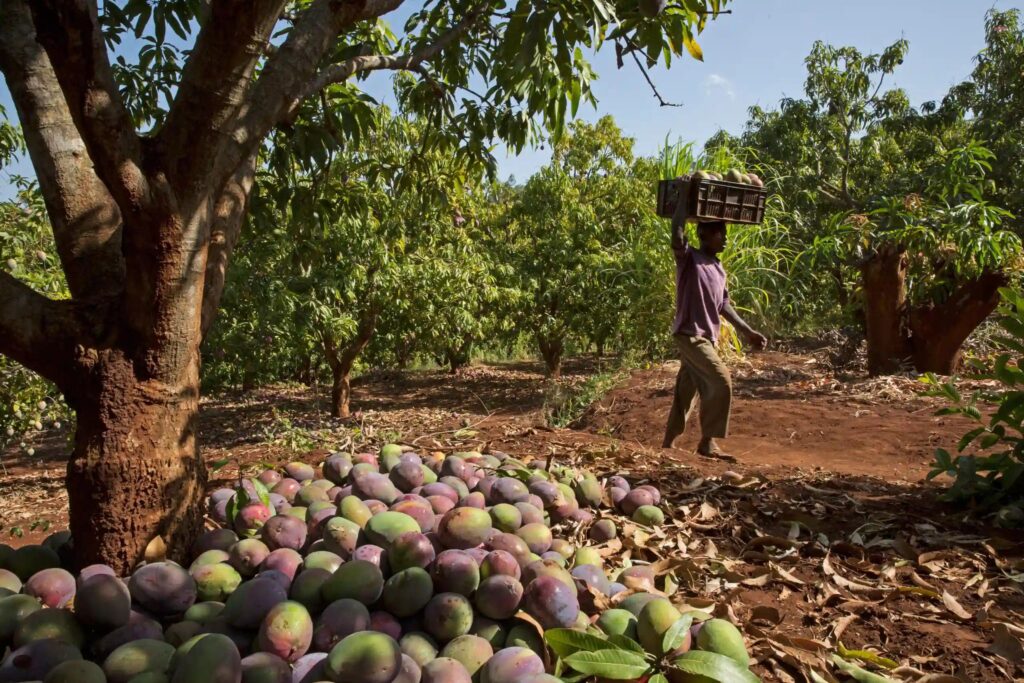 This guide explains where this 10x figure comes from. It covers which new varieties drive it. It shows why timing your harvest for the off-season window changes your income as much as variety choice does. It details what it costs to plant and manage a mango orchard built around these advantages. You finish with a clear picture of whether your farm captures the yield and pricing gains already available to Kenyan mango growers who moved first.
Key Facts At A Glance
- Local Kenyan mango varieties yield around 200 fruits per tree at most
- KARI-introduced varieties from Florida showed yield potential of 1,000 to 1,200 fruits per tree
- A documented Kitui farmer case saw yields double from 500 to 1,000 fruits per tree after switching to grafted stock
- Mature grafted trees typically produce 300 to 600 fruits per tree under standard smallholder management
- Peak-season farm-gate prices drop to Sh2 to Sh6 per fruit due to oversupply
- Off-season farm-gate prices climb to Sh15 to Sh20 per fruit, with retail prices reaching Sh40 to Sh50
- Kenya grows over 65,000 hectares of mango, producing roughly 450,000 metric tonnes yearly
- Local landrace varieties cover only 30 percent of total national mango production
Mango Farming in Kenya Today: Why Variety Choice Decides Everything
Mango farming in Kenya now covers more than 65,000 hectares of land. This figure keeps expanding as farmers move away from traditional crops toward high-value fruit. National production sits around 450,000 metric tonnes a year. Growers cultivate roughly 50 documented varieties. Only 31 of these carry detailed agronomic records.
Local landrace varieties, the trees most smallholders inherited or planted decades ago, now account for only 30 percent of total national production. The remaining 70 percent comes from introduced and improved commercial varieties. This shift reflects how much variety choice now shapes a farmer’s outcome in Kenya.
This split did not happen by accident. Polyembryonic varieties, mostly the traditional local types, propagate easily from seed. They produce true-to-type trees. This trait helped them spread widely across smallholder farms for generations. Monoembryonic varieties, mostly the improved commercial types, require grafting onto a rootstock to reproduce reliably. This technical barrier kept them out of reach until certified nurseries made grafted seedlings widely available.
Government policy now actively favors this shift. The Ministry of Agriculture has prioritized mango under horticultural development programs. It backs certified nurseries and extension services aimed at improving yields and cutting post-harvest losses. Counties from Murang’a to Bungoma to Baringo now run active mango expansion programs. This turned what was once a regional coastal and eastern crop into a genuinely national one.
Local Varieties Versus New Varieties: Where the 10x Yield Claim Comes From
The 10x figure traces to a specific, documented program rather than a rounded-up marketing number. The Kenya Agricultural Research Institute brought five new mango varieties into Kilifi and Malindi. The program aimed to replace conventional stock among more than 500 participating farmers.
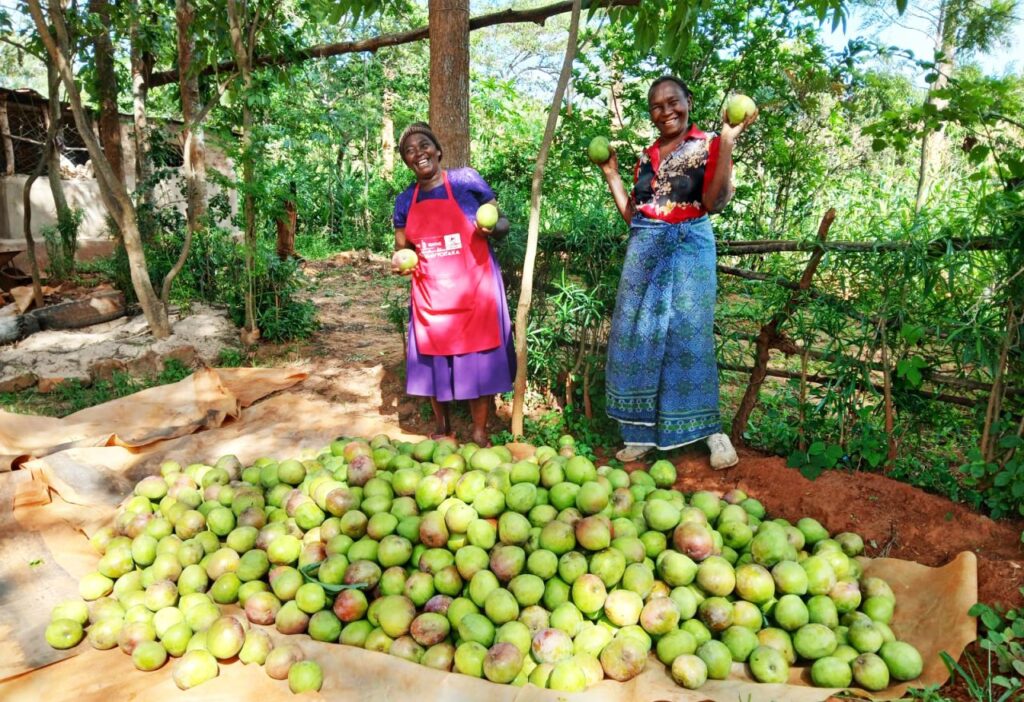
Local varieties in the program, Ngowe, Boribo and local Apple mango, topped out at roughly 200 fruits per tree. The five introduced varieties showed yield potential of 1,000 to 1,200 fruits per tree. Program officials described this range directly as ten times conventional varieties. Run the numbers yourself. One thousand fruits against 200 fruits lands at exactly five times. The upper end of 1,200 fruits pushes past six times. The “ten times” framing used by officials likely reflects field-level variability. It also reflects the weakest-performing local trees compared against the strongest-performing new varieties. This figure remains the most widely cited number in Kenyan agricultural reporting on this specific program.
A separate, independently documented case from Kitui County shows a more conservative result. A farmer there abandoned local mango varieties for grafted stock. His yield rose from 500 fruits per tree to 1,000 fruits per tree. This represents a straightforward doubling rather than a tenfold jump. His starting point already reflected better-than-average local variety performance. This likely explains why his improvement came in lower than the Kilifi and Malindi comparison.
For a realistic planning number, mature grafted mango trees under standard smallholder management typically produce 300 to 600 fruits per tree per season. Treat the 10x figure as the documented ceiling this crop has shown under a specific, real program. Treat 300 to 600 fruits as the range worth budgeting around for your own farm.
Meet the New Varieties Driving This Shift
Kent ranks among the most commercially important introduced varieties in Kenya today. The fruit grows large, fiberless and rich in flavor. Yield potential runs between 800 and 1,200 fruits per mature tree. Kent also carries a genuine off-season advantage. Its harvest window extends later than most competing varieties. This trait lets growers hit the market precisely when supply from other varieties has already dried up.
Tommy Atkins built its reputation on shelf life and handling durability rather than flavor alone. The fruit’s firm flesh and bright red skin resist bruising during transport. This makes the variety a preferred choice for exporters moving fruit long distances to European buyers who prioritize consistency over the sweetest possible taste.
Apple mango remains the strongest performer in domestic urban markets. It commands retail prices of Sh80 to Sh150 per kilogram thanks to its sweet flavor and attractive red-yellow skin. This variety also fruits earlier than many competitors. This gives growers a faster path to their first harvest income.
Ngowe holds its position as a traditional Kenyan favorite. Growers prize it for elongated shape and deep orange flesh. It remains the preferred variety for juice processing. It commands a 20 to 30 percent price premium in this specific channel.
Van Dyke, Sensation and Haden round out the KARI-introduced lineup. Each contributes to the yield gains documented in the Kilifi and Malindi program. Alphonso and Sabin serve niche premium and general-purpose roles respectively for growers targeting specific market segments.
Why Local Landraces Still Matter
None of this makes local varieties worthless. Dismissing them entirely costs you money in a different way. Local landraces carry genuinely useful traits. They show high and stable yields under low-input conditions. They carry strong drought tolerance. They show low susceptibility to the pests and diseases troubling more delicate introduced varieties.
This explains why grafted commercial seedlings still rely on local landrace rootstock. Nurseries graft the desired scion, the Kent, Tommy Atkins or Apple variety a farmer wants to harvest, onto hardy local rootstock. That rootstock was bred for generations to survive Kenyan soil and climate conditions without heavy chemical or irrigation support.
Genetic erosion among these landraces represents a real, underappreciated risk. As farmers uproot local trees in favor of commercial varieties, the rootstock genetics making grafted trees resilient become harder to source. Conservation of local landrace diversity is not a sentimental concern. It directly protects the long-term supply of rootstock the entire grafted seedling industry depends on.
Farmers weighing a full switch to commercial varieties should keep at least some local rootstock trees or access to local seed sources on their land. This acts as a hedge against extreme weather years. It also contributes to keeping this genetic resource available for future grafting.
The Off-Season Opportunity: Why Timing Changes Your Price As Much As Yield
Most Kenyan mango regions fruit once a year. Supply peaks between October and February. This single harvest window creates a predictable, almost annual price crash. During peak season, farm-gate prices sometimes fall to Sh2 to Sh6 per fruit. That level barely covers harvest labor, let alone input costs.
Off-season pricing tells a completely different story. As peak-season supply dries up, farm-gate prices climb to Sh15 to Sh20 per fruit. Retail prices in some markets reach Sh40 to Sh50 per fruit. One documented comparison found peak farm-gate prices as low as Sh3 per piece rising to Sh15 per piece once farmers reached better, later markets. That jump works out to exactly five times. Agricultural writers commonly describe this swing as a 400 to 500 percent increase.
This swing is not identical every season or every region. Treat this as a documented range rather than a guaranteed multiplier. A separate, more recent market report found peak farm prices around Sh6 per fruit climbing to Sh15 to Sh20 in the off-season. That represents a smaller but still meaningful 150 to 233 percent increase. The exact multiplier moves with weather, regional oversupply and how many other farmers also chase the same off-season window in a given year.
The underlying cause behind both figures stays consistent. Kenyan mango farmers overwhelmingly harvest during the same few months. They flood the market and crash prices exactly when everyone brings fruit to sale at once. Any farmer able to shift even part of their harvest outside this window captures pricing most of the market never sees.
Two Ways to Hit the Off-Season Window
Variety selection offers the simplest, lowest-risk path to off-season timing. Kent mango naturally extends its harvest into the late season. It arrives on the market precisely when supply from earlier varieties has already been exhausted. Plant a meaningful share of your orchard in Kent rather than relying entirely on early or mid-season varieties. This builds off-season timing directly into your variety mix without any additional technique or expense.
Chemical flower induction offers a second, more technical route researched specifically for Kenyan growing conditions. Agricultural researchers have studied off-season flower induction technologies aimed at triggering mango trees to flower and fruit outside their natural window. These technologies directly target the oversupply and price crash problem documented above. This approach demands more precise timing and management skill than simply choosing the right variety. It works best when guided by an agricultural extension officer familiar with the specific product and application timing involved.
Staggered planting across your orchard gives you a third, longer-term option. Rather than planting a single variety across your entire acreage, split your planting between an early variety like Apple mango, a mid-season standard like Tommy Atkins, and a late variety like Kent. This spreads your harvest and your income across a longer window. It avoids concentrating everything into the same crash-prone months every other farmer in your area also sells into.
Cold storage investment extends your selling window even without changing what or when you plant. Low-cost cold storage technologies, including the Coolbot system piloted for Makueni County mango farmers, let you hold harvested fruit past the immediate peak-season glut. You sell gradually into improving prices rather than dumping your entire harvest at the worst possible moment.
Getting Started: Ecological Conditions and Site Selection
Mango grows well across a wide range of Kenyan conditions. This adaptability explains why the crop has expanded so far beyond its traditional coastal and eastern strongholds. Target an altitude between 0 and 1,500 meters above sea level. Optimal temperatures run between 25 and 30 degrees Celsius. The tree tolerates higher heat reasonably well. Frost damages mango seriously, ruling out the highest-altitude zones of the country.
Annual rainfall of 650 to 1,200 millimeters, well distributed across the year, gives mango trees what they need without extra irrigation investment. Drier areas still grow mango successfully. Expect to budget for irrigation in these zones, particularly during the establishment years before root systems mature enough to access deeper soil moisture on their own.
Soil matters as much as climate. Mango performs best in well-drained loamy or sandy-loam soil rich in organic matter. Target a soil pH between 5.5 and 7.5. Waterlogged or heavy clay soil causes root problems regardless of how well the climate otherwise suits the tree. Test drainage on your specific plot before committing to a large planting.
Test your soil directly rather than assuming conditions match a regional average. Soil pH and fertility vary meaningfully even within a single county. A proper test tells you whether you need lime to correct acidity or additional organic matter before your seedlings go into the ground.
Planting and Spacing for Maximum Yield
Space grafted mango seedlings between 5 by 5 meters and 8 by 10 meters. This range depends on variety vigor and how intensively you plan to manage the orchard. At the tighter 5 by 5 meter spacing, expect to fit approximately 150 to 160 trees per acre. This gives newer growers a clear planning number for both seedling costs and eventual yield projections.
Dig planting holes 60 centimeters by 60 centimeters by 60 centimeters. This gives young roots enough loosened soil to establish before they meet undisturbed native ground. Mix the excavated topsoil with 20 kilograms of well-decomposed organic manure and 200 grams of DAP fertilizer. Use this enriched mixture to fill the hole around your seedling rather than plain native soil.
Plant at the onset of the rainy season wherever possible. Ensure reliable irrigation access if you plant outside this window. Position the seedling so the graft union, the visible point where the scion joins the rootstock, sits above the final soil line. Burying this union invites rot and threatens the entire tree. This mistake costs you a full seedling investment and a year or more of lost growing time.
Stake young seedlings using a simple wooden or bamboo support. Tie the support loosely enough to avoid damaging the developing stem as the tree grows. This staking matters most in the first year, before the root system anchors the tree firmly enough to handle wind and its own increasing weight without support.
Care, Pruning and Disease Management
Keep the area around each seedling weed-free, particularly during the first two years. Weeds compete directly with young trees for both water and nutrients at exactly the growth stage when your tree needs both the most.
Prune mango trees regularly to shape the canopy, remove dead or diseased branches, and open the tree structure to better airflow and sunlight penetration. Proper pruning does more than tidy the tree. It directly encourages fruit production by keeping the canopy structured for maximum flowering surface rather than dense, shaded growth producing leaves instead of fruit.
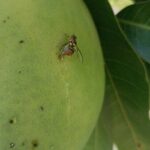
Watch specifically for anthracnose and powdery mildew, the two disease problems most commonly affecting Kenyan mango orchards. Watch for fruit fly pressure during fruiting season. Apply appropriate fungicides and insecticides as soon as you spot symptoms rather than waiting for a problem to spread across the orchard. Early intervention costs far less than treating an established outbreak.
Top-dress established trees with CAN or another suitable fertilizer every three to six months. Adjust frequency based on your soil’s existing fertility and how vigorously your specific trees are growing. Trees showing strong, healthy growth need less frequent supplementation than trees on depleted or marginal soil.
Harvest Timing and Handling
Grafted mango trees begin bearing fruit within two to three years of planting. This timeline runs dramatically faster than the five to seven years many non-grafted, seed-grown trees need to reach first fruiting. This earlier income timeline is one of the most underrated advantages of paying more upfront for certified grafted stock rather than cheaper seed-grown seedlings.
Kenya’s main harvesting season runs from November through March. This shifts somewhat depending on your specific variety mix and region. This variability is exactly what the staggered planting approach covered earlier in this guide puts to your advantage.
Watch for color change, a developing fruity aroma, and slight softening near the stem as your primary maturity signals. Harvest by hand or with a picking pole to avoid bruising or puncturing the fruit. Damaged mangoes lose value fast and spoil faster, cutting directly into the margin your careful variety and timing choices worked to build.
Post-harvest loss remains a serious, well-documented problem across Kenyan mango farming. Research estimates place losses at 40 to 50 percent of harvested fruit in some studies. Much of this loss happens after the fruit leaves your hands. Careful handling during harvest, combined with cold storage access where possible, meaningfully reduces how much of your own crop you lose before it reaches a paying buyer.
The Real Economics: Cost, Revenue and Profit Per Acre
Initial establishment costs for a mango orchard typically range from Sh50,000 to Sh70,000 per acre. This covers seedlings, manure, fertilizer, pesticides and labor. Maintenance costs in subsequent years drop meaningfully, usually landing between Sh30,000 and Sh50,000 per acre annually once the orchard structure is established.
Revenue potential depends heavily on the yield and pricing factors already covered in this guide. At an average yield of 10 to 15 tons per acre and a farm-gate price of Sh30 per kilogram, gross income lands around Sh375,000 per acre. Subtracting establishment and maintenance costs leaves a net profit in the Sh300,000 to Sh325,000 range per acre during the early productive years. Profit rises further as trees mature toward their full 300 to 600 fruit per tree potential.
This projection assumes reasonable market access. The gap between a farmer who achieves it and one who does not usually comes down to exactly the two factors this guide has focused on: variety choice and harvest timing. A farmer stuck selling exclusively into peak-season broker pricing at Sh2 to Sh6 per fruit earns a fraction of a farmer selling the same physical harvest into an off-season window at Sh15 to Sh20 per fruit or better.
Value addition offers a further, often overlooked profit layer. Dried mango products carry markups of 300 to 400 percent over fresh fruit pricing. Mango puree demand grows at roughly 15 percent annually according to processing industry tracking. A grower willing to invest in basic drying or processing equipment captures a meaningfully larger share of their harvest’s total potential value instead of selling everything fresh at farm-gate rates.
Common Mistakes Mango Farmers Make in Kenya
Planting only local, seed-grown varieties without considering the documented yield gap wastes years of growing time on trees capped well below what grafted commercial varieties demonstrably achieve. The 200-fruit ceiling documented in the Kilifi and Malindi comparison is not a limitation every farmer needs to accept.
Selling exclusively into peak-season markets locks you into the worst pricing window of the entire year by default. Every other farmer in the region also brings fruit to sale during this window. Even a partial shift toward late-season varieties or basic cold storage meaningfully improves your average selling price across a full season.
Skipping soil testing before planting risks committing years of establishment cost to land poorly suited for mango. This risk runs highest on waterlogged or heavy clay plots where root problems undermine even the best variety choice and management practices.
Burying the graft union during planting remains one of the most common and costly physical mistakes new growers make. This invites rot threatening the entire tree. It erases the investment in certified grafted stock meant to deliver faster fruiting and higher yield in the first place.
Ignoring post-harvest handling quality treats harvest day as the finish line rather than the midpoint of your income process. Careful picking, sorting and storage decisions in the hours after harvest directly determine how much of your crop survives to reach a paying buyer intact.
Frequently Asked Questions About Mango Farming in Kenya
Is mango farming in Kenya still profitable with new competition?
Yes. Government data shows the crop expanding past 65,000 hectares nationally. Net profit estimates of Sh300,000 to Sh325,000 per acre remain achievable for growers combining improved varieties with reasonable market access and timing.
What is the highest-yielding mango variety in Kenya?
KARI-introduced varieties including Kent, Tommy Atkins, Van Dyke, Sensation and Haden showed yield potential of 1,000 to 1,200 fruits per tree in documented Kilifi and Malindi trials. Local varieties like Ngowe and Boribo produce roughly 200 fruits per tree.
How much do grafted mango seedlings cost in Kenya?
Grafted mango seedling prices typically range from Sh150 to Sh500 at Farmers Trend nurseries. Popular options include Apple Mango, Tommy Atkins, Kent, Vandyk, Alphonso, Sabin and Ngowe available from certified suppliers.
How long does a grafted mango tree take to bear fruit?
Grafted mango trees begin bearing fruit within two to three years of planting. This runs considerably faster than the five to seven years typical of non-grafted, seed-grown trees.
Why do mango prices crash during peak season in Kenya?
Most Kenyan mango regions harvest during the same October to February window. This floods markets simultaneously and pushes farm-gate prices down to Sh2 to Sh6 per fruit in oversupplied years. Off-season months pay far better.
How do farmers earn more from off-season mango sales?
Planting late-fruiting varieties like Kent, staggering harvest timing across an early, mid-season and late variety mix, and investing in basic cold storage all extend a farmer’s selling window into higher-priced off-season months.
What spacing works best for mango trees in Kenya?
Standard spacing runs from 5 by 5 meters up to 8 by 10 meters depending on variety vigor. Spacing of 5 by 5 meters allows approximately 150 to 160 trees per acre for growers prioritizing higher planting density.
Your Next Steps
Mango farming in Kenya rewards two decisions more than any other input choice on your farm. Those decisions are which variety you plant and when you sell what you harvest. The documented 10x yield gap between local and improved commercial varieties traces back to real, cited programs. The 400 to 500 percent price swing between peak and off-season selling windows traces back to real market data rather than rounded-up marketing claims.
Start by auditing your current variety mix against the yield figures in this guide. If your orchard runs entirely on local, seed-grown stock, even a partial transition toward certified grafted varieties positions you to close a meaningful share of this documented yield gap over the next several seasons.
When you are ready to plant, buy grafted mango seedlings from Farmers Trend to secure certified stock suited to Kenyan growing conditions. Certified grafted stock costs more upfront than roadside seedlings, but it delivers the faster fruiting and higher yield this guide has documented.
Test your soil. Confirm your altitude and rainfall match the ranges covered here. Plan your variety mix deliberately rather than defaulting to whatever seedlings a roadside vendor happens to stock in a given week. A mix weighted toward early, mid and late-season varieties builds off-season pricing advantage directly into your orchard rather than leaving it to chance.
The fruit sitting on a local variety tree and the fruit sitting on an improved variety tree cost roughly the same to grow. The difference between 200 fruits and 1,000 fruits comes down to variety. The difference between selling at Sh3 and selling at Sh15 comes down to timing. Both decisions sit entirely in your hands before you ever plant a single seedling.
https://farmerstrend.co.ke/trending/mango-farming-in-kenya-4/https://farmerstrend.co.ke/wp-content/uploads/2026/09/mango-farming-in-kenya-1024x768.jpghttps://farmerstrend.co.ke/wp-content/uploads/2026/09/mango-farming-in-kenya-150x150.jpg# TrendingFruitsIn FruitsMango Farming10x mango yield,anthracnose mango Kenya,Apple mango Kenya,best mango varieties Kenya,Boribo mango,Cera Trap mango Kenya,commercial mango farming Kenya,Coolbot mango Makueni,dried mango Kenya,grafted mango seedling price Kenya,Grafted mango seedlings Kenya,Haden mango,how to grow mangoes Kenya,KALRO mango Kenya,KARI mango varieties,Kent mango Kenya,mango cold storage Kenya,mango export Kenya,mango farming cost Kenya,mango farming for beginners Kenya,mango farming guide Kenya,mango farming in kenya,mango farming investment Kenya,mango farming Kilifi,mango farming Kitui,Mango farming Makueni,mango farming Malindi,Mango farming Meru,mango farming Murang'a,mango farming profit per acre,mango fruit fly control Kenya,mango market prices Kenya,mango off-season prices,mango orchard establishment cost,mango pest management,mango planting guide Kenya,mango price per fruit Kenya,mango pruning Kenya,mango soil requirements Kenya,mango spacing Kenya,mango value addition Kenya,Mango yield per tree Kenya,Ngowe mango,off-season mango production,Sensation mango,smallholder mango farming,Tommy Atkins mango Kenya,Van Dyke mangoMango farming in Kenya splits into two clear outcomes today. One group of farmers still grows local varieties their parents planted. Those trees produce around 200 fruits per tree. Those farmers sell into a market crashing every peak season. A second group switched to improved grafted varieties. Some of...FarmersTrendjohn doefarmerstrend@gmail.comAdministratorFarmers Trend Ltd.





Leave a Reply