Kenya Avocado Gold Rush 2026: New Markets, Record Production, and Stricter Rules
Kenya’s avocado sector is experiencing an unprecedented transformation in 2026. The government has launched aggressive expansion campaigns, international markets are opening up, and production is projected to hit record levels. But with these opportunities come stricter regulations and new challenges that farmers and exporters must navigate. Understanding Kenya avocado gold rush 2026 is essential for anyone looking to profit from this booming industry.
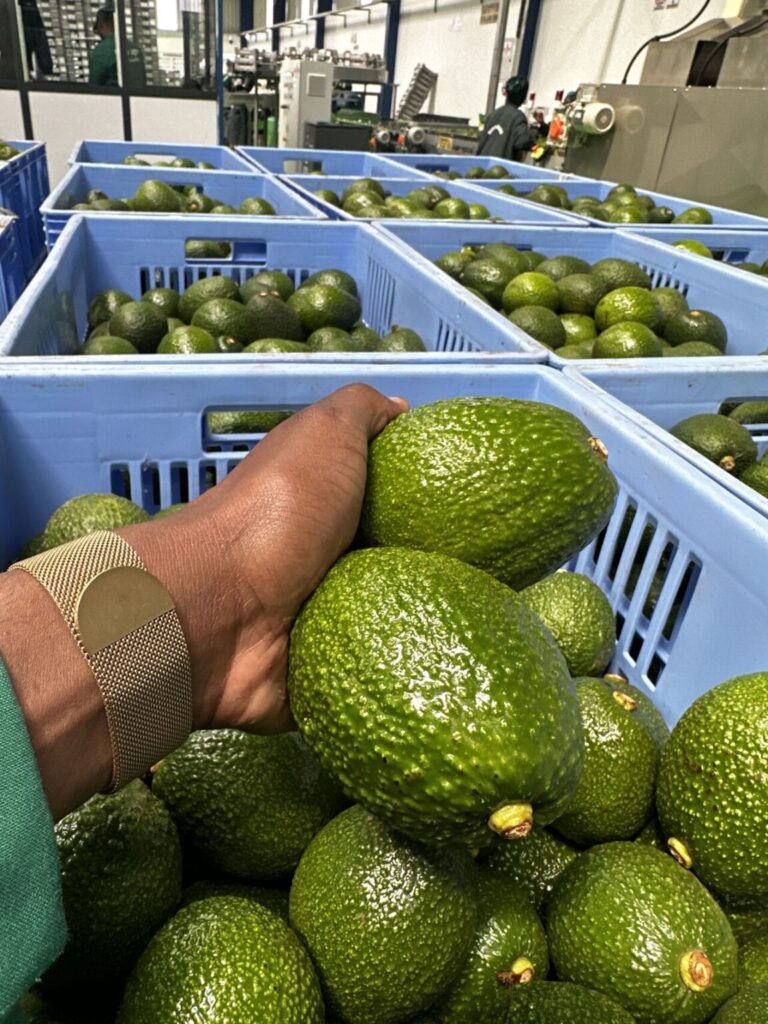
This guide covers everything you need to know about Kenya avocado gold rush 2026. You will learn about the new market opportunities, record production figures, and the stricter rules that are shaping the industry.
Key Takeaways
- Kenya’s avocado production is forecast to expand by 4.8% to approximately 727,000 metric tonnes in 2026, up from a record 694,000 metric tonnes in 2025 .
- Export revenues are forecast to hit KES 25.4 billion (US$170 million), driven by a 22% increase in production and expanded market access .
- China’s zero-tariff policy, effective May 1, 2026, has provided duty-free access for 98.2% of Kenya’s agricultural exports .
- The Agriculture and Food Authority (AFA) has introduced stricter export controls, including mandatory packhouse inspections and traceability requirements .
- KEPHIS has opened audit applications for avocado farmers seeking licenses to export to China and India .
- Licence revocation for non-compliant exporters has increased by 40% year-on-year.
Record Production: Kenya’s Avocado Boom
Kenya is now the largest avocado producer in Africa, with output hitting a record 694,000 metric tonnes in 2025 . The momentum continues in 2026, with production forecast to expand by 4.8% to approximately 727,000 metric tonnes . This places Kenya among the top avocado producers globally, competing with established suppliers like Mexico, Peru, and South Africa.
Projected Export Growth
Despite record production, 2025 exports decreased to 121,000 metric tonnes due to disruptions in the Red Sea and export controls put in place by the Kenyan Agriculture and Food Authority (AFA) . However, FAS Nairobi forecasts exports to increase by 7.4 percent to 130,000 metric tonnes in 2026 . The market is projected to expand by 7.4% to 130,000 metric tonnes in 2026, and some estimates suggest exports could reach 140,000 metric tonnes .
Value of the Industry
Export revenues are forecast to hit KES 25.4 billion (US$170 million), supported by a 22% increase in production and expanded market access in the UAE and other Asian nations . The sector already supports over 3 million livelihoods directly and indirectly, with potential to scale to over 10 million with improved market access and financing.
Avocado Oil Processing Boom
Avocado oil processing also increased significantly between 2024 and 2025 from 3,326 metric tonnes to 10,188 metric tonnes, driven by rising demand in high-income markets . This represents a 206% increase in just one year and indicates strong and growing demand for value-added products.
New Markets: China, UAE, and India
The China Market: Zero-Tariff Opportunity
China’s zero-tariff policy, effective May 1, 2026, has been the most significant market-access development for Kenyan avocado exporters. The policy provides duty-free access for 98.2% of Kenya’s agricultural exports, eliminating the 7-20% tariffs that previously applied .
The first consignment under the new policy arrived at Guangzhou Port on May 1, 2026, with 6.9 tonnes of fresh Kenyan avocados entering China, followed by 320 tonnes of crude avocado oil at Dalian Port on 9 May 2026 . This demonstrates the proof-of-concept for the trade corridor, with the value addition at origin evident through the highly skewed ratio of crude oil to fresh fruit .
The export potential to China is significant. China is the second-largest avocado importer in Asia, and its demand for avocados continues to grow. The tariff elimination, combined with rising consumer demand, could see China take in more than 40% of Kenya’s avocado produce.
China Market Access Requirements
Farmers seeking to export to China must meet strict requirements :
- Farms must register with the KEPHIS Integrated Export and Import Certification System and be assigned a unique farm code .
- Only Hass variety avocados are permitted for export to China.
- All fresh consignments must undergo methyl bromide fumigation at a prescribed dosage of 32 g/m³ for two hours at 21.1°C or above to eliminate fruit flies and false codling moth .
- Orchards must remove fallen fruit promptly and run integrated pest management (IPM) programmes .
- Records of continuous pest monitoring and pesticide use, including active ingredients, dosage and application time, must be maintained .
- China requires farm-specific approval, pest freedom verification, and strict orchard management protocols .
- Any detection of a live quarantine pest can result in shipment rejection and suspension of the orchard or packhouse .
The UAE Market
The UAE accounts for 16% of Kenya’s avocado exports, making it a top-three market. Exporters are fielding requests for full container loads, with a 4-foot container holding about 8 tonnes of avocados. The UAE serves as a key gateway to the wider Middle East market, where Kenyan avocados are highly regarded.
India Market Opening
KEPHIS has opened audit applications for avocado farmers seeking licenses to export to India, following the country’s newly negotiated duty reductions . The baseline requirements are uniform, covering registration, traceability, and phytosanitary compliance. However, market-specific conditions apply for each destination .
No Minimum Farm Size Requirement
In a boost to smallholder farmers, KEPHIS clarified that there is no minimum farm size requirement for export eligibility . Eligibility is determined by compliance capacity rather than acreage. Smallholder farms may qualify if they are part of a cluster, cooperative, or exporter-managed production system and can meet volume consistency, traceability, and pest management requirements .
Key Lessons for Exporting to China and India
Key lessons in preparing for exporting to these markets include the need for early audits, stronger traceability systems, continuous capacity building, and exporter-led compliance models to improve consistency across the value chain . KEPHIS is working to progressively harmonise the baseline requirements for China and India to reduce duplication, lower compliance costs and simplify adoption, while still meeting market-specific conditions .
The 2026 Export Season: Stricter Rules and Enforcement
Harvesting Season Opens
Kenya officially opened its avocado export season for the 2025/2026 fiscal year on April 2, 2026 . The decision followed field surveys by the Agriculture and Food Authority (AFA) that confirmed improved fruit maturity across major production zones.
Key Regulations
The AFA has implemented stricter quality controls and traceability measures to protect Kenya’s reputation in premium markets and prevent the export of immature fruit. These regulations are currently active and include mandatory packhouse inspections for all fresh avocados for export, effective from April 7, 2026 . Exporters are required to apply for inspection at least three days before their shipment.
Exporters had to submit lists of registered Horticultural Produce Marketing Agents (HPMAs) or suppliers by March 30, 2026, to ensure traceability from farm to export. Fruit must be transported in crates. Using open trucks, pickups, or Probox vehicles is prohibited and risks license revocation .
At the Jomo Kenyatta International Airport (JKIA) cargo terminal, inspectors are verifying oil content and dry matter (20-24% required). Harvesting or processing immature fruit is prohibited. Exporters or processors caught doing so face immediate license revocation.
Maturity Standards
The Horticultural Crops Directorate (HCD) has reviewed the minimum avocado dry matter percentage (DM%) post-harvest to 24 per cent for Hass and Fuerte avocados meant for export. This revision was made “in lieu of the numerous complaints received on the quality of avocados imported to the European Union and the United Arab Emirates.” Fruit harvested with low oil content fails to ripen to the required standards, leading to rejection in export markets.
Consequences of Non-Compliance
Kenya exported approximately 110,000 metric tons of avocados in the 2024-2025 period, valued at over KES 25 billion (US$190 million). Rejection rates for immature fruit in premium markets can reach 30 per cent, resulting in losses exceeding KES 7.5 billion (US$57 million) annually. Licence revocation for non-compliant exporters has increased by 40 per cent year-on-year.
Government Initiatives: Planting the Future
One Million Tree Campaign in Meru
The Principal Secretary for Forestry, Gitonga Mugambi, launched a campaign in Mitunguu/Nkuene Sub-County in Meru County to encourage residents to plant one million avocado trees. The PS said Kenya had secured access to lucrative avocado markets in China and Japan through trade engagements spearheaded by President William Ruto’s government. He distributed 3,000 avocado seedlings to farmers in Uruku and Ukuu locations as a starting point. He noted that increasing avocado production would enable farmers to meet market demand, attract more buyers, and support the establishment of value-added industries in the region.
42,000 Seedlings for Migori Farmers
The National Government, in collaboration with the Migori County Government, distributed 42,000 grafted Hass avocado seedlings to farmers across the county. The initiative aims to boost household incomes, expand export-oriented agriculture, and support the government’s 15 billion trees growing programme. Each seedling costs approximately Sh444, translating to nearly Sh20 million invested by the government in the project. The County Commissioner assured farmers that if properly managed, each avocado tree could generate up to Sh10,000 annually after five years.
Farmer Success Story: The Kakuzi Model
Lucas Wainaina, from Thangira village of Makuyu in Murang’a County, is a testament to the profitability of avocado farming under the right support system . In 2021, he was among 3,500 smallholder farmers who received a Sh31 million bonus pay-out from Kakuzi PLC for quality Hass avocado fruits .
How It Works
Kakuzi pays farmers a farm-gate price on delivery of the fruits, packs and sells the fruits, and then shares the resultant profit (bonus) with farmers . “The first payment is done immediately after delivering the fruits. Two weeks later after processing, they usually send the second payment. And at the end of the year, I do get a bonus which is always good money,” Wainaina reported.
From Fuerte to Hass
Wainaina initially started with Fuerte variety, planting only five trees which dried up except one. In 2012, when Kakuzi PLC initiated the integration of smallholder farmers into their business, Wainaina joined a local group. “That’s when I realized avocado farming would be more profitable than mangoes. Kakuzi introduced me to Hass variety,” he added.
The Results
Presently, he has over 200 Hass variety avocado trees which occupy about three acres of his land . This has placed him in an advantageous position as this type of variety is the most popular avocado for export since it enjoys a good market in Europe as compared to other varieties . Every season, he delivers three pickups full of avocado fruits with each carton fetching him a minimum of Sh300 .
He has also been enjoying free extension services guaranteeing him better crop husbandry and output translating to more production and more money in his pocket . The firm has a fully-fledged smallholder department that has extension officers who visit his farm regularly, offering training sessions in line with Kakuzi’s best standards .
“I have come to realise that avocado farming is actually a godsend venture due to the higher returns I have been getting lately from the investment,” said Wainaina.
The Bigger Picture: Why This Matters
Economic Impact
The fresh produce sector is Kenya’s agricultural powerhouse. It already supports over 3 million livelihoods, and industry leaders anticipate that figure could scale to over 10 million with improved market access. The contradiction between record production and declining exports underscores the importance of market diversification.
Farmer Benefits
The government has signed deals that will see China reduce import levies from 30% to 7%, making Kenyan avocados more competitive in the world’s second-largest economy . The zero-tariff policy, along with the 1.4 billion Chinese consumers, is a major opportunity .
Challenges Ahead
Despite the opportunities, challenges remain. Brokers often aggregate fruit from smallholder growers, mixing mature and immature batches to meet early demand. This leads to high rejection rates (up to 30%) in premium markets. The shortage of raw materials has also encouraged premature harvesting, which has reduced oil extraction yields. National yields now average around 4.5%, where with proper harvesting, they reach about 8%.
The Impact of the Red Sea Crisis
Logistical disruptions in the Red Sea have dampened export growth despite record production . The longer sea routes have increased freight costs, creating headwinds for Kenyan avocado exporters . However, the processing channel is becoming a key outlet for lower-grade fruit, helping stabilize farm revenues even as fresh exports face volatility.
Frequently Asked Questions
What is the current avocado export season in Kenya?
The 2025/2026 avocado export season opened on April 2, 2026, following field surveys confirming improved fruit maturity across major production zones .
What are the new export regulations?
The AFA has introduced mandatory packhouse inspections, traceability requirements, transport regulations, and dry matter testing. Harvesting or processing immature fruit is prohibited and risks license revocation .
How much does Kenya export in avocados?
Kenya exported approximately 110,000 metric tons of avocados in the 2024-2025 period, valued at over KES 25 billion (US$190 million). Exports are forecast to increase to 130,000 metric tonnes in 2026 .
What is the potential of the China market?
China’s zero-tariff policy, effective May 1, 2026, has provided duty-free access for 98.2% of Kenya’s agricultural exports . The first consignments arrived in May 2026, demonstrating the operational viability of the trade corridor .
What are the requirements for exporting to China?
Farms must register with KEPHIS, undergo methyl bromide fumigation at 32 g/m³ for two hours, maintain IPM programmes, and ensure traceability. Only Hass avocados are permitted .
What is the dry matter requirement for export?
The minimum dry matter percentage for Hass and Fuerte avocados meant for export is 24% for Hass avocados.
How can I access the avocado export market?
You must register as an exporter with the AFA, register with KEPHIS, obtain GlobalGAP certification, and comply with all export regulations. KEPHIS has opened audit applications for farmers seeking licenses to export to China and India .
What are the penalties for non-compliance?
Exporters caught mislabeling or shipping immature fruit risk license revocation for the entire season. Licence revocation for non-compliant exporters has increased by 40% year-on-year.
Conclusion
Kenya avocado gold rush 2026 is real. Record production, new markets, and government support are creating unprecedented opportunities for farmers and agribusinesses. But success in Kenya avocado gold rush 2026 requires understanding and complying with the stricter rules that now govern the industry. The farmers and exporters who invest in quality, traceability, and compliance will reap the rewards of Kenya avocado gold rush 2026. The market is ready. The demand is growing. The opportunity exists for Kenyan avocado farmers and agribusinesses to capture more of the value in the avocado value chain. The question is not whether Kenya avocado gold rush 2026 is happening, but whether you will be part of it.
Contact Farmers Trend for Avocado Seedlings
Grafted Hass Avocado Seedlings – KSh 250 each
Grafted Fuerte Avocado Seedlings:
2-3 Months — KSh 150
8-9 Months — KSh 250
Contact Us:
Call/WhatsApp: 0724 559 286 | 0790 509 684
Website: www.farmerstrend.co.ke
Email: info@farmerstrend.co.ke
We Offer:
Countrywide Delivery
Export Arrangements
Free Agronomy Support upon purchase






Leave a Reply