How to Properly Fertilize Young Hass Avocado Trees: Ring Method and Common Mistakes
- Learn how fertilizing young Hass avocado trees using the ring method prevents stem burn, protects feeder roots, and maximizes growth in Kenyan orchards.
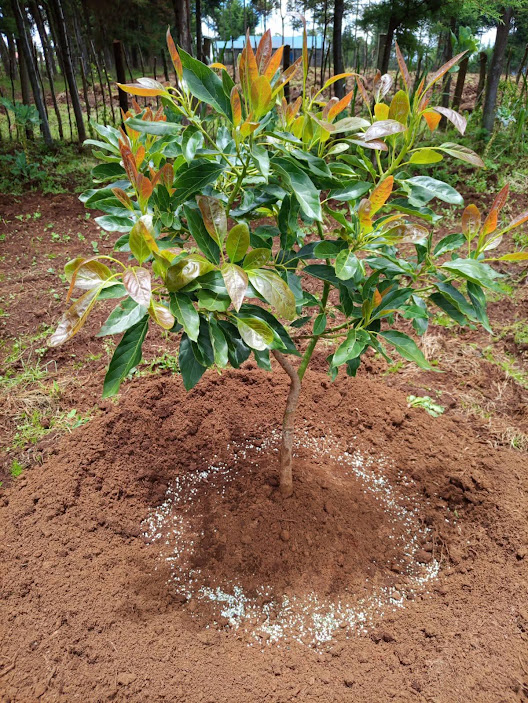
How to Properly Apply Fertilizer on Young Hass Avocado Trees: Ring Method vs. Stem Contact Mistakes
A farmer in Central Kenya can buy certified grafted seedlings, prepare deep planting holes, install a functional drip line, and still burn a young Hass avocado tree to death within two weeks by dumping a single handful of fertilizer directly against its stem.
This scenario happens regularly across expanding avocado regions, from Murang’a and Kisii to Nakuru and Eldoret. When a young tree leaves show scorching, dry up, or drop off shortly after top-dressing, the problem is rarely that the fertilizer was toxic or fake. In most cases, the chemical formulation was correct, but the physical placement was wrong.
Proper nutrition for young Hass avocado trees depends just as much on where you put the fertilizer as on what type you buy. The root system of an avocado tree is shallow, delicate, and sensitive to salt concentration. Dumping concentrated chemical fertilizers or un-composted animal manure directly against the tender bark of a young tree causes tissue damage, draws moisture out of the root zone, and restricts nutrient uptake.
Understanding how to feed young Hass avocado trees requires mastering the ring method of fertilizer application, recognizing how nutrient placement interacts with soil moisture, protecting the trunk from direct chemical contact, and adjusting your field practices as the canopy expands.
The Shallow Nature of Hass Avocado Roots
To understand where fertilizer belongs, you must first understand where the tree feeds. Avocado trees (Persea americana) do not possess a deep, aggressive taproot system that mines nutrients from meters below the surface. Instead, they rely on a superficial network of roots concentrated within the upper 15 to 30 centimeters of soil.
       [ SUNLIGHT & CANOPY ]
                 |
             ( Trunk )
             /   |   \
   [Stem Base]   |   [Stem Base]
   (NO FERTILIZER ZONE)
  ___________________________________ Soil Line
   |                             |
   |<-- 15-20cm -->|             |
   |   Stem Guard  |             |
   |               |==== RING ===|  <-- [ACTIVE FEEDER ROOT ZONE]
   |               |  FERTILIZER |      (Fine, white root tips absorb water & nutrients)
   |               |_____________|
   |                             |
   |     Shallow Soil Layer      |
   |___(0 - 30cm depth)__________|
These feeding roots are thin, pale, highly branched, and structurally fragile. They lack root hairs, which are the micro-structures that help other crops like maize or beans absorb water and minerals efficiently. Because avocado feeder roots lack these structures, they depend heavily on direct contact with moist soil and beneficial mycorrhizal fungi to absorb dissolved nutrients.
These root tips are exceptionally sensitive to chemical salts, dry conditions, and low oxygen levels. If you place high-salinity granular fertilizer in direct contact with them, or pile fertilizer where feeder roots do not yet exist, you injure the plant or waste money.
Why the Stem Base Has No Feeding Capability
The trunk base of a young grafted Hass seedling consists of woody tissue and bark designed to transport water, carbohydrates, and structural nutrients upward and downward. It does not possess active feeder roots capable of absorbing dry or dissolved chemical fertilizers from the surface.
When you pile fertilizer against the stem base, the roots beneath that specific spot cannot consume it. Instead, the high salt concentration pulls water out of the delicate bark and structural root collar through osmotic stress. Feeding roots grow outward from the base as the tree develops, searching for moisture and air near the dripline. Placing nutrients directly at the stem base puts chemicals where the tree cannot use them while actively scorching the tissue that keeps the plant alive.
Why Fertilizer Should Not Touch the Hass Avocado Stem
Placing granular fertilizer or raw animal manure against the stem of a young Hass avocado seedling causes chemical, physiological, and biological damage.
    [ CONCENTRATED FERTILIZER AT STEM ]
                    |
      ( High Soil Salt Concentration )
                    |
      [ Moisture Pulled Out of Bark ]  <-- Osmotic Stress
                    |
       ( Bark Lesions & Stem Scorch )
                    |
   [ Pathogen Entry: Phytophthora / Pythium ]
                    |
      ( Girdled Stem & Seedling Death )
Osmotic Stress and Chemical Scorch
Granular fertilizers, including Nitrogen-Phosphorus-Potassium (NPK) blends, Calcium Ammonium Nitrate (CAN), and Ammonium Sulphate, are mineral salts. When these granules dissolve in soil moisture, they create a highly concentrated salt solution in that localized area.
If this concentrated solution sits directly against the soft bark of a young grafted stem, it triggers osmosis in reverse. Instead of the plant absorbing water from the soil, the high salt concentration outside the bark draws moisture out of the young stem’s plant tissues. This osmotic dehydration causes localized tissue collapse, leading to visible bark scorching, cracking, and dark lesions around the stem base.
Bark Girdling and Nutrient Blockage
The vascular system of a young tree sits just beneath the thin outer bark. The phloem transports sugars created in the leaves down to the roots, while the xylem carries water and soil minerals up to the canopy.
When fertilizer burns through the protective bark layer at ground level, it girdles the stem. Once this tissue is killed in a ring around the base, the flow of carbohydrates to the root system stops entirely. The roots starve, fail to absorb water, and the entire canopy wilts and dies, even if the soil around the tree is wet.
Biological Infection and Secondary Rot
Chemical burns created by stem contact act as open wounds. Moist soil contains ubiquitous fungal pathogens like Phytophthora cinnamomi and Pythium species. Under normal conditions, healthy, intact stem bark resists these soil-borne organisms. However, once the bark is scorched and softened by direct fertilizer contact, fungal spores easily invade the damaged tissue, accelerating collar rot and structural failure of the young seedling.
Understanding Fertilizer Burn in Young Avocado Trees
Fertilizer burn refers to tissue injury caused by excessive salt concentrations in the root zone or on plant surfaces. Young Hass avocado trees are far more susceptible to this condition than mature, established trees due to their limited root volume and thinner bark.
Causes and Environmental Drivers
Over-application in a single spot: Applying a full dose of fertilizer in a small mound rather than spreading it evenly.
Applying to bone-dry soil: When soil lacks adequate moisture, applied fertilizer dissolves into an extremely concentrated salt solution rather than diluting safely into the soil profile.
Erratic watering: Allowing the soil to dry out completely after applying granular inputs increases salt intensity around the feeder roots.
High temperatures: Warm days accelerate evaporation, drawing soil moisture upward and concentrating salts near the surface where young roots reside.
Symptoms Farmers Should Monitor
| Symptom | Visual Appearance | Primary Cause | Distinguishing Features |
| Leaf Margins Scorched | Brown, dry, crispy edges on mature leaves | High salt index in root zone; excessive nitrogen or potassium | Starts at leaf tip and edges, progressing inward toward the central vein. |
| Sudden Canopy Wilting | Leaves droop while soil remains visibly wet | Osmotic root damage or stem girdling | Leaves stay green initially while drooping, turning brown and papery rapidly. |
| Defoliation | Tree drops green or partially browned leaves | Root shock from high fertilizer concentrations | Leaves drop prematurely, leaving bare twigs at the top of the seedling. |
| Stem Lesions at Ground Level | Blackened, soft, or cracked bark at the stem base | Direct fertilizer contact with the trunk | Concentrated strictly around the ground level where fertilizer touched the bark. |
Corrective Action for Suspected Injury
If you realize fertilizer was applied against the stem or in excessive concentration around a young tree, take immediate corrective steps:
Remove Physical Granules: Carefully scrape away un-dissolved fertilizer granules from around the stem base and topsoil using your hand or a small trowel.
Flush the Root Zone: Apply generous amounts of clean, fresh water to dilute accumulated mineral salts and flush them downward past the shallow root zone. Ensure the site has adequate drainage so water drains away freely.
Hold Chemical Applications: Pause further applications of synthetic nitrogen or potassium fertilizers until the tree produces a clear wave of healthy, dark-green new growth.
Shade the Recovery Zone: If the tree has lost significant foliage, protect the exposed stem and main branches from sunburn using a diluted, water-based white neutral paint or temporary shade netting.
The Fertilizer Ring Method Explained
The fertilizer ring method is the standard, agronomically sound practice for feeding young Hass avocado trees. It delivers nutrients directly above active feeder roots while keeping high salt concentrations away from the sensitive stem base.
                  [ TOP VIEW OF FERTILIZER RING ]

                        . - - - - - - - .
                    . '                   ' .
                  '      ( CANOPY EDGE )      '
                '     . - - - - - - - - .       '
               '    '                     '      '
              '    '     . - - - - .       '      '
             '    '    '  [TRUNK]   '       '      '
             '    '    '   NO-GO    '       '      '
             '    '     '  ZONE    '        '      '
              '    '     ' - - - - '       '      '
               '    '                     '      '
                '     ' = FERTILIZER = '        '
                  '     '   RING ZONE  '      '
                    ' . - - - - - - - . '
                        ' - - - - - - - '
Defining the Ring Method
The ring method involves applying granular fertilizers, compost, or organic amendments in a continuous, broad, donut-shaped band around the tree. This band is placed at a specific radial distance from the trunk, aligned with where the active feeder roots are growing beneath the surface.
Calculating Correct Placement Distance
There is no single fixed measurement for a fertilizer ring that applies to every tree. Placement shifts continuously as the seedling grows into a mature tree.
As a general agronomic principle, the active feeder root system of a young avocado extends slightly beyond the outer perimeter of its leaf canopy, known as the dripline.
Newly Planted Seedling (0–3 Months): Feeder roots remain confined within the original nursery root-ball diameter. Place any organic amendments or mild starters in a shallow ring 15 to 20 centimeters away from the stem.
Young Tree (6–12 Months): The canopy spread is typically 30 to 50 centimeters wide. Place the fertilizer ring in a band starting 20 centimeters from the trunk and extending out to 40 or 50 centimeters.
Established Tree (Year 2): The canopy has widened significantly. Place the ring from 30 centimeters out from the stem to just beyond the current dripline.
       [ CROSS-SECTION: RING PLACEMENT vs CANOPY ]

                       / \
                      /   \  <-- Canopy Edge (Dripline)
                     /     \
                    /       \
   ____________________|___________________ Soil Line
   |      |            |            |     |
   | NO-GO| FERTILIZER | FERTILIZER |     |
   | ZONE |    RING    |    RING    |     |
   |<15cm>|<--30cm---->|<--30cm---->|     |
   |      |            |            |     |
   |      |  Feeder    |  Feeder    |     |
   |      |  Root Zone |  Root Zone |     |
Why Placement Beats Quantity
Applying two kilograms of NPK fertilizer in a concentrated heap against a young stem will stunt or kill the tree. Applying 100 grams of the same fertilizer evenly distributed across a wide, properly placed ring in moist soil allows the tree to absorb nutrients efficiently without stress. Nutrient absorption depends on root surface contact with soil moisture containing low, steady concentrations of dissolved minerals.
Comparing Fertilizer Application Methods for Young Avocado Trees
Different application techniques offer varying degrees of control, labor requirements, and nutrient delivery efficiency in young Hass orchards.
| Application Method | How It Works | Key Advantages for Young Trees | Risks and Limitations | Best Use Case |
| Ring Application | Granules spread in a continuous circular band around the tree within the root zone. | High safety margin; protects stem; aligns nutrients directly with feeder root distribution. | Requires careful manual labor to ensure uniform distribution and correct distance. | Standard method for granular applications in small to medium commercial orchards. |
| Spot Application | Fertilizer placed in 2–4 concentrated piles or small holes around the tree. | Fast manual application; reduces wind movement of fine granules. | Creates extreme salt hotspots; high burn risk if roots touch the spots; uneven uptake. | Not recommended for young Hass avocado trees due to localized root scorch risks. |
| Broadcasting | Fertilizer scattered uniformly across the entire orchard floor surface. | Highly efficient for large mature orchards; low manual labor per tree. | Feeds weeds between rows; wastes expensive inputs on bare ground where roots do not exist. | Unsuitable for young trees whose root systems occupy only a fraction of the field area. |
| Band Application | Fertilizer applied in linear strips along both sides of the tree row. | Easy to combine with mechanized or strip-mulched orchard layouts. | Can miss roots if placed too far out from young, narrow canopies. | Effective in high-density orchards with continuous mulched tree strips. |
| Fertigation | Water-soluble nutrients injected directly through drip irrigation lines. | Precise control over dosage; immediate root availability; zero stem contact risk; low labor. | Requires reliable pressurized irrigation system, clean water, and soluble fertilizer products. | Ideal for modern commercial orchards with drip irrigation systems. |
| Foliar Feeding | Liquid nutrient solution sprayed directly onto active leaves. | Rapid correction of micronutrient deficiencies (Zinc, Boron, Iron). | Cannot deliver macro-nutrients (N, P, K) in sufficient quantities; risk of leaf scorch in heat. | Supplemental use only for micronutrients or during specific growth flushes. |
The Chemical Trio: NPK and Essential Micronutrients
Young Hass avocado trees require balanced plant nutrition to build strong structural branches, maintain vibrant foliage, and develop a resilient root system.
            [ BALANCED AVOCADO NUTRITION ]
                         |
      +------------------+------------------+
      |                  |                  |
[ MACRONUTRIENTS ] [ SECONDARY ]    [ MICRONUTRIENTS ]
   - Nitrogen (N)     - Calcium (Ca)    - Zinc (Zn)
   - Phosphorus (P)   - Magnesium (Mg)  - Boron (B)
   - Potassium (K)    - Sulphur (S)     - Iron (Fe)
Primary Macronutrients (NPK)
Nitrogen (N)
Nitrogen drives vegetative shoot flushes, leaf surface development, and chlorophyll production. Young avocado trees undergo periodic growth flushes throughout the year, producing soft, reddish-bronze leaves that mature into deep green foliage.
Excessive nitrogen application results in long, weak, sappy branches that break under wind pressure and are susceptible to sucking pests. Deficient nitrogen causes pale green or yellow leaves across the entire canopy and stunts overall growth.
Phosphorus (P)
Phosphorus is critical for root cell division, energy transfer within the plant, and early establishment of grafted seedlings.
Adequate phosphorus applied during planting or early field establishment encourages rapid root extension into surrounding soil. Because phosphorus moves extremely slowly through the soil profile, correct placement within the root zone during field preparation is vital.
Potassium (K)
Potassium regulates water movement within plant tissues, stomatal opening and closing, and cellular turgor pressure. It builds tissue strength, improves drought tolerance, and plays a foundational role in preparing the young framework for future fruit bearing.
Balanced potassium ensures that new growth flushes harden off efficiently without becoming brittle.
Secondary Nutrients and Micronutrients
Calcium (Ca): Builds cell wall integrity, structural stem strength, and root tip development. Soil low in available calcium yields plants prone to root tip dieback and soft, disease-vulnerable tissues.
Magnesium (Mg): Forms the central atom of the chlorophyll molecule. Deficiencies present as interveinal chlorosis (yellowing between leaf veins while veins stay green) on older foliage.
Zinc (Zn): Essential for hormone production and internode elongation. Zinc deficiency is widespread in Kenyan soils, causing “little leaf” syndrome, where new leaves emerge small, narrow, mottled, and clustered tightly together.
Boron (B): Required for cell wall synthesis, root tip extension, and vascular system development. Deficiency causes deformed leaf growth, split twigs, and fragile stem structures.
Soil Testing: The Foundation of Avocado Nutrition
Applying chemical inputs or organic amendments without testing your soil is an expensive form of guesswork that often creates nutrient imbalances.
   [ SOIL TEST ANALYSIS ]
             |
             v
   +--------------------+  --> Too Low (< 5.5): Apply Agricultural Lime / Dolomite
   |  Soil pH Checking  |  --> Ideal Range (5.5 - 6.5): Optimal Nutrient Availability
   +--------------------+  --> Too High (> 7.0): Apply Elemental Sulphur / Acidifying Inputs
             |
             v
   [ Target Nutrient Application Based on Deficits ]
Why Soil pH Controls Nutrient Availability
Soil pH measures the acidity or alkalinity of the soil solution, operating on a scale from 0 to 14. Hass avocado trees perform best in slightly acidic to neutral soils with a pH range between 5.5 and 6.5.
When soil pH drops below 5.0, phosphorus becomes tightly bound to iron and aluminum compounds, rendering it insoluble to plant roots. Additionally, toxic levels of available aluminum can severely stunt young feeder roots.
Conversely, when soil pH rises above 7.0 or 7.5, essential micronutrients like zinc, boron, and iron precipitate out of the soil solution, causing severe deficiency symptoms even if those minerals are physically present in the dirt.
Soil Structure, Organic Matter, and Drainage
Laboratory soil testing also evaluates organic matter percentage, cation exchange capacity (CEC), and salinity levels (electrical conductivity). High-clay soils retain nutrients well but risk waterlogging and root rot if over-irrigated. Sandy soils drain freely, protecting roots from oxygen starvation, but suffer from high nutrient leaching, requiring smaller, more frequent fertilizer applications.
Manure and Compost Management for Young Hass Trees
Organic amendments enrich soil structure, increase moisture-retention capacity, and foster beneficial soil microbial populations. However, improper use of animal manure causes severe root and stem damage.
                       [ MANURE COMPARISON ]
                                 |
        +------------------------+------------------------+
        |                                                 |
[ RAW / FRESH MANURE ]                           [ DECOMPOSED COMPOST ]
  - High ammonia levels (Burns roots)               - Stable organic matter
  - Generates intense heat (Root damage)            - Balanced nutrient release
  - Contains weed seeds & pathogens                 - Improves soil microbiology
  - High salt index                                 - Safe for root contact zone
The Dangers of Raw or Immature Manure
Fresh or partially decomposed animal manure (poultry, cattle, goat, or pig) should never be applied around young Hass avocado trees. Immature manure presents three severe risks:
Ammonia Toxicity and Heat: As fresh manure decomposes rapidly in the field, it releases free ammonia gas and generates high temperatures within the topsoil. This heat and chemical activity burn tender avocado feeder roots and scorch the stem base.
High Salt Content: Raw poultry and cattle manure often contain high salt concentrations, aggravating osmotic stress in dry soil.
Pathogen and Weed Introduction: Uncured manure introduces weed seeds, pest larvae, and fungal pathogens directly into the root zone.
Proper Compost Application Practices
Always use fully decomposed, well-aerated compost or dark, odorless, well-rotted manure that has cured for at least three to six months.
Placement: Apply compost in a wide ring starting 15 to 20 centimeters away from the trunk, extending slightly past the leaf dripline.
Depth: Maintain a uniform layer of 5 to 10 centimeters deep. Never pile manure against the stem in a “volcano” shape. Piling compost against the stem traps moisture, cuts off oxygen, and creates an environment for collar rot pathogens.
The Water-Fertilizer Nexus: Irrigation and Nutrient Uptake
Fertilizer cannot feed a plant without water. Avocado feeder roots absorb nutrients exclusively when those nutrients are dissolved in water within the soil solution.
       [ THE WATER-FERTILIZER BALANCING ACT ]

    [ Dry Soil + Fertilizer ]    --> High Salt Concentration --> Root Scorch & Wilting
    [ Optimal Moisture + Ring ]  --> Dissolved Nutrients     --> Healthy Root Absorption
    [ Waterlogged Soil + Ring ]  --> Oxygen Starvation       --> Root Rot (Phytophthora)
Nutrient Movement and Leaching Risks
Under-watering: Applying granular fertilizer to dry soil, or failing to water after application, leaves fertilizer salts concentrated near the surface. As soil moisture drops, salt concentration spikes, scorching shallow feeder roots.
Over-watering and Heavy Rain: Excessive irrigation or heavy rainfall immediately following fertilizer application washes mobile nutrients—particularly nitrate nitrogen—down past the shallow root zone (leaching). This wastes inputs and pollutes groundwater.
Oxygen Availability in the Root Zone
Avocado feeder roots require high levels of soil oxygen to respire and actively absorb nutrients. In waterlogged, poorly drained soils, water displaces soil air pockets. Under these anaerobic conditions, root tips cease nutrient uptake, turn black, and die, regardless of how much fertilizer is present in the soil.
Adjusting Fertilizer Placement as the Tree Grows
Fertilizer management is a dynamic process that evolves alongside tree architecture and root expansion.
[ STAGE 1: Planting ]       [ STAGE 2: Year 1 ]          [ STAGE 3: Year 2+ ]
  Seedling in hole            Canopy expanding             Wide canopy
  Rootball local              Ring: 20-50cm out            Ring: 30cm to past dripline
  Stem protection 15cm        Dripline alignment           Expanded root feeding area
Stage 1: The Newly Planted Grafted Seedling (0–3 Months)
During the first three months after transplanting out of the nursery bag, the seedling recovers from transplant shock. Feeder roots are confined entirely within the original planting root-ball.
Primary Objective: Encourage root establishment without burning tender roots.
Fertilizer Focus: Mix well-decomposed compost and a source of phosphorus into the planting hole soil before placing the seedling. Do not throw concentrated nitrogen or potassium fertilizers into the bottom of the hole or against the nursery root ball.
Placement: Keep all top-dressed fertilizers at least 15 to 20 centimeters away from the seedling stem.
Stage 2: First Year Growth (4–12 Months)
The tree establishes an active vegetative growth cycle, throwing out new branch flushes and expanding its root radius.
Primary Objective: Build a strong framework of branches and healthy foliage.
Fertilizer Focus: Light, frequent applications of balanced NPK or organic nitrogen and potassium sources combined with micronutrients like zinc and boron.
Placement: Apply in a ring starting 20 centimeters from the trunk and extending outward to 40 or 50 centimeters, corresponding with the expanding canopy dripline.
Stage 3: The Second Year (Pre-Bearing Framework)
The tree develops a broad, bushy canopy and an extensive network of shallow feeder roots extending beyond the leaf margin.
Primary Objective: Expand structural branching, maintain canopy density, and prepare the tree for its initial flower set.
Fertilizer Focus: Soil-test-guided applications of balanced macronutrients and organic soil conditioners.
Placement: Apply in a broad band starting 30 centimeters from the stem and extending 10 to 20 centimeters beyond the outer edge of the canopy.
General Fertilizer Management Considerations by Tree Stage
| Stage | Main Management Focus | Fertilizer Consideration | What to Monitor |
| Transplanting (Day 1) | Root ball protection; minimizing shock. | Mix well-rotted compost and phosphorus into planting soil; no chemical nitrogen on raw roots. | Soil settlement, moisture retention, drainage, and stem stability. |
| Months 1–3 | Initial root extension into native soil. | Rely on planting hole nutrients; avoid top-dressing high-salt fertilizers on stressed trees. | Leaf color, sunburn symptoms, transplant shock, and weed encroachment. |
| Months 4–12 | Vegetative canopy expansion and framework building. | Small, split doses of balanced nutrients applied in a 20–50 cm ring; supplement with foliar zinc/boron. | Flush cycles, leaf margin scorch, stem contact, and soil moisture levels. |
| Year 2 | Branching structure and root expansion. | Broaden application ring to match expanding dripline; adjust rates based on soil tests and growth vigor. | Canopy density, interveinal yellowing, structural strength, and root zone drainage. |
Step-by-Step: Applying Granular Fertilizer Around a Young Hass Tree
Follow this field process to apply granular fertilizer safely and effectively in your orchard.
[ STEP 1: Inspect Tree & Soil Moisture ]
                  |
[ STEP 2: Clear Weeds in 1m Radius ]
                  |
[ STEP 3: Measure Calibrated Dose ]
                  |
[ STEP 4: Spread Granules in Uniform Ring ] (Keep 20cm off stem)
                  |
[ STEP 5: Lightly Scratch into Soil Surface ]
                  |
[ STEP 6: Apply Water or Adjust Drip Line ]
Step 1: Inspect the Tree and Soil Condition
Check the young seedling before applying inputs. Ensure the tree is healthy, actively growing, and free from severe drought stress or waterlogging. Never apply granular fertilizer to a severely wilted or water-stressed tree.
Step 2: Clear the Ring Zone
Remove weeds and deep grass from around the base of the tree to a radius of at least 1 meter. Applying fertilizer directly over heavy weed cover wastes nutrients, as weeds consume the nitrogen before it reaches shallow avocado roots.
Step 3: Measure the Exact Dose
Use a calibrated container (such as a marked cup or small scale) to measure the exact recommended fertilizer quantity. Avoid using uncalibrated tins or hand tin sweeps, which cause wide variation in dosage across the orchard.
Step 4: Apply in a Broad Ring
Distribute the measured granules evenly in a continuous ring around the tree. For a one-year-old tree, start the inner edge of the ring 20 centimeters away from the trunk and spread the granules evenly out to the leaf dripline. Ensure no granules bounce against or rest against the stem bark.
Step 5: Incorporate Lightly into Topsoil
Using a small hand rake or wooden stick, gently work the granules into the top 1 to 2 centimeters of soil or under the organic mulch layer. Do not dig deeply, as deep tillage damages the shallow feeder roots lying just beneath the surface.
Step 6: Water Appropriately
Irrigate the tree thoroughly after applying granular fertilizer to dissolve the mineral salts into the root zone. If using drip irrigation, ensure the dripper emitters are positioned over the fertilizer ring zone so the wetting pattern dissolves and moves the nutrients into the root area.
The Role of Mulch in Nutrient Management
Mulching is an essential practice in young Hass avocado orchards, but it must be managed correctly to avoid trunk rot.
       [ CORRECT MULCH PLACEMENT ]

  Mulch Layer (5-10cm thick)
  ________________________                 ________________________
  |                      |                 |                      |
  |   Mulch Covering     |   15-20cm GAP   |   Mulch Covering     |
  |   Feeder Root Zone   |  (CLEAR STEM)   |   Feeder Root Zone   |
  |______________________|_____(TRUNK)_____|______________________| Soil Line
Benefits of Organic Mulch
A 5 to 10 centimeter layer of organic mulch—such as dry coarse grass, sorghum stalks, or wood chips—provides critical soil management benefits:
Retains soil moisture, preventing high salt concentrations in the root zone.
Regulates soil temperature, keeping shallow feeder roots cool during hot weather.
Suppresses weed growth that competes for applied nutrients.
Decomposes gradually, contributing stable organic matter to the topsoil profile.
The “Volcano Mulching” Danger
Piling mulch high against the trunk of a young avocado tree—known as volcano mulching—creates a destructive micro-environment. Wet mulch trapped against soft bark holds continuous moisture, cuts off air circulation, and causes tissue softening (maceration). This allows Phytophthora collar rot and pest larvae to girdle the stem base, causing seedling failure. Always maintain a clear 15 to 20 centimeter gap between the mulch layer and the tree trunk.
Common Fertilizer Application Mistakes in Young Orchards
Avoiding common errors prevents nutrient loss, reduces input costs, and protects young trees from physiological injury.
| Mistake | Why It Happens | Risk to Young Tree | Correct Practice |
| Placing Fertilizer Against Stem | Misunderstanding root locations; careless broad hand-throwing. | Severe stem scorch, osmotic bark dehydration, collar rot, seedling death. | Apply in a broad ring starting 15–20 cm away from the stem base. |
| Fertilizing Dry Soil | Applying on schedule regardless of weather or irrigation status. | Extreme localized salt concentrations; rapid feeder root scorch. | Ensure soil is moist before application; irrigate thoroughly immediately afterward. |
| Over-dosing Single Trees | Using uncalibrated tins or guessing application rates. | Fertilizer burn, leaf scorch, root toxicity, wasted money. | Use calibrated measuring cups based on specific agronomic recommendations. |
| Applying in Heavy Weeds | Failing to clear the weed ring before applying inputs. | Weeds consume 70–80% of applied nitrogen and water. | Maintain a clean, weed-free 1-meter radius around each young tree. |
| Volcano Mulching over Fertilizer | Piling mulch directly against the trunk over applied inputs. | Stem bark rot, anaerobic conditions, fungal infection at collar. | Keep both mulch and fertilizer 15–20 cm clear of the trunk base. |
| Using Raw Animal Manure | Attempting to save money using fresh farmyard waste. | High heat generation, ammonia root burn, introduction of pathogens. | Use only fully cured, dark, decomposed compost or aged manure. |
| Fertilizing Sick / Waterlogged Trees | Assuming yellow leaves always mean nitrogen deficiency. | Accelerates root rot; stresses roots that cannot breathe or absorb water. | Fix soil drainage and root rot issues first; do not apply inputs to waterlogged soil. |
| Copying Neighbor’s Program | Assuming all soils in a region have identical nutrient needs. | Imbalanced soil chemistry; over-applying already abundant minerals. | Base fertility programs on independent soil testing and expert agronomic advice. |
Differentiating Fertilizer Injury from Other Orchard Stresses
Yellowing leaves, brown tips, or stunted growth are general stress responses. Do not assume every leaf symptom stems from nitrogen deficiency or fertilizer burn.
                  [ DIAGNOSING CANOPY SYMPTOMS ]
                                |
      +-------------------------+-------------------------+
      |                         |                         |
[ FERTILIZER BURN ]     [ ROOT ROT DISEASE ]     [ DROUGHT / SALT STRESS ]
  - Dry, brown edges       - Pale, yellow foliage   - Uniform wilting
  - Rapid after application - Dark, rotting roots   - Dry topsoil profile
  - Clear stem damage       - Soil stays waterlogged - Broad tip dieback
Fertilizer Burn vs. Root Rot (Phytophthora cinnamomi)
Fertilizer Burn: Scorch symptoms appear rapidly (within days) following a fertilizer application. Leaves display crispy, dark brown margins while the center of the leaf remains green. Feeder roots show localized chemical scorching.
Phytophthora Root Rot: Yellowing occurs gradually across the entire canopy. Leaves wilt and remain attached or drop slowly. Feeder roots turn black, brittle, and soft, peeling away easily when rubbed between fingers. Waterlogged soil conditions are usually present.
Fertilizer Burn vs. Drought Stress
Drought Stress: Soil is visibly dry throughout the root profile. Leaves droop uniformly across the entire canopy during hot afternoons, recovering slightly by early morning. Tips brown gradually rather than displaying sharp, scorched margins.
Managing Fertility in Commercial Hass Avocado Orchards
As your operation expands from a small plot to a multi-acre commercial orchard, fertility management transitions from individual hand applications to systematic field operations.
       [ COMMERCIAL ORCHARD FERTILITY SYSTEM ]

   [ Regular Soil & Leaf Analysis ]
                 |
   [ Block-by-Block Management Zones ]
                 |
   [ Precise Input Calibration & Record Keeping ]
                 |
   [ Integrated Fertigation & Soil Health ]
Field Mapping and Soil Blocks
Large commercial properties contain variable soil textures, drainage characteristics, and slope positions. Divide your orchard into distinct management blocks based on soil test results rather than treating the entire farm as a single uniform unit.
Record Keeping and Cost Control
Maintain detailed field records for every orchard block. Document:
- Date of application and specific tree age/stage.
- Fertilizer type, formulation, and exact rate per tree.
- Soil moisture status and subsequent irrigation volume.
- Tree response over the following 30 to 60 days.
Track these inputs against tree growth rates to optimize fertilizer expenditures and prevent unnecessary over-application.
Where to Buy Certified Grafted Hass Avocado Seedlings in Kenya
Successful, profitable avocado production relies on a foundation of high-quality planting material. Applying proper fertilizer placement techniques on weak, diseased, or untrue-to-type seedlings will yield poor commercial results.
[ CERTIFIED NURSERY MATERIAL ] + [ CORRECT RING FERTILIZATION ] = [ HIGH-YIELDING ORCHARD ]
Farmers Trend Limited provides certified grafted Hass avocado seedlings raised under strict technical standards in Kenya. Starting with clean, vigorous, disease-indexed planting stock ensures your investment in soil fertility, irrigation, and orchard management translates into robust vegetative establishment and early, high-value commercial yields.
Beyond supplying certified grafted seedlings, Farmers Trend Limited offers agronomy consultancy to help commercial growers and smallholders design soil fertility programs, evaluate soil tests, establish functional irrigation systems, and manage young orchards across Kenya.
What to Check Before Buying Hass Avocado Seedlings

Use this field checklist when selecting Hass avocado planting material from any nursery:
[ ] Certification Status: Confirm the nursery is registered and inspected by relevant agricultural regulatory bodies (KEPHIS / HCD in Kenya).
[ ] Graft Union Integrity: Inspect the graft union. It should be fully healed, clean, smooth, and located at least 15 to 20 centimeters above the soil line to prevent soil-borne pathogens from reaching the scion.
[ ] Root System Health: Examine the container bag. The seedling must not be severely root-bound, with thick taproots spiraling tightly at the bottom of the bag. Look for bright, white root tips indicative of active growth.
[ ] Stem Diameter and Maturity: Choose seedlings with a sturdy, pencil-thick wood stem rather than thin, weak, overly succulent growth.
[ ] Foliage and Pests: Leaves should show a deep, glossy green color without yellow mottling, leaf distortion, scale insects, thrips damage, or fungal leaf spots.
[ ] Nursery Hardening: Ensure seedlings have undergone proper sun-hardening outdoors rather than being moved directly from heavy shade cloth into the hot field sun.
[ ] Trueness-to-Type: Source planting stock exclusively from reputable nurseries that maintain verified scion mother blocks to guarantee true-to-type Hass material.
Frequently Asked Questions (FAQs)
1. How do you fertilize a young Hass avocado tree?
Fertilize a young Hass avocado tree using the ring method. Apply granular fertilizer or compost evenly in a circular band around the tree matching the outer edge of the leaf canopy (dripline), keeping all inputs at least 15 to 20 centimeters away from the central trunk, then water the site thoroughly.
2. What is the ring method of fertilizer application?
The ring method involves spreading fertilizer in a continuous, donut-shaped circular band around the tree over the active shallow feeder root zone while keeping the central stem area completely free of fertilizer.
3. How far should fertilizer be placed from an avocado stem?
For a young tree, place fertilizer at least 15 to 20 centimeters away from the main stem. As the canopy expands, shift the inner boundary of the ring outward to align with the growing leaf dripline.
4. Can fertilizer touch an avocado tree trunk?
No. Fertilizer should never touch an avocado tree trunk. Direct contact causes chemical burns, dehydrates stem tissues, girdles the bark, and creates open wounds vulnerable to collar rot fungal diseases.
5. What happens if fertilizer touches an avocado stem?
If concentrated fertilizer touches a young stem, high salt levels draw moisture out of the bark through osmotic dehydration. This burns the tissue, damages the vascular transport system, and can kill the seedling.
6. Can fertilizer burn young avocado trees?
Yes. Young avocado trees have sensitive feeder roots and thin stem bark. Applying excessive fertilizer, placing granules near the stem, or applying inputs to dry soil creates high salt concentrations that burn roots and leaves.
7. Should I fertilize a newly planted Hass avocado seedling?
Avoid placing high-nitrogen chemical fertilizer directly in the planting hole or on tender roots during transplanting. Mix well-decomposed compost and a source of phosphorus into the planting hole soil, and wait until the tree establishes new root growth before top-dressing with nitrogen.
8. What is the best fertilizer for young Hass avocado trees?
There is no single best fertilizer. Young Hass avocado trees require a balanced combination of organic matter, nitrogen for shoot growth, phosphorus for root development, potassium for tissue strength, and essential micronutrients like zinc and boron based on a soil test.
9. How often should young Hass avocado trees be fertilized?
Young trees respond best to small, split applications applied every 2 to 3 months during the active growing season rather than one large annual dose. Split applications reduce leaching and prevent high-salt fertilizer burn.
10. Should I apply fertilizer before or after watering an avocado tree?
Ensure the soil is moist before applying granular fertilizer, and irrigate lightly immediately afterward. Applying fertilizer to dry soil scorches shallow feeder roots.
11. Can I put manure around a young avocado tree?
Yes, provided the manure is fully decomposed, dry, and cured. Apply cured manure in a wide ring around the tree, maintaining a 15 to 20 centimeter gap off the central stem. Never use fresh, wet, or hot manure.
12. How do I apply NPK fertilizer to a young Hass avocado tree?
Measure the correct dose using a calibrated cup. Clear weeds around the tree, spread the NPK granules uniformly in a wide ring under the canopy dripline (at least 20 cm off the stem), gently work into topsoil, and irrigate immediately.
13. Why are my young Hass avocado leaves turning yellow?
Yellowing leaves can result from nitrogen deficiency, waterlogged soil causing root rot, high soil alkalinity, or root damage from fertilizer burn. Check soil moisture, drainage, and fertilizer placement to identify the root cause.
14. Why is my young Hass avocado tree not growing?
Stunted growth can be caused by root damage from stem-contact fertilizer burn, poor soil drainage, severe weed competition, low soil phosphorus, or buying poor-quality un-hardened seedlings.
15. Can too much fertilizer damage avocado roots?
Yes. Excessive fertilizer increases soil salinity in the root zone, drawing water out of root cells, scorching feeder root tips, and rendering the tree unable to absorb moisture or nutrients.
16. Should fertilizer be applied under the avocado canopy?
Yes. Apply fertilizer in the outer band beneath the canopy and slightly beyond the dripline, where active feeder roots are concentrated. Keep the inner area near the trunk clear.
17. How do I prevent fertilizer burn in avocado seedlings?
Prevent fertilizer burn by keeping fertilizers 15 to 20 centimeters clear of the stem, measuring exact doses using calibrated containers, applying inputs only to moist soil, and watering immediately after application.
18. Where can I buy certified grafted Hass avocado seedlings in Kenya?
You can purchase certified grafted Hass avocado seedlings directly from Farmers Trend Limited nurseries, which supply inspected, true-to-type, disease-indexed planting stock across Kenya.
19. Does Farmers Trend Limited provide avocado agronomy consultancy?
Yes. Farmers Trend Limited offers expert agronomy consultancy covering orchard establishment, soil fertility management, irrigation layout design, and pest management for smallholders and commercial growers.
20. What should I check before buying Hass avocado seedlings?
Check for KEPHIS/HCD nursery certification, a smooth and fully healed graft union at least 15 cm above the bag line, dark green leaf foliage, healthy non-bound root systems, a sturdy stem, and proper sun-hardening.
Key Takeaways for Orchard Success
Keep the Stem Clear: Never allow granular chemical fertilizers or raw organic manure to touch the trunk of a young tree. Maintain a strict 15 to 20 centimeter no-fertilizer zone around the stem base.
Master the Ring Method: Apply nutrients in a wide circular band corresponding with the outer edge of the leaf canopy where active feeder roots live.
Match Placement to Tree Size: As the canopy expands outward, widen the fertilizer ring to follow the expanding dripline and feeder root network.
Moisture Drives Absorption: Apply fertilizers only to moist soil and irrigate immediately after application. Dissolved nutrients feed roots; concentrated dry salts burn them.
Test Your Soil: Avoid guesswork by conducting regular soil tests to guide nutrient selection, adjust soil pH, and optimize input spending.
Start with Quality Material: Establish your orchard using certified grafted Hass avocado seedlings from Farmers Trend Limited, pairing superior genetics with sound field nutrition and root-zone management.






Leave a Reply