The 60% Yield Gap Mystery: How Local Knowledge Hubs Could Transform Kenyan Harvests
“Kenya’s smallholder farmers struggle with generic advice – discover why hyper-local knowledge hubs like Avepo Smart Farm are revolutionizing agricultural productivity through context-specific training.”

Agriculture remains Kenya’s economic pillar, yet millions of smallholder farmers remain unproductive despite decades of interventions.
The disconnect is not that there are no solutions – it is that there is a failure to localise knowledge transfer. The Avepo Smart Farm which has been recognized as a Yara Knowledge Centre demonstrates how hyper-local training centres can revamp smallholder productivity.
The persistent yield gaps in Kenyan agriculture reveal a systemic deficiency in the way we deliver farm information. Our current extension system performs well, but still, it is constrained by logistical challenges and advice that tries to fit all, neglecting the specifics of the localities.
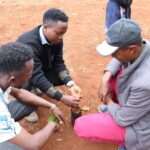
The Avepo Smart Farm offers a different paradigm – a lasting, locality-focused center where farmers have on-the-ground training in place. Compared to mobile extension services that come at intervals, this model offers a consistent learning platform where farmers can observe, experiment and adopt innovations at their own pace.
The most powerful thing about the Avepo Smart Farm is that it is holistic. The farm consolidates three core elements: soil science education via Yara’s fertiliser expertise, climate-resilient agriculture practices, and digital platforms for market access.
This three-pronged approach addresses the fundamental handicaps of smallholders – low soil quality, climatic risk and market disconnection. Maize yield increases from 10 to 30 bags per acre have been reported by Kenyan farmers who have visited the centre by simply adopting proper fertiliser blending practices – evidence of what can be delivered by practical, localized demonstration.
Kenya’s existing infrastructure has current platforms set up to be replicated. Our dormant network of agricultural training institutions could be transformed into vibrant knowledge clusters through smart public-private partnerships.
County governments would take the lead in providing land and basic infrastructure, while agribusiness companies like Yara, Safaricom and Twiga Foods would provide technical expertise and market links. Above all, they must be farmer-centric rather than donor-centric – based on actual pain points like post-harvest loss and input availability rather than abstract ideas.
The Avepo Smart Farm example shows that the economics work. For agribusinesses, the centres create loyal customers who understand how to use products effectively.
For farmers, they create risk-free spaces in which to test innovations before scaling. To government, they offer the cheapest model of extension – one center could serve thousands through farmer-to-farmer knowledge transfer.
For maize production in Kenya’s breadbaskets of Trans Nzoia and Uasin Gishu, these centers would bridge the 60 percent yield gap. For drylands, they would trigger rapid adoption of drought-tolerant crops and water harvesting.
Critically, this model is well-suited to Kenya’s agricultural modernisation agenda. The government’s plans for aggregation centres and digital platforms would take off immediately if backed by local knowledge hubs.
Young agripreneurs – typically disillusioned with agriculture’s clichéd image – would have exciting opportunities in these technology-facilitated learning spaces. Women farmers, typically locked out of extension services, would benefit from training timetables that match their availability.
The pilot project days are behind us. Kenya needs to accelerate scaling up this model starting with our most productive agricultural counties. The success of Avepo Smart Farm proves that if we take the farmers where they are – figuratively and literally – adoption rates skyrocket.
With climate change quickening and food demand rising, we can no longer have knowledge delivery systems that leave out smallholders.
Let’s build a network of localised farmer knowledge centres – not as charity projects, but as strategic investments in Kenya’s food security and economic future.
The blueprint exists. The partners are ready. What’s needed now is decisive action to bring agricultural knowledge home to where it’s needed most – our farming communities.
The writer is the founder of Avepo Smart Farm
https://farmerstrend.co.ke/trending/the-60-yield-gap-mystery-how-local-knowledge-hubs-could-transform-kenyan-harvests/https://farmerstrend.co.ke/wp-content/uploads/2025/04/GoPa5Y_WkAALACr-1024x767.jpghttps://farmerstrend.co.ke/wp-content/uploads/2025/04/GoPa5Y_WkAALACr-150x150.jpg# Trending'Kenya's smallholder farmers struggle with generic advice - discover why hyper-local knowledge hubs like Avepo Smart Farm are revolutionizing agricultural productivity through context-specific training.'Agriculture remains Kenya's economic pillar, yet millions of smallholder farmers remain unproductive despite decades of interventions.The disconnect is not that there are no solutions –...FarmersTrendjohn doefarmerstrend@gmail.comAdministratorFarmers Trend Ltd.










Leave a Reply