Uganda’s Zigoti Coffee Eyes Regional Expansion in Equity-Backed Cross-Border Trade Push
- Zigoti Coffee Works is leading Uganda’s shift from raw coffee exports to specialty processing, as investors tour the farm under the 2026 Trade and Investment Roadshow.
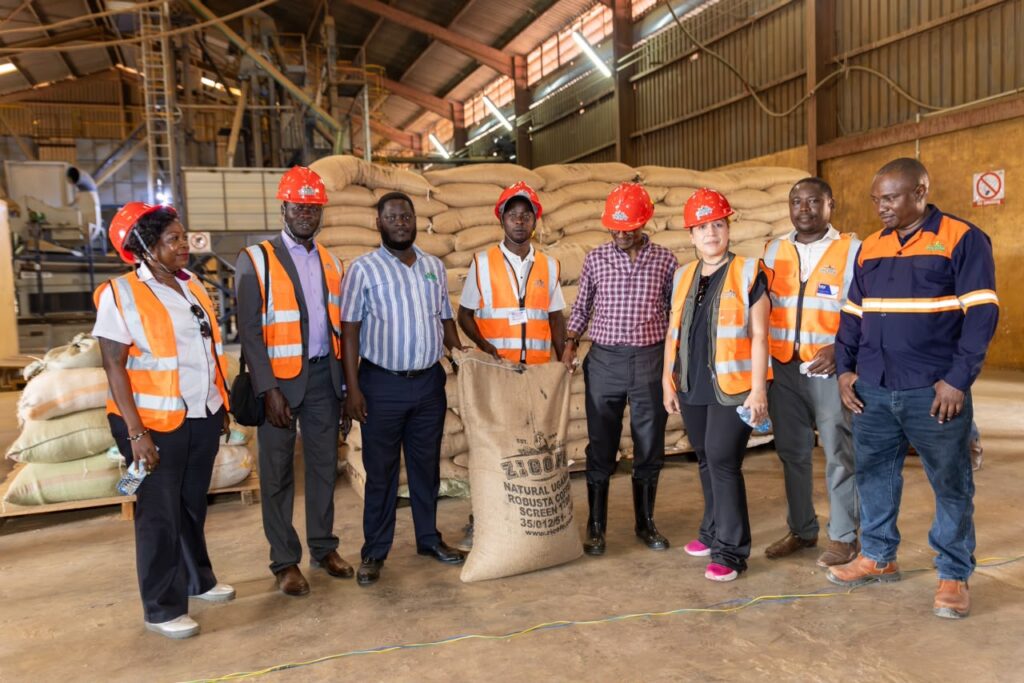
On the hundred-acre model farm of Zigoti Coffee Works Limited, the air smells of ripening coffee cherries as Charles Roscoe Nsubuga walks between the rows, the wet-processing plant running behind him.
“If you cut our blood, the DNA is coffee,” he says. “This is a third-generation coffee business. Our grandparents started with coffee, our parents continued, and now we are taking it to another level.”
Nsubuga is the company’s Chairman, his voice carrying the quiet pride of a man holding a long-running torch.
Established in 1984 and incorporated in the early nineties, Zigoti was the very first local firm to secure a coffee export license when Uganda liberalized the sector. For decades, they did what most African agribusinesses have traditionally done: they sourced, graded, and shipped bulk raw beans to Europe, Asia, and North America.
But Nsubuga is no longer content with just exporting raw potential. Zigoti is currently leading a quiet revolution in the Ugandan coffee sector, shifting its focus from bulk commercial trading to high-value, specialty coffee. It is a transition that has already earned them the Best Pearl Robusta Award for four consecutive years, from 2021 to 2024, with their specialty beans scoring an impressive 85-plus in professional cupping tests.
Yet, scaling up value addition, experimenting with complex fermentation profiles, installing modern wet-processing drying equipment, and securing international traceability standards to satisfy strict European buyers, requires more than just passion. It demands patient, structured capital. Local exporters face steep competition from multinational traders, particularly when it comes to securing financing for coffee stocks and hedging.
“We need financial institutions to understand the coffee business and support local exporters,” Nsubuga says. “If we can stabilize the business, we can create better returns for farmers and contribute more to the economy.”
On Tuesday, September 15, 2026, a delegation of over 150 investors and business leaders walked down into Zigoti’s processing facilities, part of a mission to connect private capital with the kind of local enterprise Zigoti represents.
The visit fell under the 2026 Trade and Investment Roadshow, a regional initiative organized by Equity Group to help Ugandan businesses move beyond exporting raw materials and into higher-value processing, by linking them to capital, markets, technology, and partnerships across East Africa.
For Nsubuga, having bankers and investors tour the red soils of the farm was a crucial turning point.
“When financial institutions come to the farm, they see the farmers, the gardens, and the processing,” Nsubuga reflects. “It gives them a better understanding of the business and the challenges we face.”
The visit came on the backdrop of the roadshow’s high-level launch at the Marriott Hotel in Kampala, where policymakers and private sector players gathered to address a critical bottleneck: how to finance the transition from exporting raw materials to local processing.
Speaking at the forum, Uganda’s Minister of Trade, Industry, and Cooperatives, Sanjay Tanna, challenged financial institutions to lower the cost of capital and deepen financial literacy among micro and small businesses to de-risk lending.
“Uganda’s economic transformation will require stronger investment in value addition, manufacturing, innovation, and skills,” Minister Tanna noted, urging lenders like Equity to double down on practical bookkeeping training for smallholders.
This sentiment is at the heart of Equity’s regional strategy. Rather than relying solely on traditional, collateral-heavy corporate lending, the bank is actively brokering market linkages and trade finance across the East African Community (EAC).
“Uganda does not lack opportunity; what we need is to connect that opportunity to the right capital, markets, technology, and partnerships,” says Claver Serumaga, Equity Bank Uganda’s Executive Director. “The real opportunity is to move beyond exporting raw potential and capture greater value through processing, technology, branding, and access to regional and global markets.”
For Zigoti, this partnership could unlock a highly anticipated expansion. Nsubuga is looking beyond simple asset financing for the company’s headquarters; he wants to see the entire agricultural value chain supported.
Under a proposed credit model, Zigoti’s network of smallholder farmers, which heavily includes women and youth groups, could access small, targeted input loans of about Shs 1 million to Shs 2 million. The repayment of these loans would be seamlessly linked to the proceeds of their coffee sales, protecting farmers from predatory lending while ensuring Zigoti receives a steady supply of high-quality cherries.
This value-chain approach could also open up formal regional markets. While Zigoti already has buyers in South Sudan, much of that trade currently moves informally by road.
Thomas Muto Lo’Buda, an Equity delegate from South Sudan, saw immediate potential for growth during the farm visit. “There is an opportunity to connect this business with markets and partners in South Sudan,” Lo’Buda noted. “We can look at the product, the financing required, and how to build a sustainable partnership” through formal distribution, packaging, and private-label coffee.
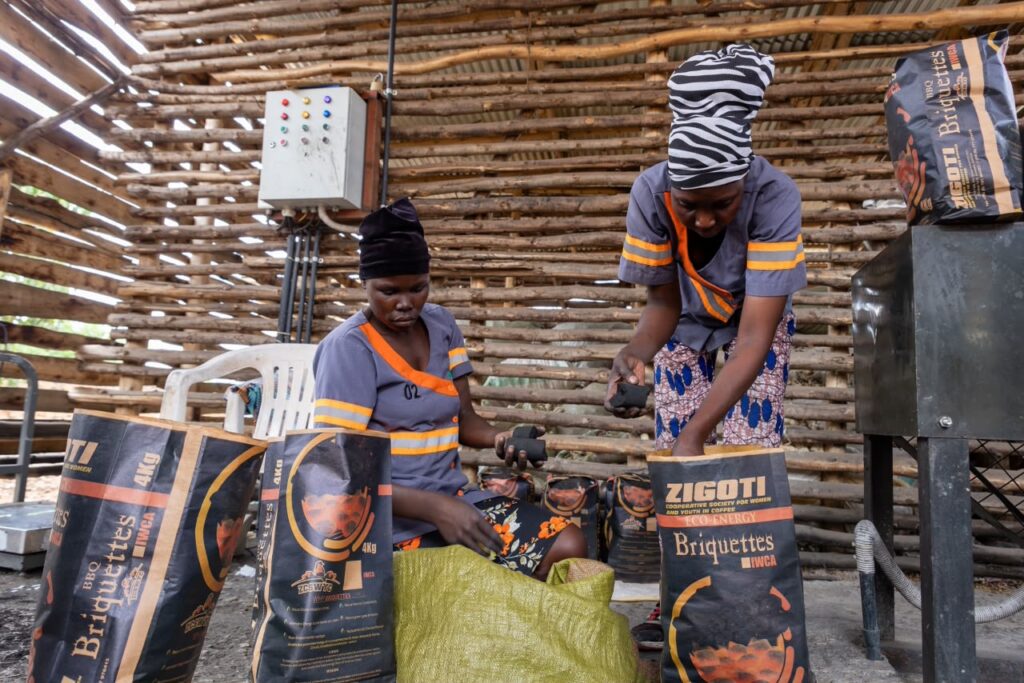
Away from the washing stations, the estate is also finding new life for what gets left behind. Zigoti is currently investing in circular economy initiatives, including a women-led project that recycles coffee pulp and waste into household briquettes, alongside an upcoming black soldier fly project to convert organic waste into animal feed and fertilizer.
As the roadshow delegates packed up to transition to Kigali, Rwanda, for the next leg of their regional tour, Nsubuga stood by his newly installed wet-processing equipment, looking out over the plantation. For him, the path forward is clear: with the right financial backing, Uganda’s coffee will no longer just leave the continent in burlap sacks, but as a finished, premium product that carries the true value of the land and its people.
https://farmerstrend.co.ke/trending/zigoti-coffee-works-uganda-specialty-coffee-value-addition/https://farmerstrend.co.ke/wp-content/uploads/2026/09/Ugandas-Zigoti-Coffee-Eyes-Regional-Expansion-in-Equity-Backed-Cross-Border-Trade-Push-1024x683.jpeghttps://farmerstrend.co.ke/wp-content/uploads/2026/09/Ugandas-Zigoti-Coffee-Eyes-Regional-Expansion-in-Equity-Backed-Cross-Border-Trade-Push-150x150.jpeg# TrendingGlobal Farmingblack soldier fly farming,circular economy coffee,coffee exports Uganda,coffee farmers loans,coffee financing Africa,coffee processing Uganda,coffee pulp briquettes,coffee value addition,East African coffee,Equity Group Trade and Investment Roadshow,Kenyan farming news,Robusta coffee Uganda,smallholder coffee farmers,specialty coffee Africa,Uganda coffee farming,Zigoti Coffee WorksZigoti Coffee Works is leading Uganda's shift from raw coffee exports to specialty processing, as investors tour the farm under the 2026 Trade and Investment Roadshow.On the hundred-acre model farm of Zigoti Coffee Works Limited, the air smells of ripening coffee cherries as Charles Roscoe Nsubuga walks between...FarmersTrendjohn doefarmerstrend@gmail.comAdministratorFarmers Trend Ltd.







Leave a Reply