Soursop Health Claims in Kenya: What’s Proven, and What Isn’t
Soursop health claims in Kenya travel fast on WhatsApp, Facebook and roadside herbal stalls. Search the fruit online and you find posts calling it “10,000 times stronger than chemotherapy,” a cure for diabetes, and a natural defense against nearly every serious disease. Open the actual scientific literature behind these claims and you find something narrower, more careful, and in some cases more concerning than the marketing suggests.
This guide separates what researchers have genuinely tested from what sellers simply repeat. You see exactly which soursop claims come from real laboratory data, which come from animal studies never confirmed in humans, and which come from nothing more than a chain message. You also see a safety concern almost no Kenyan seller mentions: a documented link between heavy soursop consumption and a serious neurological disease, studied for decades in the Caribbean.
None of this makes soursop a bad fruit. It remains a genuinely nutritious crop with real farming and business potential in Kenya. What it is not, based on the current evidence, is a proven medical treatment for cancer, diabetes or any other disease.
What Soursop Is
Soursop, botanically Annona muricata, grows as a small evergreen tree producing a large, spiky green fruit with soft, creamy white flesh. English speakers also know it as graviola, and Spanish speakers call it guanabana. In Kenya, coastal and Eastern growers cultivate it commercially, drawn by its short 2 to 3 year fruiting timeline from grafted stock and its rising farm-gate price.
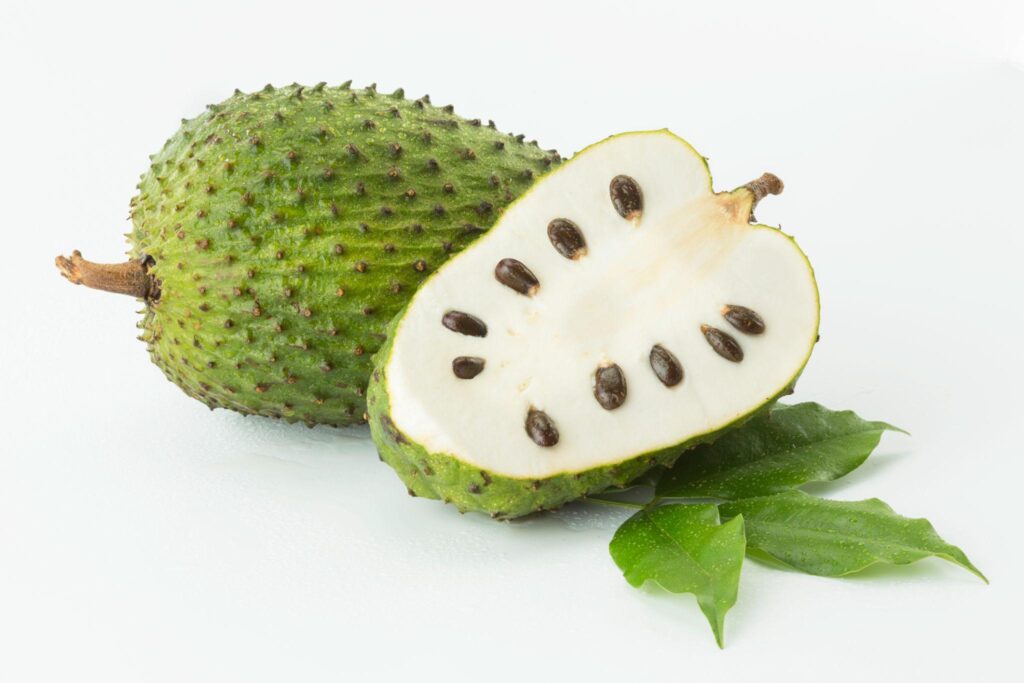
The tree originates in tropical regions of the Americas and Caribbean, later spreading through Africa and Southeast Asia. Nearly every part of the plant, the fruit, leaves, bark, roots and seeds, appears somewhere in traditional medicine across these regions. This partly explains why so many different health claims attach to it.
This traditional use history matters for understanding today’s marketing. A plant used for generations in folk remedies accumulates centuries of anecdotal claims long before modern science tests any of them directly. Soursop carries exactly this kind of inherited reputation, and Kenyan sellers today often repeat centuries-old folk claims as though modern research already confirmed them.
Soursop Farming in Kenya: A Crop With Real Potential
Soursop farming in Kenya remains a small but growing sector. Most Kenyan farmers know the fruit from coastal markets or herbal stalls. Fewer grow it commercially. This gap creates opportunity for farmers who move early.
The crop suits Kenya’s coastal and lower Eastern regions well. Warm temperatures, good drainage and moderate rainfall support healthy growth. Soursop trees also tolerate drought better than many fruit crops once established, making them suitable for areas where irrigation is limited.
Why Kenyan farmers are planting soursop now:
- Grafted trees fruit in two to three years, faster than many alternatives
- Farm-gate prices for fresh fruit keep rising as demand grows
- Processing potential exists for juice, powder, and tea products
- Land requirements are modest, with good yields per tree at maturity
- Local and export markets both show growing interest
KALRO identified soursop as one of 20 key fruit species selected based on market potential, ability to thrive under harsh climatic conditions and opportunities for value addition. Government recognition of the crop signals long-term support for growers entering the sector.
A mature soursop tree produces 20 to 50 fruits per season under good management. Each fruit weighs between 1.5 and 5 kilograms. At current market prices, a single tree generates meaningful income once it reaches full production.
Our Soursop Seedlings: Available Now at KSh 500 Each
Farmers Trend supplies certified grafted soursop seedlings to farmers across Kenya. Each seedling costs KSh 500. Grafted stock gives you faster fruiting, consistent fruit quality and higher yields than seed-grown trees.
Why buy grafted soursop seedlings from us:
- Grafted trees fruit in two to three years, not five to seven
- Consistent fruit size, taste and quality from every tree
- Strong rootstock suited to Kenyan soil and climate
- Healthy, disease-free stock from certified nursery production
- Guidance on planting, spacing and orchard management included
Order your soursop seedlings today by calling or sending a WhatsApp message to 0724 559 286 or 0790 509 684, visiting www.farmerstrend.co.ke, or emailing info@farmerstrend.co.ke.
The Cancer Cure Claim: What Has Been Tested
Start with the claim driving the most soursop sales worldwide: the idea it cures or treats cancer. This claim deserves the most careful treatment, since it directly affects decisions people make about serious illness.
Laboratory research genuinely exists, and it genuinely shows something real. Compounds in soursop, particularly a group called annonaceous acetogenins, kill cancer cells when applied directly in petri dish experiments. Researchers have observed this effect against breast, liver, lung, pancreatic, prostate and colon cancer cell lines. A widely cited 1997 study published in the Journal of Medicinal Chemistry found soursop compounds more effective than a chemotherapy comparison drug at destroying cultured breast cancer cells.
Animal studies extend this picture somewhat further. Research on mice found graviola leaf extract shrank breast cancer tumors, and separate studies on rats showed anti-tumor activity against prostate cancer and some preventive effect against colon cancer. A 2016 study published in Scientific Reports documented anticancer activity against prostate cancer cells in mice specifically.
Here is where the evidence stops. No completed human clinical trials have tested whether soursop treats cancer in real patients. Cancer Research UK states this plainly: there is not enough reliable evidence soursop works as a cancer treatment, and websites promoting it rely on unsupported opinion and anecdote rather than clinical data. Memorial Sloan Kettering Cancer Center states there is no proof graviola benefits cancer patients. MD Anderson Cancer Center and Cancer Treatment Centers of America both warn directly against using soursop as a cancer treatment.
A 2015 systematic review found several studies showing positive laboratory results, while explicitly calling for more robust, systematic clinical trials before anyone confirms soursop’s value or safety as a cancer treatment. A separate 2018 review reached the same conclusion from a different angle, describing soursop as a potential chemopreventive agent based on laboratory data while confirming no valid human clinical trials exist. Neither review found the missing human evidence, because it genuinely does not exist yet.
Why “Killed Cancer Cells In A Lab” Does Not Mean “Cures Cancer”
Understanding why lab results and human treatment are different questions matters more than memorizing any single study. Petri dish experiments expose cancer cells directly to concentrated compound extracts, bypassing digestion, liver processing and the immune system entirely. Nothing in your body works this way when you eat a fruit or drink a tea.
Animal studies add a layer of real biological complexity, but mice and rats process compounds differently than humans do, at different doses relative to body size, and researchers typically use far more concentrated extracts than anyone would consume from eating the fruit itself. A dose shrinking a tumor in a mouse says little about what happens in a person drinking soursop tea once a day.
Human clinical trials exist specifically to bridge this gap, testing safety and effectiveness in real patients under controlled, monitored conditions. Soursop has not gone through this process for cancer treatment, and researchers writing in the toxicology literature note a specific reason why: annonacin, the primary compound responsible for soursop’s lab-based anticancer activity, carries known toxicity concerns making human trials difficult to justify without first resolving safety questions covered later in this guide.
Treat any claim citing only laboratory or animal data as incomplete information, not proof. This standard applies equally whether the claim comes from a supplement seller, a farming blog, or a forwarded WhatsApp message promising a miracle cure.
The Real Danger: Delaying Proven Treatment
Cancer specialists raise a concern beyond simple lack of proof: patients who believe soursop treats cancer sometimes delay or skip conventional treatment in favor of fruit, tea or supplements. Cancer Treatment Centers of America and other major cancer institutions specifically flag this behavior as genuinely dangerous, since it trades treatments with documented survival benefits for one with no confirmed human benefit at all.
This risk applies directly in Kenya, where herbal remedies often reach patients faster and cheaper than formal oncology care. A farmer or family member choosing soursop leaf tea over a hospital referral, based on an online claim, makes this decision with incomplete information about what the science shows.
None of this means soursop has no biological activity. It means the specific claim, soursop treating or curing cancer in humans, has not been tested and confirmed the way real cancer treatments are required to be before doctors recommend them. Anyone facing a cancer diagnosis deserves this distinction clearly, not buried under enthusiastic marketing language.
What About Diabetes and Blood Sugar Claims
Soursop’s diabetes reputation follows a similar pattern to its cancer claims: real laboratory and animal data, no confirmed human evidence. One frequently cited study gave soursop extract to diabetic rats and found blood sugar levels five times lower than an untreated comparison group. Another animal study reported blood sugar reductions of up to 75 percent following soursop extract treatment.
These numbers sound dramatic, and sellers often present them as though they settle the question. They do not. Both studies tested concentrated extract in rats, not fruit consumption in humans, and researchers reviewing this literature consistently note more research, specifically in people, remains necessary before drawing conclusions about soursop and diabetes management.
Separate from these extract studies, soursop fruit does carry one genuinely confirmed, relevant property: a low glycemic index around 30 to 32, alongside meaningful fiber content near 3.3 grams per 100 grams. Low glycemic index foods raise blood sugar more slowly than high glycemic index foods, a real and measurable nutritional fact independent of the unproven extract research. This distinction matters: eating whole soursop fruit as part of a balanced diet differs entirely from claiming a soursop extract treats diagnosed diabetes.
Anyone managing diabetes should treat soursop the way nutrition-focused medical guidance supports it, as a reasonably low glycemic index fruit eaten in normal portions, not as a substitute for prescribed medication or monitoring.
The Safety Risk Nobody Talks About: Annonacin and Atypical Parkinsonism
Most soursop marketing stays silent on this next point entirely, which is exactly why it deserves space here. Soursop contains annonacin, a compound belonging to the same acetogenin family researchers study for anticancer activity. This same compound carries a documented association with a serious neurological disease.
On the Caribbean island of Guadeloupe, researchers identified unusually high local rates of atypical parkinsonism, a movement disorder resembling Parkinson’s disease but not responding to standard Parkinson’s medication. French biomedical researchers traced this cluster to heavy, sustained consumption of soursop fruit and leaf tea across the local population, a connection first published in the late 1990s and studied extensively since.
Laboratory research explains a plausible mechanism behind this link. Annonacin acts as a mitochondrial toxin, disrupting energy production inside cells. Studies found annonacin crosses the blood-brain barrier, and researchers detected it directly in the brain tissue of animals given the compound over time, alongside measurable degeneration in brain regions controlling movement, the same regions affected in Parkinson’s disease.
One frequently cited calculation puts this risk in concrete terms: an adult consuming one soursop fruit, or one can of soursop nectar, every day for a year ingests an amount of annonacin comparable to the dose producing brain lesions in laboratory rats given the purified compound directly. This is not a claim saying occasional soursop consumption causes neurological disease. It is a documented reason why sustained, heavy, concentrated intake, particularly from leaf tea and supplements rather than occasional fresh fruit, deserves genuine caution rather than the unlimited “more is better” framing common in soursop marketing.
France’s national food safety agency reviewed this research in 2010 and concluded existing evidence was insufficient to definitively prove soursop caused the Guadeloupe cluster, while explicitly calling for further study given the scale of soursop consumption worldwide. This is the accurate, honest state of the science: a real, published, mechanistically plausible safety signal, not yet fully proven as causal, and worth taking seriously rather than dismissing.
What Is Proven: The Real Nutritional Value of Soursop
Step away from the disputed medical claims and soursop stands on genuinely solid ground as a nutritious fruit. A 100 gram serving delivers roughly 20 to 46 milligrams of vitamin C depending on ripeness and measurement method, a meaningful contribution toward daily immune-supporting nutrient needs. The same serving provides around 3.3 grams of fiber, placing soursop among the higher-fiber fruits available in Kenyan markets.
Potassium content adds further genuine nutritional value, supporting normal muscle and nerve function as part of an overall balanced diet. Soursop also contains measurable amounts of magnesium, thiamine, and smaller quantities of other B vitamins, alongside plant antioxidant compounds confirmed through standard laboratory nutritional analysis rather than disputed medical research.
None of these facts require hedging the way the cancer, diabetes and infection-fighting claims do. Vitamin C content, fiber content and glycemic index are measurable, repeatable nutritional facts, confirmed the same way any fruit’s nutrition label gets confirmed. This is the accurate foundation Kenyan sellers and farmers should market soursop on, rather than borrowed disease-cure claims the science does not yet support.
A reasonable serving size sits around half a cup to one cup of fresh pulp daily, delivering these nutritional benefits without excessive natural sugar intake, since soursop does carry meaningful carbohydrate content alongside its fiber and vitamins.
Anti-Inflammatory and Antimicrobial Claims: Where the Evidence Stands
Beyond cancer and diabetes, sellers commonly promote soursop for inflammation and infection. The evidence pattern here matches the rest of this guide closely: real laboratory activity, no confirmed human clinical outcome.
Test-tube and animal research has found soursop extracts show antimicrobial activity against certain bacteria and show markers consistent with reduced inflammation in laboratory models. These findings represent genuine, publishable scientific results, not fabricated marketing claims. They simply have not progressed to human clinical trials confirming the same effects occur, at safe and effective doses, in actual patients.
Treat anti-inflammatory and antimicrobial soursop claims with the identical framework applied throughout this guide: laboratory activity is real and scientifically interesting, but it is not the same thing as a confirmed human health benefit, and the gap between the two remains unfilled for these claims the same way it does for cancer and diabetes.
How Kenyan Sellers and Online Content Misrepresent This Research
Kenyan soursop marketing follows a recognizable pattern once you know what to look for. A post cites a real laboratory study, drops the crucial detail showing the study used cell cultures or animals rather than humans, and presents the result as though it applies directly to a person drinking the tea or eating the fruit.
Herbal sellers at markets and online storefronts often layer several unrelated claims together, cancer, diabetes, ulcers, high blood pressure, parasites, into a single sales pitch, a pattern itself signaling weak evidence rather than strong evidence. Legitimate medical treatments rarely claim effectiveness against such a wide, unrelated range of serious conditions simultaneously.
WhatsApp and Facebook forwards compound this problem by stripping away sourcing entirely. A claim starting as “laboratory study finds soursop compound kills cultured cancer cells” becomes, after several forwards, simply “soursop cures cancer,” with no trace of the original qualification left for a reader to check.
Kenyan farmers and sellers genuinely benefit from resisting this pattern rather than repeating it. A grower marketing soursop honestly, on its real nutritional value and legitimate ongoing research interest, builds more durable customer trust than one repeating disease-cure claims a buyer might eventually learn are unproven.
A Practical Framework for Reading Any Soursop Health Claim
Apply four questions to any soursop health claim you encounter, whether from a seller, a website or a family member forwarding a message.
Ask whether the claim specifies human testing. Phrases like “studies show,” without naming whether those studies involved humans, cell cultures or animals, hide the most important detail. Real evidence-based content names its evidence type directly.
Ask whether the source has something to sell. A claim appearing directly alongside a product purchase link deserves more scrutiny than the same claim published by a cancer research institution with no product to sell you.
Ask whether the claim matches what major medical institutions state. Cancer Research UK, Memorial Sloan Kettering, MD Anderson and similar institutions publish their soursop findings openly, and their consistent conclusion, real lab activity, no confirmed human treatment benefit, offers a reliable benchmark against which to measure any other claim you encounter.
Ask what a false positive costs. Believing an unproven nutrition claim about vitamin C content costs you little if wrong. Believing an unproven cancer treatment claim, and acting on it by delaying real treatment, carries a genuinely serious cost if wrong. Scale your skepticism to match what you stand to lose.
Soursop Leaf Tea: Popular in Kenya, Worth Moderating
Soursop leaf tea appears widely in Kenyan herbal medicine, often marketed even more aggressively than the fruit itself for cancer, diabetes and general wellness. This specific product deserves particular caution given everything covered in this guide.
Leaf tea concentrates plant compounds, including annonacin, well beyond what you would consume eating the fruit pulp occasionally. The Guadeloupe research linking annonacin to atypical parkinsonism specifically implicated both fruit pulp and leaf tea consumption, with tea representing a concentrated, repeated-exposure pattern of exactly the kind researchers flagged as concerning.
Occasional soursop leaf tea consumption has not been shown to cause harm, and this guide makes no claim saying it does. The available research instead points toward sustained, heavy, daily consumption over months or years as the pattern worth genuine caution, precisely the consumption pattern many wellness sellers actively encourage through daily-dosing recommendations.
Anyone drinking soursop leaf tea regularly, particularly as a self-directed treatment for a diagnosed condition, should treat this decision with the same scrutiny applied to any supplement carrying an unresolved safety question, ideally discussing it with a healthcare provider familiar with their specific health situation.
Who Should Be Especially Cautious
Certain groups warrant extra caution around soursop beyond normal moderate fruit consumption. Anyone currently undergoing cancer treatment should discuss soursop with their treating physician before using it in any concentrated form, given both the unresolved effectiveness question and potential interaction with prescribed treatment.
People with existing neurological conditions, or a family history of Parkinson’s disease or related movement disorders, have a specific, published reason to moderate concentrated soursop products given the annonacin research covered above. This caution applies most directly to leaf tea and supplement forms rather than occasional fresh fruit consumption.
Pregnant women commonly receive general caution around concentrated herbal products and supplements during pregnancy, soursop leaf tea and extracts included, given the absence of safety research specific to pregnancy for this plant. Anyone taking prescription medication should also confirm with a pharmacist or physician no interaction risk exists, since soursop’s bioactive compounds have not been comprehensively studied for drug interactions.
Soursop in a Balanced Kenyan Diet
Soursop fruit fits into a healthy diet. It provides vitamin C, fiber, and potassium. Its low glycemic index makes it a reasonable fruit choice for most people.
Treat it as food, not medicine. Enjoy fresh fruit occasionally. Use caution with concentrated leaf teas and supplements. Continue prescribed medical treatment for any diagnosed condition.
This approach captures soursop’s real nutritional value while avoiding the risks of unproven claims. It also protects your credibility if you grow or sell the fruit, since honest marketing builds trust that disease-cure claims eventually destroy.
Key Takeaways on Soursop health claims in Kenya
- Soursop contains confirmed vitamin C, fiber, potassium, and a low glycemic index
- No human clinical trials support soursop as a cancer treatment
- Diabetes treatment claims come from animal studies only
- Annonacin links to neurological risk under heavy, sustained consumption
- Sellers cite real studies while omitting the human evidence gap
- Major cancer institutions warn against replacing proven care with soursop
- Eat soursop as food, not medicine, and use concentrated products with caution
- Occasional fresh fruit consumption has not been shown to cause harm
- Leaf tea and supplements carry higher annonacin exposure than fresh fruit
- Honest marketing on real nutritional value builds more durable customer trust
Your Next Steps
Soursop health claims in Kenya split cleanly into two categories once you apply the evidence standard this guide has walked through. Nutritional claims, vitamin C, fiber, low glycemic index, hold up under direct measurement and deserve confidence. Disease-treatment claims, cancer, diabetes cures, broad infection-fighting power, rest on laboratory and animal data never confirmed in human trials, and deserve real skepticism alongside genuine attention to the documented annonacin safety question.
If you grow or sell soursop in Kenya, market it honestly. The fruit’s real nutritional profile, fast fruiting timeline and rising farm-gate price already make a strong, truthful case for growing it commercially, without needing to borrow unproven disease-cure language risking your credibility once a buyer checks the actual research.
Ready to start your soursop orchard? Buy certified grafted soursop seedlings from Farmers Trend at KSh 500 each. Grafted trees fruit in two to three years and deliver consistent, market-ready fruit. Order your soursop seedlings today by calling or sending a WhatsApp message to 0724 559 286 or 0790 509 684, visiting www.farmerstrend.co.ke, or emailing info@farmerstrend.co.ke.
If you or someone you know is considering soursop for a serious health condition, particularly cancer, bring the specific studies and their limitations, laboratory versus animal versus human, directly to a healthcare provider before making treatment decisions based on marketing claims alone. This single conversation costs little and protects against the genuinely serious risk of delaying treatment with confirmed benefit in favor of one remaining scientifically unproven.
The science on soursop is not finished, and future human trials stand to genuinely change parts of this picture. Until this research exists, the honest answer sits exactly where the evidence currently stands: a nutritious fruit with real, unresolved scientific questions, not yet a proven medicine.
https://farmerstrend.co.ke/trending/soursop-health-claims-in-kenya/https://farmerstrend.co.ke/wp-content/uploads/2026/09/z2wYyhU3KDtkDyV9ZakZiHugaUH4oCIqZ4q9yWyphIkngnIU042Di2Zr-H-3rN0BjFrTPLRY3rheK1yWGfIeaw-IkkcRX2-LTh1ZRqDMRRwNJVJ6dUFdiUNMyAVFyuxwfrUwIJhrviIZkV_ui3yQywBbSl7sF4pL_RmYQVbi6KC_wo74HY4FtX-bwYuYpzon-1024x778.jpghttps://farmerstrend.co.ke/wp-content/uploads/2026/09/z2wYyhU3KDtkDyV9ZakZiHugaUH4oCIqZ4q9yWyphIkngnIU042Di2Zr-H-3rN0BjFrTPLRY3rheK1yWGfIeaw-IkkcRX2-LTh1ZRqDMRRwNJVJ6dUFdiUNMyAVFyuxwfrUwIJhrviIZkV_ui3yQywBbSl7sF4pL_RmYQVbi6KC_wo74HY4FtX-bwYuYpzon-150x150.jpg# TrendingFruitsIn FruitsSoursop FarmingAnnona muricata Kenya,annonacin soursop,buy soursop seedlings,certified soursop seedlings Kenya,Farmers Trend soursop seedlings,grafted soursop seedlings,graviola Kenya,guanabana Kenya,is soursop safe,KALRO soursop,soursop atypical parkinsonism,soursop cancer claims,soursop diabetes claims,soursop fact check,soursop farming coastal Kenya,soursop farming Eastern Kenya,soursop farming for beginners Kenya,soursop farming guide,soursop farming in kenya,soursop fruit price Kenya,soursop glycemic index,soursop harvest Kenya,soursop health benefits,soursop health claims Kenya,soursop health myths,soursop leaf tea Kenya,soursop market Kenya,soursop nutrition facts,soursop orchard Kenya,soursop processing Kenya,soursop profit per acre,soursop research Kenya,soursop seedling KSh 500,soursop seedlings Kenya,soursop seedlings price Kenya,soursop side effects,soursop tree planting Kenya,soursop value addition Kenya,soursop vitamin CSoursop health claims in Kenya travel fast on WhatsApp, Facebook and roadside herbal stalls. Search the fruit online and you find posts calling it '10,000 times stronger than chemotherapy,' a cure for diabetes, and a natural defense against nearly every serious disease. Open the actual scientific literature behind these...FarmersTrendjohn doefarmerstrend@gmail.comAdministratorFarmers Trend Ltd.


Leave a Reply