French Beans Farming in Kenya: 2026 Guide to KES 1.5 Million Profit
French Beans Farming in Kenya: 2026 Guide to KES 1.5 Million Profit
French beans farming in Kenya holds a special place in the country’s agricultural export success. The crop, known locally as Mishiri, is a backbone of the Kenyan horticultural sector. For 2026, the focus shifts decisively toward high-value extra-fine bean varieties. These varieties meet the strict demands of the European Union market. Exporters now pay a premium for beans that are tender, straight, and uniformly thin.

Farmers across the country are asking which farming has the highest profit. Many are also searching for which crop has the highest profit per acre in Kenya. French beans farming in Kenya provides a clear answer. When you compare Mishiri to traditional staples like maize or even potatoes, the financial potential is unmatched. Maize might give you a modest return after a long season. French beans give you a harvest in under two months. You can also plant multiple cycles in a single year. This rapid turnover is what pushes profits toward the KES 1.5 million mark annually. It is not just about high prices. It is about efficiency, market demand, and intensive land use.
Understanding the French Beans Market in Kenya
Understanding the French beans market in Kenya is your first step toward profit. The market splits into two main streams. The first and most lucrative is the export market, mainly serving the European Union. The second is the local market, which also demands Mishiri for hotels, supermarkets, and homes.
The price of French beans in Kenya for export averages $2,256 per ton. This figure translates to a strong farm-gate price per kilogram, often ranging from KES 60 to KES 150 depending on the grade and season. Exporters reject beans that are curved, blemished, or too thick. They enforce strict standards on pesticide residues and food safety. This is why GlobalGAP certification is becoming non-negotiable for serious growers.
Local market prices fluctuate more. A kilogram of fresh Mishiri in Nairobi markets can sell for between KES 80 and KES 200. The demand is consistent. To succeed in French beans farming in Kenya, you must decide your target market early. If you aim for export, you must follow the specific guidelines found in various French beans production PDF resources from the Horticultural Crops Directorate. These documents outline the protocols for pesticide use, harvesting techniques, and post-harvest handling required for export.
French Beans Varieties in Kenya for 2026
Your choice of seed determines your success. French beans varieties in Kenya are numerous, but hybrids dominate the export trade. Amy and Teresa are two of the most popular extra-fine types. They produce straight, dark green pods that meet export grade one standards. Serengeti is another excellent choice, known for its high yield potential and disease tolerance. Julia is also widely planted for its consistent quality.
The French beans seeds price per kg for these hybrids ranges from KES 500 to KES 800. This cost is higher than open-pollinated varieties, but the return on investment is worth it. You need approximately 25 to 30 kilograms of seed for one acre. A top-performing seed gives you strong germination and vigorous plants.
Experts agree that French beans yield per acre in Kenya depends 60% on the choice of seed. The remaining percentage relies on your soil fertility and water management. Do not compromise on seed quality. Buy only from certified agrovets. Saving seed from a previous harvest is not advisable for hybrid varieties. The next generation will not perform as well.
Ecological Requirements for French Beans Farming in Kenya
French beans farming in Kenya requires specific ecological conditions for optimal growth. The ideal altitude ranges from 1000 meters to 2000 meters above sea level. Areas like Mwea, Sagana, Naivasha, and parts of Kirinyaga provide these conditions perfectly. The crop thrives in well-drained loamy soils rich in organic matter. Soil pH should be between 5.5 and 6.5.
Timing is critical. Farmers often ask, what is the best month to plant green beans? You can plant French beans almost year-round with irrigation. However, the most profitable window is the “Hungry Gap” period in the European market. This gap occurs in February and again in October. During these months, supply from other global producers drops. Kenyan exporters scramble for beans to fill the gap, and prices rise. Planting in early December or late August positions you to harvest during these high-price windows.
French beans are sun-loving plants. They need full sunlight for most of the day. Temperatures between 20°C and 28°C are ideal. High temperatures above 32°C cause flower drop and poor pod set. Low temperatures below 15°C slow down growth and delay harvest.
Land Preparation and Planting for French Beans Farming in Kenya
The journey from seed to pod is intensive. Farmers new to French beans farming in Kenya often ask, how long does it take for French beans to grow? The answer is 45 to 60 days from planting to first harvest. The exact duration depends on the altitude and the weather.
Prepare your land early. Plough and harrow to create a fine tilth. French beans need a loose seedbed for their roots to penetrate easily. Plant your seeds at a depth of 2 to 3 centimeters. Spacing is important. Use a spacing of 30 centimeters between rows and 10 centimeters between plants. This density gives you about 130,000 plants per acre.
Water Requirements in French Beans Farming in Kenya
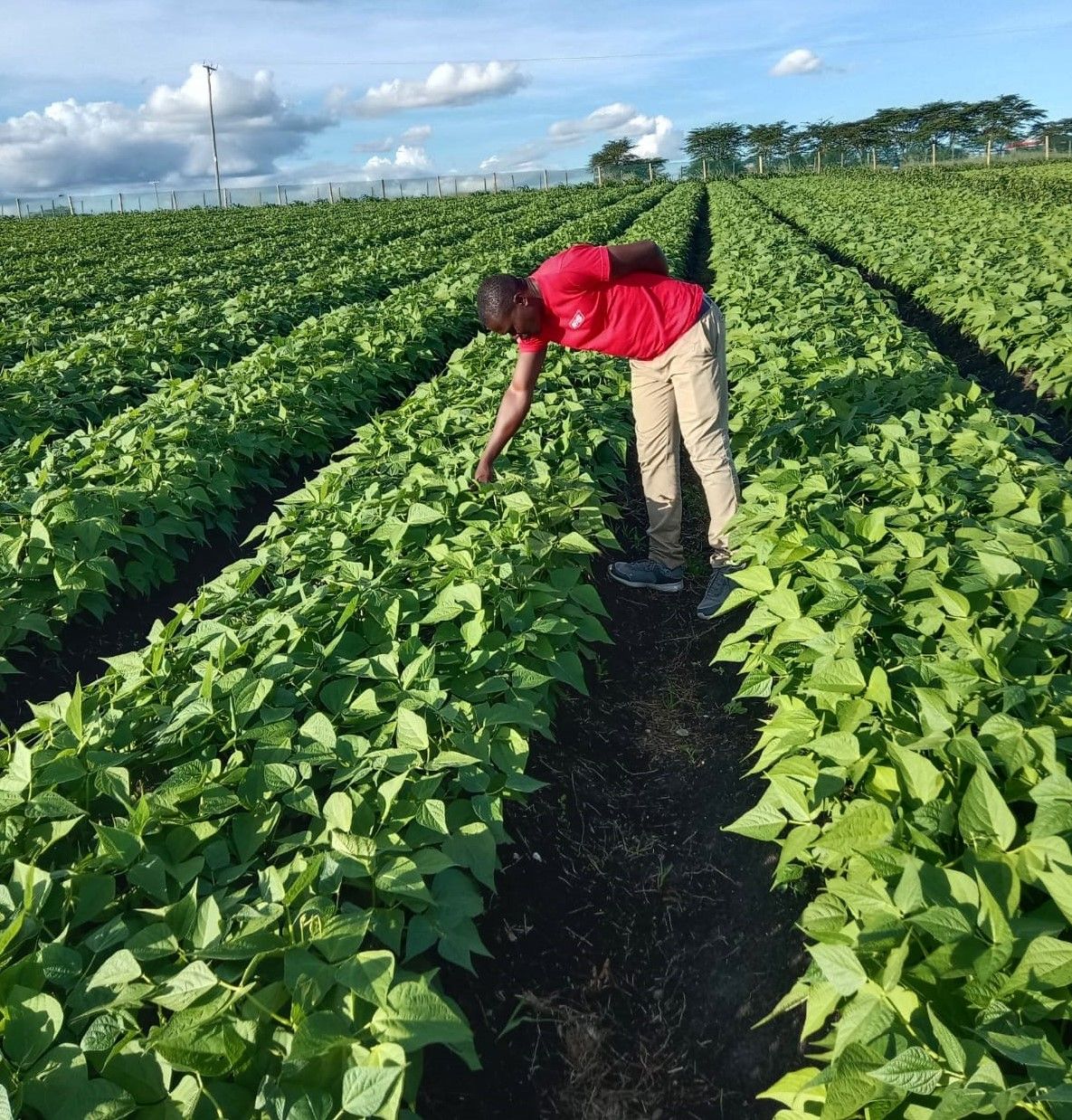
Do French beans need a lot of water? Yes, but they require consistent moisture, not flooding. The plants need between 35mm and 50mm of water per week. This requirement is critical during flowering and pod formation. Water stress at flowering causes the flowers to abort. Stress during pod filling results in curved, short pods that exporters reject. Drip irrigation is the most efficient method. It delivers water directly to the roots and keeps the foliage dry, which reduces the risk of fungal diseases.
Best Fertilizer for French Beans Farming in Kenya
Soil testing is the best practice before applying any fertilizer. For general guidance, farmers ask, what kind of fertilizer do you use for French beans? At planting, apply 200 kilograms of DAP per acre. DAP provides phosphorus, which is essential for strong root development. About 30 days after planting, just as the plants start flowering, you need to top-dress with CAN. Apply 100 kilograms of CAN per acre. The calcium in CAN helps with pod firmness and prevents disorders like blossom end rot. Foliar feeds with micronutrients like boron and molybdenum also improve pod set and quality.
Finding the best fertilizer for French beans is an ongoing process of observation and adjustment. Your soil type and the previous crop influence your exact needs. A balanced approach with both basal and top-dress fertilizers gives the best results.
Weed and Pest Control
Keep the field weed-free for the first four weeks. Weeds compete for nutrients and water. French beans are sensitive to many herbicides, so manual weeding is often the safest method. Common pests include aphids, thrips, and bean flies. Monitor your crop daily. Use approved pesticides only when you see an infestation. Spraying must stop at least 7 to 10 days before harvest to respect the pre-harvest interval.
Companion Planting Guidelines
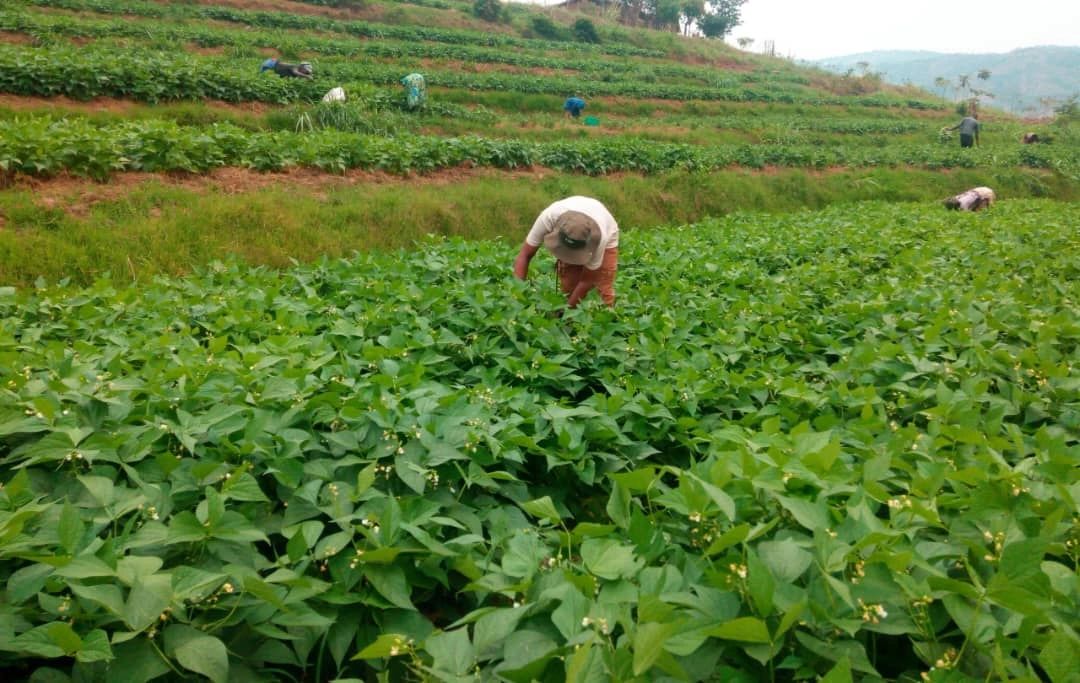
Good neighbors matter in the garden. Farmers also need to know what not to plant next to French beans. You must avoid the Allium family entirely. Do not plant onions, garlic, or leeks near your beans. These plants release substances that stunt bean growth and reduce yields. Good companions include maize, carrots, and cucumbers.
Harvesting Techniques for Maximum Yield
Harvesting is the most labor-intensive stage in French beans farming in Kenya. The pods must be picked when they are still tender and the seeds inside are just visible as tiny bumps. For extra-fine grade, the pod diameter should be less than 6.5 millimeters.
The harvest period lasts for about three weeks. You will pick every two to three days. Farmers often ask, how many times can you harvest French beans? You will make 6 to 9 picking passes over the harvest window. Each plant continues to flower and set new pods as long as you keep picking the mature ones. A common question is, how many French beans per plant? A healthy plant in good conditions will produce 15 to 25 marketable pods over its lifetime.

French Beans Yield Per Acre in Kenya
This leads to the ultimate question: how many tonnes of French beans per acre? A realistic target for a commercial farmer using best practices is 4 to 6 tonnes per acre per cycle. Some exceptional farmers achieve up to 8 tonnes. With three cycles in a year, your total annual production can reach 12 to 18 tonnes from a single acre. This level of productivity drives the high profit potential of the crop.
French beans yield per acre in Kenya depends on many factors. Soil fertility, water consistency, pest control, and variety selection all play a role. Farmers who pay attention to every detail see the highest yields. The difference between 4 tonnes and 8 tonnes per acre is often in the management practices.
Cost of French Beans Farming in Kenya
Let us talk numbers. The cost of French beans farming in Kenya requires careful planning. We will break down the investment for a single acre over one cycle. These figures are estimates and can vary based on location and input prices.
Land preparation, including ploughing and harrowing, costs around KES 8,000. Certified hybrid seeds for one acre cost between KES 12,500 and KES 20,000. DAP fertilizer costs about KES 6,000 for a 50kg bag. You need four bags, totaling KES 24,000. CAN fertilizer for top-dressing costs about KES 3,000 per bag. You need two bags, costing KES 6,000. Foliar feeds and pesticides cost roughly KES 5,000. Drip irrigation tubes and water costs, if amortized, add another KES 10,000. Labor for planting, weeding, and spraying costs about KES 15,000. The biggest expense is harvesting labor, which can reach KES 25,000 for a full cycle. Adding transport and miscellaneous costs of KES 5,000 brings your total investment to approximately KES 135,000 to KES 150,000 per acre.
French Beans Farming Profit Analysis
If you harvest a conservative 4 tonnes per acre and sell at an average export farm-gate price of KES 100 per kilogram, your gross revenue is KES 400,000.
Profit = Revenue minus Cost. KES 400,000 minus KES 150,000 gives you KES 250,000 per acre for that single cycle.
French beans farming in Kenya allows for up to three cycles per year on the same land with good management. Three cycles at KES 250,000 profit each gives you KES 750,000. If you achieve the higher yield of 6 tonnes per cycle, your profit per cycle jumps to KES 450,000. Three cycles at this rate push your annual French beans farming profit to KES 1,350,000. This is how farmers approach that KES 1.5 million target from a single acre.

Export Standards and Certification
The export market demands strict compliance with international standards. GlobalGAP certification is becoming mandatory for farmers supplying European buyers. This certification covers food safety, environmental sustainability, and worker welfare. The process involves documentation, farm inspections, and traceability systems.
The Horticultural Crops Directorate provides guidance on export requirements. They issue export licenses and monitor compliance. Contact them early in your planning process. They can direct you to registered exporters and provide the latest market updates.
Common Challenges in French Beans Farming in Kenya
Every farming venture faces obstacles. French beans are sensitive to weather extremes. Heavy rains during harvest can stain pods and cause disease outbreaks. Prolonged dry spells without irrigation reduce yields. Pest pressure increases during certain seasons. Thrips and whiteflies are persistent problems.
Market prices fluctuate based on European demand. When European producers have high supply, Kenyan exporters offer lower prices. This is why the “Hungry Gap” planting strategy is so important. It aligns your harvest with periods of low European production.
Labor availability is another challenge. Harvesting requires many hands working quickly. Pods mature at different rates, so you need skilled pickers who can identify the right stage for harvest. Training your workers improves quality and reduces rejection rates.
Risk Management Strategies
Diversify your planting dates. Do not plant all your acreage on the same day. Stagger your planting by one or two weeks. This spreads your harvest window and reduces the risk of weather damage or price drops affecting your entire crop.
Build relationships with multiple exporters. Do not rely on a single buyer. Exporters have different quality requirements and payment terms. Having options gives you negotiating power. It also provides a backup if one buyer stops purchasing.
Invest in soil health. French beans farming in Kenya depletes soil nutrients rapidly. Rotate your beans with other crops like maize or leafy vegetables. Incorporate organic matter through manure or compost. Healthy soil produces healthier plants that resist pests and diseases better.
Irrigation Systems for French Beans
Drip irrigation is the preferred method for commercial growers. It delivers water directly to the root zone. This efficiency reduces water waste and keeps leaves dry. Dry leaves mean less fungal disease pressure. Drip systems also allow for fertigation, where you apply soluble fertilizers through the irrigation lines.
Sprinkler irrigation works but carries higher disease risk. The water wets the foliage, creating conditions for fungal growth. If you use sprinklers, water early in the morning so leaves dry quickly during the day.
Rain-fed production is possible in areas with reliable rainfall. However, the unpredictability of rains makes this approach risky for export contracts. Exporters need consistent supply. Irrigation gives you control over your production schedule.
Post-Harvest Handling
The moment you pick a bean, it starts losing quality. Pods lose moisture and firmness rapidly. Keep harvested beans in a cool, shaded area. Do not leave them in direct sunlight. Pack them into crates or perforated plastic bags for transport to the collection point.
Exporters require beans to be pre-cooled soon after harvest. This removes field heat and extends shelf life. Some exporters provide collection points with cooling facilities. Others expect farmers to deliver to their pack houses directly.
Grade your beans before delivery. Remove any pods that are curved, damaged, or too thick. Consistent quality builds trust with your buyer. Exporters remember farmers who deliver clean, uniform produce. They prioritize these farmers when demand is high.
Financial Planning for French Beans Farming in Kenya
Treat your farm as a business. Keep records of every expense and every sale. Track your input costs per acre. Note the yields from different seed varieties. Record which fertilizer combinations work best. This data helps you make better decisions each season.
Set aside money for the next planting cycle. French beans farming in Kenya requires capital for each new season. Do not spend all your profit after one harvest. Save for seeds, fertilizers, and labor for the next cycle.
Consider forming or joining a farmer group. Groups can bulk their produce to attract better prices. They can also share the cost of certification and access training from extension officers. Exporters prefer dealing with organized groups because they can aggregate larger volumes.

Regional Production Hubs
Mwea remains a powerhouse for French beans production. The combination of reliable irrigation from the Mwea Irrigation Scheme and experienced farmers creates high yields. Many exporters source directly from this region.
Sagana and the surrounding areas also produce significant volumes. The cool temperatures and fertile soils suit bean production perfectly. Farmers here have access to agrovets and extension services that support intensive production.
Naivasha benefits from the flower farm infrastructure. Many former flower workers have started their own bean farms. They bring technical knowledge and access to export networks. The region’s climate allows for year-round production with proper irrigation.
Future Trends in French Beans Farming in Kenya
The European market continues to tighten its requirements. Maximum Residue Levels for pesticides are becoming stricter. Farmers must use only approved chemicals and follow recommended application rates. Residue testing is becoming more common at the point of export.
Organic French beans fetch premium prices in some markets. The certification process for organic production is rigorous, but the price premium makes it attractive for dedicated farmers. Demand for organic produce grows each year in European supermarkets.
Value addition opportunities exist. Some exporters are exploring processing options like freezing or canning. These options would absorb beans that do not meet fresh export grades. They also extend the shelf life and open new market channels.
Final Recommendations on French Beans Farming in Kenya
French beans farming in Kenya offers a clear path to high profits for committed farmers. The crop demands attention to detail and a willingness to follow strict protocols. The rewards match the effort for those who succeed.
Start small if you are new to the crop. Master one acre before expanding. Learn the rhythms of the crop, the pest pressures in your area, and the expectations of your chosen market. Build your skills and knowledge gradually.
Visit successful French beans farms in your area. Talk to experienced farmers. Learn from their successes and their mistakes. Most farmers are willing to share advice with serious newcomers.
Secure your market before you plant. Talk to exporters about their requirements and their prices. Some exporters provide inputs on credit to farmers they trust. Building these relationships takes time, so start early.
The 2026 season brings opportunities for farmers who prepare well. The export market continues to grow. Kenyan French beans have a strong reputation for quality. Your job is to produce beans that meet that reputation consistently.
French beans farming in Kenya is not a get-rich-quick scheme. It is serious agriculture that requires serious commitment. The farmers who treat it as a business, who invest in good practices, and who build strong market relationships are the ones who reach that KES 1.5 million profit target. The opportunity is there. Your execution determines your success.
https://farmerstrend.co.ke/crops/french-beans-mishiri-farming/french-beans-farming-in-kenya-2026-guide/https://farmerstrend.co.ke/wp-content/uploads/2026/03/harvested-french-beans-on-crates-1024x683.jpeghttps://farmerstrend.co.ke/wp-content/uploads/2026/03/harvested-french-beans-on-crates-150x150.jpegFrench beans (mishiri) farming# TrendingFrench Beans Farming in Kenya: 2026 Guide to KES 1.5 Million Profit French beans farming in Kenya holds a special place in the country's agricultural export success. The crop, known locally as Mishiri, is a backbone of the Kenyan horticultural sector. For 2026, the focus shifts decisively toward high-value extra-fine...FarmersTrendjohn doefarmerstrend@gmail.comAdministratorFarmers Trend Ltd.










Leave a Reply