Potato Farming in Kenya Can Boost Farmer Incomes, but Access to Quality Seed Remains a Challenge
- Potato farming in Kenya supports food security and farmer incomes, but limited access to certified seed potatoes continues to hold back yields and climate resilience.
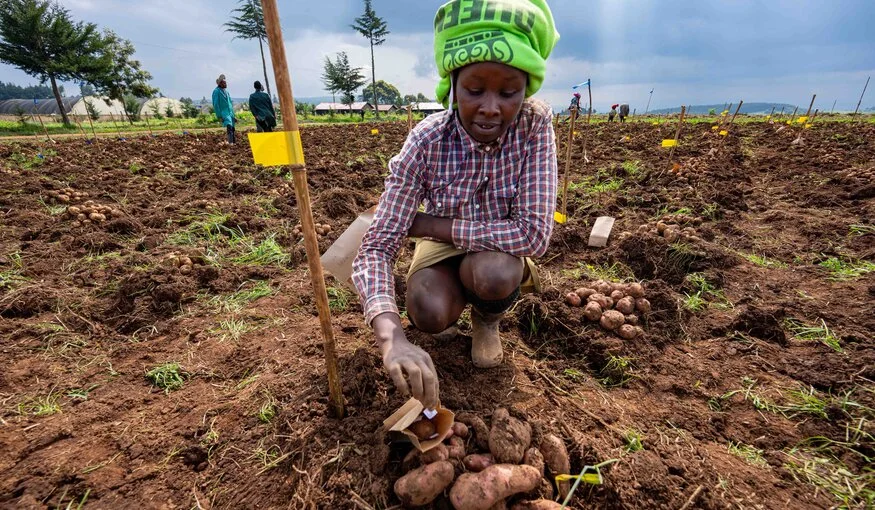
Potato Farming in Kenya Can Boost Farmer Incomes, but Access to Quality Seed Remains a Challenge
Few crops can feed a family, supply urban markets and help farmers pay school fees at the same time. Potato is one of them.
Across Kenya, potatoes are an important food crop and a source of income for smallholder farmers. Demand comes from households, hotels, restaurants, food processors and traders supplying towns and cities. With good seed potatoes and sound crop management, farmers can improve yields and earn more from each season.
The figures shared in a recent evaluation illustrate the crop’s potential. Farmers with good seed potatoes and improved production practices can earn an estimated US$1,000 to US$2,000 per acre per season, although actual returns depend on yields, market prices, production costs and access to buyers. Some farmers begin with an acre before considering renting additional land as they gain confidence in their production.
Potatoes also offer an important advantage where water is limited. The Food and Agriculture Organization (FAO) has reported that potatoes can produce more food energy per unit of water than major cereals, with estimates of about 5,600 kilocalories per cubic metre of water, compared with approximately 2,300 for wheat and 2,000 for rice.
For farmers facing unpredictable rainfall and rising production costs, this water-use efficiency makes potatoes worth considering. However, successful production still depends on suitable varieties, healthy seed, soil fertility, disease management and reliable access to water when rainfall is insufficient.
Potato yields in Kenya remain limited by poor-quality seed
Despite the crop’s potential, access to quality seed potatoes remains a major challenge for Kenyan farmers. According to the figures shared in the evaluation, Kenya produces only about 5% of the seed potatoes required by its farmers. Much of the remaining demand is met through recycled seed from previous harvests.
Repeatedly planting potatoes saved from an earlier crop can contribute to declining yields when the tubers carry diseases or accumulate pathogens over successive generations. Farmers may invest in land preparation, fertiliser, labour and crop protection, yet harvest far less than the crop could potentially produce.
The evaluation reported that some farmers in Nakuru had previously harvested as little as five 50-kilogram bags per acre, equivalent to 250 kilograms. That is a very low harvest for a crop expected to provide both household food and cash income.
The same evaluation found that 78% of the households assessed in Nakuru identified potatoes as their main source of income. This points to how strongly some farming households depend on the crop, while also showing why poor yields can have serious consequences for household finances.
Why certified seed potatoes matter
Certified seed potatoes are produced and inspected under established standards intended to ensure varietal identity and acceptable seed health. Starting with healthy seed gives farmers a better foundation for achieving good crop establishment and higher yields.
However, quality seed alone is not enough. Farmers also need varieties suited to their production areas and intended markets, appropriate spacing, adequate soil fertility, timely weeding and effective management of late blight and other diseases. Harvesting at the right maturity and handling tubers carefully can also reduce losses.
Expanding access to quality seed must therefore go hand in hand with farmer training, stronger seed multiplication systems, affordable distribution and dependable market links.
Better potato production can support food security and climate resilience
Potato’s value extends beyond the farm gate. It is widely consumed in Kenya and can provide a useful source of food for households while generating income from sales. When farmers harvest more from the same piece of land, they have a better opportunity to meet household needs and earn money from surplus production.
Its relatively high food output per unit of water also makes potato relevant to discussions about climate resilience. Still, water efficiency should not be confused with an ability to grow well under every drought condition. Potato production can suffer significantly from heat, water stress and disease, making the choice of variety and production location important.
For potato-growing communities, improving seed quality is one practical step towards reducing the gap between the crop’s potential and what farmers actually harvest.
Kenya’s experience also raises a wider question for African agriculture. If farmers across potato-producing countries face similar shortages of reliable seed, investments in seed systems, research, extension services and local multiplication could help improve both food supplies and rural incomes.
The challenge is not simply to encourage farmers to plant more potatoes. It is to help them produce better crops, reduce avoidable losses and earn a reasonable return from their land and labour.
What other staple crops can provide smallholder farmers with a dependable income, and what is holding them back?
https://farmerstrend.co.ke/trending/potato-farming-in-kenya-food-security/https://farmerstrend.co.ke/wp-content/uploads/2026/10/Potato-Farming-in-Kenya.webphttps://farmerstrend.co.ke/wp-content/uploads/2026/10/Potato-Farming-in-Kenya-150x150.webp# TrendingPotato FarmingPotato farming in Kenya supports food security and farmer incomes, but limited access to certified seed potatoes continues to hold back yields and climate resilience.Potato Farming in Kenya Can Boost Farmer Incomes, but Access to Quality Seed Remains a Challenge Few crops can feed a family, supply urban markets...FarmersTrendjohn doefarmerstrend@gmail.comAdministratorFarmers Trend Ltd.









Leave a Reply