The Silent Killer in Our Soil: How Banned Chemicals Are Poisoning Kenyan Farmers
A deep investigation reveals how banned chemicals are causing a health crisis among Kenyan farmers, leading to cancer, infertility, and death. Discover the smuggling pipeline and lack of enforcement.

A Village of Graves: The Human Cost of Toxic Farming
In the quiet village of Mbaria in Meru County, the soil is rich, but the cost of farming it has become deadly. The landscape holds more than ten fresh graves of farmers who died from cancer. For those still living, the symptoms form a checklist of neurological decay: constant tremors, loss of sensation, and failing eyesight.
Lucy Makena’s family shows the reach of this crisis. She lost her father-in-law to liver cancer and her father to diabetes and blindness. Now, her mother fights breast cancer that has spread to her brain, while her uncle battles throat cancer. Other villagers suffer from nerve damage, kidney disease, early menopause, and symptoms like Parkinson’s disease. A common thread runs through their stories: years of spraying their crops with cheap, powerful weed killers.
What Science Reveals: 100% Contamination in Meru
The crisis drew the attention of Professor Zakayo Thaimuta, a pathologist. In October, he conducted a study in Mbaria. After testing blood and urine from seventy farmers, the result was chilling: every single person tested positive for paraquat.
Paraquat is a highly toxic herbicide linked to Parkinson’s disease and severe lung damage. It was banned in the United Kingdom in 2007 but remains widely used in Kenya because it is cheap and effective. Professor Thaimuta found traces of the chemical in farmers who had left the fields three or four years earlier, proving it lingers in the body.
The science explains why. Paraquat stops the liver’s natural detoxifying enzymes, leaving the organ vulnerable. In water, it can last for over eight years. The researcher’s findings suggest the chemical can pass through breast milk and may be linked to a rise in childhood illness and infertility in the region. He highlights the case of a woman who worked on a farm for seventeen years. Her youngest son, born during her time in the fields, developed severe testicular problems sixteen years later. Doctors had to remove the boy’s testes.
“It might mean there was paraquat in the milk the boy was consuming. The mother may have transmitted the chemical,” Professor Thaimuta explains.
The Two-Tier System: Poisoned Food for Market, Safe Food for Home
Perhaps most alarming is that many farmers know the danger. This has created a disturbing “two-tier” farming system. “People have two levels of production,” says a Meru-based researcher. “They grow tomatoes for the market, which they spray heavily, and then tomatoes for their own consumption, which they grow without chemicals.” This means farmers protect their own families while sending produce laden with banned chemicals to markets for the general public to eat.
Beyond Meru: Flower Farms and Legal Battles
This crisis extends far beyond one village. In Naivasha, workers on flower farms have tested positive for both paraquat and another controversial chemical, glyphosate. In Thika, lawyers are representing over one hundred cancer victims who trace their illness back to plantation work.
Advocate Gilbert Njoroge leads a legal battle for Naivasha flower farm workers. Out of sixty-three clients tested, fifteen showed dangerously high levels of glyphosate and paraquat in their blood.
The situation in Thika is worse, with exposure dating to the 1990s. Workers there had no protection; instead of proper gear, they were given sacks and simple dust masks. Many mixed these dangerous chemicals with their bare hands.
“The number of cancer cases has been overwhelming,” says Njoroge. “In just two weeks, the people seeking help more than doubled. We’ve seen more than fifteen new cancer cases in a fortnight.” Legal teams are now preparing to file these test results in court as they fight for medical compensation for the victims.
The Smuggling Pipeline: How Banned Chemicals Cross Borders
Despite being classified as Highly Hazardous Pesticides by the World Health Organization, these banned chemicals flood Kenya through porous borders. About forty-two percent of pesticides imported into Kenya are considered potentially dangerous, yet they remain available through a thriving illegal trade.
In Kimana near the Tanzanian border, the reason for smuggling is cost. “In Tanzania, you can get a litre for 2,500 shillings, while here it is 5,000 or 6,000,” says farmer Paul Kironyo. Security agencies struggle to stop smugglers who hide chemicals inside other goods and transport them on motorcycles or through secret paths on foot.
Charles Wambua, a consultant agronomist, points to a policy gap. “Kenya may stop a drug like Dimethoate, but it’s still sold in Tanzania for 900 shillings. The replacement in Kenya costs 3,000 shillings. A desperate farmer will choose the cheaper one they know works, even if it can kill them.”
Death in the Rice Fields: The Mwea Tragedy
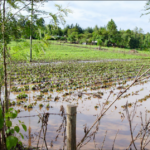
The trail of smuggled banned chemicals leads to the rice fields of Mwea in Kirinyaga County. Here, farmers fight the Golden Apple Snail, an invasive species that can destroy eighty percent of a crop. While legal alternatives exist, farmers say they only kill snail eggs, whereas the black market chemicals kill the adults instantly.
In Ndorome village, Jane (not her real name) used a chemical called “Dudu” for three years. She only stopped when her body began to fail. “I was told the medicine was killing my nerves,” she says, describing the onset of nerve damage.
Another resident, Wairimu (not her real name), explains the secretive trade. “If you don’t know someone, you get nothing. You have to send a ‘handler’, usually one of the young men who work as sprayers.”
Mutua (not his real name), a sprayer with five years of experience, reveals how distributors avoid police. “They use motorcycles to carry drums or even a human coffin. The coffin is nailed shut, often with a cross on top. No policeman is going to stop a rider with a coffin at night to check for pesticides.”
The chemicals arrive in Embu and are taken into Mwea via secret paths. They are never sold in original bottles but are poured into small plastic bags or unlabeled containers for as little as fifty shillings per dose. The human cost is high. “Your legs feel dead. You lose your appetite for days, as well as sexual function,” Mutua says.
For sprayers like Makau (not his real name), the job is slow suicide. He earns 150 shillings per knapsack sprayed. Over fifteen years, his eyesight has faded, and he often suffers from “dead limbs” after work. “We know it’s dangerous, but when the snails start cutting the rice, and you’ve invested 15,000 shillings, you don’t think about your health. You think about the hunger of your children,” he says.
Official Data Confirms the Crisis
A study by the Centre for Environmental Justice and Development (CEJAD) provides data to confirm these stories. The findings show a systemic failure in pesticide management in Kenya. The study identified 527 pesticide products in use in Kajiado, Kirinyaga, and Nakuru counties. Of these, 167 were classified as Highly Hazardous Pesticides.
The health effects are severe. The study found that 42.9 percent of these hazardous pesticides are reproductive toxicants, capable of causing infertility. Forty percent are classified as human carcinogens. Perhaps most troubling, 37.5 percent of the active ingredients are banned in other countries but continue to be exported to Kenya by large agrochemical companies.
The study also found dangerous practices. Nearly half of the farmers admitted to pouring pesticides into unmarked containers. Thirty percent reused the original containers for storing water or food. “This presents a high risk of accidental poisoning, especially for children,” the report notes.
Immediate health effects were common, with 36.4 percent of farmers reporting skin rashes, dizziness, and trouble breathing after spraying. In Kajiado, nearly twenty-eight percent of families reported chronic conditions like cancer and kidney disease.
A System in Collapse: No Oversight, No Protection
Michael Mbugua, an agriculture officer in Loitoktok, confirms the battle is being lost. The border with Tanzania is marked only by beacons and secret paths through homesteads. “Farmers tell us openly: ‘If it is cheaper and effective, why can’t I use it?'” he says.
Mbugua has seen ecological damage. Bees no longer visit some farms, and honey from hives near sprayed fields has a chemical taste. The most significant problem is a crippling lack of resources. The Ministry of Agriculture’s work is supposed to be handled by counties, but on the ground, there is little support.
The shortage of agricultural extension officers is staggering. In Rombo ward, one officer is expected to oversee more than 8,000 farmers. Kimana and Entonet have one officer each. Kuku Ward, a major farming area, has no officer at all. The ideal ratio is one officer for every 600 farmers. In Kajiado South, it is one for every 8,000.
“We have wards with no officers due to retirements. To cross a whole ward, you need a motorcycle and fuel. Without these, we cannot reach the farmers to warn them that what they are feeding the community is poisonous,” Mbugua admits.
The Regulator’s Fight Against Impossible Odds
At the centre of this storm is Frederick Muchiri, CEO of the Pest Control Products Board (PCPB). His agency is mandated to oversee every pesticide in Kenya. “Pesticides are toxic substances. They are manufactured to kill. Because of that, they need a regulatory mechanism,” Muchiri states.
He explains the illegal trade. Chemicals entering through the Coast are often for pests in homes. But the stretch between Taveta and Oloitoktok is different. Here, the trade is purely agricultural, fuelled by Tanzanian shops right across the border targeting Kenyan farmers.
Since 2023, PCPB has used intelligence to conduct raids. They have confiscated 2.5 tonnes of illegal pesticides at the border, seized 50 metric tonnes nationwide, and confiscated three million shillings worth of goods in Garissa. But a major problem is the weak legal response. Muchiri highlights a case where a major smuggler was caught but only fined 30,000 shillings.
“We have a feeling some of these guys are protected. You arrest them today, they pay a small fine, and they are back in business tomorrow,” he notes. To combat this, PCPB now arrests suspects using police from other regions and charges them in distant courts to avoid local corruption.
On safety gear, Muchiri acknowledges the high cost. Professional protective equipment is expensive, but Kenyan universities have developed affordable “Tropical PPE” suited for the local climate, certified by the Kenya Bureau of Standards. “At a cost of 2,100 shillings, it is far more affordable,” says Muchiri—though this is still too much for the poorest labourers who wear old clothes or sacks.
The Path Forward: What Must Change
The poisoning of Kenyan farmers by banned chemicals is a national emergency with clear causes and needed solutions.
First, border enforcement must be strengthened dramatically. This requires equipping and supporting the agencies that patrol these areas to physically stop the flow of illegal pesticides. Regional cooperation with Tanzania is essential to harmonize bans and reduce the price incentive.
Second, the legal framework must have teeth. The fines for smuggling and selling highly hazardous, banned chemicals must be severe enough to be a real deterrent, not a minor business cost. Prosecution must be swift and certain.
Third, support for farmers is non-negotiable. The government must revitalize agricultural extension services. Farmers need affordable, safe alternatives and training on integrated pest management that doesn’t rely on poison. They also need access to affordable protective equipment.
Finally, public awareness is crucial. Consumers have a right to know what is on their food. Farmers need to understand the long-term, generational damage these products cause to their own health. The story of Mbaria village must be a warning heard across the country.
The choice is clear: continue down the path of cheap poison, watching as villages become graveyards and hospitals fill with chronic patients, or invest in a sustainable, healthy agricultural system that protects the people who feed the nation. The time for that choice is now.
https://farmerstrend.co.ke/trending/banned-chemicals-in-kenya/https://farmerstrend.co.ke/wp-content/uploads/2026/01/GdL0EMKXEAA2sfY.jpeghttps://farmerstrend.co.ke/wp-content/uploads/2026/01/GdL0EMKXEAA2sfY-150x150.jpeg# TrendingA deep investigation reveals how banned chemicals are causing a health crisis among Kenyan farmers, leading to cancer, infertility, and death. Discover the smuggling pipeline and lack of enforcement.A Village of Graves: The Human Cost of Toxic FarmingIn the quiet village of Mbaria in Meru County, the soil is...FarmersTrendjohn doefarmerstrend@gmail.comAdministratorFarmers Trend Ltd.











Leave a Reply