Ginger Rhizome Rot: 3 Planting Mistakes That Kill a Plot Before Month 3
Ginger rhizome rot ranks among the most destructive diseases of ginger. You plant healthy-looking seed. Shoots appear in the first month. By week 10 the leaves turn yellow, the stems fall over and the rhizome becomes soft, rotten tissue in the soil. You lose your seed money, your labour and a full season.
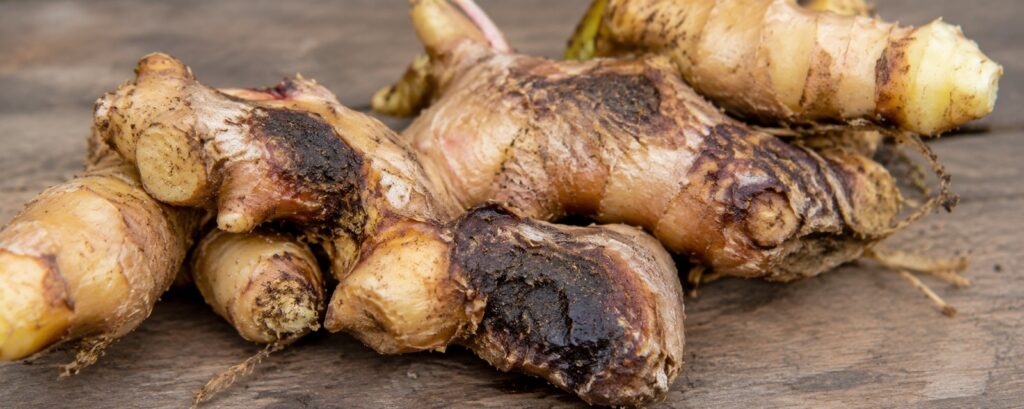
Three planting mistakes open the door to ginger rhizome rot. You make all three before the first shoot appears. You plant infected or untreated seed. You plant in soil which holds water. You plant into a plot which already carries the disease. Each mistake has a clear fix, and you apply each fix before or at planting.
Farmers Trend Limited prepared this guide for Kenyan ginger growers. The advice draws on research from India, Australia and Fiji, and on reports from growers in Kenya and Uganda. You will learn what the disease is, how the disease spreads, how to fix each mistake, how to spot trouble week by week and what to do when rot appears in your plot.
What Ginger Rhizome Rot Is and Why Plots Fail Before Month 3
Ginger rhizome rot is a disease complex. Several organisms attack the same rhizome. Researchers in India link the disease to three groups of pathogens: Pythium, Fusarium and Ralstonia. Each group damages the plant in a different way. You often find two or more of them in the same plot.
Pythium Soft Rot
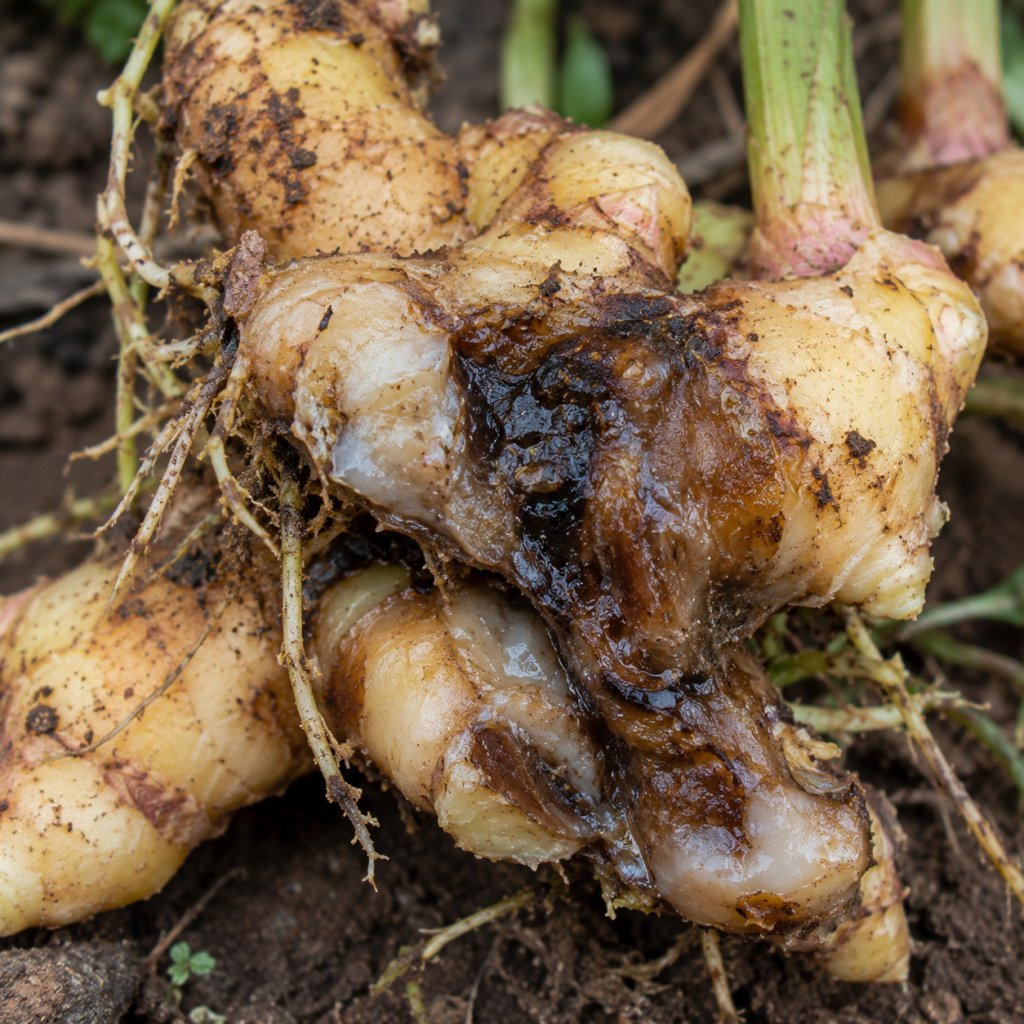
Pythium thrives in wet soil. The pathogen rots the rhizome from the inside. A Fiji advisory service notes the rhizome looks fresh and shiny on the outside while the tissue inside decays. The base of the stem turns watery, then brown. The lower leaves yellow first. When you pull the stem gently, the stem comes away from the rhizome. This pull test separates soft rot from dry rot.
Fusarium Yellows and Dry Rot
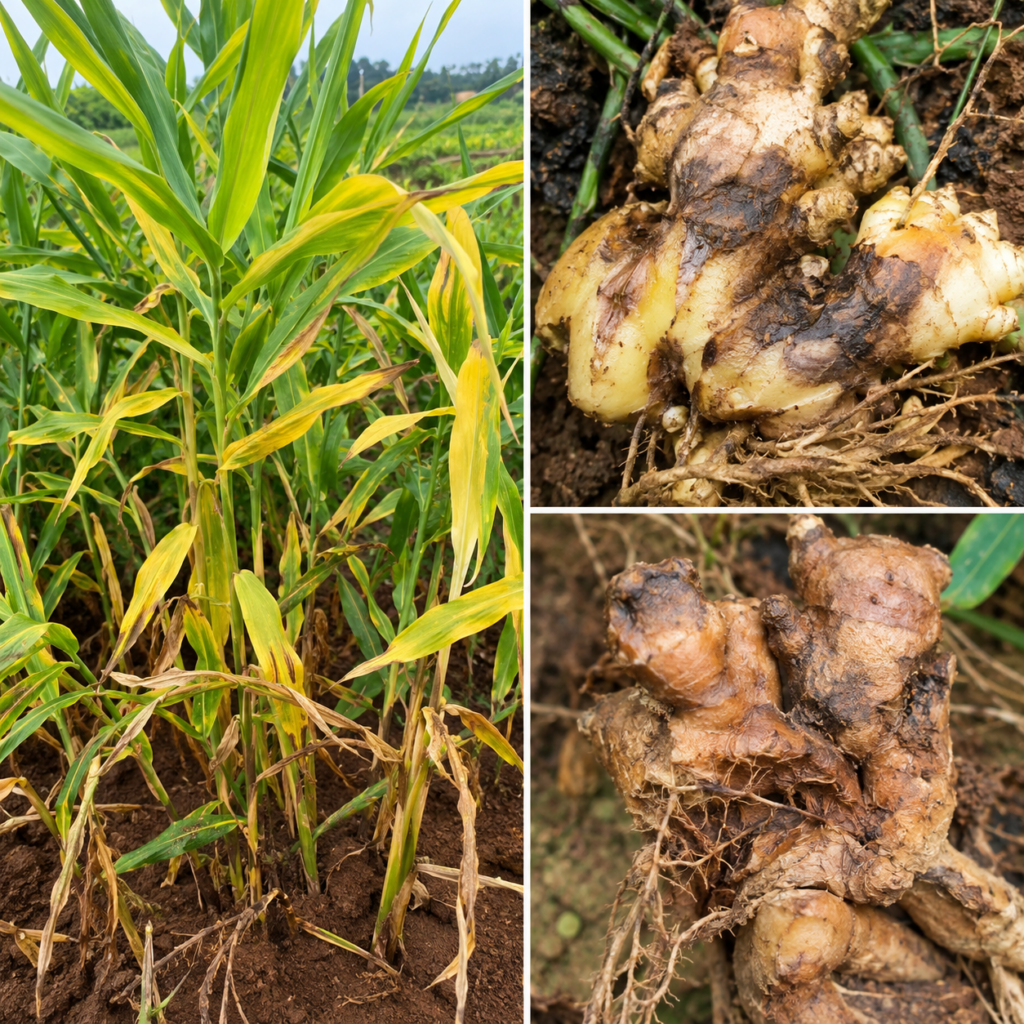
Fusarium causes yellowing and dry rot. Dry rot appears in small patches and spreads slowly. The stem does not come away with a gentle pull. Nematodes often join the attack. They wound the roots and the rhizome, and the wounds give fungi a way in. Indian guidance names Fusarium and the lesion nematode Pratylenchus as a dry rot complex.
Ralstonia Bacterial Wilt
Ralstonia solanacearum causes bacterial wilt. The bacterium lives in the soil and in the seed. Plants wilt even when the soil stays moist. Press a cut stem base gently and a milky fluid oozes out. The rhizome then rots. Indian guidance states the same cultural practices which control soft rot also control wilt.
Why Ginger Rhizome Rot Damage Shows Before Month 3
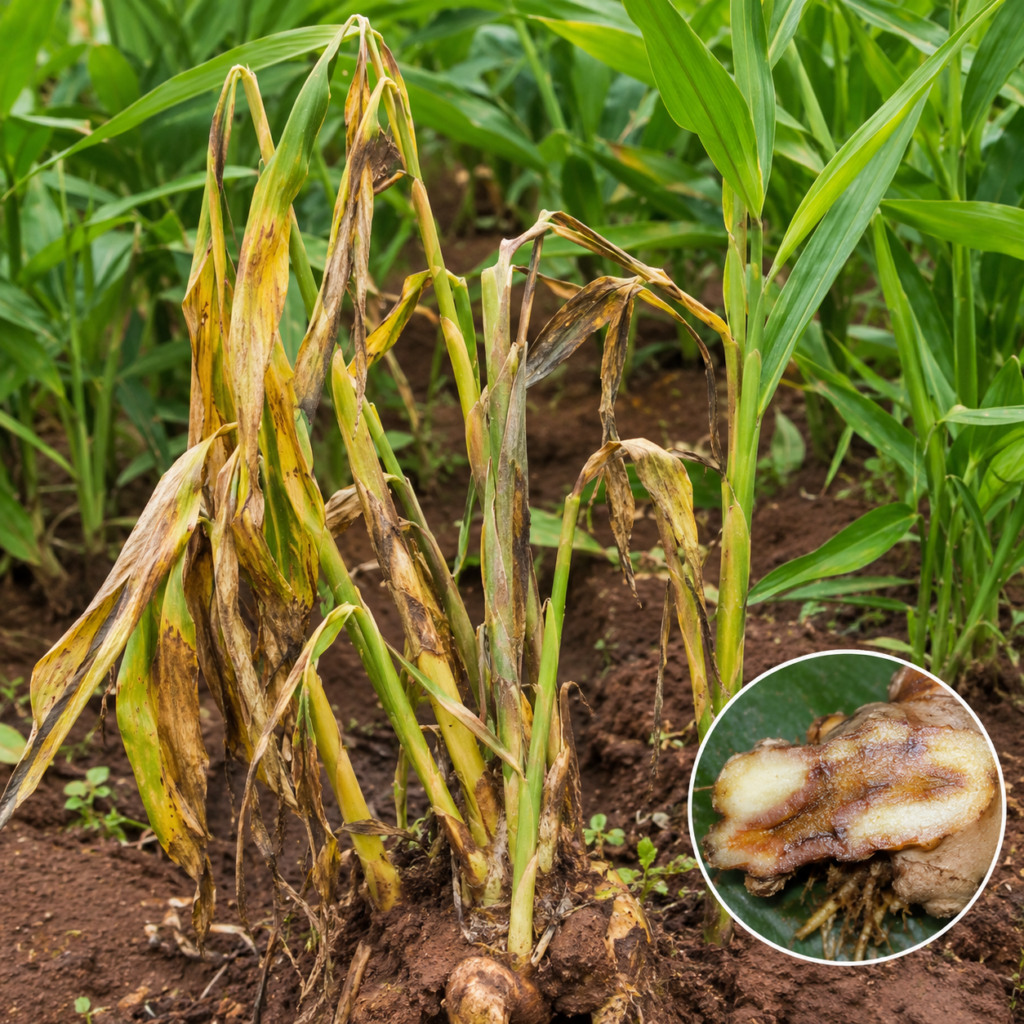
Pathogens arrive on the seed or wait in the soil at planting. Young shoots feed on the seed rhizome. Rot in the seed starves the plant. Weak shoots, yellow leaves and collapsed stems show within the first 90 days. Wet weather speeds every step. The Fiji advisory names prolonged wet weather as the ideal condition for soft rot.
Kenyan crop advice published by Nation Africa states ginger needs heavy rains followed by a dry spell, with temperatures between 25 and 30 degrees Celsius. Rain in the first weeks helps your ginger and helps the pathogens too. Your task is to give ginger enough rain without giving the pathogens an infected, waterlogged start.
How Ginger Rhizome Rot Spreads Through Your Plot
Australian research on Pythium soft rot in ginger shows the pathogen moves in contaminated seed, soil and water. Indian guidance names infected rhizomes as the primary source of infection. You stop ginger rhizome rot when you close each route.
| Route | How the pathogen arrives | Your control |
|---|---|---|
| Seed | Infected rhizomes carry the pathogen into clean soil | Buy from disease-free sources and treat seed before planting |
| Soil | Pathogens survive in the field after a diseased crop | Rotate crops and choose a clean plot |
| Water | Runoff and standing water move spores between beds | Raise your beds and dig drainage channels |
Notice the pattern. Seed brings the pathogen in. Water moves the pathogen around. Soil keeps the pathogen alive for the next crop. The three mistakes in this guide match these three routes.
Mistake 1: You Plant Infected or Untreated Seed
Infected seed brings ginger rhizome rot into clean soil. A rhizome with early infection looks normal. You see no spots, no soft tissue and no foul smell. The pathogen sits inside. You plant the piece, the soil warms and the disease wakes up.
Where Infected Ginger Seed Comes From
Indian guidance warns healthy-looking seed rhizomes also carry infection. Seed from a plot with rot, wilt or yellowing carries the pathogen. Seed bought at a roadside market comes from unknown fields. Seed kept in a damp store picks up rot.
Nigeria shows the cost of poor seed. A fungal disease hit ginger around Bwari in 2023. The Federal Government estimated the losses above 12 billion naira by 2024, about 8 million US dollars. Farmers reported a shortage of healthy seed for the following season. One bad season of seed spread loss across a whole district.
How to Select Clean Seed Rhizomes
Buy from a nursery or grower whose ginger came from a plot with no history of wilt or rot. Visit the plot when possible. Look at the standing plants. Ask when the grower harvested the seed and how the grower stored the seed.
Choose firm, plump rhizomes with tight, shiny skin and healthy buds. Reject any piece with soft spots, dark patches, shrunken wrinkled skin or a foul smell. Break one piece open. The flesh must look uniform in colour with no brown streaks. Never plant seed from a plot which showed rot, even from the plants which looked healthy. Indian extension advice states the produce of such fields must not serve as seed.
Treat Seed Before You Plant
Seed treatment kills pathogens on and inside the rhizome. You have three choices. Hot water treatment, a fungicide dip and a biological dip. The table below compares them.
| Treatment | Dose or setting | Result or purpose | Source |
|---|---|---|---|
| Hot water dip | 51 degrees Celsius for 10 minutes | Checks seed-borne soft rot and bacterial wilt | Indian extension guidance |
| Metalaxyl plus mancozeb dip | 1.25 grams per litre of water | 81.6 percent plant survival and 10.2 tonnes per hectare | Indian Journal of Agricultural Sciences trial |
| Trichoderma harzianum dip | Follow the product label | 72.05 percent plant survival and 7.6 tonnes per hectare | Indian Journal of Agricultural Sciences trial |
| Carbendazim plus mancozeb dip | 3 grams per litre for about 30 minutes | Lowers rhizome rot risk | National advisory service guidance |
Start with hot water if you have fuel, a drum and a thermometer. Hold the water at 51 degrees Celsius. Check the temperature with a thermometer, never with your hand. Dip the seed for 10 minutes. Lift the seed out and dry the seed in shade before planting.
The chemical route has the strongest published result. A trial reported in the Indian Journal of Agricultural Sciences compared seed treatments under natural field conditions. A seed dip of Ridomil MZ 72 WP, which holds 8 percent metalaxyl and 64 percent mancozeb, gave the best plant survival at 81.6 percent. The same treatment gave the top yield of 10.2 tonnes per hectare. Ask your agrovet for a registered metalaxyl and mancozeb product. Read the label. Wear gloves, a mask and eye protection when you mix and dip.
The biological route came second in the same trial. Seed treated with Trichoderma harzianum reached 72.05 percent plant survival and 7.6 tonnes per hectare. Indian guidance also recommends a seed treatment with Pseudomonas fluorescens and Trichoderma harzianum, followed by a soil application 60 days after planting. Choose this route if you farm organically or want to lower chemical use.
Cut and Dry Seed Pieces With Clean Tools
Cut seed into pieces with at least one healthy bud. Use a clean knife. Dip the blade in disinfectant or pass the blade through a flame between seed bags. A dirty knife moves the pathogen from one rhizome to the next. Spread the cut pieces in shade and let the cut faces dry before planting. Indian guidance advises you to dry the rhizome in shade and then sow.
Plan Your Seed Quantity
Ugandan grower guidance published in the Daily Monitor states one acre needs 9 to 10 bags of seed, about one tonne of rhizomes. The same report states an acre yields up to 10 tonnes with good practice. Buy your full quantity from one clean source. Mixing seed from many sources raises your risk because each source brings a different disease history.
Mistake 2: You Plant in Poorly Drained Soil
Waterlogged soil kills ginger. Pythium spreads in free water. An Indian advisory lists an ill-drained field as a main cause which predisposes ginger to soft rot. Australian industry research on Pythium in ginger includes drainage trials for the same reason. Water moves the pathogen, and standing water holds the pathogen against the rhizome.
Choose a Site With Natural Drainage
Pick a gentle slope. Avoid hollows where water gathers after rain. Avoid heavy clay which stays wet for days. Ugandan guidance states ginger prefers rich, fertile, mildly acidic soil which is moist but well drained. Loam rich in organic matter fits this description.
Run a quick drainage test before you commit. Dig a hole 30 centimetres deep. Fill the hole with water. Check the hole the next day. If water still stands, choose another plot or build high raised beds with deep channels. A plot which fails this test will fail your ginger in a wet season.
Build Raised Beds and Drainage Channels
Ugandan growers advise sowing ginger in raised beds at least 25 to 30 centimetres high and mulching with leaves. Raised beds lift the seed rhizome above standing water. Dig channels between the beds. Slope the channels towards an outlet so water leaves the plot. Keep channel outlets away from your clean blocks and away from your water source.
| Practice | Target | Reason |
|---|---|---|
| Bed height | At least 25 to 30 centimetres | Keeps seed above standing water |
| Channels between beds | Open, sloped to an outlet | Moves excess rain out of the plot |
| Mulch | Leaves, applied after planting | Holds soil moisture and feeds the soil as the mulch breaks down |
| Drainage test | Hole of 30 centimetres, water gone within one day | Screens out waterlogged sites |
Plant at the Right Time
Time your planting so shoots emerge into moist soil, not flooded soil. Ginger needs rain followed by a dry spell. Look at the weather forecast before you plant. Avoid planting into the middle of a long wet spell. Prolonged wet weather creates the conditions for soft rot, as the Fiji advisory notes. Plant when you see several dry days ahead and rain expected soon after.
Water and Mulch With Care
Mulch protects the bed. Ugandan growers always mulch ginger planted in the ground. Mulch keeps the soil moist and feeds the ginger as the mulch breaks down. In a long wet spell, check your beds every week. Open any blocked channel. If you irrigate, keep the soil moist, not wet. Stop irrigating when rain falls.
Mistake 3: You Plant Into a Contaminated Plot
Soil keeps pathogens alive between crops. Planting ginger on ginger restarts the cycle. Planting after crops which share the disease does the same. Bacterial wilt bacteria also attack tomato, potato and capsicum, so those crops make poor neighbours and poor predecessors for ginger.
Rotate Crops Before Ginger Returns
Never plant ginger after ginger in the same plot. Keep ginger off any plot with a history of wilt or soft rot. Grow a cereal such as maize on the plot first. Avoid tomato, potato and capsicum as the crop before ginger. Keep a simple field record. Write the crop, the date and any disease for every plot. Your record tells you which plot is clean next season.
Solarise Beds and Control Nematodes
Indian guidance advises solarising ginger beds and using nematode-free seed to cut nematode damage. Nematodes open wounds which let Fusarium in. Indian guidance also applies 40 kilograms of mustard oil cake per hectare in the furrows before sowing. This rate equals about 16 kilograms per acre. Ask your agrovet or county extension officer which cakes and amendments you find locally.
Clean Tools, Boots and Water
Australian research found contaminated water spreads Pythium. Do not irrigate from a pond which collects runoff from a diseased plot. Wash boots, hoes and wheelbarrows when you move from a sick block to a clean block. Work in your clean blocks first and your suspect blocks last. These steps cost little and protect your whole farm.
Remove Sick Plants Early
Walk your plot every week. Dig out any plant which yellows, wilts or leans in the first 12 weeks. Take the plant with the soil around the base. Carry the plant out in a bag. Burn the plant or bury the plant deep, far from drains and water sources. Do not leave sick plants at the plot edge. Do not keep seed from this plot.
Ginger Rhizome Rot Warning Signs by Week
Early detection saves part of your crop. Walk the plot weekly and check the signs below. Emergence time varies with variety, soil and temperature, so use the weeks as a guide.
| Stage | What you see | Likely cause | Your action |
|---|---|---|---|
| Weeks 1 to 4 | Patches with no shoots | Rotted seed or waterlogging | Dig up a few seed pieces, check for soft tissue and open the drainage channels |
| Weeks 5 to 8 | Yellow lower leaves, thin stems, watery stem base | Pythium soft rot | Remove sick plants, improve drainage and ask an extension officer about a registered drench |
| Weeks 9 to 12 | Yellowing, wilting, stem pulls away from the rhizome | Soft rot or wilt | Isolate the block and stop moving soil and water out of the block |
| Any time | Milky fluid from a pressed stem base | Bacterial wilt | Remove and destroy plants and keep seed from this plot out of your next planting |
| Any time | Slow yellowing in small patches, stem stays firm | Dry rot with nematodes | Remove patches and plan solarising and crop rotation |
What to Do When Ginger Rhizome Rot Appears in Your Plot
Act within days. Rot spreads with water and with your boots. Follow these steps in order.
First, confirm the problem. Pull one yellow plant. Check the stem base and the rhizome. Look for soft, watery or brown tissue and smell the tissue for a foul odour. Press the stem base to see if milky fluid appears.
Second, remove the sick plants. Dig each plant with the soil around the base. Bag the plant and take the bag out of the plot. Burn the plant or bury the plant deep away from drains.
Third, fix the water. Open and deepen the channels between beds. Clear any blocked outlet. Stop irrigating until the beds drain.
Fourth, protect the healthy plants. Ask your agrovet or county extension officer for a registered product for soil application and follow the label. Indian guidance applies Pseudomonas fluorescens and Trichoderma harzianum to the soil 60 days after planting to cut rhizome rot. Spread the work so you move from clean blocks to sick blocks, never the other way.
Fifth, keep records. Write the date, the block, the number of plants lost and the actions you took. Use the record to choose seed, beds and rotation next season.
What Ginger Rhizome Rot Costs You Compared With Prevention
Take the Ugandan figure of up to 10 tonnes per acre under good practice. Assume a farm gate price of KSh 100 per kilo as an example. Use your own local price to repeat the sums. At this price, an acre grosses KSh 1,000,000. The table shows what plant loss does to this income if yield falls in line with the plants you lose.
| Plants lost to rot | Yield lost per acre | Income lost at KSh 100 per kilo |
|---|---|---|
| 10 percent | 1 tonne | KSh 100,000 |
| 20 percent | 2 tonnes | KSh 200,000 |
| 30 percent | 3 tonnes | KSh 300,000 |
| 50 percent | 5 tonnes | KSh 500,000 |
Now compare these figures with the cost of prevention. Hot water treatment needs fuel, a drum and a thermometer. A seed dip needs a registered product and protective gear. Raised beds need labour. Each cost is a fixed, known amount at planting. Rot costs you a share of the whole harvest and you learn the size of the loss only at harvest time.
The Indian trial supports the same logic. The best seed dip lifted plant survival to 81.6 percent and gave 10.2 tonnes per hectare. A farmer who skips treatment gives up the protection the dip offers. Prevention at planting is the cheapest decision you make all season.
Your Ginger Rhizome Rot Prevention Calendar
| When | What you do |
|---|---|
| 4 weeks before planting | Choose your plot, run the drainage test, solarise the beds and order clean seed |
| 2 weeks before planting | Build raised beds 25 to 30 centimetres high and dig drainage channels |
| Planting week | Treat seed, dry the seed in shade, cut with clean tools, plant and mulch with leaves |
| Weeks 1 to 4 | Check drainage after every heavy rain and look for patches with no shoots |
| Weeks 5 to 8 | Scout weekly and remove sick plants at once |
| Day 60 | Apply Trichoderma and Pseudomonas to the soil as the product label directs |
| Weeks 9 to 12 | Weed by hand to protect the roots, keep channels open and keep your records |
Ugandan growers advise hand weeding in ginger because a hoe damages the roots. Wounded roots give pathogens an entry. Weed by hand and keep your tools clean.
Start With Clean Ginger Seedlings From Farmers Trend Limited
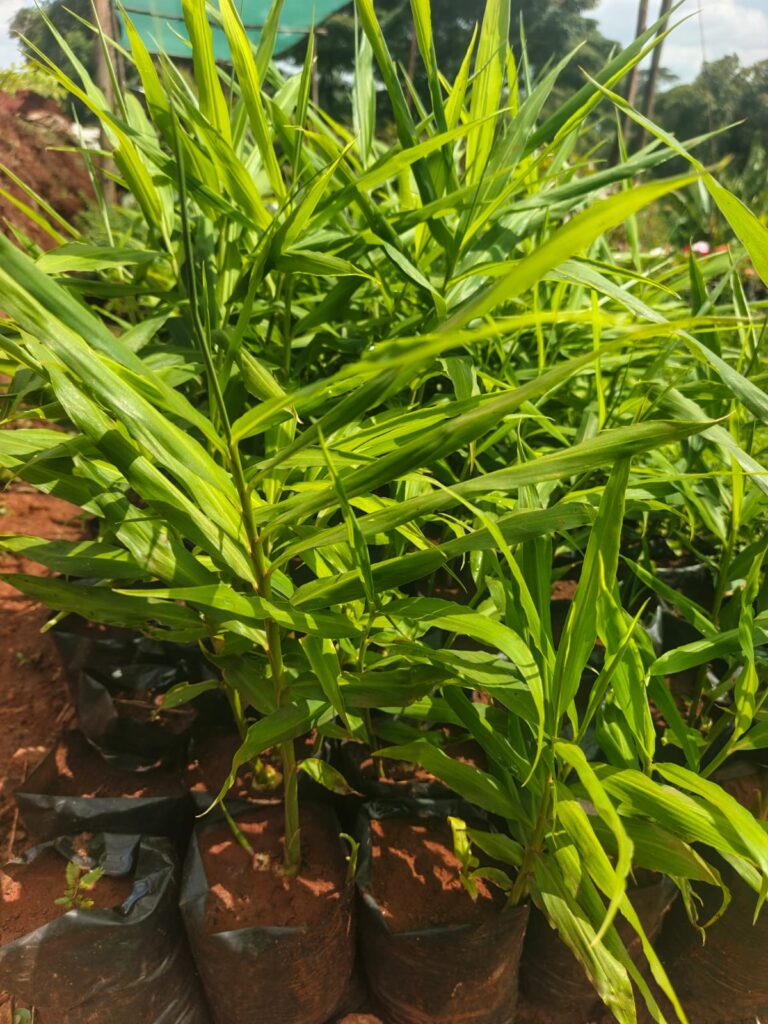
Clean seed is your first defence against ginger rhizome rot. Farmers Trend Limited lists ginger seedlings in its online agrovet. Visit the ginger seedlings page to check current availability and price. Ask the team about the source of the planting material, the growing conditions and the delivery options before you order.
Farmers Trend Limited serves farmers across Kenya from nurseries in Murang’a and Nairobi. You reach the team on Call or WhatsApp 0724 559 286 or 0790 509 684. Visit www.farmerstrend.co.ke or write to info@farmerstrend.co.ke. Tell the team your county, your plot size and your planting date. The team advises on the quantity of seed your acreage needs.
Frequently Asked Questions About Ginger Rhizome Rot
What causes ginger rhizome rot?
Pythium, Fusarium and Ralstonia cause ginger rhizome rot, often together. The pathogens enter through infected seed, contaminated soil or contaminated water. Waterlogging and wet weather speed the disease.
How do you recognise ginger rhizome rot in the field?
Look for yellow lower leaves, a watery brown stem base and stems which pull away from the rhizome with a gentle tug. A foul smell at the base signals rot. Milky fluid from a pressed stem base signals bacterial wilt.
Does ginger rhizome rot spread through seed?
Yes. Indian guidance names infected rhizomes as the primary source of infection. Healthy-looking seed also carries the pathogen. Buy from a clean source and treat every batch of seed.
Which seed treatment works best?
In the Indian Journal of Agricultural Sciences trial, a metalaxyl and mancozeb dip gave 81.6 percent plant survival and Trichoderma harzianum gave 72.05 percent. Hot water at 51 degrees Celsius for 10 minutes also checks seed-borne soft rot and wilt. Choose the method which fits your resources and your farming system.
How much seed does one acre need?
Ugandan guidance states one acre needs 9 to 10 bags, about one tonne of rhizomes. Confirm the exact quantity with your seed supplier because piece size and spacing change the weight you need.
Will you save a plot once ginger rhizome rot starts?
You save part of the plot when you act early. Remove sick plants, open the drainage channels and apply a registered product as the label directs. A plot with heavy infection and standing water rarely recovers. Put the lessons into your next planting.
Where is ginger grown best in Kenya?
Nation Africa lists the coastal lowlands of Kwale, the Eastern region, Mt Elgon, Western Kenya and counties around Lake Victoria as main ginger areas. Wherever you farm, apply the same three fixes: clean seed, good drainage and a clean plot.
Your Plan for a Healthy Ginger Plot This Season
Ginger rhizome rot starts at planting. Three decisions control the outcome. You choose clean seed and treat the seed. You plant in raised beds on well-drained soil. You plant into a clean plot and keep tools, boots and water clean. Each decision costs you labour and money before the first shoot, and each decision protects the whole harvest.
Write your plan today. Pick the plot. Run the drainage test. Order your seed. Choose your treatment. Mark the date for beds and channels. Put the weekly walk in your diary for the first 12 weeks. Then plant with confidence. Your ginger rhizome rot risk falls with every step you complete before month 3.
Order clean ginger seedlings from Farmers Trend Limited on 0724 559 286 or 0790 509 684, and plan your first healthy ginger plot with the team today.
https://farmerstrend.co.ke/trending/ginger-rhizome-rot/https://farmerstrend.co.ke/wp-content/uploads/2026/10/WhatsApp-Image-2026-10-26-at-12.23.02-1024x409.jpeghttps://farmerstrend.co.ke/wp-content/uploads/2026/10/WhatsApp-Image-2026-10-26-at-12.23.02-150x150.jpeg# TrendingGinger FarmingIn cropsFarmers Trend agrovet,Farmers Trend Limited,Fusarium in ginger,ginger bacterial wilt,ginger crop rotation,ginger diseases,ginger diseases in Kenya,ginger drainage,ginger farming,ginger farming in kenya,ginger farming losses,ginger pests and diseases,ginger planting,ginger planting mistakes,ginger plot management,ginger rhizome rot,ginger seed rhizomes,ginger seed treatment,ginger seedlings,ginger seedlings kenya,ginger soft rot,ginger wilt control,ginger yellowing leaves,herbs and spices farming,how to prevent ginger rot,Pythium in ginger,raised beds for ginger,Ralstonia solanacearum,spice farming in KenyaGinger rhizome rot ranks among the most destructive diseases of ginger. You plant healthy-looking seed. Shoots appear in the first month. By week 10 the leaves turn yellow, the stems fall over and the rhizome becomes soft, rotten tissue in the soil. You lose your seed money, your labour...FarmersTrendjohn doefarmerstrend@gmail.comAdministratorFarmers Trend Ltd.







Leave a Reply