Coffee Sector Reforms Kenya 2026: The Complete Guide That Pays Farmers in 5 Days and Targets Sh250 Per Kg
Coffee sector reforms are changing how Kenya grows, sells and pays for coffee in 2026. Farmers now receive payment within five days of delivery. At least 80 percent of every coffee sale goes directly to farmers. Farm-gate prices moved from about Sh50 per kilogram two years ago to as high as Sh158 per kilogram. The government targets Sh250 per kilogram next.
This guide explains each reform in plain terms. You will see the money the government committed, the new laws, the new institutions and the production targets. You will also see what these coffee sector reforms mean for your farm and how to plan your planting to earn from them.
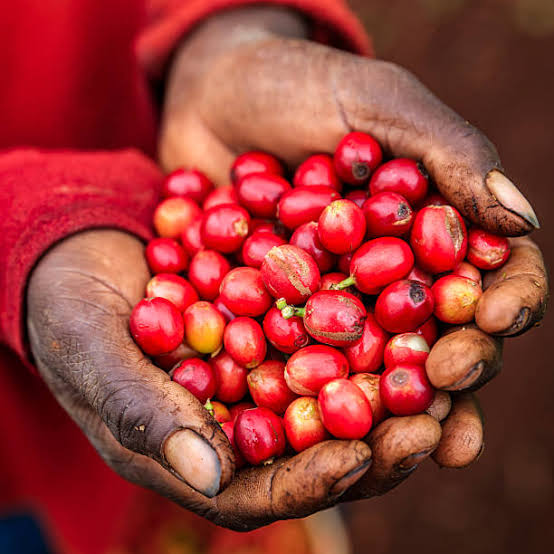
Coffee supports more than 700,000 smallholder farmers in Kenya. Many of them abandoned their trees during years of late payments and low returns. The reforms aim to bring those farmers back and to attract new ones. The government wants production to triple from 50,000 metric tonnes to 150,000 metric tonnes by 2028.
Certified grafted Ruiru 11 coffee seedlings now sell at KSh 150 each. Order certified grafted Ruiru 11 coffee seedlings from Farmers Trend today.
Read the sections in order or jump to the part you need. Each section gives you facts, numbers and steps you act on today.
Table of Contents
- What Coffee Sector Reforms Mean for Kenya
- Why Coffee Sector Reforms Became Necessary
- The Direct Settlement System
- Coffee Sector Reforms by the Numbers
- The Sh18 Billion Fertilizer Subsidy
- Debt Settlement and Factory Funding
- The Coffee Act 2026 and New Institutions
- Cooperative Societies in the Coffee Sector Reforms
- Coffee Sector Reforms and the Sh250 Price Target
- Production Target: 50,000 to 150,000 Metric Tonnes
- How to Turn Coffee Sector Reforms Into Farm Income
- Certified Grafted Ruiru 11 Coffee Seedlings at KSh 150
- Sample One-Acre Budget
- Risks and Gaps in the Coffee Sector Reforms
- Social Media Posts You Share
- Your Next Step
What Coffee Sector Reforms Mean for Kenya
Coffee sector reforms are a set of laws, payment rules, funding programmes and market changes. They aim to raise farmer income and restore trust in the crop. The reforms cover five areas.
- Payment speed. The Direct Settlement System pays farmers within five days.
- Revenue share. At least 80 percent of each sale goes to farmers.
- Funding. The government allocated billions of shillings for fertilizer, debts, factories and seedlings.
- Regulation. The Coffee Act, signed in March 2026, created the Coffee Board of Kenya.
- Market access. Cooperatives sell through the Nairobi Coffee Exchange and through direct sales to buyers.
President William Ruto launched the National Coffee Revival Through Cooperative Societies Programme at Kianyaga Stadium in Kirinyaga County on 22 June 2026. He told farmers the person who carries the greatest risk must receive the greatest reward. The programme puts cooperative societies at the centre of the plan.
You find the main official announcements in reports from KBC and The Star.
Why Coffee Sector Reforms Became Necessary
Kenya produces some of the most respected Arabica coffee in the world. Yet production fell for decades. Farmers pulled out trees and planted other crops. The government identified several causes.
Delayed payments
Farmers often waited weeks or months for payment. In some cases, they waited up to six months. A farmer who delivers cherry in October needs money in November for school fees, inputs and labour. A six-month delay destroys the plan. Many farmers stopped spending on their coffee trees because they did not trust the payment.
Excessive deductions
Farmers reported large deductions before they saw any money. Charges from millers, marketing agents and other parties reduced the final payment. Farmers had little information on how the deductions were calculated.
Weak transparency
Prices were hard to track from the auction floor down to the farm. Middlemen and brokers controlled information. Farmers rarely knew the price their coffee earned at auction.
Rising costs and climate pressure
Fertilizer, fungicides and labour became more expensive. Land subdivision reduced farm sizes. Weather patterns became less predictable. Disease pressure from coffee berry disease and coffee leaf rust pushed spray costs higher.
Cooperative mismanagement
Some cooperative societies carried heavy debts and poor governance. Farmers lost confidence in the societies meant to serve them.
Coffee sector reforms target each of these problems directly. The sections below show how.
The Direct Settlement System: The Core of the Coffee Sector Reforms
The Direct Settlement System, often shortened to DSS, sits at the centre of the coffee sector reforms. The system sends sale proceeds straight to cooperative accounts controlled by farmers. The Nairobi Coffee Exchange manages the process. The Capital Markets Authority supports the framework.
How the five-day payment works
Follow the money in four steps.
- Your cooperative delivers your coffee to the Nairobi Coffee Exchange or sells directly to a buyer.
- The buyer pays into the Direct Settlement System.
- The system tracks the sale and splits the proceeds under the legal formula.
- Money reaches cooperative accounts, and farmers receive payment within five days.
The system reduced payment time from as long as six months to five days. Ruto said digitisation efforts will improve transparency further and reduce opportunities for corruption and exploitation by brokers.
The 80 percent rule
The government requires at least 80 percent of coffee sale proceeds to go directly to farmers. Ruto said the state will keep enforcing this rule. Before the reforms, farmers received a smaller share after deductions. The 80 percent floor gives you a clear benchmark. Compare the payment with your statement each season. If your payment falls below the benchmark, ask your cooperative for the breakdown in writing.
What the early results show
Reports from July 2026 state coffee prices improved by about 40 percent because of greater transparency. Many cooperative societies now pay over Sh100 per kilogram.
Trust builds slowly. Farmers who waited years for payment want to see the system work over several seasons. Track your own payment dates and record them. Your records help your cooperative and your county officials fix problems fast.
Coffee Sector Reforms by the Numbers: Prices, Funding and Targets
Numbers show the scale of the coffee sector reforms. Here are the figures from the government announcements.
- Payment time: five days after delivery.
- Farmer share: at least 80 percent of every sale.
- Farm-gate price two years ago: about Sh50 per kilogram.
- Farm-gate price now: as high as Sh158 per kilogram.
- Government price target: Sh250 per kilogram.
- Fertilizer subsidy allocation: Sh18 billion.
- Debt settlement for farmers: Sh2 billion.
- Support to counties for cooperative coffee factories: Sh1 billion.
- Quality coffee seedlings distribution: Sh1 billion.
- Production target: 150,000 metric tonnes by 2028, up from 50,000 metric tonnes.
Auction and direct sales data
Sales data from the 2025 to 2026 season confirm the trend. By Sale 29, Kenya sold 42.4 million kilograms of clean coffee and earned $297 million, or about Sh38 billion. The Nairobi Coffee Exchange handled 36 million kilograms worth $248 million. Direct sales added 6.07 million kilograms worth $49.24 million.
Direct sales paid better. A 50 kilogram bag of clean coffee averaged $405.87 in direct sales. The same bag averaged $340.55 at auction. The gap equals about $65 per bag. Cooperatives which build direct relationships with buyers earn more per bag.
Kirinyaga County leads. The county supplied 2.37 million kilograms, or 39 percent of all direct sales, and ranks as the top coffee-producing county overall. The Star reported these figures in its July 2026 coverage.
Understanding cherry and clean coffee
Farmers deliver cherry. Buyers purchase clean coffee. About six kilograms of cherry produce one kilogram of clean coffee. Keep this ratio in mind when you read auction prices in dollars per bag and farm-gate prices in shillings per kilogram of cherry. The two numbers measure different products. Trabocca explains this conversion in its review of the coffee sector reforms.
The Sh18 Billion Fertilizer Subsidy in the Coffee Sector Reforms
Fertilizer is the largest input cost in coffee. The government allocated Sh18 billion to the fertilizer subsidy programme. Lower input costs raise your margin per kilogram.
Coffee trees need nitrogen, phosphorus and potassium. They also need zinc and boron in many soils. A soil test tells you which nutrients your farm lacks. Buy only what your soil requires. Blind fertilizer use wastes money and hurts yield.
Follow this simple input plan.
- Test your soil before you apply fertilizer.
- Apply phosphorus at planting. Use 200 grams of DAP or TSP per hole.
- Apply nitrogen in split doses at the start of rains.
- Apply foliar feeds with zinc and boron to support flowering and berry set.
- Mulch around each tree to hold moisture.
Register with your cooperative to access subsidised fertilizer. Confirm the price and collection point before the rains start.
Debt Settlement and Factory Funding Under the Coffee Sector Reforms
Sh2 billion for outstanding farmer debts
The government set aside Sh2 billion in the 2026 to 2027 budget to clear debts owed to coffee farmers and cooperative societies. Farmers who carried unpaid balances for years gain relief. The coffee sector reforms also waived Sh6.8 billion in historical debts owed by coffee cooperatives. These steps restore the finances of societies which had almost stopped operating.
Sh1 billion for cooperative coffee factories
Counties receive Sh1 billion for cooperative coffee factories. Factories, also called wet mills, process cherry into parchment. Poor factory equipment lowers quality and wastes water. Ruto announced plans to modernise factories with eco-pulpers, better drying systems, storage facilities and traceability technology.
Better factories raise the grade of your coffee. Higher grades earn higher prices at auction and in direct sales. Ask your cooperative how the society will use the county funds. Attend the annual general meeting and vote on factory investments.
Sh1 billion for quality coffee seedlings
The government allocated another Sh1 billion for distribution of quality coffee seedlings. Good planting material is the base of your income for the next 30 years. You read more on this in the seedling section below.
The Coffee Act 2026 and the New Institutions
Law changes support the coffee sector reforms. President Ruto signed the Coffee Act in March 2026. The Act comes from the Coffee Bill, Senate Bill No. 10 of 2023.
The Act does the following.
- The Act creates the Coffee Board of Kenya as the industry regulator.
- The Act shifts regulation of coffee away from the Agriculture and Food Authority.
- The Act creates the Coffee Research and Training Institute.
- The Act gives the Board power over licensing and national registers of coffee dealers.
- The Act requires the Board to collect market intelligence and coordinate sector strategy.
- The Act introduces a 2.5 percent Coffee Development and Marketing Levy on the value of coffee exports and imports.
The Act improves governance, licensing and market oversight. Research and extension services gain strength. A regulator focused only on coffee gives farmers a clear place to report problems.
The Cooperatives Bill now sits before Parliament. Ruto asked lawmakers to fast-track the bill. The government also plans to stimulate domestic coffee consumption. Kenyans drink far less coffee than they grow. A larger local market gives farmers another buyer and reduces exposure to export price swings.
Cooperative Societies in the Coffee Sector Reforms
The revival programme within the coffee sector reforms runs through cooperative societies. Strong cooperatives deliver reforms to your farm gate. Weak cooperatives block them.
Farmer-owned brokerages
Ruto said cooperatives now sell Kenyan coffee directly to the world through the Nairobi Coffee Exchange and farmer-owned brokerages. This cuts out layers of middlemen. Each layer removed leaves more money in the farmer account.
Digitisation of the Nairobi Coffee Exchange
The Nairobi Coffee Exchange moved to a more digital system. Prices are more visible along the value chain. Farmers see what buyers pay and compare the figure with what they receive.
What you do as a member
Take these steps in your cooperative.
- Confirm your name appears on the member register.
- Ask for the sale price of each lot delivered by your society.
- Ask for the exact deductions and the reason for each one.
- Compare your payment with the 80 percent benchmark.
- Attend meetings and vote for honest, capable officials.
- Push your society to test direct sales to buyers.
Members who ask questions and read statements hold their societies to account. Silence protects poor management.
Coffee Sector Reforms and the Sh250 Price Target
Prices rose from about Sh50 per kilogram to as high as Sh158 per kilogram within two years. The government now aims for Sh250. Ruto has spoken publicly about even higher levels in the future. You reach these levels only when three conditions hold.
- Global demand for Kenyan Arabica stays firm.
- Cooperatives capture more value through direct sales and better grades.
- Farmers deliver high-quality cherry in steady volumes.
The government cannot set world prices. The government controls the domestic system. Faster payment, lower deductions, better factories and direct sales all move more of the export value to farmers. The Sh250 target rests on those domestic gains.
Plan your farm on conservative prices. If you budget at Sh100 per kilogram and receive Sh158, you gain. If you budget at Sh250 and receive Sh158, you face a shortfall. Use a range for planning and update the range each season.
Production Target: From 50,000 to 150,000 Metric Tonnes
The coffee sector reforms aim to triple output by 2028. The target needs more trees, better trees and better care of existing trees. Three actions matter most.
Plant new areas
Interest in coffee is rising in Western Kenya. Cooperatives Cabinet Secretary Wycliffe Oparanya said the reforms restored confidence and attracted new farmers in the region. Traditional growers in Nyeri, Kirinyaga, Embu, Murang’a and Kiambu are also planting again.
Replace old varieties
Old SL28 and SL34 trees carry high disease risk. Many older trees also yield less. Farmers replace them with disease-resistant varieties such as Ruiru 11 and Batian.
Raise yield per tree
Good spacing, pruning, nutrition and pest control raise yield per tree. Most existing farms fall far below the yield potential of their trees. Better management delivers faster gains than new planting.
How to Turn Coffee Sector Reforms Into Farm Income
Policy does not fill your bank account. Your trees do. Use these steps to convert the coffee sector reforms into higher earnings.
Step 1: Choose the right variety
Ruiru 11 resists coffee berry disease and coffee leaf rust. Disease resistance cuts fungicide spending. Farmers report savings of up to 60 percent on sprays. Batian also offers strong resistance. Ask KALRO or your county extension officer which variety suits your altitude.
Step 2: Buy grafted, certified seedlings
Grafted seedlings combine a high-yielding scion with a hardy rootstock. The rootstock reaches deep for water in dry spells. Buy only from a nursery which certifies its material and ships disease-free plants.
Step 3: Prepare planting holes correctly
- Dig holes 60 centimetres wide, long and deep.
- Fill the bottom 30 centimetres with topsoil mixed with two buckets of decomposed manure.
- Add 200 grams of DAP or TSP.
- Plant at the start of the rains.
- Mulch each seedling and water in dry weeks.
Step 4: Set your spacing
Traditional spacing of 2.7 metres by 2.7 metres holds about 540 trees per acre. High-density spacing of 2 metres by 2 metres holds about 1,000 trees per acre. Intensive systems use 2 metres by 1 metre and hold about 2,000 trees per acre. Higher density raises yield per acre when you supply enough nutrition and prune well.
Step 5: Manage pests and disease
Four threats hurt coffee most.
- Coffee berry disease, a fungus which rots berries.
- Coffee leaf rust, a fungus which causes orange spots and leaf drop.
- Coffee berry borer, a beetle which bores into berries and destroys beans.
- Antestia bug, which attacks flowers and young berries and causes bitter beans.
Resistant varieties handle the first two. Scout your trees every week for the last two.
Step 6: Time your harvest
Most regions have two harvests. The main crop arrives between October and December. The fly crop arrives between June and August. Pick only ripe red cherry. Deliver the same day to your factory. Quality decides your grade and price.
Certified Grafted Ruiru 11 Coffee Seedlings at KSh 150
The coffee sector reforms reward farmers who plant strong material. Farmers Trend supplies certified grafted Ruiru 11 coffee seedlings to farmers, cooperatives and estates across Kenya.
Current price: KSh 150 per seedling. The regular price was KSh 250. Order certified grafted Ruiru 11 coffee seedlings here or call the numbers at the end of this guide.
What you get
- A Ruiru 11 scion grafted onto an SL28 rootstock.
- Resistance to coffee berry disease and coffee leaf rust.
- Drought tolerance from the deep-rooted SL28 base.
- Maturity in 18 to 24 months, with a first fly crop in the same period.
- Readiness for high-density planting at 2 metres by 2 metres.
A mature tree yields 15 to 30 kilograms of cherry per year under good management. Yield depends on your altitude, soil, rainfall and care. Use the low end of the range when you plan your budget.
Bulk orders for cooperatives
Cooperatives and county programmes need large volumes of seedlings. Contact Farmers Trend early. Early orders give the nursery time to prepare grafted plants and confirm delivery dates before the rains.
Sample One-Acre Budget Under the Coffee Sector Reforms
Use this budget as a planning template. Replace the figures with your local prices.
- Grafted Ruiru 11 seedlings: 1,000 plants at KSh 150 each equals KSh 150,000.
- Land preparation and pitting: KSh 15,000.
- Manure at two buckets per hole: about KSh 100,000 at KSh 50 per bucket.
- DAP fertilizer for planting: about KSh 14,000.
- Planting labour: about KSh 5,000.
- Estimated establishment cost: about KSh 284,000 per acre.
Manure costs fall sharply if you produce your own. Many farmers cut this line by half or more.
Sample income projection
Assume 1,000 mature trees. Assume each tree yields 10 kilograms of cherry, which sits below the range Farmers Trend reports. Assume a farm-gate price of Sh100 per kilogram, a conservative figure near what many cooperatives now pay.
- Total cherry: 10,000 kilograms.
- Gross income at Sh100 per kilogram: KSh 1,000,000.
- Gross income at Sh158 per kilogram: KSh 1,580,000.
These figures show gross income before labour, inputs, pruning, spraying and processing costs. Subtract your annual running costs to find your net margin. The first two years bring cost with little income. Plan your cash flow for the period. Intercrop with beans or other short crops in the early years if your spacing allows.
Risks and Gaps in the Coffee Sector Reforms
Honest planning includes risks. Coffee sector reforms improve conditions, but gaps remain.
Implementation gaps
In April 2025, some farmers questioned whether the rules allowed direct payment to farmers. They asked for guidelines and amendments to regulations. The Coffee Act and the new programme address those concerns, but implementation decides the result. Watch how your cooperative applies the coffee sector reforms.
Price volatility
World coffee prices move with weather, currency shifts and demand. The government controls the domestic system. The government does not control global markets. Diversify your farm income and avoid heavy borrowing against future coffee prices.
Cooperative governance
Debt waivers give societies a clean start. Bad management brings the problems back. Farmers hold the power to elect honest boards. Use this power.
Climate and disease
Drought and disease still threaten yield. Choose resistant varieties, mulch, and use shade and water management. Keep records of rainfall and yield on your farm.
Time to first income
A new coffee farm takes 18 to 24 months to produce its first crop with grafted seedlings. Older varieties take about 36 months. Plan for the wait.
Coffee Sector Reforms: Social Media Posts You Share
Share these posts with your farmer groups, cooperative members and county officials. Each one uses facts from this guide.
Post 1: Payment speed
Coffee sector reforms mean farmers receive payment within five days of delivery. The Direct Settlement System sends money to farmer-controlled cooperative accounts. Before the reforms, payment took up to six months. Check your payment date and record the date.
Post 2: Farmer share
The law requires at least 80 percent of coffee sale proceeds to go to farmers. Ask your cooperative for your statement. Compare each deduction with the rule. Report gaps to your county coffee office.
Post 3: Prices
Farm-gate coffee prices moved from about Sh50 to as high as Sh158 per kilogram in two years. The government targets Sh250 per kilogram. Direct sales earned about $65 more per bag than auction sales this season. Ask your society about direct buyers.
Post 4: Government support
Sh18 billion for the fertilizer subsidy. Sh2 billion to settle debts owed to farmers. Sh1 billion for county cooperative coffee factories. Sh1 billion for quality coffee seedlings. Register with your cooperative to receive your share.
Post 5: Planting
Plant certified grafted Ruiru 11 seedlings for disease resistance and early maturity. Space trees at 2 metres by 2 metres for 1,000 trees per acre. Add 200 grams of DAP to each planting hole. Order from Farmers Trend on 0724 559 286 or 0790 509 684.

Your Next Step With the Coffee Sector Reforms
The coffee sector reforms give you faster payment, a fixed farmer share, lower input costs and a clear production target. The coffee sector reforms reward farmers who act early. Plant strong material now, join a well-run cooperative and track every payment.
Start with three actions this week.
Visit your cooperative and confirm your registration.
Test your soil and plan your fertilizer purchase.
Order your seedlings before the rains begin.
Farmers Trend supports you with certified grafted seedlings, soil analysis and farm management advice. Send your order or your questions today.
Contact Farmers Trend
Order certified grafted Ruiru 11 coffee seedlings at KSh 150 each
Call/WhatsApp: 0724 559 286 | 0790 509 684
Website: www.farmerstrend.co.ke
Email: info@farmerstrend.co.ke








Leave a Reply