Bachuma Livestock Quarantine Centre Opens Kenya to Global Livestock Markets
- Bachuma Livestock Quarantine Centre is set to support livestock exports, open global markets and create new opportunities for Kenyan farmers.
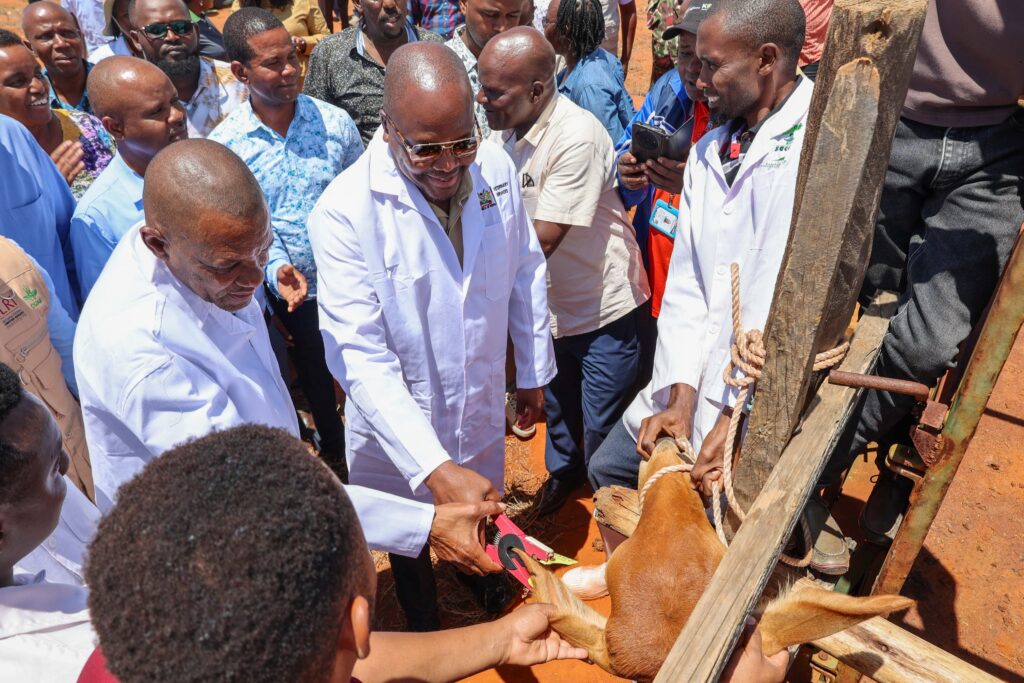
Bachuma Livestock Quarantine Centre Opens Kenya to Global Livestock Markets
The Bachuma Livestock Quarantine Centre in Taita-Taveta is set to strengthen Kenya’s livestock exports by providing quarantine, inspection and certification services for animals destined for international markets.
The Government is positioning the facility as a strategic gateway for livestock farmers seeking access to high-value export markets. The centre is being handed over to private investor Blue Mountain for commercialisation as part of a public-private partnership.
Agriculture and Livestock Development Cabinet Secretary Sen. Mutahi Kagwe said the investment is intended to create jobs, expand livestock markets and increase earnings for farmers and communities around the facility.
The Government said the Bachuma Livestock Quarantine Centre will help Kenya meet international animal health and food safety requirements while creating a structured system for preparing livestock for export.
Bachuma Targets Growing Livestock Export Demand
The scale of the potential market is significant. An offtake arrangement cited during the handover could generate demand for up to 100,000 cattle annually.
An order for goats and sheep from South Africa was also cited at approximately KSh2 billion, while the total potential value linked to the facility was put at about KSh30 billion.
The quarantine centre is expected to receive livestock from different parts of Kenya and could also serve animals from neighbouring countries.
This would give Taita-Taveta a larger role in regional livestock trade while creating additional economic activity for businesses and communities in the county.
The facility will provide services required before livestock enters international markets, including quarantine, inspection and certification. These measures are important for verifying animal health and meeting requirements imposed by importing countries.
Government Plans Farmer-Owned Livestock Investment Companies
The Government is also working on the supply side of the livestock export value chain through a proposed County Livestock Investment Company model covering 23 arid and semi-arid counties.
Under the proposed model, each county would target 15,000 livestock farmers. Each farmer would contribute KSh3,000 towards a KSh10,000 share, with the Government contributing the remaining KSh7,000.
At the county level, the model would create potential share capital of KSh150 million. Across 23 counties, the potential capital would reach KSh3.45 billion.
The proposed companies are intended to give farmers a commercial structure through which they can aggregate livestock, access larger markets and participate more directly in the export value chain.
Farmers could receive returns through dividends or bonuses generated by the commercial activities of the companies.
The model is intended to improve the link between livestock producers and formal markets while giving farmers greater participation in the business side of livestock trade.
ANITRAC to Strengthen Livestock Export Traceability
Animal identification and traceability will also be important to the development of Kenya’s livestock export trade.
The Government is implementing ANITRAC, the Animal Identification and Traceability system, to improve the ability to trace livestock to their source.
The system provides information relating to an animal’s origin, vaccination records and animal health history. Such information is important for disease surveillance, livestock security and compliance with requirements in international markets.
A reliable traceability system also gives importing markets greater visibility into the history and health status of animals entering their supply chains.
Water infrastructure will form another part of the livestock development strategy in Taita-Taveta. The national and county governments are expected to work with ranchers to identify strategic locations for water pans and other infrastructure needed to support livestock production across the county.
The Bachuma facility will operate through collaboration between Government and the private sector. The private investor is expected to provide capital, technical expertise and commercial management, while Government provides the regulatory and infrastructure environment needed to support operations.
For livestock farmers, the development creates a potential link between production at farm level and formal international markets.
The Government is positioning the Bachuma Livestock Quarantine Centre as more than an animal quarantine facility. Its wider role will be to support livestock exports, strengthen animal health controls, attract investment and create new commercial opportunities for farmers in Kenya and the wider region.
https://farmerstrend.co.ke/farming-news/bachuma-livestock-quarantine-centre-global-markets/https://farmerstrend.co.ke/wp-content/uploads/2026/09/Bachuma-Livestock-Quarantine-Centre-Opens-Kenya-to-Global-Livestock-Markets-1024x683.jpeghttps://farmerstrend.co.ke/wp-content/uploads/2026/09/Bachuma-Livestock-Quarantine-Centre-Opens-Kenya-to-Global-Livestock-Markets-150x150.jpegFarming NewsBachuma Livestock Quarantine Centre is set to support livestock exports, open global markets and create new opportunities for Kenyan farmers.Bachuma Livestock Quarantine Centre Opens Kenya to Global Livestock Markets The Bachuma Livestock Quarantine Centre in Taita-Taveta is set to strengthen Kenya’s livestock exports by providing quarantine, inspection and certification...FarmersTrendjohn doefarmerstrend@gmail.comAdministratorFarmers Trend Ltd.









Leave a Reply