Coffee Farming in Kenya Faces New Reforms as CS Kagwe Calls for Better Farmer Earnings and Global Market Growth
- Coffee farming in Kenya faces renewed calls for reforms as CS Mutahi Kagwe pushes for better farmer earnings, stronger regulation and expanded global markets.
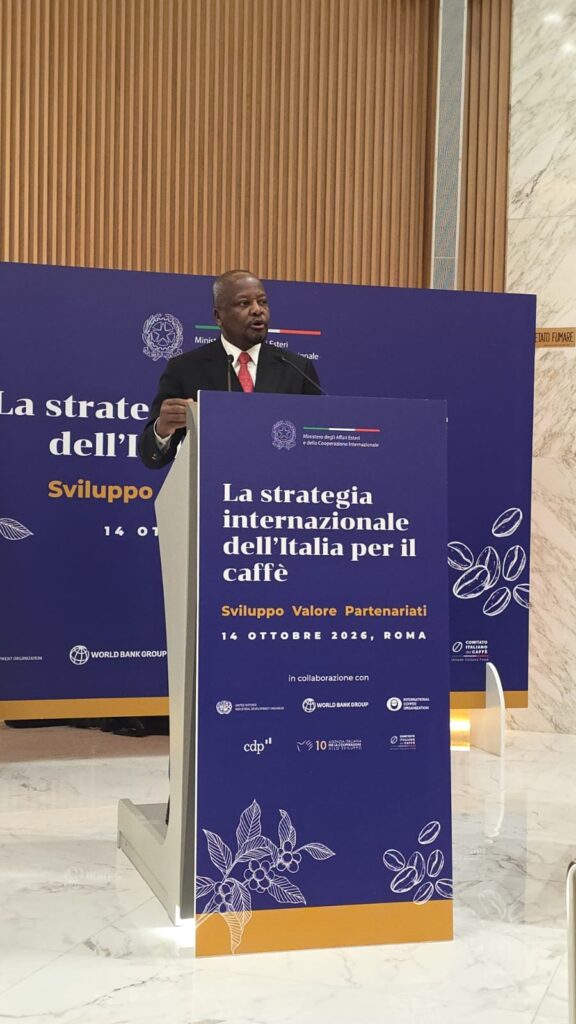
Coffee Farming in Kenya Faces New Reforms as Kagwe Calls for Better Farmer Earnings
Agriculture Cabinet Secretary Mutahi Kagwe has called for reforms to make coffee farming more profitable, strengthen regulation and expand global consumption, warning that the future of the international coffee industry depends on the economic wellbeing of producers.
Speaking at Italy’s International Coffee Strategy Forum, Kagwe emphasised the need for stronger cooperation between coffee-producing and consuming countries to address declining production, improve farmers’ earnings and build a more sustainable global market.
The Cabinet Secretary cited Kenya’s experience, noting that national coffee production had declined from approximately 150,000 metric tonnes to 50,000 metric tonnes. The decline, he said, underscores the need for policies that make coffee farming competitive against alternative agricultural enterprises.
For Kenyan farmers, the issue goes beyond the amount of coffee harvested each year. Production costs, the prices growers receive, access to markets and the returns available from other crops all influence whether farmers maintain their coffee trees or shift to alternative enterprises.
Kagwe said the global coffee value chain depends on farmers and challenged international coffee companies to invest in the welfare of producers, arguing that the industry’s long-term commercial interests are directly linked to the prosperity of the people supplying its raw materials.
Coffee production decline raises concerns for Kenyan farmers
Kenya has a long-established coffee industry, with smallholder farmers and estates supplying beans to domestic and international markets. However, declining production has raised concerns about the long-term viability of coffee farming and the country’s ability to maintain reliable supplies.
When coffee becomes less attractive financially than competing enterprises, farmers may reduce investment in their plantations, neglect tree management or replace coffee with other crops. For growers facing rising labour and input costs, the price received for their harvest is a major consideration when deciding whether to continue production.
Improving productivity is part of the solution, but farmers also need a marketing system that delivers reliable payments and competitive returns. Higher yields alone may not make coffee attractive if production costs rise faster than earnings.
Kagwe’s remarks place farmer incomes at the centre of discussions about the industry’s future. The challenge for Kenya is to create conditions in which growers can earn enough to maintain their plantations, invest in improved production practices and attract younger generations to coffee farming.
Coffee Act reforms aim to strengthen market regulation
Kagwe pointed to Kenya’s Coffee Act as an important step towards strengthening the regulation of domestic and export markets. Effective regulation can help establish clearer rules for trading, improve accountability and support confidence among farmers and other industry participants.
For farmers, the practical impact of reforms will depend on how well the rules address challenges across the value chain, including marketing arrangements, payment transparency and access to buyers.
Coffee research is also central to improving sector performance. Research institutions can help develop better production practices, address crop health challenges, improve quality and provide farmers with technical guidance suited to changing growing conditions.
However, the benefits of regulatory and research reforms will depend on implementation. Farmers need accessible extension services, reliable information and marketing systems that allow them to translate improvements in production and quality into better returns.
International coffee companies urged to support producers
Kagwe called on international coffee companies to invest in the welfare of farmers, arguing that the sustainability of the industry depends on viable production at the farm level.
Coffee passes through several stages before reaching consumers, including processing, trading, roasting, packaging, distribution and retail. Businesses across the chain provide services and incur costs, but farmers remain responsible for producing the beans on which the industry depends.
The challenge is to ensure that growers can earn sustainable returns while businesses throughout the chain remain commercially viable. Better relationships between farmers, cooperatives, processors, exporters and international buyers could support more reliable supply arrangements and improve communication about quality requirements and market demand.
For Kenyan growers, transparent purchasing arrangements and timely payments are important because coffee income must cover farm expenses as well as household needs. Farmers also need incentives to maintain their trees and invest in production improvements that may take time to deliver results.
Kenya urged to strengthen its international coffee brand
Kagwe also called for deliberate investment in promoting Kenyan coffee internationally. He drew parallels with efforts to market Kenyan tea and urged governments, processors and other industry players to work together to expand global coffee consumption.
Kenyan coffee has an established presence in international markets, where buyers may value particular flavour characteristics and quality profiles. However, maintaining market recognition requires consistent quality, reliable supply and effective promotion.
Building a stronger national brand could help communicate the characteristics of Kenyan coffee to consumers and buyers. It would also require coordination among producers, cooperatives, processors, exporters and marketers so that promotional efforts are supported by products that meet market expectations.
Expanding consumption is another part of the strategy. Increasing demand can create opportunities for producers, but the benefits reaching farmers will depend on market access, trading arrangements and the prices offered for their coffee.
EUDR requirements and the future of coffee exports
The European Union Deforestation Regulation (EUDR) was another issue raised by Kagwe, who called for international policies to reflect the realities of agricultural production. He emphasised the need to recognise coffee as a tree crop and ensure that compliance requirements account for conditions on the ground.
For farmers and exporters supplying regulated markets, compliance requirements can affect how production information is collected, verified and shared across the supply chain. Smallholder farmers may need support to understand buyer requirements and provide the information required for market access.
Kagwe’s comments highlight the importance of ensuring that environmental objectives and practical compliance arrangements work together. For Kenya, maintaining access to international markets will require cooperation between government agencies, producer organisations, exporters and buyers.
Digital trading could connect farmers more directly to buyers
Kagwe also highlighted digital transformation as a way to modernise coffee trading. Digital systems could help connect smallholder farmers more directly with international buyers, improve market access and create greater transparency across the value chain.
Digital platforms can support access to price information, trading records, traceability data and communication between farmers and buyers. When implemented effectively, these systems may help reduce information gaps and make it easier to track transactions.
However, technology alone cannot guarantee better prices. Farmers need reliable connectivity, practical training, trusted trading systems and clear rules governing transactions. Digital tools must also fit the way farmers and cooperatives operate rather than creating additional administrative burdens.
The value of digital trading will ultimately depend on whether it helps farmers make better marketing decisions, improves accountability and creates genuine access to buyers.
Kenya and Italy strengthen coffee research cooperation
Kenya’s collaboration with Italy and the United Nations Industrial Development Organization (UNIDO) to establish the Coffee Research and Training Institute in Nairobi reflects the role of international partnerships in developing the sector.
Research and training can help strengthen technical skills, improve production practices and support innovation throughout the coffee value chain. Farmers can benefit when research findings are translated into practical advice on crop management, quality improvement and production challenges.
A stronger research and training system could also support the development of skills needed in processing, quality assessment, marketing and other coffee-related businesses.
For the benefits to reach growers, research institutions and extension services must remain connected to the challenges farmers face in their fields and the markets in which they sell their harvests.
What the reforms mean for coffee farmers
Kagwe’s message places the economic viability of coffee production at the centre of Kenya’s coffee strategy. Better regulation, research, international promotion and digital trading may all contribute to a stronger industry, but farmers will judge the reforms by their practical effects on production costs, market access and earnings.
Kenya’s challenge is to make coffee farming an enterprise that rewards investment and encourages growers to maintain productive plantations. This requires more than increasing output. It calls for a coordinated approach that connects research, regulation, marketing and international demand with the realities of smallholder production.
The long-term sustainability of the coffee industry will depend on whether the people growing the crop can earn a reasonable return while meeting the quality and supply requirements of domestic and international buyers.
As discussions on global coffee strategy continue, the central question for Kenya remains how to turn policy commitments and international partnerships into measurable improvements for farmers and the wider coffee economy.
https://farmerstrend.co.ke/farming-news/coffee-farming-in-kenya-new-reforms/https://farmerstrend.co.ke/wp-content/uploads/2026/10/Coffee-Farming-in-Kenya-Faces-New-Reforms-as-CS-Kagwe-Calls-for-Better-Farmer-Earnings-and-Global-Market-Growth-576x1024.jpeghttps://farmerstrend.co.ke/wp-content/uploads/2026/10/Coffee-Farming-in-Kenya-Faces-New-Reforms-as-CS-Kagwe-Calls-for-Better-Farmer-Earnings-and-Global-Market-Growth-150x150.jpegFarming NewsCoffee FarmingCoffee farming in Kenya faces renewed calls for reforms as CS Mutahi Kagwe pushes for better farmer earnings, stronger regulation and expanded global markets.Coffee Farming in Kenya Faces New Reforms as Kagwe Calls for Better Farmer Earnings Agriculture Cabinet Secretary Mutahi Kagwe has called for reforms to make coffee...FarmersTrendjohn doefarmerstrend@gmail.comAdministratorFarmers Trend Ltd.









Leave a Reply