Kenya Coffee Production Push: 7 Ways Government Will Triple Output to 150,000 Tonnes by 2028
Coffee Production Push is now a funded, deadline-driven government program. Kenya will move from 50,000 metric tonnes to 150,000 metric tonnes within three years. The KSh 500 million seedling allocation targets 10 million high-yielding, disease-resistant trees annually.
Certified grafted Ruiru 11 coffee seedlings in Kenya are now available at Farmers Trend Ltd for KSh 150 per seedling for successful Coffee Farming in Kenya. Visit the Murang’a and Nairobi nurseries. Call or WhatsApp 0790 509 684 or 0724 559 286. Email info@farmerstrend.co.ke.
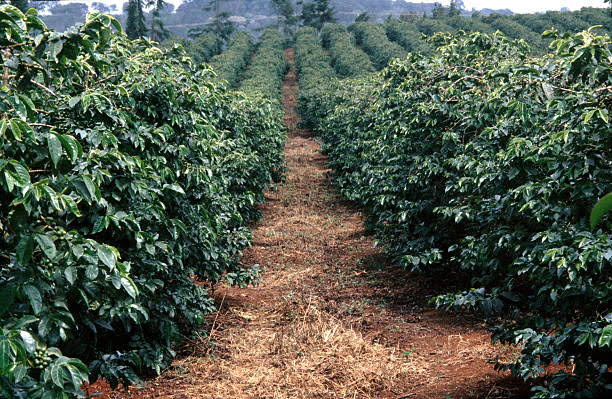
Here is the complete breakdown of the plan, the money, and what it means for you as a farmer, cooperative leader, or investor.
What Is the Coffee Production Push Target?
The government set a fixed target. Kenya will produce 150,000 metric tonnes of coffee annually by 2028.
Current output sits at 50,000 metric tonnes. This represents a collapse from the 1980s and 1990s when Kenya produced up to 150,000 tonnes annually.
The Coffee Production Push reverses a 30-year decline. Kenya was once Africa’s second-largest coffee producer. It now trails Ethiopia, Uganda, and others.
Why This Target Matters for You
You depend on coffee if you are one of the 800,000 smallholder farmers in Kenya. Coffee supports rural employment, foreign exchange, and household income.
The Cabinet Secretary for Cooperatives and MSMEs Development, Wycliffe Oparanya, stated the market exists. Kenya produces a fraction of what buyers demand.
“Kenya’s coffee production is currently a drop in the ocean,” Oparanya said. “As soon as we produce more quality coffee, the market is available”.
Growing demand in China, India, and the United States creates immediate opportunities.
The KSh 500 Million Seedling Commitment
Money makes the Coffee Production Push real. The government committed KSh 500 million to propagate 10 million high-yielding, disease-resistant seedlings annually.
The Principal Secretary for the State Department for Cooperatives, Patrick Kilemi, confirmed the allocation comes from the supplementary budget.
Here is how the money flows:
- Coffee Research Institute (CRI) and New Kenya Planters Cooperative Union (New KPCU) receive the propagation responsibility.
- Seedlings go to farmers across all coffee-growing regions.
- The target reaches 20 million seedlings annually in some program documents, showing ambition beyond the initial 10 million figure.
The KSh 500 million does not stand alone. The government increased the coffee sector allocation to KSh 1 billion this financial year.
Beyond Seedlings: The Full Financial Package
You need more than seedlings to triple production. The Coffee Production Push includes several financial interventions:
- KSh 4 billion released to waive historic coffee cooperative debts.
- An additional KSh 2 billion allocated in the current financial year to settle commercial bank loans .
- An Sh8 billion advance revolving fund offering credit at 3 percent interest.
- Coffee Cherry Advance Revolving Fund disbursed over Sh9.7 billion in three years.
- A USD 73 million public-private investment package proposed by FAO and UNIDO.
These funds address the debt trap. When cooperatives carry heavy debts, farmers wait years for payments. The new system changes this.
How the Coffee Production Push Changes Payments for Farmers
Payment delays killed coffee farming motivation in Kenya. The Coffee Production Push fixes this through the Direct Settlement System (DSS).
Under DSS, farmers receive 80 percent of earnings directly. Cooperatives receive 20 percent.
Payment periods dropped from more than a month to five days after coffee sales.
The Coffee Cherry Advance Revolving Fund helps you access credit before harvest. The fund surpassed Sh15 billion in total disbursements, helping farmers cut reliance on commercial bank loans.
Cherry prices rose to an average range of Sh110 to Sh160 per kilogram in 2026, up from Sh30 to Sh70 historically.
Debt Relief for Cooperatives
Many coffee cooperatives drowned in debt. An audit found genuine debts of Sh6.8 billion, down from an initial estimate of Sh11 billion.
The government already cleared about Sh2 billion owed to state institutions. Another Sh2 billion in the current financial year settles commercial bank loans .
Kirinyaga County requested waiver of Sh1.06 billion owed by 14 cooperatives, including Karithathi, Rung’eto, Thirikwa, and Ngiriambu.
When cooperatives operate without debt, they invest in milling, marketing, and farmer services.
Expanding Coffee to New Regions
The Coffee Production Push does not limit itself to traditional growing zones. The government targets Nyanza, Western, and the Rift Valley as new coffee frontiers.
Traditional areas in Mt Kenya receive support to improve productivity through better farming practices.
The North Rift region launch covered West Pokot, Nandi, Uasin Gishu, and Elgeyo-Marakwet counties.
County steering committees now profile coffee farmers, map acreage, identify suitable varieties, and monitor production.
Regional Production Shifts
Western Kenya emerged as the fastest-growing coffee production region. Nandi increased auction volumes by 92 percent. Bungoma grew by 97 percent.
Kisii more than quadrupled deliveries. Nyamira recorded nearly six-fold growth.
Kericho became Kenya’s leading coffee-producing county by volume and value. The county delivered 6 million kilograms valued at USD 41 million.
Traditional Central Kenya counties saw their share decline from 62 percent to 51 percent of national auction volumes.
Narok County made its debut at the Nairobi Coffee Exchange, pointing to new growing areas.
Government Support Infrastructure
The government plans strategic coffee milling plants in Eldoret, Kakamega, and Mt Kenya region centers.
You do not need to buy expensive milling equipment. The government through KPCU establishes shared facilities.
Oparanya barred cooperative societies from purchasing their own milling machines. Milling services centralize under New KPCU at minimal fees.
This cuts costs, reduces idle equipment, and eliminates expenses tied to specialized staff, maintenance, and security.
Negotiations with manufacturers aim to make coffee pulping machines affordable for farmers.
The Seedling Revolution: High Yielding Varieties
The Coffee Production Push depends on better trees. The Coffee Research Institute developed improved varieties that transform productivity.
Ruiru 11 and Batian varieties offer specific advantages:
Batian: Tolerant to Coffee Berry Disease and Coffee Leaf Rust. Early maturing at 18 months. Reduces production costs by 30 percent. Spacing of 2.1 by 2.5 meters yields 1,905 trees per hectare.
Ruiru 11: Hybrid variety tolerant to both major diseases. Matures in 2 years. Compact growth suits high-density planting. Spacing of 2 by 2 meters yields 2,500 trees per hectare.
These varieties solve the disease problem that destroys traditional Arabica types like SL28 and SL34.
Where to Buy Certified Grafted Ruiru 11 Seedlings in Kenya
You need certified planting material to succeed. Farmers Trend Ltd supplies certified grafted Ruiru 11 coffee seedlings in Kenya at KSh 150 per seedling.
Visit the nurseries in Murang’a and Nairobi. Call or WhatsApp 0790 509 684 or 0724 559 286. Email info@farmerstrend.co.ke.
Grafted Ruiru 11 seedlings offer you several advantages over ordinary seedlings. Grafting combines a productive scion with a vigorous rootstock. The result is faster establishment, better disease resistance, and higher yields per tree.
Buy your seedlings early. Demand spikes during the long rains and short rains planting seasons. Certified nurseries sell out fast when government distribution runs parallel to private purchases.
Productivity Per Bush
Average yields currently sit at about 2 kilograms per coffee bush. Some farmers using proper agronomy achieve up to 50 kilograms per bush.
The government targets at least 5 kilograms per bush initially. The long-term vision aims for 20 kilograms per bush, which could raise output tenfold.
Old coffee bushes produce poorly for more than 20 years. Replacing them with high-yielding seedlings drives the productivity gain.
Kirinyaga County sold 120,000 Ruiru 11 grafted seedlings at Sh55 each, nearly half the private market price of Sh100.
Cost Economics of Improved Varieties
AFA data shows the cost of producing 1 kilogram of cherries ranges from KES 31 to KES 48.
Improved varieties like Ruiru 11 and Batian perform better under high management, with costs averaging KES 31 per Kg. Traditional varieties record higher costs of KES 39 to 48 per Kg.
Fertilizer alone exceeds KES 131,000 per acre under high management systems.
The key insight: low productivity leads to higher cost per kilogram. Farmers producing 10 Kg per tree spread costs efficiently. Those producing 2 Kg face higher unit costs.
Training and Research: Building Farmer Knowledge
You need knowledge to maximize new seedlings. The government established a Coffee Training Center at the Kenya Agricultural and Livestock Research Organisation (KALRO) in Ruiru.
The Italian government supports this facility with EUR 80 million, about Sh13 billion, in climate financing under the Mattei Plan.
The newly signed Coffee Act establishes a Coffee Board and expands the Coffee Research and Training Institute mandate.
Agriculture CS Mutahi Kagwe emphasized productivity per tree matters more than acreage expansion.
Ward Champion Programme
A key pillar of the programme is the Ward Champion Programme, a grassroots framework designed to enhance service delivery at the local level.
Through ward-based champions, farmers receive improved access to extension services, better cooperative governance, and support in adopting modern agronomic practices.
This localized approach rebuilds trust and drives participation across both traditional and emerging coffee-growing regions.
Market Reforms and Value Addition
The Coffee Production Push connects to market reforms that improve farmer returns.
Kenya’s coffee enjoys premium status globally. Buyers pay well for quality Kenyan beans. The problem was volume, not demand.
The investment forum in Rome, Italy in October 2026 showcased opportunities to global financiers.
FAO and UNIDO proposed a USD 73 million package including :
- Rehabilitating 100 wet coffee mills.
- Establishing a dry mill in Kakamega for western Kenya farmers.
- Integrating apiculture with coffee farming for additional income.
- Digital marketing platforms for transparency.
Coffee waste utilization creates new products. Kenya generates nearly 200,000 metric tonnes of coffee pulp annually for cascara tea and industrial materials .
Direct Sales Premium
Kenyan farmers earned Sh1.75 billion from direct coffee export sales in March 2026, as international buyers paid premium prices for quality and traceable coffee.
Coffees fetched an average price of Sh51,317 per 50-kilogram bag, far above the average price of Sh37,057 recorded at the Nairobi Coffee Exchange auction in the same period.
NH grade coffee from Nandi County recorded the highest price of Sh106,265 per 50-kilogram bag.
Switzerland emerged as the biggest buyer of Kenyan coffee through direct sales, importing more than one million kilograms.
Local Consumption Growth
Domestic coffee culture expands rapidly. Cafeterias grew from 14 to 800 in three years.
Kenya consumes less than 5 percent of its coffee compared to Ethiopia’s over 50 percent.
Growing local demand cushions farmers from global price shocks.
What the Coffee Production Push Means for You
If You Are a Coffee Farmer
- Access 10 million high-yielding seedlings annually through the program .
- Buy certified grafted Ruiru 11 seedlings from Farmers Trend Ltd at KSh 150 each. Call or WhatsApp 0790 509 684 or 0724 559 286.
- Receive payments within five days through Direct Settlement System.
- Access credit at 3 percent interest through the revolving fund.
- Benefit from debt relief for your cooperative.
- Get training through expanded research and extension services.
If You Are an Investor
- The government seeks private capital through FAO and UNIDO packages.
- Milling, processing, and value addition offer opportunities.
- Kenya’s premium coffee brand provides market access.
- The Rome investment forum connected Kenya to global financiers.
If You Are a Cooperative Leader
- County steering committees coordinate support delivery.
- New governance structures under the Cooperative Act improve accountability.
- Shared milling facilities reduce capital expenditure.
- Ward Champions provide localized extension support.
- Source certified seedlings from Farmers Trend Ltd for your members at KSh 150 per seedling. Call 0790 509 684 or 0724 559 286.
Key Numbers From the Coffee Production Push
- Current production: 50,000 metric tonnes.
- Target production: 150,000 metric tonnes.
- Timeline: Three years, by 2028.
- Seedling propagation budget: KSh 500 million.
- Seedlings propagated annually: 10 million.
- Certified grafted Ruiru 11 seedling price at Farmers Trend Ltd: KSh 150.
- Farmers Trend Ltd contacts: 0790 509 684 or 0724 559 286.
- Current yield per bush: 2 kilograms.
- Target yield per bush: 5 kilograms minimum.
- Stretch yield target: 20 kilograms.
- Cooperative debt: Sh6.8 billion.
- Revolving fund size: Sh8 billion.
- Credit interest rate: 3 percent.
- Cherry price range: Sh110 to Sh160 per kg.
- Coffee farmers: 800,000.
- Export earnings: USD 343.99 million in 2024/25.
- US export growth: 101.2 percent in Q1 2026.
Frequently Asked Questions
What is the Coffee Production Push?
The Coffee Production Push is a Kenyan government program to increase coffee production from 50,000 to 150,000 metric tonnes within three years through seedling propagation, financial reforms, and market restructuring.
How much money did the government commit for seedlings?
KSh 500 million is committed to propagate 10 million high-yielding, disease-resistant seedlings annually.
Which coffee varieties does the program promote?
Ruiru 11 and Batian varieties, both tolerant to Coffee Berry Disease and Coffee Leaf Rust, early maturing, and capable of reducing production costs by 30 percent.
Where can I buy certified grafted Ruiru 11 coffee seedlings in Kenya?
Farmers Trend Ltd sells certified grafted Ruiru 11 coffee seedlings at KSh 150 per seedling. Visit the Murang’a and Nairobi nurseries. Call or WhatsApp 0790 509 684 or 0724 559 286. Email info@farmerstrend.co.ke.
How do farmers get paid under the new system?
Farmers receive 80 percent of earnings directly through the Direct Settlement System within five days of sale. Cooperatives receive 20 percent.
When does Kenya expect to reach 150,000 metric tonnes?
The target timeline is 2028 or 2028/2029 depending on the official projection cited.
What regions does the Coffee Production Push target for expansion?
The program expands into Nyanza, Western, and the Rift Valley while improving productivity in traditional Mt Kenya growing areas.
How can farmers access credit under the program?
The Sh8 billion advance revolving fund offers credit at 3 percent interest. The Coffee Cherry Advance Revolving Fund provides pre-harvest financing and has disbursed over Sh15 billion.
What is the Ward Champion Programme?
A grassroots framework deploying local champions to deliver extension services, improve cooperative governance, and support farmers in adopting modern agronomic practices.
Which county leads coffee production now?
Kericho County became Kenya’s leading coffee producer by volume and value in the 2025/2026 season, delivering 6 million kilograms valued at USD 41 million.
What is the average price for Kenyan coffee?
Cherry prices average Sh110 to Sh160 per kilogram. Direct export sales fetched Sh51,317 per 50-kilogram bag in March 2026.
The Bottom Line
The Coffee Production Push commits real money, real seedlings, and real reforms to a sector that declined for three decades. The KSh 500 million seedling program targets 10 million high-yielding trees annually. The Sh8 billion revolving fund offers affordable credit. The Direct Settlement System pays farmers in five days.
You should track this program if you farm coffee, lead a cooperative, or invest in Kenyan agriculture. The market exists. The seedlings exist. The reforms exist. The next three years determine whether Kenya returns to its position as a leading coffee producer or continues its decline.
Start your coffee farming journey today. Certified grafted Ruiru 11 coffee seedlings are available at Farmers Trend Ltd for KSh 150 per seedling. Visit the Murang’a and Nairobi nurseries. Call or WhatsApp 0790 509 684 or 0724 559 286. Email info@farmerstrend.co.ke.
https://farmerstrend.co.ke/trending/coffee-production-push-kenya/https://farmerstrend.co.ke/wp-content/uploads/2026/09/Screenshot-2026-09-21-132201-1024x409.pnghttps://farmerstrend.co.ke/wp-content/uploads/2026/09/Screenshot-2026-09-21-132201-150x150.png# TrendingCoffee FarmingCropsIn crops150000 Metric Tonnes,Arabica coffee Kenya,Batian Coffee Variety,Batian seedlings Kenya,Bungoma Coffee,Buy Coffee Seedlings Kenya,Cascara Tea Kenya,Certified Coffee Seedlings Price,Certified Grafted Coffee Seedlings,Cherry Price Kenya,China Coffee Market,Coffee 10 Million Seedlings,Coffee 20 Million Seedlings,Coffee Acreage Mapping,Coffee Act Kenya,Coffee Agronomy,Coffee Apiculture,coffee auction Kenya,coffee berry disease,Coffee Board Kenya,Coffee Cabinet Secretary,Coffee Cafeterias Kenya,Coffee Cherry Advance,Coffee Climate Financing,Coffee Climate Resilience,Coffee Consumption Kenya,Coffee Cooperative Debt,Coffee County Steering Committee,Coffee Culture Kenya,Coffee Debt Waiver,Coffee Decline Kenya,Coffee Digital Marketing,Coffee Direct Export,Coffee Direct Sales,Coffee Diseases Kenya,Coffee Dry Mill,Coffee Earnings Kenya,Coffee Establishment Cost,Coffee Export Earnings,coffee export Kenya,Coffee Extension Services,Coffee Farm Investment Kenya,Coffee Farmer Profiling,Coffee Farmer Training,Coffee Farming Guide,coffee farming in kenya,Coffee Farming Kenya 2026,Coffee Fertilizer Kenya,Coffee Food Security,Coffee FX Kenya,Coffee Governance,Coffee Grades Kenya,Coffee Grafting,Coffee Harvesting,Coffee Household Income,Coffee Intercropping,Coffee Investment Forum Rome,coffee irrigation Kenya,coffee leaf rust,Coffee Management,Coffee Market Demand,Coffee Milling Kenya,Coffee Monitoring,Coffee Mulching,Coffee Nursery Kenya,Coffee Output Kenya,Coffee Payment System,Coffee Pests Kenya,coffee planting season Kenya,Coffee Prices 2026,Coffee Principal Secretary,coffee processing,Coffee Production Push,Coffee Production Target,Coffee Profit Per Acre,Coffee Pruning,Coffee Public Private Partnership,Coffee Pulp Utilization,Coffee Pulping,Coffee Quality Kenya,Coffee Rehabilitation Kenya,Coffee Research Institute,Coffee Research Ruiru,Coffee Revival Kenya,Coffee Revolving Fund,Coffee Roasting Kenya,Coffee Rural Employment,Coffee Sector Allocation,Coffee Seedling Price,Coffee Seedling Suppliers Kenya,Coffee Seedlings Kenya,Coffee Seedlings Murang'a,Coffee Seedlings Nairobi,Coffee Spacing Guide,Coffee Stumping,Coffee Subsidy Kenya,Coffee Supplementary Budget,Coffee Sustainability,Coffee Switzerland,Coffee Traceability,Coffee Training KALRO,Coffee US Exports,coffee value addition,Coffee Varieties Kenya,Coffee Weeding,Coffee Wet Mill,coffee yield per acre,Direct Settlement System,FAO Coffee Kenya,Farmers Trend Ltd,Grafted Coffee Seedlings Price,High Yielding Coffee,India Coffee Market,Italy Kenya Coffee,Kenya Coffee Brand,Kenya coffee production,Kenya coffee sector,Kenya Coffee Target 2028,Kericho Coffee Production,Kisii Coffee,KSh 500 Million Seedlings,Mattei Plan Kenya,Mt Kenya coffee,Murang'a Coffee Nursery,Nairobi Coffee Exchange,Nairobi Coffee Nursery,Nandi Coffee,Narok Coffee,New KPCU,NH Grade Coffee,North Rift coffee,Nyamira Coffee,Premium Coffee Kenya,Robusta Coffee Kenya,Ruiru 11 Price Kenya,Ruiru 11 Seedlings,Ruiru 11 vs Batian,SL28 coffee,SL34 coffee,smallholder coffee farmers,specialty coffee Kenya,UNIDO Coffee Kenya,US Coffee Market,Ward Champion Programme,Western Kenya CoffeeCoffee Production Push is now a funded, deadline-driven government program. Kenya will move from 50,000 metric tonnes to 150,000 metric tonnes within three years. The KSh 500 million seedling allocation targets 10 million high-yielding, disease-resistant trees annually. Certified grafted Ruiru 11 coffee seedlings in Kenya are now available at Farmers...FarmersTrendjohn doefarmerstrend@gmail.comAdministratorFarmers Trend Ltd.






Leave a Reply