Zero-Tilled Soils: How to Improve Structure, Water Infiltration, and Carbon Sequestration on Your Farm
Zero-tilled soils have improved structure and porosity. You stop ploughing. You let soil life rebuild the architecture underground. Water enters faster. Roots grow deeper. Organic matter accumulates. Your farm becomes more resilient to drought and heavy rain.
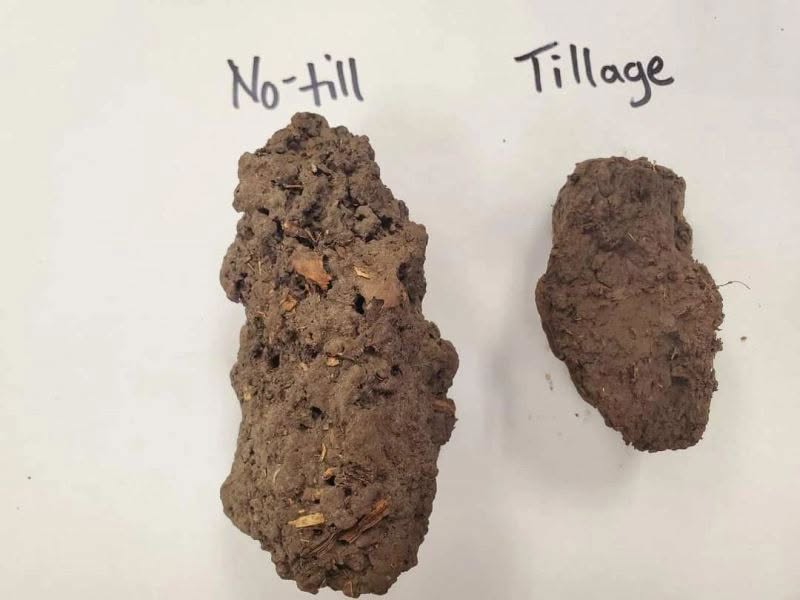
This article explains how zero tillage transforms soil physical properties. You will learn the science behind improved water infiltration, erosion control, soil biology, and carbon sequestration. You will see real data from Kenyan farms and global research. You will get practical steps to adopt zero tillage on your land.
What Zero-Tilled Soils Mean for Your Farm
Zero tillage eliminates mechanical soil disturbance. You plant directly into undisturbed soil. You keep crop residues on the surface. You rotate crops.
The FAO defines conservation agriculture through three linked principles. Minimum mechanical soil disturbance. Permanent organic soil cover. Diversification of crop species.
Zero-tilled soils function differently from ploughed soils. The differences show in water movement, soil structure, and biological activity.
A long-term trial in Australia compared zero tillage to traditional tillage after eight years. Traditional tillage received 34 operations. Zero tillage received none. Researchers measured sorptivity and hydraulic conductivity at the soil surface. Zero-tilled soils had more large pores in the 1.5 to 3 millimetre range. Tilled soils had more small pores below 1.5 millimetres. Rainfall simulation at 100 millimetres per hour showed significantly greater time to ponding and total infiltration in zero-tilled soils.
Large pores matter. They conduct water rapidly. They resist crusting. They stay open because earthworms and termites create and maintain them.
How Zero-Tilled Soils Improve Water Infiltration
Water infiltration determines how much rain enters your soil and how much runs off. Zero-tilled soils infiltrate more water. The evidence comes from multiple studies.
A study on sloping agricultural fields in India compared conventional tillage, minimum tillage, and zero tillage under a maize-wheat rotation. The highest runoff volume was 257.40 cubic metres under conventional tillage. The lowest runoff volume was 67.95 cubic metres under zero tillage. Runoff coefficient dropped from 42.84 percent to 11.35 percent. Soil loss fell from 11.3 tonnes to 1.05 tonnes.
That is a 92 percent reduction in runoff. A 90 percent reduction in soil loss.
A Nigerian study on twin watersheds found cumulative runoff 10 times higher from ploughed watershed than from no-till watershed. Erosion was 42.2 times higher. Infiltration capacity five years after land development measured 3.8 centimetres per hour for ploughed land and 10.4 centimetres per hour for no-till land.
You get 2.7 times more water entering your soil with zero tillage.
Why does this happen? Zero-tilled soils have continuous pores from the surface to depth. Earthworm channels and termite galleries form preferred pathways. The Australian study used image analysis of soil structure. Zero-tilled soils showed abundant continuous pores. Tilled soils showed high-density surface crusts and larger compacted structural units.
Zero-Tilled Soils Reduce Erosion and Preserve Topsoil
Soil erosion removes your most fertile layer. Zero tillage stops erosion by protecting the soil surface.
The mechanism works through two paths. First, crop residues absorb raindrop impact. Rain hits straw, not bare soil. Soil aggregates stay intact. Second, undisturbed soil has stronger structure. Roots and fungal networks bind particles together.
Data from the sloping field study quantifies the difference. Conventional tillage lost 11.3 tonnes of soil per hectare. Zero tillage lost 1.05 tonnes.
In Kenya, farmers adopting conservation agriculture report major changes. Ferdinand Wangila Makhanu from Bungoma County switched from ploughing to spraying herbicide and digging planting holes only where seeds go. He retained crop residue on his fields. His maize harvest rose from 6 bags per acre to 30 to 35 bags per acre. His ploughing cost dropped from KSh 4,500 per acre to KSh 500 per acre on herbicides.
You keep your topsoil. You keep your nutrients. You keep your yield potential.
Soil Structure and Porosity in Zero-Tilled Soils
Soil structure describes how particles bind into aggregates. Good structure creates pore space for air, water, and roots.
Zero-tilled soils develop stronger aggregates over time. A study in central Mexico compared conservation agriculture to conventional tillage. Conservation agriculture resulted in four times higher earthworm abundance. Soil organic carbon concentrated at the surface. Aggregate stability measured by mean weight diameter was 2.6 millimetres under conservation agriculture and 1.6 millimetres under conventional tillage after dry sieving.
Water-stable macroaggregation measured 415 milligrams per gram under conservation agriculture. Conventional tillage measured 251 milligrams per gram.
Aggregates resist breakdown when wet. They maintain pore space. Water moves through. Roots penetrate easily.
The Mexican study used micromorphological analysis of thin sections. Conservation agriculture produced a loose and highly biogenic soil microstructure. Conventional tillage produced a physicogenic microstructure. Soil bulk density was similar in both systems. Bulk density alone fails to capture soil physical quality differences between tillage systems.
You need to look at pore continuity and biological activity. Not just weight per volume.
Research from the Indian Council of Agricultural Research confirms these findings. When conservation agriculture is practiced for six to ten years, there is improvement in soil structure, porosity and pore size distribution, macro-micro faunal activity, and organic matter content.
One important note. The soil under zero tillage shows the lowest porosity compared to conventional management practices in some measurements. The highest porosity and the maximum connected pores are frequently seen in conventionally tilled soil immediately after tillage. But this structure collapses quickly. Zero tillage builds stable porosity over time through biological activity.
Soil Biota and Organic Matter in Zero-Tilled Soils
Zero-tilled soils support more life. Earthworms, termites, fungi, and bacteria thrive without disturbance.
The Australian trial found a 4-fold increase in earthworm numbers under zero tillage compared to conventional tillage. Earthworm channels increased soil pore volume. They improved aeration and water entry.
A study comparing three farm types in an unusually dry farming season found no invertebrates in conventional farm soil. No-till farm soil had the highest macroinvertebrate abundance and diversity.
A three-year study across 20 farms in Northern Italy measured soil biological fertility under conservation agriculture and conventional systems. Conservation agriculture resulted in significantly higher soil organic carbon, soil organic carbon stock, biological fertility index, and earthworm numbers for medium-term adoption.
Organic matter accumulates in zero-tilled soils. The Mexican study found higher total nitrogen and soil organic carbon under conservation agriculture at 0 to 5 centimetres depth. Soil organic carbon showed more pronounced vertical stratification. Carbon concentrated near the surface where biological activity peaks.
Enzymatic activity rises under zero tillage. A review of multiple studies found consistently higher activity for dehydrogenase, phosphatase, urease, and glucosidase under zero tillage compared to conventional tillage. These enzymes drive nutrient cycling.
You get more nutrient turnover. More available nitrogen and phosphorus. Better plant nutrition.
Carbon Sequestration and Climate Mitigation with Zero-Tilled Soils
Soil holds about 1500 gigatonnes of organic carbon globally. Agricultural lands contain 12 percent of this stock. Any change in management affects carbon release or storage.
Conventional tillage exposes stored carbon to oxygen. Microbes oxidize it. Carbon dioxide releases to the atmosphere.
Zero tillage reduces carbon loss. Crop residues stay on the surface. Decomposition happens slowly. Carbon stabilizes in aggregates.
A 16-year study in Mexico measured soil organic carbon under zero tillage and conventional tillage with and without residue retention. The highest soil organic carbon content occurred in zero tillage treatments with residue retention in the 0 to 5 centimetre layer. Soil organic carbon stock expressed as equivalent soil mass was greatest in zero tillage treatments with residue retention at 0 to 20 centimetres depth.
A review of conservation agriculture found zero tillage, minimum tillage, and reduced tillage all recorded higher total organic carbon, microbial biomass carbon, and particulate organic carbon compared to conventional tillage.
A seventeen-year study in a rice-wheat system found that conservation tillage and residue retention with fewer farm operations, lower fuel use, and the elimination of residue burning resulted in a significant decrease in greenhouse gas emissions compared to traditional systems.
You reduce greenhouse gas emissions. You store carbon. You improve soil fertility for future seasons.
Equipment Options for Small-Scale Zero Tillage Farmers
You do not need expensive machinery to adopt zero tillage. Several low-cost options work for smallholder farms in Kenya.
Jab planter. A hand-operated tool that opens a small hole, drops seed, and closes it. You disturb less than 15 centimetres of soil width. Cost ranges from KSh 3,000 to KSh 8,000. Suitable for one-acre to five-acre farms.
Direct seed drill. A tractor-mounted implement for larger farms. Places seed into undisturbed soil with minimal disturbance. Cost varies by size and brand. Suitable for farms above ten acres.
Two-wheel tractor with no-till attachment. A middle option between hand tools and full tractor equipment. Cost ranges from KSh 150,000 to KSh 300,000. Suitable for five-acre to twenty-acre farms.
Knapsack sprayer. Essential for weed control before planting. Cost ranges from KSh 2,500 to KSh 6,000. Every zero tillage farmer needs one.
Chopper or slasher. Manages crop residues and cover crops. Cost ranges from KSh 1,500 to KSh 10,000 depending on type.
You start with hand tools. You upgrade as your acreage grows. The principle stays the same. Disturb as little soil as possible.
Integrating Livestock with Zero-Tilled Soils
Livestock integration requires careful management under zero tillage. You need residues for soil cover. Your animals need feed. You balance both.
Controlled grazing. Allow animals into harvested fields for short periods. They eat some residues. They deposit manure. You remove them before they compact soil or consume all cover. Keep at least 30 percent residue on the field.
Cut and carry. Harvest crop residues and cover crops. Feed them to livestock in stalls. Return manure to the field as compost. This system preserves soil cover and captures nutrients.
Rotational grazing. Move animals between paddocks. Prevent overgrazing. Let paddocks rest. This maintains ground cover and prevents compaction.
Zero grazing units. Keep dairy cattle in stalls. Collect manure. Apply compost to zero-tilled fields. This system works well for smallholder farms with one or two cows.
A study in eastern Kenya combined no-tillage with leguminous trees like Calliandra calothyrsus. The trees provided livestock feed. The animals produced manure. The manure improved soil nitrogen and phosphorus. No-tillage blocks with Calliandra spaced at 1.5 metres recorded 41.9 megagrams of nitrogen per hectare. Available phosphorus rose from 22.9 to 28.8 milligrams per kilogram.
You feed your animals. You feed your soil. Both benefit.
More Kenyan Farmer Success with Zero-Tilled Soils
Pauline Mogambi from Nakuru County switched to zero tillage, intercropping, and compost manure. Her one-acre farm now produces enough to feed her family and sell surplus. She harvests 36 bags of maize and 20 tonnes of silage. Before conservation agriculture, she harvested a maximum of seven bags of maize.
Serah Ndung’u from Nakuru uses minimum tillage, mulching, and drip irrigation. She retains soil moisture during dry spells. She grows maize, beans, kales, potatoes, and avocado to maturity even when rain fails.
The SIMLESA project across eastern and southern Africa documented economic returns of $4 for every $1 invested in conservation agriculture. Net annual financial returns reached $1,500 per hectare using conservation agriculture methods compared to $900 per hectare using conventional methods.
Labour costs dropped by 56 percent. From $418.25 to $182.50 per hectare.
A study in Meru County found that zero tillage combined with optimal mulch thickness of 20 centimetres significantly increased marketable potato yield and improved soil moisture retention under a maize cropping system.
A WOCAT documentation of large-scale conservation agriculture in Meru Central, Kenya describes a system operating for 10 to 50 years. The system includes zero tillage, residue retention providing 70 to 100 percent cover, herbicide application at 2 litres per hectare, and contour seeding at 25 centimetre row spacing. Wheat and barley grow without irrigation because of improved water conservation and infiltration.
Alfred Musyoka from Machakos County adopted conservation agriculture on his 10-acre farm. He stopped ploughing. He retained residues. He rotated maize with pigeon peas and cowpeas. His soil moisture improved. His maize yield stabilized even in dry years. His input costs dropped because he no longer hired tractors for ploughing.
Grace Wanjiku from Laikipia County grows wheat under zero tillage. She retains straw from previous harvests. Her soil holds more water. Her wheat yields match conventional fields. Her fuel costs fell by half.
Comparison Data: Conventional Tillage Versus Zero Tillage
The table below summarizes key metrics from the studies cited in this article. Use this data to evaluate zero tillage for your farm.
| Metric | Conventional Tillage | Zero Tillage | Difference |
|---|---|---|---|
| Runoff volume (m³) | 257.40 | 67.95 | 74% reduction |
| Runoff coefficient (%) | 42.84 | 11.35 | 74% reduction |
| Soil loss (t/ha) | 11.3 | 1.05 | 91% reduction |
| Infiltration capacity (cm/hour) | 3.8 | 10.4 | 174% increase |
| Earthworm count (relative) | 1 | 4 | 300% increase |
| Aggregate stability (mm) | 1.6 | 2.6 | 63% increase |
| Water-stable macroaggregation (mg/g) | 251 | 415 | 65% increase |
| Labour cost ($/ha) | 418.25 | 182.50 | 56% reduction |
| Net annual returns ($/ha) | 900 | 1,500 | 67% increase |
Important Considerations Before You Adopt Zero Tillage
Zero tillage works well on some soils. It fails on others. You need to know the difference.
Research from Kenya shows that zero tillage without cover crop or crop residue results in high runoff on crusting and compacting soils. At Katumani in semi-arid Kenya, zero tillage performed poorly under certain soil conditions because of high soil crusting and compaction, low rainwater infiltration, and increased surface runoff. Farmyard manure application enhanced infiltration and reduced crusting during early rainy season stages.
Zero tillage suits medium textured soils with high biological activity. It works on self-structuring, cracking clay soils. It performs poorly on poorly drained clay soils without improved drainage. It fails on soils with compaction problems unless you address the compaction first.
The success of zero tillage is soil specific. It depends on how well you control weeds, pests, and diseases. Morgan noted zero tillage to be well suited for better drained, coarse and medium textured soils but not on poorly drained or heavy soils.
Long-term data from Western Kenya shows that zero tillage and residue retention alone reduced soil organic carbon losses by an average of 0.13 tonnes of carbon per hectare per year. This did not fully offset carbon losses. Initial soil conditions from previous land use drove most of the carbon changes. Conservation agriculture reduced losses but did not sequester carbon in that humid tropical ecosystem.
You need realistic expectations. Zero tillage slows degradation. It improves soil physical properties. It increases water infiltration and reduces erosion. Carbon sequestration varies by soil type, climate, and initial conditions. Your results depend on your starting point and your management consistency.
Maintaining Long-Term Soil Fertility with Zero Tillage
Zero-tilled soils improve over time. The first season may show no difference. The third season shows structure changes. The fifth season shows yield gains.
Soil organic matter builds slowly. Expect one to three years for measurable changes. Five to ten years for full biological function.
Monitor your soil. Test every two to three years. Track organic matter, pH, and nutrient levels.
Adjust fertilizer. Zero-tilled soils cycle nutrients differently. You may need less nitrogen as organic matter builds. You may need more phosphorus if stratification occurs.
Keep residues on the field. This single practice drives most of the benefits. Residues feed earthworms. They protect soil from rain and sun. They suppress weeds.
Avoid compaction. Do not drive heavy equipment on wet soil. Keep traffic on permanent lanes.
Address drainage before you start. Poorly drained soils need drainage improvement before zero tillage works. Install subsurface drains or plant on raised beds if your soil holds water.
Social Media Summary: Zero-Tilled Soils
Copy these points for your social media posts.
- Zero tillage reduces runoff by 92 percent compared to conventional ploughing.
- Soil loss drops from 11.3 tonnes to 1.05 tonnes per hectare under zero tillage.
- Water infiltration increases 2.7 times with zero tillage.
- Earthworm numbers increase 4-fold when you stop ploughing.
- Labour costs fall 56 percent under conservation agriculture.
- Net returns rise from $900 to $1,500 per hectare.
- Kenyan farmer Ferdinand Makhanu raised maize yield from 6 bags to 35 bags per acre.
- Pauline Mogambi harvests 36 bags of maize from one acre using zero tillage.
- Keep at least 30 percent crop residue on your soil surface.
- Zero tillage works best on well-drained, medium textured soils.
- Address compaction and drainage before you adopt zero tillage.
- Soil organic matter builds over three to ten years, not one season.
Your Next Steps for Zero-Tilled Soils
Zero-tilled soils offer a practical path to better water infiltration, erosion control, soil biology, and carbon storage. You stop ploughing. You keep residues. You rotate crops. You let soil life rebuild structure.
Start with one field. Test your soil. Control weeds. Plant directly. Retain residues. Measure the changes in water infiltration and yield.
The data supports the practice. Runoff reductions of 90 percent. Soil loss reductions of 90 percent. Earthworm increases of 4-fold. Carbon storage at the surface. Labour cost reductions of 56 percent.
Your soil responds to how you treat it. Stop disturbing it. Start feeding it. Watch it produce.
Contact Farmers Trend for Zero Tillage Support and Farm Inputs
Farmers Trend supports Kenyan farmers with practical information, certified seedlings, and farm inputs. We help you adopt conservation agriculture and improve your soil health.
Call or WhatsApp: 0724 559 286 | 0790 509 684
Website: www.farmerstrend.co.ke
Email: info@farmerstrend.co.ke
Reach out for soil testing guidance, cover crop seeds, jab planter sourcing, and zero tillage training in your county. We deliver countrywide.
https://farmerstrend.co.ke/trending/zero-tilled-soils-improve-structure/https://farmerstrend.co.ke/wp-content/uploads/2026/10/WhatsApp-Image-2026-10-08-at-13.34.34-1024x409.jpeghttps://farmerstrend.co.ke/wp-content/uploads/2026/10/WhatsApp-Image-2026-10-08-at-13.34.34-150x150.jpeg# TrendingCropsFruitsIn cropsIn Fruitscarbon sequestration,Climate-Smart Agriculture,conservation agriculture,cover crops,crop rotation,earthworms,farm inputs,kenyan farmers,no-till farming,residue retention,smallholder farming,soil biota,soil erosion,soil health,soil organic matter,soil porosity,soil structure,sustainable farming,water infiltration,zero tillageZero-tilled soils have improved structure and porosity. You stop ploughing. You let soil life rebuild the architecture underground. Water enters faster. Roots grow deeper. Organic matter accumulates. Your farm becomes more resilient to drought and heavy rain.This article explains how zero tillage transforms soil physical properties. You will learn...FarmersTrendjohn doefarmerstrend@gmail.comAdministratorFarmers Trend Ltd.











Leave a Reply