Kirinyaga Irrigation Project Transforms Smallholder Farming as Government Expands Irrigation Across Kenya
Kirinyaga Irrigation Project is helping smallholder farmers increase production, diversify into high-value crops and livestock, and improve incomes as Kenya expands irrigation.
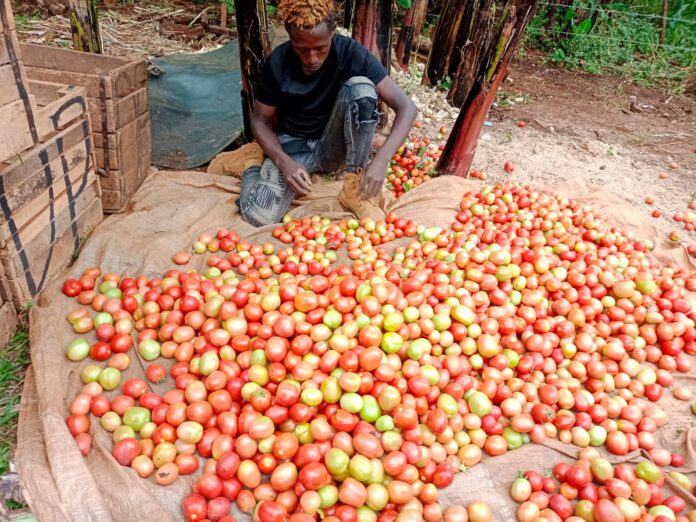
Smallholder farmers in Kirinyaga County are increasing crop production, diversifying into high-value enterprises and earning more stable incomes after adopting a community-managed irrigation system that is reducing dependence on unreliable rainfall.
The Kandeki Irrigation Project, a KSh91 million investment funded jointly by the government and farmers, is changing farming in an area where erratic rainfall and rising production costs have long limited agricultural productivity. The project provides reliable water for irrigation throughout the year, enabling farmers to grow crops and rear livestock regardless of changing weather patterns.
The initiative also reflects the government’s wider strategy of expanding irrigation as part of efforts to strengthen climate-smart agriculture, improve food security and increase rural incomes.
Reliable Water Changes Farming Fortunes
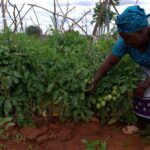
For Jane Wairimu, one of the farmers benefiting from the project, access to reliable irrigation has transformed both her farming practices and household income.
She said the project has eliminated the need to rely on expensive petrol-powered pumps after water was stored in a lined community pond, significantly reducing production costs.
“Reliable water supply has reduced my production costs and enabled me to diversify from conventional crop farming into dairy farming, fish production, avocados, French beans, maize and macadamia,” Wairimu said.
“This project has changed my farming completely. I no longer worry about water shortages, and I can now invest in different enterprises that generate income throughout the year.”
Besides improving production, Wairimu urged the government to strengthen market linkages for farmers, saying reliable markets are just as important as reliable water if farmers are to maximize returns from increased production.
Irrigation Creates Opportunities for Young Farmers
The irrigation scheme is also attracting young people to agriculture by providing new income opportunities.
Erick Mwendia, a Community Health diploma graduate who struggled to secure formal employment, said irrigation enabled him to turn farming into a profitable business.
“Reliable water has made farming profitable and challenged the perception that agriculture is only for those with limited career options,” he said.
Mwendia called on the government to expand irrigation projects targeting young people, arguing that agriculture can play a major role in reducing unemployment, poverty and rural crime.
He also appealed for subsidized farm inputs, especially pesticides and crop protection products, to lower production costs for smallholder farmers.
Farmers Shift to High-Value Enterprises
Access to reliable irrigation has allowed many farmers at Kandeki to move beyond traditional rain-fed crop production.
With water available throughout the year, farmers are investing in dairy farming, fish production, avocados, French beans, maize and macadamia, creating multiple income streams instead of relying on a single seasonal harvest.
The project has also reduced production risks associated with prolonged dry spells, allowing farmers to plan production according to market demand rather than rainfall patterns.
According to project chairman Henry Kariuki, farmers who previously harvested only once or twice a year are now producing continuously.
“Before this project, most farmers depended entirely on rainfall and harvested only once or twice a season. This project has restored hope to many families,” Kariuki said.
He added that the irrigation scheme is also supplying water for domestic use while strengthening community ownership through farmer-led management and maintenance.
Government Expands Irrigation Investment
The success of the Kandeki Irrigation Project is informing the government’s broader plan to increase irrigation across the country.
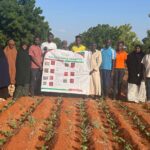
During an inspection of the project, Irrigation Principal Secretary Ephantus Kimotho said expanding irrigation infrastructure remains one of the government’s key priorities for increasing agricultural production and building resilience against climate change.
“Our goal is to ensure farmers have reliable water throughout the year so they can increase production, improve their incomes and contribute to national food security. Irrigation is no longer an option; it is the future of climate-smart agriculture in Kenya,” Kimotho said.
He explained that irrigation projects are implemented only after detailed hydrological assessments confirm adequate water availability and are supported through public participation, county governments and agricultural extension services to ensure long-term sustainability.
Kimotho also encouraged farmers to join cooperatives and Irrigation Water Users Associations, saying organized groups have better access to affordable credit, quality farm inputs, extension services and structured markets.
Expansion Planned Across Kenya
According to the Principal Secretary, the irrigation model has already supported 19 projects across the Mt. Kenya region, with about 95 percent of participating farmers reporting improved productivity and higher incomes.
Building on these results, the government has secured approximately KSh3 billion to develop similar irrigation projects in Western Kenya while investing in water harvesting infrastructure across arid and semi-arid lands (ASALs).
The expansion forms part of Kenya’s national plan to increase irrigated land from about 600,000 acres to 2.5 million acres as the country works to reduce dependence on rain-fed agriculture.
Irrigation Seen as Key to Food Security
Agriculture remains one of Kenya’s most important economic sectors, contributing about 33 percent of the country’s Gross Domestic Product and employing more than 40 percent of the population, according to the Kenya National Bureau of Statistics.
Despite its importance, only about five percent of Kenya’s arable land is currently under irrigation, leaving most farmers vulnerable to prolonged droughts and increasingly unpredictable weather.
Agricultural experts say expanding irrigation will not only increase food production but also help stabilize supplies throughout the year, reduce post-harvest losses and improve farm incomes.
For farmers at Kandeki, the results are already visible. Reliable water has reduced production costs, encouraged enterprise diversification and provided confidence to invest in farming as a sustainable business, offering a practical example of how irrigation can strengthen rural livelihoods across Kenya.
By Jane Mugambi
https://farmerstrend.co.ke/trending/kirinyaga-irrigation-project/https://farmerstrend.co.ke/wp-content/uploads/2026/08/Kirinyaga-Irrigation-Project.jpeghttps://farmerstrend.co.ke/wp-content/uploads/2026/08/Kirinyaga-Irrigation-Project-150x150.jpeg# Trendingagricultural productivity,avocado farming,Climate-Smart Agriculture,dairy farming,Ephantus Kimotho,farmer incomes,food security Kenya,French beans,high-value crops,irrigation farming,irrigation in Kenya,irrigation infrastructure,Irrigation Water Users Association,Kandeki Irrigation Project,Kenya irrigation projects,Kirinyaga irrigation project,Macadamia Farming,Ministry of Irrigation,Mt Kenya irrigation,smallholder farmersKirinyaga Irrigation Project is helping smallholder farmers increase production, diversify into high-value crops and livestock, and improve incomes as Kenya expands irrigation.Smallholder farmers in Kirinyaga County are increasing crop production, diversifying into high-value enterprises and earning more stable incomes after adopting a community-managed irrigation system that is reducing dependence...FarmersTrendjohn doefarmerstrend@gmail.comAdministratorFarmers Trend Ltd.







Leave a Reply