KALRO Expands Improved Cowpea Demonstrations in Wajir to Strengthen Food Security in ASAL Regions
The Kenya Agricultural and Livestock Research Organization (KALRO), through the Agricultural Mechanization Research Institute (AMRI) Katumani, has expanded efforts to strengthen food security and climate resilience by establishing improved cowpea demonstration sites in Wajir County under the Food Systems Resilience Project (FSRP).

The initiative is part of ongoing efforts to promote improved agricultural technologies in Kenya’s Arid and Semi-Arid Lands (ASALs), where farmers continue to face challenges brought about by prolonged drought, erratic rainfall and declining agricultural productivity.
Between June 26 and June 29, 2026, KALRO established cowpea demonstration sites across four wards in Wajir County after holding an inception meeting with county government officials and project stakeholders. The meeting laid the foundation for the implementation of the project, including the identification and selection of suitable demonstration sites that would represent local farming conditions.
Before planting began, KALRO researchers collected soil and water samples from the selected locations for laboratory analysis. The assessments helped determine the suitability of each site for cowpea production and irrigation while guiding appropriate management decisions to support successful crop establishment.
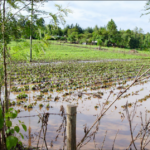
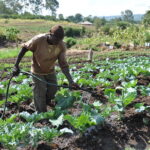
On July 23, 2026, KALRO scientists returned to the demonstration fields to conduct a post-establishment monitoring exercise aimed at evaluating crop emergence, plant establishment and early vegetative growth. The monitoring exercise showed that the improved cowpea varieties had established successfully despite the harsh environmental conditions that characterize Wajir County.
Researchers observed healthy crop development across the demonstration plots, confirming the adaptability and resilience of the improved varieties under dryland conditions. The encouraging performance highlights the potential of improved cowpea technologies to support sustainable food production in regions frequently affected by drought and climate variability.
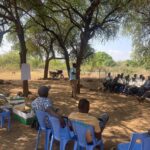
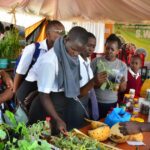
During the field visits, KALRO researchers also engaged participating farmers through practical training sessions focusing on the cowpea value chain. Farmers received information on the crop’s nutritional importance, commercial opportunities and environmental benefits while learning how improved production practices can increase yields and household incomes.
Researchers emphasized that cowpea remains one of the most suitable crops for ASAL regions because of its ability to tolerate dry conditions while producing reliable harvests. The crop also contributes to improved soil fertility through biological nitrogen fixation, reducing the need for synthetic fertilizers and supporting sustainable agricultural production.
Farmers were further informed about the multiple uses of cowpea, with both the leaves and grains providing valuable sources of food and income. In addition, extension officers provided guidance on recommended agronomic practices, including proper crop establishment, field management and production techniques designed to improve productivity under local conditions.
KALRO says the demonstration sites are intended to strengthen the connection between agricultural research and farming communities by allowing farmers to observe improved technologies under real field conditions. The approach enables farmers to evaluate new crop varieties while receiving practical support from researchers and extension officers.
The initiative also supports the objectives of the Food Systems Resilience Project, which seeks to improve agricultural productivity, strengthen resilience to climate change and enhance food and nutrition security across Kenya’s dryland regions.
As climate-related challenges continue to affect agricultural production, KALRO says research-driven innovations such as improved cowpea varieties will play an increasingly important role in helping farmers adapt to changing weather patterns while maintaining sustainable production.
The organization believes expanding access to climate-smart technologies, combined with farmer training and continued research, will contribute to higher productivity, improved household incomes and stronger food systems across Kenya’s ASAL counties.
https://farmerstrend.co.ke/trending/kalro-improved-cowpea-demonstrations-in-wajir/https://farmerstrend.co.ke/wp-content/uploads/2026/07/KALRO-Expands-Improved-Cowpea-Demonstrations-in-Wajir-to-Strengthen-Food-Security-in-ASAL-Regions-1024x768.jpghttps://farmerstrend.co.ke/wp-content/uploads/2026/07/KALRO-Expands-Improved-Cowpea-Demonstrations-in-Wajir-to-Strengthen-Food-Security-in-ASAL-Regions-150x150.jpg# Trendingagricultural research Kenya,ASAL farming Kenya,climate-smart agriculture Kenya,cowpea farming Kenya,drought-tolerant crops Kenya,Farmers Trend News,food security Kenya,Food Systems Resilience Project,FSRP Kenya,improved cowpea varieties Kenya,KALRO AMRI Katumani,KALRO cowpea,sustainable agriculture Kenya,Wajir County agricultureThe Kenya Agricultural and Livestock Research Organization (KALRO), through the Agricultural Mechanization Research Institute (AMRI) Katumani, has expanded efforts to strengthen food security and climate resilience by establishing improved cowpea demonstration sites in Wajir County under the Food Systems Resilience Project (FSRP).The initiative is part of ongoing efforts to...FarmersTrendjohn doefarmerstrend@gmail.comAdministratorFarmers Trend Ltd.





Leave a Reply