Crop Insurance in Kenya: Why Less Than 1% of Farmers Are Insured as Climate Risks Grow
Agriculture is more than just another sector of Kenya’s economy; it is the foundation upon which millions of livelihoods, our national food security and rural prosperity depend.
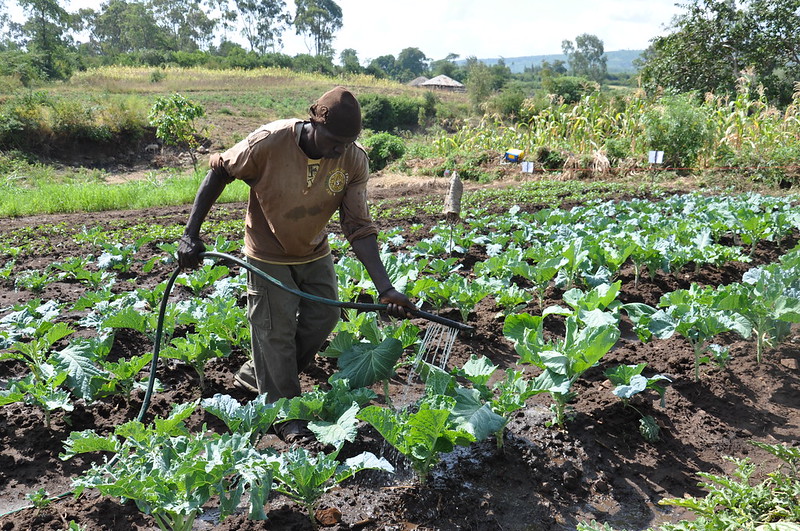
The sector contributes approximately one-fifth of Kenya’s Gross Domestic Product directly and supports many more jobs through manufacturing, transport, trade and agro-processing. More importantly, it provides employment and income for most rural households.
Yet agriculture is also the sector most exposed to climate risk.
Every planting season has increasingly become a gamble against drought, floods, pests, diseases and unpredictable weather patterns. Climate change is no longer a future threat. It is today’s farming reality.
This year has once again illustrated the scale of that challenge.
Across the country, erratic rainfall has devastated harvests and left thousands of farming households facing uncertainty. In Nakuru County, one maize farmer harvested 120 bags from five acres last season. This year, from the same land and using similar farming practices, he harvested only 26 bags.
His experience reflects what thousands of farmers are enduring across Kenya.
In Taita Taveta County, widespread crop failure has left tens of thousands of residents facing food insecurity, while in West Pokot, thousands of households require food assistance despite living adjacent to one of Kenya’s major grain-producing regions.
Meteorological forecasts continue to warn of increasing climate variability, including the likelihood of severe flooding in some areas and prolonged dry spells in others. These extremes threaten agricultural production, household incomes and national food security.
For farming families, crop failure means much more than reduced harvests. It often translates into depleted savings, inability to repay loans, withdrawal of children from school, reduced investment in future production and increased dependence on humanitarian assistance.
This is precisely why crop insurance in Kenya must become a central pillar of the country’s agricultural transformation agenda.
Last year, Kenyans spent KSh2 billion insuring their crops and animals, according to data from the Insurance Regulatory Authority.
While this nearly doubled the amount spent the previous year, the uptake remains paltry, with fewer than one per cent of Kenya’s farmers reported to insure their crops.
This gap represents one of the greatest untapped opportunities to strengthen resilience within our agricultural sector.
Crop insurance can strengthen the entire agricultural value chain
Insurance also strengthens the entire agricultural value chain.
Financial institutions are more willing to lend to insured farmers. Agribusinesses gain more reliable suppliers. Governments spend less on emergency relief. Rural economies recover more quickly following climate shocks.
The benefits therefore extend well beyond the individual farmer.
When a farmer loses an uninsured crop, the financial consequences can spread through the entire rural economy. A farmer who cannot repay a loan may reduce investment in the following season. A household that loses its income may cut spending on education, food and other essential needs. A trader may see reduced business because farming households have less disposable income.
Agricultural insurance can help break this cycle by providing a financial cushion when an insured event occurs.
The evidence supporting agricultural insurance continues to grow.
An independent evaluation of the aMaizing Project in Kenya, implemented by the Alliance of Bioversity International and CIAT, part of CGIAR, found that farmers participating in a bundled index-based crop insurance programme achieved average maize yield gains of 315 kilograms per acre and improved household food security by almost 14 per cent compared with non-participating farmers.
Importantly, the programme combined insurance with climate advisories, farmer education and digital support services. This demonstrates that insurance delivers the greatest impact when integrated into broader agricultural risk management systems.
Similarly, evidence highlighted by the UNDP Sustainable Finance Hub shows that insured smallholder farmers are significantly more likely to invest in long-term climate adaptation measures. The same studies indicate that integrating agricultural insurance into agricultural finance programmes can increase farmers’ access to credit while reducing loan defaults following climate-related shocks.
Insurance therefore creates confidence, not only for farmers, but also for banks, agribusinesses, investors and development partners.
Why are so few Kenyan farmers insured?
Despite these demonstrated benefits, uptake remains disappointingly low.
Several factors contribute to this.
Awareness remains limited. Many farmers have never received adequate information about how agricultural insurance works, what risks are covered or how claims are assessed and paid. Others perceive insurance simply as an additional production cost rather than an investment in business continuity.
This perception must change.
For a farmer, insurance should be viewed in the same context as other investments made to protect production. A farmer does not buy quality seed because failure is guaranteed. The farmer buys it because quality seed improves the chances of achieving a good harvest. Similarly, insurance does not prevent drought or floods. It provides financial protection when specified risks cause losses.
Affordability also remains a challenge for many smallholder farmers operating with limited disposable income.
A farmer with a small plot must already spend money on seed, fertilizer, pesticides, labour, land preparation and other inputs. Adding an insurance premium to those costs can appear difficult, particularly when the farmer does not fully understand the potential benefit.
On the supply side, insurers face increasing uncertainty as climate change makes weather events more frequent and more severe. This increases underwriting complexity and requires continuous investment in improved climate data, satellite monitoring and actuarial modelling.
The insurance industry therefore faces the difficult task of designing products that remain affordable to farmers while accurately reflecting the risks being insured.
Kenya has already laid the foundation
Fortunately, Kenya has already laid an important foundation.
The Government’s Kenya Agricultural Insurance Programme (KAIP) has demonstrated that public-private partnerships can significantly expand insurance access for vulnerable farmers.
Building upon this success will require increased investment in farmer education, premium support for vulnerable households, improved weather observation infrastructure and stronger collaboration between national government, county governments, insurers and development partners.
County governments have an especially important role to play.
Agricultural insurance should not operate separately from county agricultural programmes. Extension officers are already in direct contact with farmers and can help explain insurance products, coverage conditions and claims processes.
Integrating insurance awareness into agricultural extension could therefore help reach farmers who have never interacted directly with insurance companies.
Technology could transform agricultural insurance
Technology also presents an unprecedented opportunity.
Modern agricultural insurance is increasingly powered by satellite imagery, remote sensing, automated weather stations, drones, artificial intelligence and digital claims assessment.
These technologies can improve underwriting accuracy, reduce operating costs and enable faster, more transparent claims settlement.
Equally important is the rapid growth of parametric, or index-based, insurance, where payouts are triggered automatically when objective weather indicators such as rainfall, vegetation health or temperature reach predetermined thresholds.
This approach can reduce disputes, speed up compensation and potentially make insurance more affordable for smallholder farmers.
For example, rather than requiring an insurance assessor to physically inspect thousands of farms after a drought, a weather-based insurance product can use independently measured rainfall data to determine whether the agreed trigger has been reached.
The technology does not eliminate all challenges. Index-based insurance can still face basis risk, where a farmer experiences a loss but the measured index does not trigger a payout.
This makes the quality of weather and agricultural data extremely important.
Kenya is well positioned to scale digital insurance
Kenya is uniquely positioned to scale these innovations.
With widespread mobile phone ownership and a well-developed mobile money infrastructure, farmers can now purchase insurance, receive weather advisories, report losses and receive claim payments digitally, even in remote rural areas.
This creates an opportunity to move agricultural insurance away from complicated processes that require farmers to travel long distances or complete extensive paperwork.
Digital platforms can also make it easier to communicate policy conditions, provide weather information and notify farmers when a claim trigger has been reached.
However, technology should complement rather than replace farmer education.
A farmer must understand what he or she is buying, what risks are covered, what conditions apply and when compensation can be expected.
Trust will remain central to the success of agricultural insurance.
Insurance can unlock agricultural finance
Agricultural insurance also has an important role in improving access to finance.
Banks and SACCOs are often reluctant to lend to farmers whose ability to repay depends heavily on weather conditions.
A farmer may have productive land, a viable enterprise and a good repayment history, but a severe drought or flood can eliminate the income required to service a loan.
Insurance can help reduce this risk.
Banks and SACCOs should therefore increasingly consider bundling insurance with agricultural credit.
Such arrangements could give farmers access to both production finance and financial protection against specified agricultural risks.
For financial institutions, this can reduce exposure to climate-related defaults. For farmers, it can provide greater confidence to borrow and invest in productivity-enhancing technologies.
The relationship between insurance and agricultural finance is therefore critical to Kenya’s agricultural transformation.
Agribusinesses can help expand insurance coverage
Agribusinesses should also play a greater role.
Insurance can be incorporated into contract farming arrangements, farmer financing programmes and input packages.
A processor working with hundreds or thousands of farmers, for example, can work with insurers and financial institutions to develop a package that combines inputs, extension services, market access, credit and insurance.
This approach addresses several risks at once.
It can also make insurance easier for farmers to understand because it becomes part of an existing agricultural relationship rather than a separate financial product.
Farmer cooperatives and producer organisations can similarly help aggregate demand and improve access to appropriate insurance products.
What needs to change?
Increasing crop insurance in Kenya will require more than simply selling more policies.
Government must continue strengthening enabling policies and investing in climate information systems.
County governments should integrate agricultural insurance into county agricultural extension programmes and climate adaptation strategies.
Banks and SACCOs should increasingly bundle insurance with agricultural credit.
Agribusinesses should incorporate insurance into contract farming arrangements.
Development partners should continue supporting innovation, premium financing and farmer education.
The insurance industry must continue simplifying products, improving customer experience and expanding digital distribution channels.
Most importantly, farmers themselves must begin viewing insurance not as an optional expense but as an essential investment in protecting their livelihoods.
This does not mean every farmer should purchase every insurance product available. It means farmers should understand the risks facing their enterprises and consider appropriate financial protection as part of their overall farm management strategy.
Kenya needs to build a culture of agricultural risk management
Countries around the world have demonstrated what is possible when agricultural insurance becomes part of national agricultural policy.
While Kenya’s farming systems differ from those of larger economies, the underlying principle remains universal: resilient agriculture requires resilient farmers.
Climate change is already redefining the future of farming.
Our response must be equally transformative.
Quality seed, irrigation, mechanisation and extension services have become essential agricultural investments. Agricultural insurance should similarly be recognised as an important component of Kenya’s efforts to build food security, protect rural livelihoods and sustain economic growth.
The country cannot eliminate droughts, floods or other extreme weather events.
What it can do is reduce the financial damage they cause.
That requires farmers, government, insurers, banks, agribusinesses and development partners to work together to build an agricultural insurance system that is affordable, transparent, accessible and responsive to the realities of Kenyan farming.
The current level of uptake shows just how much work remains.
Fewer than one per cent of Kenyan farmers having crop insurance is not simply an insurance industry problem. It is a warning about the vulnerability of the country’s agricultural economy.
Protecting farmers is not simply an insurance issue.
It is a national development imperative.
By John Gangla
Associate General Manager, Minet Risk Solutions, Minet Kenya Insurance Brokers Ltd











Leave a Reply