KALRO and CIAT Link Nakuru Women Farmers to Markets as Waithera Beans Drive Commercial Bean Farming
Nakuru, Kenya: Women and youth farmers in Kiambogo, Nakuru County, are increasing their participation in commercial bean farming after gaining access to improved bean varieties and more reliable markets through an initiative involving the Kenya Agricultural and Livestock Research Organization (KALRO) and the Alliance of Bioversity International and CIAT.
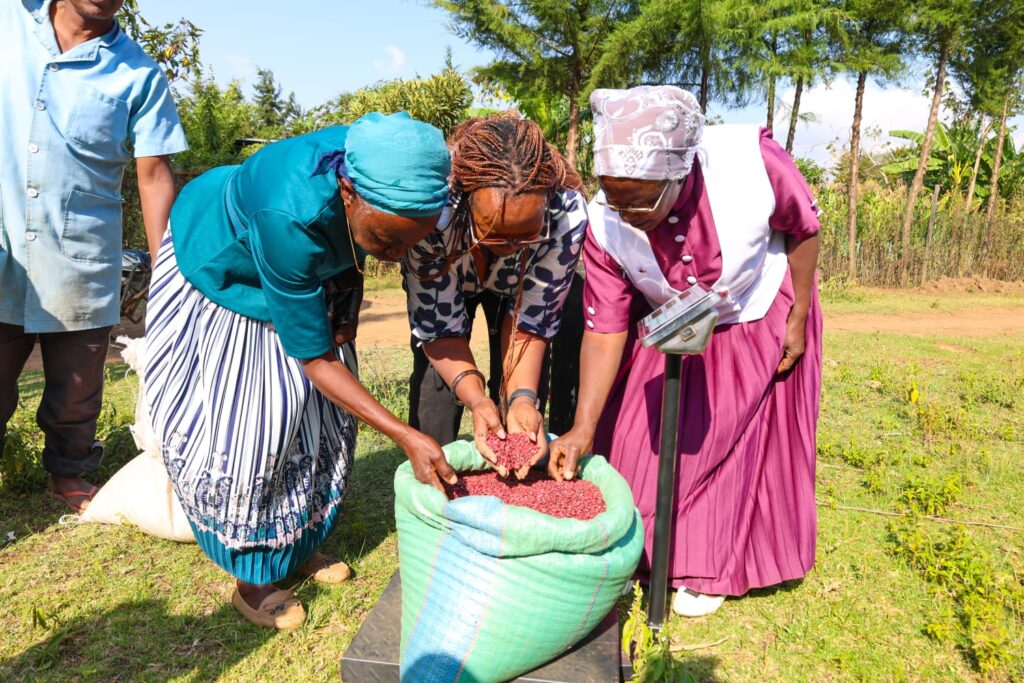
The initiative, implemented through the Pan-Africa Bean Research Alliance (PABRA), is connecting agricultural research, improved seed varieties and organised farmers with private-sector buyers, giving farmers a clearer route from production to market.
The development is providing a practical example of how improved agricultural technologies can translate into direct economic opportunities for smallholder farmers when market access is addressed alongside production.
Waithera beans lead farmer sales
The latest commercialisation effort saw Cherubet Foods purchase 92 bags of beans weighing 8,306 kilogrammes from the Ushirikiano Women Group and Kiambogo Youth Group.
Waithera beans accounted for the largest share of the beans purchased, with farmers selling 7,162 kilogrammes of the variety.
The consignment also included 789 kilogrammes of Angaza beans and 385 kilogrammes of Nyota beans.
An additional 3,240 kilogrammes, equivalent to 36 bags, of Nyota and KATB1 beans were purchased from farmers in Solai.
The figures highlight the growing importance of organised production and reliable buyers in helping farmers move beyond subsistence bean production towards a commercially oriented enterprise.
Farmers also reported strong performance by the newly introduced Waithera variety, particularly under the prevailing wet conditions.
Improved varieties open new opportunities
For many smallholder farmers, choosing the right bean variety is critical to profitability.
Yield potential alone, however, does not determine whether a variety will benefit farmers. Market demand, maturity period, tolerance to prevailing production conditions, grain quality and availability of reliable buyers all influence the commercial success of a crop.
The introduction and promotion of improved varieties such as Waithera, Angaza, Nyota and KATB1 therefore provides farmers with additional options for responding to different production and market conditions.
The KALRO and CIAT partnership is seeking to ensure that research does not stop at the development and promotion of improved varieties but extends to helping farmers commercialise the resulting harvest.
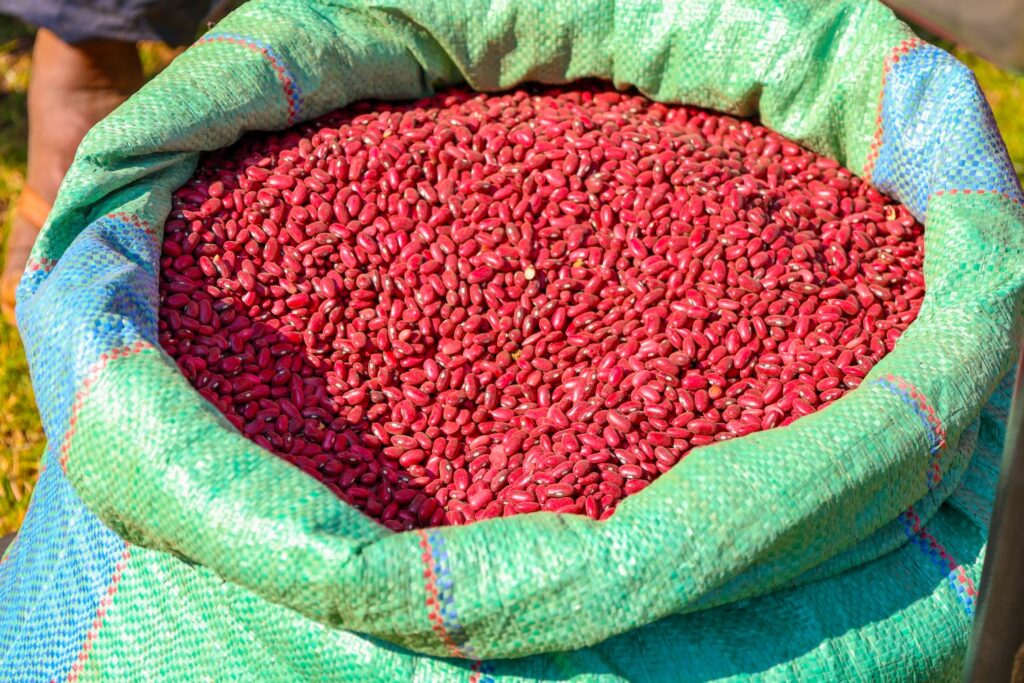
Bean farming changes fortunes for Nakuru woman
The economic impact of the initiative is already being felt among participating farmers.
Leah Wambui Wandigo, a member of the Ushirikiano Women Group, said income generated through bean commercialisation enabled her to move from farming on leased land to acquiring a title deed for her own land.
Her experience illustrates the wider economic significance of improving market access for smallholder farmers.
For women who often face greater barriers to land ownership, credit and productive resources, increased income from commercial agriculture can provide an important pathway towards greater economic independence.
The ability to generate income from a crop that has an established market can also encourage farmers to reinvest in land, inputs, livestock, education and other household enterprises.
Women and youth at the centre of commercialisation
The involvement of the Ushirikiano Women Group and Kiambogo Youth Group also demonstrates the role farmer organisations can play in agricultural commercialisation.
Organised farmers can aggregate produce, improve their bargaining position and make it easier for buyers to source larger quantities from a defined production area.
For private-sector buyers, aggregation can reduce the cost and complexity of sourcing produce from numerous individual smallholders.
This creates an important link between farmers producing on relatively small plots and commercial markets requiring consistent volumes and quality.

From agricultural research to the market
The initiative brings together several components of the bean value chain that are often treated separately.
KALRO provides research and agricultural technologies, while the Alliance of Bioversity International and CIAT contributes expertise in bean research and value-chain development through PABRA.
Farmers provide the production base, while private buyers such as Cherubet Foods create a commercial outlet for the harvest.
This connection is important because agricultural research delivers limited economic value to farmers if improved technologies do not reach farms or if farmers cannot find profitable markets for what they produce.
By linking improved varieties with organised farmers and buyers, the programme is attempting to close that gap.
Wet conditions test new bean varieties
Farmers’ observations on the performance of Waithera beans under wet conditions are also important for variety selection.
Weather conditions can have a major effect on bean production, particularly because excessive moisture can increase disease pressure and affect crop establishment and grain quality.
Varieties that perform well under specific local conditions can therefore give farmers an advantage when weather patterns become unpredictable.
For farmers in areas where rainfall varies considerably between seasons, access to information on variety performance can help improve production decisions.
Key agricultural stakeholders support the initiative
The commercialisation milestone brought together researchers, government agricultural officials, private-sector representatives, youth and farmers.
Those present included Jean-Claude Rubyogo, Director of PABRA and Global Bean Program Leader at the Alliance of Bioversity International and CIAT; David Karanja, Grain Legume Coordinator at KALRO; Peter Kibet, Deputy Institute Director at KALRO-AMRI Katumani; and Simon Kariuki, Sub-County Agricultural Officer in Gilgil.
Representatives from Cherubet Foods, alongside farmers and youth from Kiambogo, also participated in the event.
Their involvement reflects the importance of collaboration between research institutions, government extension services, farmers and private companies in developing functioning agricultural value chains.
Market access remains critical for bean farmers
Bean production has considerable potential among Kenya’s smallholder farmers because the crop has both food and commercial value.
Beans provide an important source of protein for households while also generating income when sold.
However, farmers can struggle when they produce without a clear understanding of market requirements or when they depend entirely on spot markets and intermediaries.
Reliable buyers can change this dynamic by providing farmers with a defined market for suitable varieties and encouraging production that meets specific quality and volume requirements.
The Kiambogo experience demonstrates why market linkage should form part of agricultural development programmes from the beginning rather than being treated as an issue after farmers have harvested their crops.
Research could strengthen Kenya’s bean value chain
The growing commercialisation of improved bean varieties also highlights the wider role of agricultural research in Kenya.
Researchers are increasingly expected not only to develop technologies that improve yields but also to ensure that those technologies address practical challenges faced by farmers.
For bean farmers, this means developing and promoting varieties that can perform under different environments while meeting consumer and market requirements.
It also means strengthening farmer training, seed access, extension support, aggregation and connections with processors and other buyers.
A model for women-led agricultural enterprises
The experience in Kiambogo offers a broader lesson for Kenya’s agricultural sector.
When women farmers receive access to improved technologies, organised markets and opportunities to commercialise their produce, agriculture can become a powerful source of economic empowerment.
The experience of Leah Wambui Wandigo, who used income from bean farming to acquire her own land, illustrates how agricultural earnings can translate into long-term household assets.
For KALRO, CIAT, PABRA and their partners, the continuing challenge will be to expand these opportunities to more farmers while ensuring that improved varieties remain accessible and that markets can absorb increasing production.
If the links between research, farmers and markets continue to strengthen, improved bean varieties such as Waithera could play a growing role in raising productivity, expanding women’s participation in commercial agriculture and improving incomes among smallholder farmers in Nakuru and other parts of Kenya.
https://farmerstrend.co.ke/trending/waithera-beans-nakuru-farmers-markets/https://farmerstrend.co.ke/wp-content/uploads/2026/08/KALRO-and-CIAT-Link-Nakuru-Women-Farmers-to-Markets-as-Waithera-Beans-Drive-Commercial-Bean-Farming-1024x683.jpeghttps://farmerstrend.co.ke/wp-content/uploads/2026/08/KALRO-and-CIAT-Link-Nakuru-Women-Farmers-to-Markets-as-Waithera-Beans-Drive-Commercial-Bean-Farming-150x150.jpeg# Trendingagricultural commercialization Kenya,agricultural markets Kenya,Angaza beans,bean buyers in Kenya,Bean Farming in Kenya,bean farming profits Kenya,bean markets in Kenya,bean value chain Kenya,Cherubet Foods,CIAT agriculture Kenya,CIAT Kenya,commercial bean farming Kenya,improved bean varieties,improved bean varieties Kenya,KALRO bean research,KALRO farmers,KALRO news,KALRO Waithera beans,KATB1 beans,Kenya agriculture news,Kiambogo farmers,Nakuru agriculture news,Nakuru bean farmers,nyota beans,PABRA Kenya,Ushirikiano Women Group,Waithera bean variety,Waithera beans,women farmers in Nakuru,women farmers Kenya,women in agriculture KenyaNakuru, Kenya: Women and youth farmers in Kiambogo, Nakuru County, are increasing their participation in commercial bean farming after gaining access to improved bean varieties and more reliable markets through an initiative involving the Kenya Agricultural and Livestock Research Organization (KALRO) and the Alliance of Bioversity International and CIAT.The...FarmersTrendjohn doefarmerstrend@gmail.comAdministratorFarmers Trend Ltd.








Leave a Reply