Kenya’s agricultural transformation is delivering measurable changes across key value chains, with the government reporting lower input costs, increased production and improved earnings for farmers in sectors including maize, coffee, dairy, sugar and wheat.
President William Ruto, while engaging the Parliamentary Group, county government leaders and national leadership led by Deputy President Kithure Kindiki, said the government would continue implementing reforms aimed at reducing the cost of farming, raising productivity and improving returns to producers.
The administration says the interventions are intended to make agriculture more productive and commercially viable while strengthening food security, creating employment and improving rural household incomes.
Fertiliser prices fall as maize production increases
One of the major changes highlighted by the government is the reduction in fertiliser prices.
The price of a 50-kilogramme bag of fertiliser has fallen from KSh7,500 to KSh2,500, according to the government. The reduction is expected to lower production costs for farmers and encourage greater use of fertiliser, particularly among smallholders.
At the same time, national maize production has increased from 44 million bags to 75 million bags, according to the figures presented.
The increase is significant for Kenya’s food security because maize remains one of the country’s most important food crops and a major source of income for millions of farming households.
Higher domestic production could also reduce pressure on the country to rely heavily on imports when local supplies fall short of demand.
Coffee farmers report better returns
The coffee sector is another area where the government says farmers are receiving improved returns.
According to the figures presented, coffee farmers who previously received an average of KSh60 to KSh70 per kilogramme are now earning between KSh120 and KSh150 per kilogramme.
The government has been pursuing reforms in the coffee value chain aimed at improving transparency, strengthening farmer organizations and increasing the share of earnings reaching producers.
For coffee-growing communities, better farm-gate returns can have a direct impact on household incomes and the ability of farmers to reinvest in farms through pruning, fertiliser application, pest and disease management and renovation of old coffee trees.
The government has also pledged to continue addressing brokers and other intermediaries accused of exploiting farmers within the value chain.
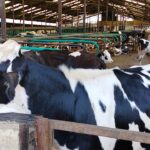
Milk production rises to 5.5 billion litres
Kenya’s dairy industry has also recorded an increase in national milk production.
Government figures show that annual milk production has risen from 4.6 billion litres to 5.5 billion litres, strengthening Kenya’s position as one of Africa’s leading milk producers.
The increase has been supported by investments in animal breeding, vaccination, extension services and dairy infrastructure.
The government is also promoting the use of sexed semen to improve dairy herd genetics and increase the number of female calves available to farmers.
Animal vaccination and identification and traceability systems are also being strengthened as part of efforts to improve livestock health, productivity and access to formal markets.
The development of stronger meat and dairy value chains is expected to create additional opportunities for farmers, processors, transporters and other businesses operating around livestock production.
Sugar farmers and workers receive government support
The sugar industry remains another major focus of agricultural reforms.
The government says sugarcane farmers are receiving KSh5,500 per tonne, while payments to farmers and factory workers are being made on time.
The measures are intended to restore confidence among sugarcane growers and encourage farmers to maintain or expand cane production.
Kenya’s sugar industry has faced years of challenges, including factory inefficiencies, delayed payments, high production costs and competition from imported sugar.
Improving payment systems and factory operations could therefore play an important role in rebuilding the sector and protecting the livelihoods of communities that depend on sugarcane farming and processing.
Wheat prices rise as government seeks to increase local production
The wheat value chain has also recorded an increase in the price paid to farmers.
According to the government, the price has risen from KSh4,750 to KSh5,100 per tonne.
Better producer prices could encourage farmers to maintain wheat production despite the crop’s high input requirements.
Kenya continues to import large quantities of wheat to meet domestic demand. Increasing local production is therefore an important component of efforts to strengthen food security and reduce exposure to international commodity prices and supply disruptions.
Government targets brokers and cartels
Beyond production and input costs, the government says it is also targeting long-standing problems within agricultural marketing.
Brokers, cartels and other intermediaries have frequently been accused by farmers of manipulating markets, delaying payments and taking a disproportionate share of the value generated along agricultural value chains.
The government says action against such practices is intended to create greater transparency and ensure farmers receive a larger share of the final value of their produce.
The issue cuts across several major agricultural industries, including coffee, tea and sugar.
For farmers, however, better regulation will only have a meaningful impact if it translates into transparent pricing, reliable markets and timely payments at farm level.
Lower costs remain critical to farm profitability
While higher commodity prices can improve farm incomes, reducing the cost of production remains equally important.
A farmer receiving a better price for produce may still make little profit if fertiliser, animal feed, pesticides, labour, energy and other inputs continue to consume most of the revenue.
The reduction in fertiliser prices is therefore particularly significant for crop farmers.
Similarly, cheaper breeding services, improved animal health and better access to feeds can determine whether dairy farmers can turn increased milk production into higher household incomes.
Agriculture remains central to Kenya’s economy
Agriculture remains one of the country’s most important economic sectors, supporting millions of households through crop production, livestock, fisheries, processing, transport and trade.
The government’s latest figures point to an agricultural strategy built around several interconnected objectives: lower production costs, higher productivity, better market prices and stronger agricultural value chains.
The success of these interventions, however, will ultimately be measured at farm level.
For farmers, the critical questions remain whether input prices will remain affordable, whether markets will remain reliable, whether payments will be made on time and whether increased production will translate into sustainable profits.
If these gains can be maintained across the different value chains, the reforms could strengthen agriculture’s contribution to food security, employment and rural economic development.
For Kenya’s farmers, the next phase will therefore be about turning increased production into consistent profitability and better household incomes.
https://farmerstrend.co.ke/farming-news/kenyas-agricultural-transformation/https://farmerstrend.co.ke/wp-content/uploads/2026/08/Kenyas-Agricultural-Transformation-1024x975.jpeghttps://farmerstrend.co.ke/wp-content/uploads/2026/08/Kenyas-Agricultural-Transformation-150x150.jpegFarmersTrendFarming Newsagricultural development Kenya,agricultural productivity in Kenya,agricultural transformation in Kenya,agricultural value chains in Kenya,agriculture in kenya,agriculture reforms under Ruto,Coffee Farmers in kenya,coffee prices in Kenya,cost of farming in Kenya,dairy farming in kenya,farm input prices Kenya,farmer incomes in Kenya,fertiliser prices in Kenya,food security Kenya 2026,government support for farmers in Kenya,Kenya agricultural transformation,Kenya agriculture ministry,Kenya agriculture news,Kenya agriculture news 2026,Kenya agriculture reforms,Kenya coffee reforms,kenya dairy farmers,Kenya dairy sector,Kenya farmer earnings,kenya farmers,kenya farming,Kenya fertiliser prices,Kenya food production.,Kenya food security,Kenya maize production,kenyan farmers,Kithure Kindiki agriculture,livestock farming in Kenya,maize production in Kenya,milk production in Kenya,President William Ruto agriculture,rural economy Kenya,sugar prices in Kenya,sugarcane farmers in kenya,wheat farming in Kenya,wheat prices in KenyaKenya's agricultural transformation is delivering measurable changes across key value chains, with the government reporting lower input costs, increased production and improved earnings for farmers in sectors including maize, coffee, dairy, sugar and wheat.President William Ruto, while engaging the Parliamentary Group, county government leaders and national leadership led by...FarmersTrendjohndoefarmerstrend@gmail.comAdministratorFarmers Trend Ltd.










Leave a Reply