Kaffir Lemon Farming in Kenya 2026: The Complete Guide to Growing Grafted Kaffir Lemon Seedlings for Profit
Kaffir Lemon Farming in Kenya: Complete Guide to Growing Grafted Kaffir Lemon Seedlings
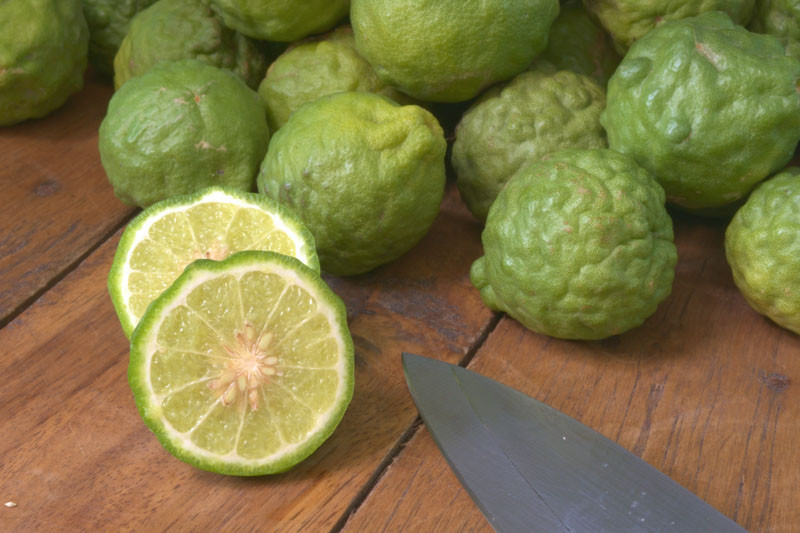
Kaffir Lemon Farming in Kenya
If you are looking for a citrus crop that earns income from more than one product, Kaffir Lemon deserves a place on your farm. Unlike ordinary lemons, which are mainly grown for their juice, Kaffir Lemon is grown for both its leaves and fruits. Fresh leaves are supplied to hotels, restaurants, supermarkets, food processors, and individual consumers. The fruits are processed into essential oils used in the cosmetic, perfume, soap, and herbal industries.
This gives farmers more than one market to target. A restaurant may buy fresh leaves every week, while a processor buys mature fruits for oil extraction. Instead of depending on one product, a Kaffir Lemon orchard provides several income opportunities throughout the year.
Kaffir Lemon is scientifically known as Citrus hystrix and belongs to the Rutaceae family, together with oranges, lemons, limes, tangerines, and grapefruits. The tree produces glossy double-lobed leaves with a strong citrus aroma and rough green fruits rich in essential oils.
The success of a Kaffir Lemon orchard begins with the quality of the seedlings. Poor planting materials often result in uneven growth, delayed maturity, and poor yields. Farmers Trend Limited supplies certified Grafted Kaffir Lemon Seedlings produced from carefully selected mother trees. Every seedling is inspected before sale to ensure healthy roots, vigorous growth, and uniform performance in the field.
Why Farmers Prefer Grafted Kaffir Lemon Seedlings
One of the biggest mistakes new farmers make is buying seedlings raised from seed because they are cheaper. Although seed-grown trees survive, they rarely grow uniformly. Some produce more leaves than others, some remain small for years, while others produce fruits with different characteristics.
A grafted seedling removes this uncertainty. The upper part of the plant comes from a carefully selected mother tree known for healthy growth and good leaf production, while the rootstock provides strength and adaptability.
A well-managed orchard planted with grafted seedlings develops more evenly, making pruning, irrigation, spraying, harvesting, and overall management much easier.
Farmers who invest in quality grafted seedlings usually spend less time replacing weak trees during the first few years after planting.
Why Grow Kaffir Lemon?
Most citrus farmers sell fruits once or twice each season. Kaffir Lemon offers something different because both the leaves and fruits have commercial value.
Fresh leaves are harvested regularly and supplied to hotels, restaurants, supermarkets, caterers, and food processors. The leaves are widely used in Thai cuisine, Vietnamese dishes, Indonesian recipes, soups, curries, seafood dishes, sauces, and herbal teas.
The fruits are rarely sold for juice. Instead, processors buy them for extracting essential oils used in perfumes, soaps, shampoos, cosmetics, candles, cleaning products, herbal medicine, and aromatherapy products.
Demand for fresh leaves remains steady because restaurants require continuous supply. Farmers located near towns and cities often establish regular supply contracts with hotels and restaurants.
Another advantage is that harvesting leaves encourages new shoots to develop. Proper harvesting therefore supports continuous leaf production while providing farmers with regular income.
Ecological Conditions for Kaffir Lemon Farming
Choosing the right site determines how productive your orchard will be over the next twenty years or more.
Altitude
Kaffir Lemon performs well from about 300 metres to 2,000 metres above sea level.
The best growth is normally achieved between 800 and 1,800 metres where temperatures remain moderate throughout the year.
Farmers in lower coastal areas also produce excellent trees provided irrigation and soil fertility are well managed.
Temperature
The ideal temperature ranges between 20°C and 30°C.
Young trees grow quickly under warm conditions with adequate soil moisture.
Temperatures below 15°C slow growth and delay new leaf development.
Extremely hot conditions above 35°C increase moisture loss through the leaves. Without irrigation, young trees become stressed and produce fewer new shoots.
Rainfall
Annual rainfall between 900 mm and 1,500 mm is suitable for commercial production.
Rainfall should be spread throughout the year rather than falling within a short period.
Heavy rainfall encourages rapid vegetative growth but also creates favourable conditions for fungal diseases if orchards have poor air circulation.
Dry conditions reduce leaf production and slow tree growth. Farmers in dry areas such as Makueni, Kitui, and parts of Kajiado achieve good results by installing drip irrigation.
Sunlight
Kaffir Lemon requires full sunlight throughout the day.
Trees planted under shade become tall and weak as they compete for light. They also produce fewer leaves and develop a more open canopy.
An orchard should receive at least eight hours of direct sunlight every day.
Relative Humidity
Moderate humidity promotes healthy growth.
Very humid conditions increase the risk of fungal diseases, especially where pruning is neglected and the canopy becomes overcrowded.
Proper spacing and annual pruning improve air circulation and reduce disease pressure.
Wind
Strong winds damage young trees by breaking branches and stripping leaves.
Farmers establishing large orchards should plant windbreaks around the farm before planting the main crop. Grevillea and Casuarina are commonly used because they reduce wind speed without creating excessive shade.
Soil Requirements
Healthy roots require deep, fertile, and well-drained soils.
Kaffir Lemon grows best in sandy loam and loam soils rich in organic matter.
Heavy clay soils hold water for long periods and encourage root diseases such as Phytophthora root rot.
Rocky or shallow soils restrict root development and reduce tree growth during dry periods.
Soil pH
The recommended soil pH ranges between 5.5 and 6.5.
A soil test should always be carried out before planting. The results help determine soil fertility, nutrient deficiencies, and whether lime or other soil amendments are required.
Skipping soil testing often leads to unnecessary fertilizer expenses and poor tree performance.
Water Requirements
Young trees require regular watering until they establish strong root systems.
Drip irrigation provides the most efficient method because water reaches the root zone directly while reducing evaporation losses.
During prolonged dry weather, maintaining adequate soil moisture encourages continuous flushing of new leaves, improves flowering, and supports healthy fruit development.

Best Areas for Kaffir Lemon Farming in Kenya
Kaffir Lemon adapts well to many parts of Kenya where temperatures remain warm and soils drain well.
Farmers in Murang’a, Kiambu, Nyeri, Kirinyaga, Embu, Meru, Nakuru, Nyandarua, Machakos, Makueni, Kitui, Kisii, Bungoma, Kakamega, Kericho, Bomet, Uasin Gishu, Trans Nzoia, Narok, Kajiado, Kilifi, Kwale, Taita Taveta, Mombasa, Kisumu, Busia, Siaya, Migori, and Homa Bay have suitable conditions for commercial production.
Farmers in drier counties should invest in drip irrigation to maintain consistent growth throughout the year.
Orchard Planning and Plant Population
Good planning makes orchard management easier for many years.
Before planting, mark the entire field using measuring tapes, pegs, and string lines. Straight planting rows improve irrigation layout, spraying, pruning, harvesting, and movement within the orchard.
Farmers Trend Limited recommends a spacing of 2 metres × 3 metres, giving a plant population of approximately 780 Grafted Kaffir Lemon trees per acre.
This spacing allows efficient use of land while providing enough room for tree development. As trees mature, annual pruning helps maintain sufficient sunlight penetration and air movement within the orchard.
Estimated Cost of Establishing One Acre of Kaffir Lemon
The table below shows an example budget for establishing one acre of Grafted Kaffir Lemon. Costs vary depending on labour charges, transport, irrigation design, and local input prices.
| Item | Quantity | Estimated Cost (KSh) |
|---|---|---|
| Land preparation | 1 acre | 18,000 |
| Soil testing | 1 sample | 5,000 |
| Grafted Kaffir Lemon Seedlings | 780 seedlings | 273,000 |
| Well-decomposed farmyard manure | 2 tonnes | 45,000 |
| Digging planting holes and planting labour | 780 holes | 28,000 |
| Drip irrigation installation | 1 acre | 65,000 |
| Pest and disease management | Year 1 | 20,000 |
| Weeding | Year 1 | 8,000 |
| Pruning and tree training | Year 1 | 5,000 |
| Miscellaneous expenses | Transport, replacements and tools | 20,000 |
Total Estimated Establishment Cost
The estimated investment for establishing one acre is approximately KSh 487,000.
This figure covers the major establishment expenses during the first year. Farmers who already have irrigation infrastructure or organic manure on the farm often reduce their establishment costs.
Expected Returns Per Acre
Profitability depends on orchard management, irrigation, harvesting practices, and market access.
An orchard planted at a spacing of 2 metres by 3 metres contains approximately 780 trees.
Many commercial growers begin harvesting leaves before full fruit production starts. Proper harvesting encourages fresh leaf flushes, allowing farmers to supply hotels, restaurants, and food processors several times each year.
Below is an example showing how different market conditions affect gross income.
| Scenario | Estimated Gross Income Per Acre (KSh) |
| Conservative production | 850,000 |
| Average commercial production | 1,250,000 |
| Well-managed orchard with premium markets | 1,800,000 |
Farmers who supply restaurants directly often receive better prices than those selling through brokers. Additional income is possible from fruit sales to essential oil processors and manufacturers of herbal and cosmetic products.
Improving quality, maintaining regular supply, and building relationships with buyers often has a greater impact on profits than increasing production alone.
Step by Step Guide to Planting Grafted Kaffir Lemon Seedlings
A Kaffir Lemon orchard should be planned before the first hole is dug. Small mistakes made during planting often affect the orchard for many years. Trees planted too deep develop poor root systems. Poor spacing increases disease problems. Poor hole preparation slows growth during the first year.
The first few months after planting determine how quickly your orchard establishes and how soon the trees begin producing healthy leaves and fruits.
Choosing the Right Site
Select land with fertile, well-drained soil. Avoid areas where water stands for several days after heavy rain. Citrus roots require oxygen to grow. Waterlogged soils encourage root diseases and reduce tree growth.
Choose a field that receives full sunlight throughout the day. Trees planted under shade produce fewer leaves and become weak as they stretch towards light.
Where possible, establish the orchard close to a reliable water source. Irrigation becomes important during dry months, especially during the first two years.
Avoid valleys where cold air settles because low temperatures slow growth and increase disease pressure.
Carry Out Soil Analysis Before Planting
Many farmers skip soil testing because they see it as an unnecessary expense. This often leads to poor tree performance and unnecessary fertilizer costs.
A soil test helps determine:
- Soil pH.
- Organic matter content.
- Phosphorus levels.
- Potassium levels.
- Calcium and magnesium levels.
- Micronutrient deficiencies.
The report also recommends corrective measures before planting.
Correcting soil problems before planting is much easier and cheaper than trying to fix them after the orchard has been established.
Clearing the Land
Remove all bushes, shrubs, old tree stumps, and perennial weeds.
Large roots left in the field often interfere with digging and later decompose, leaving air pockets around young roots.
If the land has been under cultivation, remove old crop residues that may carry pests and diseases.
Where couch grass or stubborn perennial weeds are present, control them before planting begins.
Ploughing the Land
Plough the land at least once to loosen compacted soil.
Where the soil is hard, carry out a second ploughing or harrowing to produce a fine seedbed.
Loose soil improves drainage and allows young roots to spread more quickly.
Avoid working the land when it is excessively wet because this causes compaction.
Marking the Orchard
Proper field layout produces a neat orchard that is easier to manage.
Use a measuring tape, pegs, and string to mark every planting position.
Maintain a spacing of 2 metres between trees and 3 metres between rows.
This spacing accommodates approximately 780 Grafted Kaffir Lemon trees per acre.
Straight planting rows make irrigation installation, spraying, fertilizer application, mowing, harvesting, and movement within the orchard much easier.
Before digging holes, walk through the entire field and confirm that every row is straight.
Digging Planting Holes
Dig all planting holes several weeks before transplanting.
Each planting hole should measure:
- Length: 60 cm
- Width: 60 cm
- Depth: 60 cm
Separate the topsoil from the subsoil while digging.
The darker topsoil contains most of the organic matter and beneficial microorganisms. It should not be mixed with the poorer subsoil.
Leaving planting holes open for one to two weeks allows sunlight to reduce harmful soil organisms.
Preparing the Planting Holes
Mix the topsoil with well-decomposed farmyard manure before refilling the hole.
Apply approximately 20 to 25 kg of well-decomposed manure per planting hole.
Never use fresh manure because it generates heat during decomposition and damages young roots.
Avoid placing manure directly against the seedling stem.
Fill the planting hole using the enriched topsoil first. The remaining subsoil should be placed on top.
The soil should settle slightly above ground level because it sinks after watering.
Receiving Seedlings from the Nursery
Healthy seedlings should remain upright throughout transport.
Avoid stacking seedlings on top of each other.
Protect seedlings from direct sunlight and drying winds while transporting them to the farm.
If planting does not begin immediately, place seedlings in a shaded area and water them regularly.
Never leave seedlings inside closed vehicles for long periods because excessive heat damages young plants.
Inspect Every Seedling Before Planting
Before planting begins, inspect every seedling carefully.
A healthy Grafted Kaffir Lemon Seedling should have:
- Healthy green leaves.
- A straight stem.
- A well-healed graft union.
- No cracks on the stem.
- No insect damage.
- No signs of disease.
- A vigorous root system inside the container.
Reject seedlings showing weak growth, broken stems, or poor graft unions.
Replacing poor seedlings before planting saves both time and money.
Best Time to Plant
The best planting period is at the beginning of the rainy season.
Natural rainfall reduces transplant shock and encourages rapid root development.
Where drip irrigation is available, planting can continue throughout the year provided adequate watering is maintained.
Avoid planting during extremely hot afternoons.
Morning or late afternoon planting reduces water stress.
How to Plant Grafted Kaffir Lemon Seedlings
- Water the seedling while it is still inside the nursery container.
- A moist root ball remains intact during transplanting.
- Carefully remove the container without disturbing the roots.
- Never pull the seedling by the stem.
- Place the seedling at the centre of the planting hole.
- The graft union should remain above the soil surface.
- Planting too deeply encourages stem diseases and weak growth.
- Fill the hole gradually while gently pressing the soil around the root ball to remove air pockets.
- After planting, water thoroughly to help the soil settle around the roots.
Staking Young Trees
Young Kaffir Lemon trees benefit from staking during the first year.
Drive a wooden stake firmly into the ground beside the seedling.
Tie the stem loosely using soft material.
Avoid tight knots because they damage the bark as the tree grows.
The stake protects the tree from strong winds and keeps the stem growing straight.
Mulching
Mulching conserves soil moisture, suppresses weeds, and improves soil structure.
Suitable mulching materials include:
- Dry grass.
- Maize stover.
- Bean residues.
- Dry leaves.
Spread mulch around the tree while leaving a gap of about 15 cm around the stem.
Mulch touching the stem encourages fungal diseases and insect damage.
Replace mulch regularly as it decomposes.
Watering Newly Planted Trees
Young trees require consistent moisture during establishment.
Immediately after planting, apply approximately 15 to 20 litres of water per tree.
During dry weather, irrigate two to three times each week depending on soil type and weather conditions.
Sandy soils lose moisture faster than clay soils and therefore require more frequent irrigation.
Avoid excessive watering because saturated soils reduce oxygen available to the roots.
Replacing Dead Seedlings
Inspect the orchard regularly during the first month.
Replace any dead or weak seedlings immediately.
Delaying replacement results in uneven tree sizes that remain noticeable throughout the life of the orchard.
Maintaining a uniform orchard simplifies pruning, spraying, irrigation, and harvesting.
Weed Management During Establishment
Young Kaffir Lemon trees compete poorly with weeds.
Keep a weed-free circle of at least one metre around each tree.
Hand weeding is preferred during the establishment stage to avoid damaging young stems.
Mulching also reduces weed growth while conserving soil moisture.
Common Planting Mistakes
Several common mistakes reduce orchard performance.
- Planting the graft union below the soil.
- Using fresh manure.
- Planting in waterlogged soils.
- Failing to water immediately after planting.
- Using poor-quality seedlings.
- Ignoring soil testing.
- Planting in crooked rows.
- Allowing weeds to compete with young trees.
- Delaying replacement of dead seedlings.
Each of these mistakes affects growth during the first year and reduces long-term productivity.
Practical Advice from Farmers Trend Limited
At Farmers Trend Limited, one of the most common problems we see is farmers planting seedlings immediately after delivery without preparing the land. Proper preparation should always be completed before the seedlings arrive.
Another common mistake is purchasing seedlings several weeks before planting. Young seedlings perform best when they are transplanted soon after delivery.
Healthy grafted seedlings establish quickly when they are planted correctly, watered consistently, and protected from weeds during the first year. A strong start gives the orchard the best chance of producing healthy leaves and fruits for many years.
The next section covers nutrient management, irrigation schedules, fertilizer programmes by tree age, pruning, canopy management, and how to encourage continuous leaf production throughout the year.
Why Buy Grafted Kaffir Lemon Seedlings from Farmers Trend Limited?
Farmers Trend Limited produces certified fruit seedlings for farmers across Kenya.
Our nursery selects healthy mother trees, maintains strict propagation standards, and carefully inspects every seedling before sale. This helps farmers establish orchards with healthy, vigorous trees from the beginning.
Our agronomists also guide farmers on land preparation, orchard layout, planting, irrigation, nutrition, pruning, pest management, disease control, harvesting, and long-term orchard management.
Healthy seedlings are one of the most important investments you will make when establishing a Kaffir Lemon orchard.
Grafted Kaffir Lemon Seedlings are available at KSh 350 per seedling.
For orders or technical advice, contact:
Farmers Trend Limited
- Phone: 0790 509 684
- Phone: 0724 559 286
- Email: info@farmerstrend.co.ke
- Website: www.farmerstrend.co.ke
- Location: Murang’a, Kenya
Related Articles for Internal Linking
• Hass Avocado Farming in Kenya
• Pixie Orange Farming Guide
• Meyer Lemon Farming in Kenya
• Macadamia Farming in Kenya
• Dragon Fruit Farming Guide









Leave a Reply