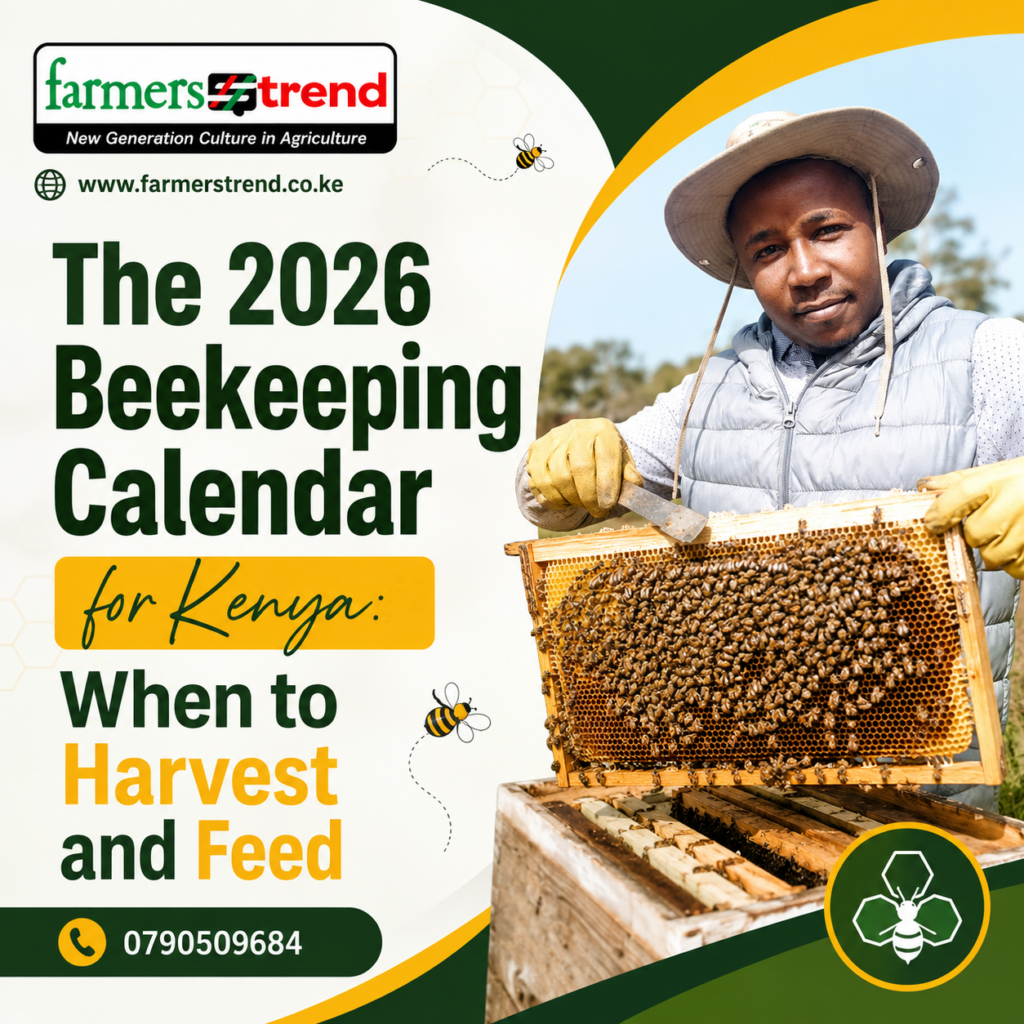
The 2026 Beekeeping Calendar for Kenya: When to Harvest and Feed
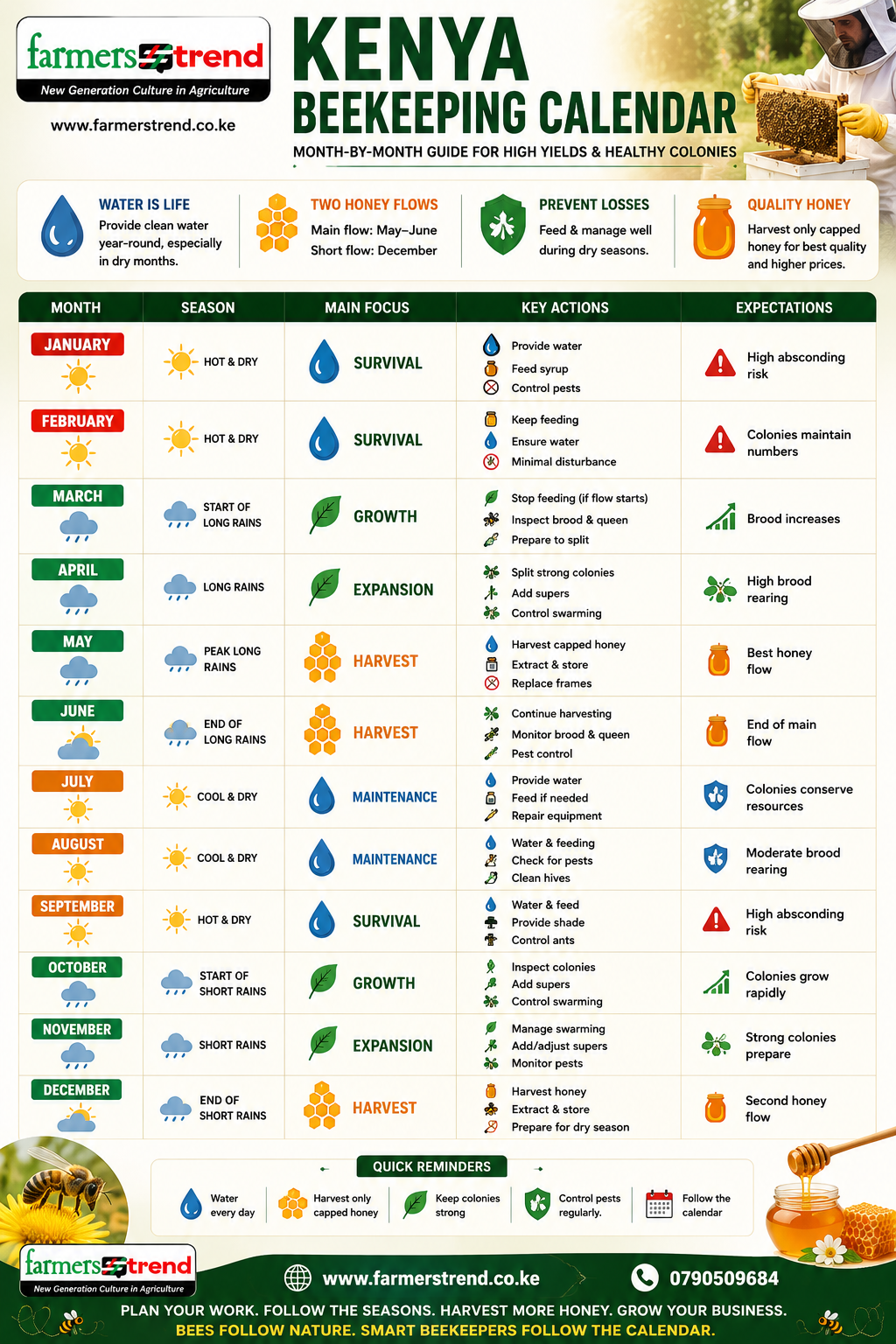
The best months for honey harvesting in Kenya are May-June after the long rains and December following the short rains. Dry months require supplemental feeding and water, while rainy seasons focus on colony expansion and swarm management. Following a seasonal beekeeping calendar can significantly reduce colony losses and increase honey production.
Have you ever opened a hive expecting a full harvest, only to find your bees have vanished? Or worse, have you harvested honey too early, only to watch it ferment and spoil within weeks?
These are common experiences among Kenyan beekeepers. A farmer in Kitui once told me he lost half his colonies in one dry season. Another in Machakos harvested fifty kilos of honey that turned sour before he could sell it. Both had one thing in common. They did not understand the rhythms of the beekeeping calendar.
The difference between a profitable apiary and a disappointing one often comes down to timing. You cannot treat every month the same way. The bees follow the seasons, and if you want to get more honey, you must learn to follow that same rhythm.
In this comprehensive guide by Farmers Trend Limited, I will walk you through a practical month-by-month beekeeping calendar for Kenya. You will learn exactly when to feed, when to harvest, when to split your hives, and when to leave your bees alone. These strategies have helped hundreds of farmers across Kenya turn their apiaries into profitable businesses.
WHY TIMING MATTERS IN KENYAN BEEKEEPING
Let me start with a reality that many beekeepers face. Colony losses during dry seasons can be substantial. Studies conducted in East Africa have shown that beekeepers often experience significant losses during extended dry periods, particularly where forage and water are limited.
Most of these losses happen when food becomes scarce, when water dries up, and when temperatures soar. Under these conditions, bees do what they must to survive. They abscond. They leave the hive and search for a better home.
Here is the hard truth. This is not the bees failing you. This is you failing the bees.
When you understand the beekeeping calendar, you can prevent these losses. Beekeepers who follow a seasonal schedule lose fewer colonies. They harvest more honey. They build sustainable businesses.
Poor timing also destroys honey quality. Harvest before the honey is properly capped, and you get watery honey that ferments in storage. Harvest too late, and the bees may have consumed what you were counting on. One beekeeper I worked with in Narok showed me honey that had turned to vinegar because he harvested during the wrong season. He lost everything.
The solution is simple but requires discipline. Follow the calendar. Do the right work at the right time. Your bees will reward you with more honey, fewer losses, and better profits.
Key Factors Affecting Beekeeping Success in Kenya
| Factor | Impact | Time of Year |
|---|---|---|
| Colony losses | Highest during dry season | January-February |
| Queen egg-laying | Peaks with pollen availability | March-April, October-November |
| Main honey flow | Highest nectar production | May-June |
| Absconding risk | Extreme when water absent | January-February, July-September |
| Swarming risk | High during rapid colony growth | March-April, October-November |
| Pest activity | Highest during warm wet periods | April-May, October-November |
The Financial Impact of Poor Timing
Consider this example from my experience. I worked with a farmer in Kitui who had fifty hives. He harvested honey only once a year, in June. He would put out his hives in January, leave them alone, and come back in June to collect whatever honey was there. He was happy if he got five kilos from each hive. That was about seventy-five thousand shillings a year from fifty hives.
When I introduced him to a beekeeping calendar, everything changed. We started providing water in January and February. We split his hives in March and April. We harvested in May and June, and again in December after the short rains. By the end of the year, he had harvested over twenty kilos per hive. That was three hundred thousand shillings from the same fifty hives. He had tripled his income just by following a simple seasonal schedule.
That is the power of timing. And that is what this beekeeping calendar is all about.
I have seen this same story repeat itself across Kenya. In Narok, a farmer with thirty hives was getting barely anything from his bees. He was about to give up. We showed him how to time his activities. Within one season, his honey production doubled. In Machakos, a women’s group was struggling with their apiary. They were losing hives to absconding every dry season. We taught them about providing water and shade. The next dry season, they lost almost no hives.
These are real examples of what happens when you align your work with the natural rhythms of the environment. The bees are doing their part. You just need to do yours at the right time.
JANUARY – FEBRUARY: THE DRY SEASON AND FAMINE PERIOD
January and February are the hottest months in most parts of Kenya. The short rains have ended. The long rains are still months away. Forage is scarce. Water is hard to find. Your bees are under extreme stress.
Understanding Colony Stress
During these months, your bees face two major challenges. First, food becomes increasingly difficult to find. The flowers that bloomed during the rains have withered. The nectar flow has stopped. Second, the heat forces bees to work harder to cool the hive. They fan their wings, bring in water, and use more energy than usual.
This combination creates what beekeepers call the “famine period.” A strong colony that entered the dry season with plenty of stores may survive. A weak colony may starve. And many colonies simply leave.
The leaving, or absconding, is the biggest risk you face. When the hive becomes too hot, when food is too scarce, and when water is nowhere nearby, the bees pack up and go. They do not wait for better conditions. They leave to find them.
You need to understand that this is not the bees being difficult. African honey bees have survived for thousands of years by moving when conditions are bad. They do not stay in a place that is killing them. A hive without food and water becomes exactly that, a death trap.
During this time, watch for signs of starvation. Dead bees at the entrance of the hive or unusually aggressive bees can indicate that the colony is struggling. Do not wait until the colony is too weak to save. Check your hives regularly and act early.
Expert Action Plan for January and February
Here is what you must do to keep your bees alive and in place during these critical months.
Provide Water Without Fail
This is the most important thing you can do. Place clean water containers within 500 meters of your apiary. Fill them every three days. Add floating sticks or stones so bees can land without drowning. Even a shallow dish with pebbles and water makes a difference. Without water, your bees will leave.
Bees need water for cooling the hive and for making honey. A single colony can use up to a liter of water per day during hot weather. If you have thirty colonies, that is thirty liters of water every day. Provide enough water for your bees.
Check Food Stores Carefully
Open one hive every two weeks. Lift the frames. If they feel light, the colony needs feeding. Use a 1:1 sugar syrup mixture. Dissolve one kilogram of sugar in one liter of warm water. Let it cool. Place it inside the hive using a top feeder or frame feeder. Never leave syrup outside where it attracts robbers.
Create Shade
If your hives sit in direct sunlight, the heat inside becomes unbearable. Plant quick-growing trees like grevillea or provide shade cloth. Move hives under existing trees if possible. A shaded hive stays cooler, reducing the work bees must do to regulate temperature.
Bees need a hive temperature of about 35 degrees Celsius to survive. Anything above 40 degrees can kill them. In January and February, temperatures can easily exceed 40 degrees in many parts of Kenya. Shade is not optional. It is essential.
Reduce Entrances
During the dry season, robber bees become aggressive. They try to steal honey from weaker colonies. Reduce your entrance size to about one centimeter. This makes defense easier for your bees. A small entrance is easier to guard than a large one.
Limit Disturbance
Every time you open a hive, you disrupt the colony. In the dry season, when bees are stressed, this can trigger absconding. Only open hives when you must. When you do, work quickly. Do not pull every frame. Do what needs to be done and close the hive.
Pro Tip for Experienced Beekeepers
Consider using pollen substitutes during this period. While pollen is not as critical as nectar, providing a pollen patty can keep brood production steady, ensuring your colony remains strong when the rains return. Mix one part pollen substitute with one part sugar syrup to form a patty. Place it directly on the top bars near the brood nest.
What to Avoid in January and February
Do not harvest honey during this period. The bees need whatever stores they have to survive. Harvesting now will weaken the colony and increase absconding risk.
Do not split colonies. The bees are already stressed. Splitting will only weaken them further.
Do not leave water containers empty. Empty containers frustrate the bees and drive them to look elsewhere. Once they find another water source, they may move their whole colony there.
MARCH – APRIL: THE LONG RAINS AND THE GREAT BUILD-UP
By March, the long rains have usually begun. The land transforms. Brown turns to green. Flowers bloom everywhere. Nectar starts flowing again. Your bees respond immediately.
The Biology Behind the Build-Up
When the rains arrive, plants respond quickly. New flowers appear. Bees bring in pollen. Pollen triggers something remarkable in the colony. It tells the queen to lay more eggs.
Under favorable conditions, a healthy queen can lay hundreds to more than a thousand eggs per day. With abundant pollen, the colony population explodes. Within weeks, you have thousands of new foragers ready to collect nectar and make honey.
But this rapid growth comes with a risk. Swarming. A colony that grows too fast may decide to split. The old queen leaves with a portion of the bees, taking away your honey production and leaving you with a weaker colony.
Why Swarming Happens
Swarming is the bee’s natural way of reproducing. When a colony becomes too crowded, the bees prepare to split. They build queen cells, stop foraging as actively, and prepare to leave.
The problem is that swarming reduces honey production. A colony that swarms loses about 60 percent of its workers. The remaining bees must raise a new queen and rebuild the colony. This takes time and resources, reducing the amount of honey you can harvest.
The key to controlling swarming is understanding the signs. Queen cells are the most obvious sign. But you may also notice that the bees are less active at the entrance, or that the colony is not bringing in as much nectar as before. These are early warning signs.
Expert Action Plan for March and April
Stop Supplementary Feeding
With the rains and flowers, your bees should have plenty of food. Stop feeding sugar syrup. Continuing to feed encourages the queen to lay even more eggs, increasing swarm risk unnecessarily.
Inspect for Queen Cells
Open your hives every seven to ten days. Look for queen cells, those peanut-shaped structures built on the bottom or sides of the comb. A single queen cell may just be normal. Multiple queen cells mean swarming is imminent.
Prevent Swarming
If you find multiple queen cells, you have two choices. First, you can split the colony. Move the old queen and some bees to a new box. Leave the old hive with the queen cells. This creates two colonies from one.
Second, you can remove the queen cells and add more space. This only works if you catch the swarming urge early. If the bees are determined to swarm, removing queen cells may not stop them.
Add Space
As your colony grows, it needs room. Add another box or more frames. A crowded hive is a swarming hive. Give your bees space to store honey and rear brood.
Install Queen Excluders
If you are serious about honey production, use queen excluders. These grids let worker bees pass through but block the queen. Place one between your brood box and honey supers. This keeps the queen from laying eggs in your honey storage area.
What to Avoid in March and April
Do not ignore swarm preparations. Many farmers think swarming is natural and let it happen. But if you want honey, you must control swarming.
Do not let your hives become overcrowded. Space is essential for colony health and honey production.
Do not use too much smoke during inspections. The bees are already active and sensitive. Too much smoke can disturb them unnecessarily.
MAY – JUNE: THE MAIN NECTAR FLOW AND MAJOR HARVEST
This is what you have been waiting for. The main honey flow. Your bees are working at full capacity. Nectar is abundant. Honey is being stored rapidly.
Recognizing When Honey is Ready
You must know when to harvest. Harvest too early and your honey is watery. Harvest too late and the flow may end, leaving you with less than you expected.
The rule is simple. Harvest when 80 percent of the honey comb is capped with wax. The bees cap honey when its moisture content drops below 18 percent. This is the sign that the honey is ready.
You can also test a frame. Shake it gently. If honey drips out, it is not ready. If nothing comes out, you can harvest. This simple test works anywhere without equipment.
The Importance of Timing in Harvesting
Harvesting at the right time matters for two reasons. First, quality. Honey harvested too early has high moisture content and will ferment. Fermented honey is unsellable.
Second, quantity. If you wait too long, the nectar flow may end and the bees may consume the honey. You could lose your entire harvest.
One beekeeper in Baringo told me he lost two hundred kilos of honey because he waited too long to harvest. The season changed, the flowers died, and the bees ate what he thought was his harvest. He learned the hard way that timing matters.
Step-by-Step Harvesting Guide
Prepare Your Equipment
You need a smoker, a bee brush, a hive tool, a sharp knife or uncapping fork, and clean food-grade containers. Wash everything with hot water. Dry thoroughly. Contaminated honey sells for less.
Smoke Gently
Use a few puffs of smoke at the entrance and under the lid. The smoke calms the bees by masking alarm pheromones. Do not overdo it. Too much smoke taints the honey.
Remove Supers
Lift the honey supers off carefully. Place them in a clean area away from the main apiary. Cover them to keep bees and insects away.
Brush Off Bees
Use the bee brush gently. Do not crush bees. Crushed bees release alarm pheromones that agitate the colony. You can also shake frames gently to remove bees.
Uncap the Honey
Use your knife or uncapping fork to remove the wax cappings from both sides of each frame. Collect the cappings in a container. These can be melted into valuable beeswax.
Extract the Honey
If you have an extractor, spin the frames to remove honey. If not, crush and strain. Crush the comb with a clean wooden tool. Strain through a clean cloth or fine sieve.
Store Properly
Strain the honey one more time to remove all wax bits. Store in clean, airtight containers. Keep in a cool, dry place away from direct sunlight. Label with the harvest date.
Pro Tip for Experienced Beekeepers
Extract honey in the evening when temperatures are cooler. At night, bee activity is lower, and the honey flows more easily. Many large-scale beekeepers prefer harvesting during cooler weather for this reason.
Also, consider using a honey refractometer to check moisture content. This tool costs a few thousand shillings but pays for itself by ensuring your honey is always at the right moisture level.
Common Harvesting Mistakes to Avoid
| Mistake | Consequence | Solution |
|---|---|---|
| Harvesting uncapped honey | Fermentation, spoilage | Wait for 80% capping |
| Harvesting too late | Reduced yield | Watch for nectar flow end |
| Using dirty equipment | Contaminated honey | Clean and dry thoroughly |
| Using too much smoke | Tainted honey taste | Use minimal smoke |
| Harvesting during rain | Moisture issues | Harvest on dry days |
| Leaving honey exposed | Robbing from other bees | Cover supers immediately |
JULY – SEPTEMBER: THE COLD SEASON AND MINOR HARVEST
After the main harvest, the weather cools. July, August, and September are the coldest months in Kenya. For highland areas like Limuru, Nyeri, and parts of the Rift Valley, this period presents unique challenges.
Managing Cold Weather
In highland areas, cold reduces brood rearing. The queen lays fewer eggs. The colony population shrinks. Moisture becomes a problem. Cold, damp conditions inside the hive encourage mold and fungal diseases.
Some flowers still bloom during this period, particularly in higher elevations. You may get a minor harvest if conditions are right. But production will be lower than the main season.
Why Cold Weather Management Matters
Many farmers ignore their bees during the cold season. They assume the bees will take care of themselves. This is a mistake.
Cold weather can kill bees. Moisture can kill bees. Pests that take advantage of weakened colonies can kill bees. You must stay vigilant throughout the year, not just during the honey flow.
In highland areas, beekeepers who ignore their bees during the cold season often lose colonies to moisture and disease. A simple thing like tilting the hive to let moisture run out can save a colony.
Expert Action Plan for July to September
Reduce Entrance Sizes
Smaller entrances keep the hive warmer and defend against robbers. Robbing increases when other colonies are food-stressed. A small entrance is easier for guard bees to protect.
Provide Insulation
In very cold areas, add insulation. Place foam, dry grass, or old cloth under the hive lid. This traps heat and keeps the colony warm. Commercial beekeepers sometimes use specialized insulation boards for this purpose.
Check Ventilation
Moisture inside the hive causes problems. Ensure your hive has good airflow. Tilt it slightly forward so any condensation runs out the front. Poor ventilation leads to mold, which can kill a colony.
Monitor Robbing
Watch for bees fighting at the entrance. If robbing starts, reduce entrances further. Consider moving weak hives to another location if robbing is severe.
Feed if Necessary
If stores are low, feed. Use the same 1:1 sugar syrup mixture. Some beekeepers also provide pollen supplements during this period to support brood rearing.
What to Avoid in July to September
Do not harvest honey if you are not sure it is properly capped. The cold weather can slow down the ripening process, and you may harvest honey that is still too wet.
Do not open hives unnecessarily. The cold air can chill the brood and weaken the colony.
Do not ignore moisture. Moisture is a silent killer in cold weather. It leads to mold, fungal diseases, and colony death.
OCTOBER – NOVEMBER: THE SHORT RAINS AND SECOND BUILD-UP
By October, the short rains are usually starting. This second rainy season triggers another round of plant growth and nectar flow.
Capitalizing on the Secondary Flow
The short rains bring a second flowering season. While the nectar flow is usually less than the main flow, it can still produce a good harvest.
The pattern is similar to the long rains but on a smaller scale. Plants grow. Flowers bloom. Bees build up. You can harvest honey in December if conditions are favorable.
Why the Short Rains Matter
Many farmers ignore the short rains. They think the main harvest is enough. But the short rains can provide a second income for farmers who are prepared.
In some parts of Kenya, the short rains harvest can be nearly as good as the main harvest. In others, it provides a useful bonus that helps farmers get through the dry season.
Expert Action Plan for October and November
Inspect Hives
Check for brood production. If the colony is building up, you may need to add space. A growing colony needs room to expand.
Monitor Swarming
Just like during the long rains, a strong colony may try to swarm. Watch for queen cells. Split if necessary.
Check Pests
Warm, wet conditions encourage pests. Small hive beetles become active. So do wax moths. Inspect your hives regularly. Remove any infested comb immediately.
Prepare for December Harvest
If the nectar flow is good, you can harvest in December. Start preparing your equipment. Plan your extraction schedule.
Pest Alert: Small Hive Beetles
Small hive beetles are a serious threat. They lay eggs in the hive. The larvae feed on honey, pollen, and brood. A heavy infestation can destroy a colony.
Signs of infestation: Slime on the comb, beetle larvae on frames, a sour smell.
What to do: Remove and destroy infested comb. Use beetle traps. Keep hives strong and clean.
Pest Alert: Wax Moths
Wax moths are also active during this time. The larvae tunnel through wax combs, leaving behind webs and debris. Infested comb is useless for honey production.
Signs of infestation: Webbing on the comb, visible larvae, a foul smell.
What to do: Remove infested comb. Freeze it for 48 hours to kill eggs and larvae. Keep hives strong, as weak hives are most susceptible.
What to Avoid in October and November
Do not feed your bees if there is plenty of nectar available. Overfeeding can encourage swarming during the build-up.
Do not let pests go unchecked. A small infestation can quickly become a big problem.
Do not assume the short rains will always produce a harvest. In some years, the rains are poor and there is no nectar flow. Always check before preparing for harvest.
DECEMBER: THE CHRISTMAS HARVEST AND ANNUAL REVIEW
December is a busy month for beekeepers. The short rains may have produced a second harvest. This is the time to collect it.
Harvesting the Secondary Crop
The same rules apply. Harvest only when honey is properly capped. Use clean equipment. Extract and store properly.
The December harvest is usually smaller than the May-June harvest. But it is still valuable. For many farmers, it provides Christmas income or funds for the dry season ahead.
Annual Review and Planning
December is also time to take stock. Look back at the year. Think about what worked and what did not.
Assess Each Colony
Check every hive. Look at the brood pattern. Check food stores. Assess overall health. Strong colonies are ready for the new year. Weak colonies may need attention.
Record Your Data
Write down your harvest amounts. Note any problems you encountered. Track your feeding schedule. These records help you improve next year.
Plan Ahead
Decide how many hives you want to add. List the equipment you need. Think about how you can improve your management practices.
Why the Annual Review Matters
Many farmers never review their year. They move from season to season without learning from their mistakes. This is a missed opportunity.
The best beekeepers keep records. They know exactly how much honey each hive produced. They know which management practices worked and which did not. They improve every year.
One farmer I worked with kept records for five years. He knew exactly which of his hives were the most productive, which locations were best, and which management practices worked best. His apiary was one of the most profitable I had ever seen.
FURTHER READING AND RESOURCES
For more information on beekeeping in Kenya, consider consulting the following organizations:
- Kenya Agricultural and Livestock Research Organization (KALRO)
- International Centre of Insect Physiology and Ecology (ICIPE)
- Food and Agriculture Organization of the United Nations (FAO)
- Kenya National Beekeeping Institute
- Ministry of Agriculture, Livestock, Fisheries and Cooperatives
- Apimondia (International Federation of Beekeepers’ Associations)
These organizations provide research-based information on beekeeping practices, pest management, and honey production in East Africa.
Related Topics to Explore
If you found this beekeeping calendar useful, you may also want to learn about:
- Choosing between Langstroth and Kenya Top Bar Hives
- Essential honey harvesting equipment for Kenyan farmers
- Best bee forage trees for different regions of Kenya
- Honey processing and value addition
- Common hive pests and their management
- How to start a profitable beekeeping business
FREQUENTLY ASKED QUESTIONS ABOUT BEEKEEPING IN KENYA
Q: When is the best time to harvest honey in Kenya?
The best times are May-June after the long rains and December after the short rains. Harvest when 80 percent of the comb is capped with wax.
Q: Why do bees abscond in Kenya?
Bees leave mainly due to lack of food and water during dry seasons, excessive heat, pest infestations, and frequent hive disturbances.
Q: How often should I inspect my beehives?
During build-up periods, inspect every 7-10 days. During dry seasons, inspect only when necessary to avoid disturbing stressed colonies.
Q: What plants produce the best nectar in Kenya?
Eucalyptus, acacia, grevillea, and various indigenous flowering trees. Different plants bloom at different times, providing seasonal nectar sources.
Q: How do I stop my bees from swarming?
Provide enough space, inspect for queen cells, split strong colonies, and ensure good ventilation. Removing queen cells alone is not always enough.
Q: What is the most profitable time of year for beekeeping in Kenya?
May-June is the main honey season. But propolis, pollen, and beeswax can be harvested throughout the year, providing steady income.
Q: How do I keep ants out of my beehives?
Place hive stands in cans filled with used engine oil. Check weekly and top up as needed. This keeps most crawling insects away.
Q: What should I feed my bees during dry seasons?
Use 1:1 sugar syrup. One kilogram of sugar dissolved in one liter of warm water. Place inside the hive, not outside where it attracts robbers.
Q: How much honey can one hive produce in Kenya?
With good management, 15-20 kilograms per hive per year. Using a beekeeping calendar and following seasonal practices can increase this significantly.
Q: What are the signs that my hive is about to swarm?
Queen cells on the bottom of the comb, reduced foraging, a crowded hive, and bees clustering at the entrance are all signs of imminent swarming.
Q: How do I protect my hives from wax moths?
Keep hives strong and healthy. Remove old combs. Freeze infested comb to kill eggs and larvae. In weak colonies, wax moths will attack.
Q: How do I protect my bees from safari ants?
Use oil traps on each hive stand. Mix used engine oil with water (50:50) in a container under each stand leg. Ants cannot cross the oil.
CONCLUSION AND FINAL TAKEAWAYS
A beekeeping calendar is your most important tool for managing your apiary profitably. It helps you know when to feed, when to harvest, when to split, and when to leave the bees alone.
Best Practices for Every Season
Keep Records
Write down what you do in each hive and when you do it. This will help you identify patterns and make better decisions. Successful beekeepers track everything.
Observe Your Bees
Open the hives and look at what is happening inside. Check the brood pattern, the food stores, and the condition of the comb. These observations will tell you what your bees need.
Stay Ahead of Problems
Do not wait until your bees are starving or your hives are overrun with pests to take action. Prevention is always better and cheaper than cure.
Be Consistent
Beekeeping is not a one-time activity. It requires regular attention throughout the year. Your bees depend on you, and they reward good management with good harvests.
Use the Right Equipment
Good hives, proper protective gear, and clean extraction equipment make your work easier and your honey better. Invest in quality equipment from the start.
Learn from Others
Talk to other beekeepers in your area. They face the same challenges you do, and they may have valuable insights to share. Join a beekeeping association if possible.
Diversify Your Income
Honey is not your only product. Beeswax, propolis, and pollen can provide steady income throughout the year. Learn how to harvest and market these products.
FINAL WORDS
Beekeeping in Kenya is not just about putting up hives and hoping for the best. It is about working with nature and following the rhythms of the seasons. A good beekeeping calendar helps you do that.
Follow the dry season feeding and watering schedule. Watch for swarm preparations during the rainy seasons. Harvest when the honey is properly capped. Protect your hives from cold and pests. Review your performance at the end of each year.
If you follow these simple guidelines, you will keep more bees alive, harvest more honey, and build a profitable business. The bees are doing their part. Make sure you are doing yours.
By: John Kiruthi / Director, Farmers Trend Limited / info@farmerstrend.co.ke
https://farmerstrend.co.ke/trending/2026-beekeeping-calendar-kenya/https://farmerstrend.co.ke/wp-content/uploads/2026/07/The-2026-Beekeeping-Calendar-for-Kenya--1024x1024.pnghttps://farmerstrend.co.ke/wp-content/uploads/2026/07/The-2026-Beekeeping-Calendar-for-Kenya--150x150.png# TrendingBee Farmingbee colony feeding schedule,bee colony management,bee colony survival,beekeeping calendar East Africa,beekeeping calendar for farmers,beekeeping calendar Kenya,beekeeping calendar PDF,beekeeping farming calendar,beekeeping in Kenya guide,beekeeping month by month,beekeeping practices Kenya,beekeeping seasonal tasks,beekeeping success Kenya,beekeeping tips for farmers,best time to harvest honey,bimodal rainfall beekeeping,cold season beekeeping,commercial beekeeping calendar,dry season bee management Kenya,dry season beekeeping,East Africa beekeeping calendar,honey harvest months,honey harvesting season Kenya,honey production seasons Kenya,Kenya agricultural extension beekeeping,Kenya apiary management,Kenya beekeeping calendar 2026,Kenya beekeeping seasons,Langstroth hive management Kenya,long rains beekeeping,maximizing honey yield Kenya,preventing bee absconding,profitable beekeeping Kenya,seasonal beekeeping guide,short rains beekeeping,small-scale beekeeping Kenya,swarm management Kenya,when to harvest honey in KenyaThe best months for honey harvesting in Kenya are May-June after the long rains and December following the short rains. Dry months require supplemental feeding and water, while rainy seasons focus on colony expansion and swarm management. Following a seasonal beekeeping calendar can significantly reduce colony losses and increase...FarmersTrendjohn doefarmerstrend@gmail.comAdministratorFarmers Trend Ltd.

Leave a Reply