Mango Farming in Kenya: The 2026 Complete Guide to High-Yield Orchards, Export Markets and KSh 500,000 Profit
Mango Farming in Kenya: The 2026 Strategy for High-Yield Orchards and Global Export Profits
Mango farming in Kenya is one of the largest fruit subsectors in the country. Walk through Makueni during harvest season, and you will see trucks loaded with mangoes heading to Nairobi. Visit Meru or Murang’a, and you will find farmers who have built their lives around this crop. Mangoes are grown across nearly every county, from the Coast to the Lake Region, from Eastern to Central. The total area under mango cultivation in Kenya exceeds 60,000 hectares, with annual production estimated at over 1.5 million metric tons.
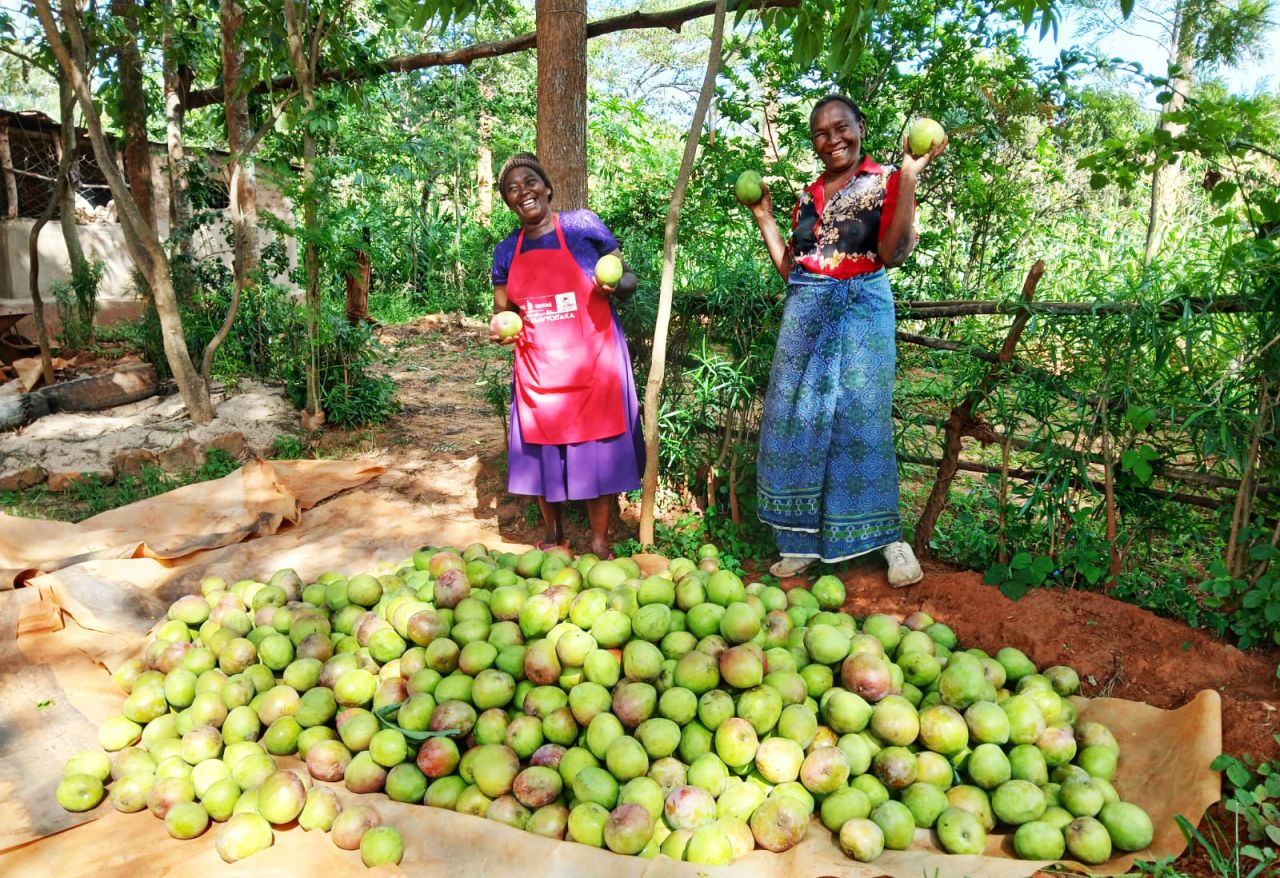
The numbers tell a story of opportunity. A mature grafted mango tree produces 100 to 150 kilograms of fruit annually. With 100 trees per acre using high-density spacing, total yield reaches 10 to 15 tonnes per acre. At peak season, prices drop to 5 to 10 shillings per piece. During off-season, prices rise to 30 to 50 shillings per piece. Farmers who understand these cycles and plan their production accordingly earn 400,000 shillings or more per acre annually.
This guide by Farmers Trend Ltd. covers everything about commercial mango farming in Kenya. You will learn about varieties, propagation, planting, nutrition, pest control, harvesting, and export requirements. The information comes from farmers, exporters, and agricultural research stations across the country.

2026 Market Dynamics and Regional Strategic Advantage for Mango Farming in Kenya
The economic landscape for mango farming in Kenya is shaped by regional differences in production timing. Makueni and the Eastern region produce the earliest mangoes, with harvest starting in October. The peak season in these areas runs from November to December. During this period, supply floods the market, and prices drop to 5 to 10 shillings per piece. Farmers in Makueni who sell during peak season earn less per fruit but benefit from early cash flow.
Meru and Murang’a counties have a different advantage. Their mangoes ripen later, with harvest starting in January and running through March. This off-season window aligns with lower supply across the country. Prices during these months range from 30 to 50 shillings per piece. Farmers in Central Kenya capture these premium prices. Their mangoes also tend to have better color and size due to cooler growing conditions.
How much profit can you make per acre of mangoes? A well-managed orchard with 100 trees at full production yields 10 to 15 tonnes annually. At an average price of 30 shillings per kilogram, gross revenue reaches 300,000 to 450,000 shillings per acre. Subtract annual maintenance costs of 50,000 to 80,000 shillings. Net profit ranges from 220,000 to 400,000 shillings per acre annually. With good management and off-season production, profits exceed 500,000 shillings.
The export market adds another layer of opportunity. Processors and exporters require consistent quality and volume. The European and UK markets demand mangoes treated to meet phytosanitary standards. Farmers who can supply export-quality fruit access premium prices of 50 to 70 shillings per kilogram.

Varietal Profiles and Export Standards for Mango Farming in Kenya
The 2026 commercial winners in mango farming in Kenya are varieties selected for market acceptance, shelf life, and disease resistance. Farmers choose based on their target market and region.
Apple Mango is the local favorite. It has a sweet flavor and soft flesh. Consumers in Kenya prefer it for eating fresh. The fruit has good color and moderate shelf life. It is grown widely in Makueni and Eastern Kenya. Apple mango does not ship well over long distances, so it is best for local markets.
Kent is the export standard. It is a fiberless variety with firm flesh that holds up during transport. The fruit has excellent flavor and good shelf life. Kent is preferred by European buyers and processors. It performs well in Meru, Murang’a, and parts of Eastern Kenya. Grafted Kent trees are available at Farmers Trend Ltd nurseries.
Tommy Atkins is the long-distance survivor. It has thick skin that protects the fruit during shipping. The flavor is good, though not as sweet as Kent or Apple. Tommy Atkins is the most common variety in international trade because it withstands handling and transport. It is grown in coastal and lowland areas.
Vandyke is rising in popularity for its aesthetic appeal. The fruit has a bright red blush that catches the eye of supermarket buyers. The flavor is sweet and the shelf life is good. Vandyke is gaining ground among farmers targeting premium local and export markets.
2026 Mango Variety Comparison Table
| Variety | Flavor | Flesh | Shelf Life | Best Region | Market |
|---|---|---|---|---|---|
| Apple | Sweet | Soft | Short | Makueni, Eastern | Local |
| Kent | Sweet | Firm | Good | Meru, Murang’a | Export |
| Tommy Atkins | Good | Firm | Long | Coastal, lowland | Export |
| Vandyke | Sweet | Firm | Good | Central, Eastern | Premium |
The Maturity Timeline: Grafted vs. Seedling for Mango Farming in Kenya
How long does a mango tree take to fruit in Kenya? The answer depends on your planting material. Grafted trees take 2 to 3 years to flower and produce first fruit. Commercial bearing begins in year 4. Seedling trees take 5 to 8 years to fruit, and the fruit quality is inconsistent.
Why should fruit formation be discouraged until the 4th year? Young trees need to put energy into root and canopy development. Allowing fruit to form early diverts resources from growth. Remove flowers and small fruit during the first 2 to 3 years. This patience pays off with larger, stronger trees that produce more fruit over their lifespan.
The productive life of a grafted mango tree is 30 to 40 years. Some trees in homesteads continue bearing for over 50 years. The initial years of care determine how well the tree produces for decades.
Farmers Trend Ltd offers grafted mango seedlings of all major varieties through their Virtual Agrovet platform. These trees are propagated from select mother stock and are certified disease-free. Contact Farmers Trend Ltd at 0790509684 to order.

Technical Cultivation and High-Density Spacing for Mango Farming in Kenya
The shift from traditional spacing to high-density planting has changed mango farming in Kenya. Old orchards used 9 meters by 9 meters spacing, giving 50 trees per acre. New orchards use 5 meters by 5 meters for 100 trees per acre, or 4 meters by 3 meters for 333 trees per acre for dwarf varieties. Higher density increases early yields and maximizes land use.
Planting hole requirements are 2 feet by 2 feet by 2 feet (60 centimeters by 60 centimeters by 60 centimeters). This size allows roots to establish without encountering compacted soil. Mix the topsoil with manure in a 3:1 ratio. Add 200 grams of DAP fertilizer per hole. Refill holes and allow them to settle for 2 to 3 weeks before planting.
Plant at the start of rains. March to May and October to November are ideal. With irrigation, you can plant year-round. Water immediately after planting and maintain consistent moisture through the first year.
Mulching around young trees conserves moisture and suppresses weeds. Apply 5 to 10 centimeters of dry grass or other organic material around each tree, keeping it away from the trunk.
Nutrition and Water Management for Mango Farming in Kenya
Do mango trees need a lot of water? During establishment and fruit set, yes. Young trees need 100 liters per week during dry weather. Mature trees need 150 to 200 liters per week during fruit development. However, a dry period of 2 to 3 months before flowering is essential. This water stress induces flowering. Resume watering after fruit sets.
The 2026 fertilizer program varies with tree age. For young trees (years 1 to 3), apply 100 grams of CAN per tree twice yearly, at the start of rains. Apply 200 grams of NPK 17:17:17 per tree once yearly. For mature trees (year 4 onward), apply 500 grams of CAN per tree twice yearly. Apply 1 kilogram of NPK 17:17:17 per tree once yearly. Add 20 to 30 kilograms of well-decomposed manure per tree every 2 years.
Foliar feeds help during flowering and fruit development. Spray with products containing boron and zinc to improve fruit set and reduce fruit drop.

Year 1 to Year 5 Production Budget Table
| Year | Trees | Yield/Tree (kg) | Total Yield (kg) | Price/kg | Gross Revenue | Costs | Net Profit |
|---|---|---|---|---|---|---|---|
| 1 | 100 | 0 | 0 | 30 | 0 | 150,000 | -150,000 |
| 2 | 100 | 0 | 0 | 30 | 0 | 80,000 | -80,000 |
| 3 | 100 | 5 | 500 | 30 | 15,000 | 80,000 | -65,000 |
| 4 | 100 | 20 | 2,000 | 30 | 60,000 | 80,000 | -20,000 |
| 5 | 100 | 50 | 5,000 | 30 | 150,000 | 80,000 | 70,000 |
After year 5, yields increase to 100 to 150 kilograms per tree, pushing net profit to 400,000 shillings per acre and above.
Pest Control and Pathogen Management for Mango Farming in Kenya
Export markets require strict pest control protocols. Fruit fly is the biggest export blocker. Bactrocera dorsalis, the invasive fruit fly, causes massive losses. Control using pheromone traps to monitor populations. Apply protein bait sprays mixed with insecticide. Maintain orchard hygiene by removing fallen fruit.
Mango seed weevil lays eggs in developing fruit. Larvae feed inside the seed, causing damage that makes fruit unmarketable. Control with insecticides during fruit development. Remove and destroy infested fruit.
Anthracnose causes black spots on leaves and fruit. It spreads in wet conditions. Copper-based fungicides provide control. Apply before and during flowering.
Powdery mildew affects flowers and young fruit. It causes 20 percent crop loss if not managed. Wettable sulfur sprays applied during flowering control powdery mildew effectively. Spray when flowers first appear and repeat every 10 to 14 days.
Harvesting, Yield, and Logistics for Mango Farming in Kenya
How many kg of mango per tree? A mature grafted tree produces 400 to 600 fruits annually, weighing 100 to 150 kilograms. With 100 trees per acre, total yield reaches 10 to 15 tonnes.
Maturity indicators are important for quality. The fruit shoulder flattens as it matures. The flesh turns yellow at the stem end. Fruits picked too early do not ripen properly. Fruits picked too late are soft and do not transport well.
Harvest with a 2 to 3 centimeter stem attached. This prevents latex burn, which causes black spots on the fruit. Use a fruit picker or ladder. Do not pull fruit by hand. Place harvested fruit in clean containers. Do not stack too deep.
Post-harvest handling determines market access. For export, fruit must undergo Hot Water Treatment. This process kills fruit fly larvae and meets phytosanitary requirements. The fruit is submerged in water at 46°C to 48°C for 65 to 75 minutes. After treatment, fruit is cooled, graded, and packed for shipping.
Sourcing Quality Grafted Mango Seedlings
Farmers Trend Ltd nurseries offer certified grafted mango seedlings through their Virtual Agrovet platform. Their seedlings are propagated from select mother stock and are disease-free. Varieties available include Apple, Kent, Tommy Atkins, and Vandyke. Contact Farmers Trend Ltd at 0790509684 to order.
The Virtual Agrovet platform lets you order online with delivery to your farm. You can browse available varieties, check prices, and place orders at any time. Farmers Trend Ltd also provides agronomic advice and IPM kits for pest control.

Next Step
Mango farming in Kenya is one of the most established fruit subsectors, with over 60,000 hectares under cultivation. The market offers opportunities for farmers who understand regional production timing. Makueni farmers capture early market cash flow. Meru and Murang’a farmers capture off-season premium prices.
Grafted trees fruit in 2 to 3 years and produce for 30 to 40 years. Yields reach 100 to 150 kilograms per tree at maturity. Prices range from 5 to 50 shillings per piece depending on season. Net profits exceed 400,000 shillings per acre annually.
The 2026 planting windows are coming. March to May and October to November are good times with the rains. Your seedlings are waiting at Farmers Trend Ltd nurseries. The Virtual Agrovet platform makes ordering easy.
Start with soil testing. Mangoes need well-drained soil with pH 5.5 to 7.5. Choose varieties based on your target market. Apple for local markets. Kent and Tommy Atkins for export. Vandyke for premium local and export.
Prepare your land. Dig holes 2 feet by 2 feet by 2 feet. Mix topsoil with manure in 3:1 ratio. Install drip irrigation for consistent moisture. Order your certified grafted mango seedlings from Farmers Trend Ltd through their Virtual Agrovet platform or call them at 0790509684.
Farmers who have built successful mango orchards started where you are now. They learned, they planned, and they did the work. You can do the same.
Your mango farming in Kenya journey starts today. The market is waiting. The returns are real. The time to act is now.
https://farmerstrend.co.ke/fruits/mango-farming/mango-farming-in-kenya-2026-profit-guide/https://farmerstrend.co.ke/wp-content/uploads/2026/03/1768465448411-1024x702.jpeghttps://farmerstrend.co.ke/wp-content/uploads/2026/03/1768465448411-150x150.jpegMango Farming# TrendingFruitsApple mango Kenya,Farmers Trend Ltd mango seedlings,Fruit fly control mango,Grafted mango seedlings Kenya,High-density mango planting,Hot water treatment mango,Kent mango farming Kenya,Mango export requirements Kenya,Mango farming in Kenya profit per acre,Mango farming Makueni,Mango farming Meru,Mango harvest season Kenya,Mango yield per tree Kenya,Tommy Atkins mango Kenya,Vandyke mango varietyMango Farming in Kenya: The 2026 Strategy for High-Yield Orchards and Global Export Profits Mango farming in Kenya is one of the largest fruit subsectors in the country. Walk through Makueni during harvest season, and you will see trucks loaded with mangoes heading to Nairobi. Visit Meru or Murang’a, and...FarmersTrendjohn doefarmerstrend@gmail.comAdministratorFarmers Trend Ltd.



Will contact you soon. I have 100 mature trees which gives me only 40k per year. Almost giving up this mango farming
Thank you for the information
Welcome