The Definitive 2026 Guide to Profitable Citrus Farming in Kenya
The Definitive 2026 Guide to Profitable Citrus Farming in Kenya
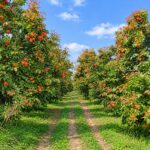
Citrus farming in Kenya stands as one of the most reliable and potentially lucrative long-term agricultural investments. Moving beyond simple cultivation, it represents a strategic agribusiness venture with deep roots in the country’s economy, catering to a robust local market and an emerging export opportunity.
This comprehensive guide by Farmers Trend Ltd. is designed to be the single most detailed resource available, addressing every query from basic planting to complex orchard economics. We will dissect the profitability of lemon and pixie orange farming, clarify optimal ecological conditions with precise data, and provide a masterclass in orchard management that transitions you from a casual grower to a professional producer. Whether you are in the coastal lowlands of Kilifi or the fertile slopes of Murang’a, this manual provides the actionable knowledge required to build a sustainable and high-yielding citrus enterprise.

Understanding the Scope and Profitability of Citrus Farming in Kenya
The fundamental question every prospective farmer asks is about viability. The profitability of citrus farming in Kenya is not a matter of speculation but of documented financial return. Success, however, is contingent upon selecting the right variety for your micro-climate and market.
While general oranges like Washington Navel provide consistent returns, the paradigm of profitability has shifted towards specialty varieties. Pixie oranges, for instance, have revolutionized the sector. Their seedless nature, sweet flavour, small size, and extended shelf life command premium prices in upscale urban markets and export circuits, often fetching three to four times the price of common oranges.
Lemon farming, particularly of the Eureka and Lisbon varieties, presents a different model of profitability based on consistent, year-round demand from the beverage, culinary, and processing industries.
To quantify this, a mature, well-managed citrus tree in optimal conditions can produce between 300 to 600 marketable fruits annually.
With a standard plant population of 250 trees per acre using a 4×5 meter spacing, an acre can yield between 75,000 to 150,000 fruits per primary season.
Factoring in conservative farm-gate pricing and accounting for seasonal gluts, the gross revenue can comfortably range from Ksh 750,000 to over Ksh 1.5 million per acre per year.
Establishment costs, spread over the three-year juvenile period, typically involve an investment of Ksh 200,000 to Ksh 400,000 for seedlings, land preparation, irrigation infrastructure, and early care.
This initial outlay is amortized over the tree’s productive lifespan of 25 years or more, making the long-term return on investment exceptionally attractive.
When farmers ask which crop has the highest profit per acre in Kenya, a mature, well-marketed citrus orchard, especially of pixie or lemon, indisputably ranks in the top tier.
Ecological Conditions: Where Citrus Farming in Kenya Thrives
Citrus farming in Kenya does not grow well everywhere; it demands specific agro-ecological conditions. Success is largely predetermined by how closely your farm aligns with these requirements.
The ideal altitude for most citrus varieties lies between 0 and 1,600 meters above sea level. Regions like the Coastal lowlands, Eastern Kenya (Machakos, Makueni, Embu), and parts of Central Kenya (Murang’a, Kirinyaga) and the Rift Valley (Nakuru, Kericho) provide these conditions.
Temperature is critical: citrus trees require warm conditions but are sensitive to frost. Optimal growth occurs within a range of 13°C to 30°C. Prolonged temperatures below 13°C stunt growth, while frost is outright fatal, eliminating high-altitude areas from consideration.
Rainfall and water management form the second pillar. Citrus trees require a substantial but well-distributed water supply, ideally between 1,000mm and 1,500mm annually. A distinct dry period of one to two months is actually beneficial as it helps initiate uniform flowering. However, moisture stress during fruit setting and development leads to significant drop and poor fruit quality. This makes supplemental irrigation not just an advantage, but a necessity for commercial production in most of Kenya’s regions.
Drip irrigation is the most efficient system, delivering water directly to the root zone and conserving this precious resource.
The third pillar is soil. Citrus performs best in deep, well-drained sandy loam or loamy soils with good organic matter content. Heavy, compacted clay soils that are prone to waterlogging are a recipe for failure, as they promote phytophthora root rot, a major citrus killer. Soil pH is equally crucial; a slightly acidic to neutral range of 5.5 to 7.0 is ideal. Outside this range, trees struggle to access essential nutrients, leading to deficiencies that limit yield. A professional soil test before planting is not an expense but a vital investment, guiding precise liming or acidification and tailored fertilization programs.
A Detailed Step-by-Step Guide to Establishing Your Citrus Orchard
The foundation of a productive 25-year orchard is laid in the first year. Compromising on establishment procedures guarantees years of subpar performance.
Phase 1: Propagation and Seedling Selection. The era of planting random seeds is over. For commercial citrus farming in Kenya, you must begin with certified, disease-free grafted seedlings from a reputable research institution or accredited nursery like Farmers Trend.
Grafting onto hardy rootstocks like Rough Lemon or Carrizo Citrange confers advantages such as drought tolerance, nematode resistance, and earlier bearing. Seedlings should be robust, about pencil-thick in stem diameter, and free of any pest or disease signs. The variety chosen – be it Washington Navel, Cara Cara Orange, Blood Orange, Grapefruit Orange, Valencia, Pixie, Eureka Lemon, or Bearss Lime must align with your market goals and local climate.
Phase 2: Land Preparation and Planting. Land should be cleared of all vegetation and ploughed deeply to break up any hardpan. Planting holes, measuring a minimum of 60cm x 60cm x 60cm, must be dug well in advance of the rainy season. Each hole should be refilled with a mixture of topsoil, 15-20 kg of well-decomposed manure, and 200g of Diammonium Phosphate (DAP) fertilizer. This mixture should be allowed to settle for at least two weeks.
The question of the best month to plant citrus trees is answered by following the rains. The onset of the long rains in March/April is the optimal planting window. This provides the young trees with ample moisture for root establishment. During planting, carefully remove the polythene pot without breaking the root ball. Place the seedling in the hole, ensuring the graft union remains at least 10cm above the soil surface to prevent rooting from the scion. Backfill, firm the soil gently, and water thoroughly. A mulch ring around the base conserves moisture and suppresses weeds.
Phase 3: The Critical Early Care Regimen. The first three years are dedicated to vegetative growth. Regular watering is non-negotiable; young trees should never experience water stress. A balanced fertilizer with micronutrients should be applied every three months in a circular band around the drip line. Pruning is minimal but important: remove any shoots emerging from below the graft union (suckers) and shape the tree to have 3-4 strong primary branches. Effective weed control within a one-meter radius prevents competition.
The Science of Sustained Production: Orchard Management Mastery
Once established, the focus shifts from survival to optimized production.
Nutrition and Fertilization: Understanding when and what to fertilize is key. The best time to fertilize citrus is at the start of each rainy season and during fruit development. A soil and leaf tissue analysis provides the blueprint. Generally, citrus requires a balanced NPK fertilizer with regular supplements of magnesium and zinc.
A notable practice is the use of Epsom salts (magnesium sulphate) for citrus trees. Magnesium is a central component of chlorophyll, and its deficiency causes yellowing between leaf veins. Foliar or soil application of Epsom salts corrects this, leading to greener foliage and better fruit quality. Organic matter from regular manure or compost applications improves soil structure and nutrient holding capacity.
Water Management: The debate of whether it is better to overwater or underwater a lemon tree presents a false dichotomy. The goal is consistent, adequate moisture. Overwatering, especially in poor soils, suffocates roots and invites root rot. Underwatering causes flower and fruit drop, reducing yield. The ideal is to maintain moist soil in the root zone without saturation. Drip irrigation achieves this most efficiently.
Canopy and Pest Management: Pruning mature trees involves removing dead wood, thinning out dense inner branches to improve air circulation and light penetration, and managing height for easier harvesting. Vigilant pest and disease monitoring is essential. Major threats include Citrus Aphids, False Codling Moth, and the devastating Citrus Greening disease (Huanglongbing). An Integrated Pest Management (IPM) approach, combining biological controls, proper sanitation, and targeted, judicious pesticide use, is the professional standard.
Harvesting, Marketing, and Navigating Challenges
Citrus season in Kenya typically peaks from May to September, but with varied varieties and irrigation, harvesting can be staggered. Fruit should be clipped with secateurs, not pulled, to avoid damaging the stem end, which leads to rapid rot. Post-harvest handling determines market value. Gentle washing, grading by size and quality, and proper packing in ventilated crates are essential.
Marketing is where many farmers lose potential income. Beyond the local roadside stall, explore collective marketing through cooperatives, contracts with juice processors like Kevian Kenya, and supplying supermarket chains. The export market, particularly for pixie oranges and lemons to the Middle East and Europe, offers the highest returns but demands strict compliance with GlobalG.A.P. standards.
Potential downsides exist. Citrus farming is capital and knowledge-intensive in the initial years. Markets can be volatile during peak season gluts. Diseases like Greening can devastate orchards if not managed. Furthermore, certain individuals with conditions like gastroesophageal reflux disease (GERD) or specific citrus allergies may need to limit consumption, a minor factor in the vast market. It is also crucial to know what not to plant next to citrus trees; avoid heavy feeders like maize or trees with invasive roots that will compete directly for nutrients and water.
Conclusion: A Legacy Investment
Citrus farming in Kenya, when approached with the professionalism outlined in this guide, transcends mere crop cultivation. It is a legacy agribusiness. The lifespan of a citrus tree—a quarter-century or more of production—means the decisions you make today will impact your income for decades. By selecting the right variety, meticulously preparing your land, implementing scientific management, and pursuing smart marketing, you can build a truly sustainable and wealth-generating enterprise. The resources to begin, from quality Farmers Trend seedlings to expert consultation, are available. The time for ambitious farmers to dominate this fruitful sector is now.
https://farmerstrend.co.ke/trending/citrus-farming-in-kenya-guide/https://farmerstrend.co.ke/wp-content/uploads/2026/01/GpXgVPAXoAAG47B.jpeghttps://farmerstrend.co.ke/wp-content/uploads/2026/01/GpXgVPAXoAAG47B-150x150.jpeg# TrendingCitrus FarmingThe Definitive 2026 Guide to Profitable Citrus Farming in KenyaCitrus farming in Kenya stands as one of the most reliable and potentially lucrative long-term agricultural investments. Moving beyond simple cultivation, it represents a strategic agribusiness venture with deep roots in the country’s economy, catering to a robust local market...FarmersTrendjohn doefarmerstrend@gmail.comAdministratorFarmers Trend Ltd.







Leave a Reply