Britam Pays Sh97.3 Million in Climate Insurance Claims to Kenyan Farmers and Pastoralists
Britam paid Sh97.3 million in climate insurance claims to 402,681 Kenyan farmers and pastoralists in 2025. Crop coverage grew 83 per cent as weather shocks intensified.
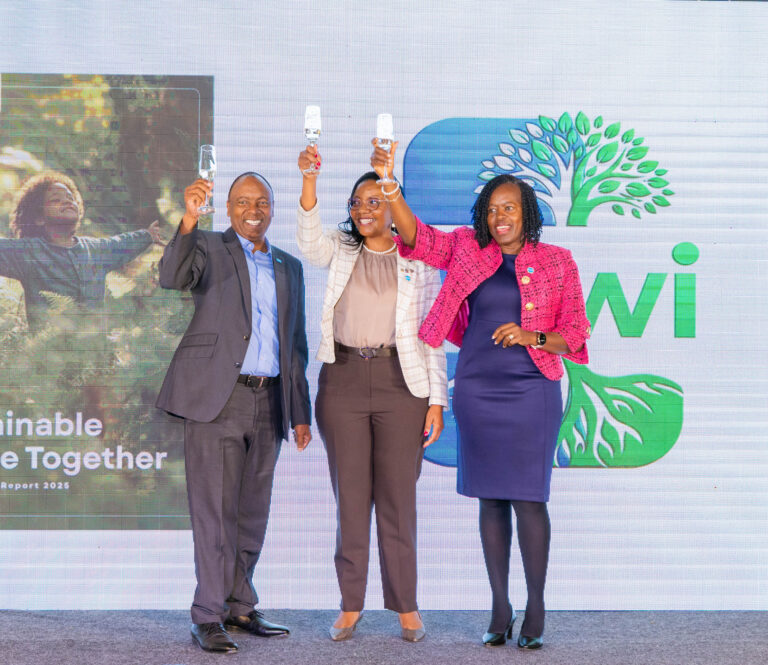
Britam Group paid Sh97.3 million in 2025 to help farmers and pastoralists recover from climate shocks. The money went to 402,681 people across East Africa. The payout was detailed in Britam’s 2025 Sustainability Report.
The report shows that Britam is expanding its parametric insurance products. These policies use satellite data and pre-set weather triggers. When drought or erratic rainfall hits, funds are released fast. Farmers do not have to wait for months to get their money.
Crop insurance coverage grew by 83 per cent from 2024 to 2025. The number of farmers covered increased from 161,521 to 294,799. Britam paid Sh80.4 million in crop claims to smallholder farmers who faced unpredictable weather.
Another 107,882 pastoralists in Kenya, Uganda and Tanzania were covered under the livestock insurance programme. Britam paid Sh16.9 million in claims to affected households.
Tom Gitogo is the Britam Group managing director and chief executive officer. “Through inclusive, sustainable and innovative solutions, we are enabling recovery, stability, and continued productivity even in the face of increasing climate uncertainty,” he said.
“Our focus is to ensure that farmers and pastoralists are not left exposed when climate shocks strike,” Gitogo added.
The climate insurance claims that Britam paid out are a lifeline for many families. When drought kills animals or floods destroy crops, traditional insurance is often too slow. It requires assessors to visit farms and verify losses. This takes time. By the time the assessor arrives, the farmer may have already sold their remaining animals or taken out desperate loans.
Parametric insurance works differently. When satellite data shows that rainfall has fallen below a certain threshold, the payment is triggered automatically. The farmer receives money within days, not months. This is the kind of insurance that Britam is scaling up.
Beyond insurance, the sustainability report highlights Britam’s investment in clean energy. In October 2025, the company commissioned a solar installation at Britam Tower in Nairobi. The system will generate 390,000 kWh of clean energy every year. It will power more than half of the building. It will offset 198 tonnes of carbon emissions. That is like planting 10,800 trees each year.
The Britam Foundation also planted 86,000 trees in the Mt Elgon Water Tower. It restored 444 acres of degraded land. It created 1,358 green jobs. These efforts support Britam’s goal of planting 60 million trees by 2030.
To track its progress, Britam launched TAWI in May 2026. This is a digital platform for real-time coordination and verification of tree-planting.
Through its Lea Mama maternal health programme, Britam enrolled more than 3,300 mothers in 2025. The programme cut miscarriage rates by 50 per cent. It scored 9.4 out of 10 on customer satisfaction.
On governance, Britam reported zero corruption incidents in 2025. It paid Sh3.1 billion in taxes across seven markets. It was certified as a Top Employer in Africa for the second year running.
The climate insurance claims that Britam paid are part of a bigger story. The company is not just selling policies and collecting premiums. It is helping communities adapt to a changing climate. It is investing in renewable energy. It is planting trees and restoring degraded land. It is keeping mothers and babies healthy.
This is Britam’s third annual sustainability report. It is the first to cover all seven markets under one ESG framework. The company says this shift aligns with its “Ascend 2030” pan-African strategy.
Hilda Njeru is the director of legal and sustainability and group company secretary. “Ultimately, sustainability is about thinking beyond the present and making decisions with the future in mind,” she said.
The 402,681 farmers and pastoralists who received climate insurance claims from Britam in 2025 are proof that this approach works. When climate shocks hit, they had a safety net. They could recover. They could keep farming. They could feed their families.
That is what sustainability looks like on the ground. It is not a buzzword. It is not a report. It is money in the hands of farmers when they need it most. It is trees in the ground. It is solar panels on roofs. It is healthy mothers and healthy babies.
Britam is showing that business can be a force for good. The climate insurance claims it paid are just one part of that story. But for the farmers who received those payments, it is the most important part. It meant they could survive another season. It meant they could keep their animals alive. It meant they had hope. And in a time of climate crisis, hope is everything.
https://farmerstrend.co.ke/trending/britam-climate-insurance-claims-kenya-farmers/https://farmerstrend.co.ke/wp-content/uploads/2026/06/IMAGE-2-768x665-1.jpghttps://farmerstrend.co.ke/wp-content/uploads/2026/06/IMAGE-2-768x665-1-150x150.jpg# TrendingBritam paid Sh97.3 million in climate insurance claims to 402,681 Kenyan farmers and pastoralists in 2025. Crop coverage grew 83 per cent as weather shocks intensified.Britam Group paid Sh97.3 million in 2025 to help farmers and pastoralists recover from climate shocks. The money went to 402,681 people across East...FarmersTrendjohn doe[email protected]AdministratorFarmers Trend Ltd.







Leave a Reply