Fertilizer Shortage in North Rift Kenya Forces Farmers to Camp at Eldoret NCPB Depot
A fertilizer shortage in North Rift Kenya has forced farmers to camp at the Eldoret NCPB depot. Top-dressing fertilizer is missing while maize crops enter a critical growth stage.
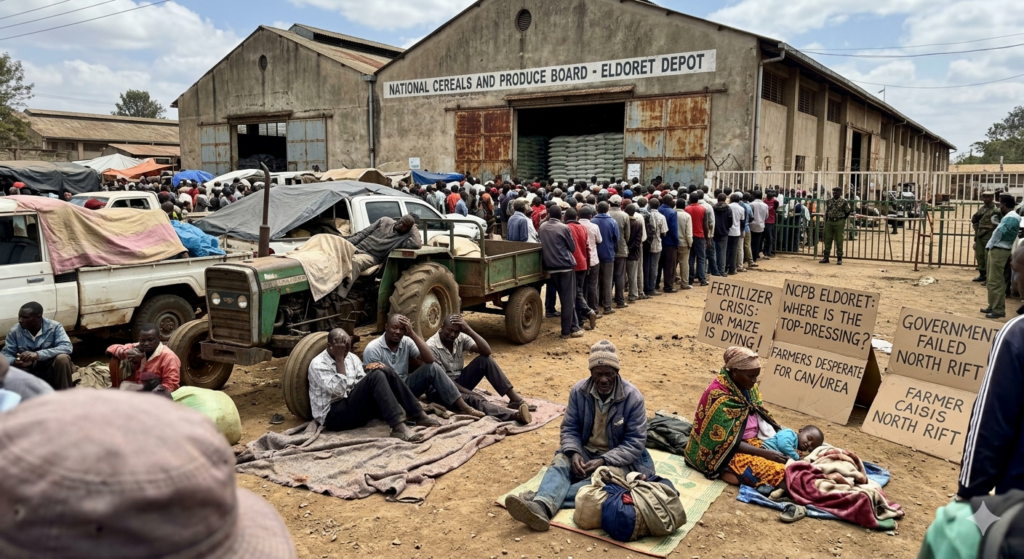
Farmers in Kenya’s North Rift region are facing a critical agricultural crisis. A severe shortage of top-dressing fertilizer has forced many farmers to camp for days at the National Cereals and Produce Board (NCPB) depot in Eldoret.
The maize crop has reached the top-dressing growth stage. This is when farmers must apply nitrogen-based fertilizer to boost yields. But the available stock at the NCPB depots consists primarily of planting fertilizer. The top-dressing fertilizer that farmers need right now is missing.
The situation has left farmers desperate and frustrated. Many have endured long queues for days. They have waited in line under the sun, through the night, and into the next morning. Some have slept in their tractors. Others have spread blankets on the ground. After all this, many have returned home empty-handed.
Farmers are criticizing the Ministry of Agriculture for the poor timing and management of input distribution. One affected farmer noted the cyclical frustration of the supply chain. When farmers needed planting fertilizer at the start of the season, the depots were stocked with top-dressing inputs. Now that the crop requires top-dressing, the depots are stocked with planting supplies. The government seems unable to match supply with demand.
There is growing anxiety among the farming community. Farmers fear that the delay in accessing the correct fertilizer will significantly impact maize yields. The crop is entering a critical growth phase. Without the necessary nutrients, the maize plants will not develop properly. The ears will be smaller. The kernels will be fewer. The harvest will be compromised.
Some farmers have expressed their exhaustion with the current system. They are calling on the government to intervene directly. Others say the government should reconsider the current subsidy model. If the inputs cannot be delivered in a timely and coordinated manner, then the subsidy programme is not working.
The fertilizer shortage in North Rift Kenya is not a new problem. Every season, similar complaints emerge from farmers across the region. Farmers report that planting fertilizer arrives too late. Top-dressing fertilizer is missing when it is needed most. The government has invested billions of shillings in the subsidy programme. But farmers are not seeing the results on the ground.
The North Rift is Kenya’s breadbasket. Counties such as Uasin Gishu, Trans Nzoia, Elgeyo Marakwet, and Nandi produce a large share of the country’s maize. When farmers in this region struggle, the entire nation feels the impact. Maize prices rise. Food insecurity increases. The cost of living goes up for every Kenyan.
The fertilizer shortage in North Rift Kenya has several causes. Logistics is a major factor. The government relies on a complex system of importers, transporters, and distributors. Delays at any point can disrupt the entire chain. This season, the rains came earlier than expected. Farmers planted earlier than usual. The fertilizer supply chain could not keep up with the accelerated timeline.
Another factor is forecasting. The government must predict how much fertilizer farmers will need and when they will need it. This is not an easy task. Planting dates vary from region to region. Farmers make decisions based on weather forecasts that can change. But the current system has consistently failed to match supply with demand. This suggests that the problem is not just bad luck. It is a systemic failure.
The fertilizer shortage in North Rift Kenya is also a storage issue. NCPB depots have limited capacity. When fertilizer arrives, it must be stored somewhere. If the depots are full of planting fertilizer, there is no room for top-dressing. The government has tried to address this by distributing fertilizer directly to cooperatives and agro-dealers. But many farmers still rely on NCPB depots. Those farmers are the ones now camping in Eldoret.
Farmers at the Eldoret depot have been camping for days. They sleep in their vehicles or on the ground. They take turns keeping their place in line. They have no guarantee that fertilizer will arrive. Some have given up and gone home. They will plant their maize without top-dressing. Their yields will be lower. Their incomes will fall. Their families will struggle.
The fertilizer shortage in North Rift Kenya has political implications. The government has made food security a priority. President Ruto has spoken often about the need to increase agricultural production. The fertilizer subsidy programme is a key part of that strategy. But if farmers cannot access fertilizer when they need it, the strategy will fail.
Opposition politicians have seized on the crisis. They accuse the government of mismanagement and incompetence. They point to the fact that the government has had years to get the subsidy programme right. Yet every season, similar problems occur. The government defends its record. Officials say they have increased the budget for fertilizer subsidies. They say more farmers are registered in the KIAMIS system. But none of this matters if the fertilizer does not reach farmers on time.
The fertilizer shortage in North Rift Kenya is a warning. The country cannot afford to keep repeating the same mistakes. The population is growing. The climate is changing. Food production must increase. Farmers need reliable access to inputs. They cannot afford to camp at depots for days while their crops suffer.
The government must take urgent action. It must release top-dressing fertilizer from strategic reserves. It must work with private sector distributors to fill the gap. It must investigate why the supply chain failed and hold those responsible accountable.
The fertilizer shortage in North Rift Kenya is a crisis that could have been avoided. The signs were there. Farmers planted early. Demand for top-dressing would come early. The government should have adjusted its distribution schedule accordingly. It did not.
The farmers camping at the Eldoret NCPB depot are not asking for handouts. They are asking for the inputs they were promised. They have done their part. They prepared their land. They planted their seeds. Now they need fertilizer to feed their crops. The government must do its part. The fertilizer must arrive. The farmers cannot wait much longer. Their maize cannot wait much longer. Kenya cannot wait much longer.
https://farmerstrend.co.ke/farming-news/fertilizer-shortage-in-north-rift-kenya/https://farmerstrend.co.ke/wp-content/uploads/2026/06/Gemini_Generated_Image_mp0cthmp0cthmp0c-1024x559.pnghttps://farmerstrend.co.ke/wp-content/uploads/2026/06/Gemini_Generated_Image_mp0cthmp0cthmp0c-150x150.pngFarming NewsA fertilizer shortage in North Rift Kenya has forced farmers to camp at the Eldoret NCPB depot. Top-dressing fertilizer is missing while maize crops enter a critical growth stage.Farmers in Kenya's North Rift region are facing a critical agricultural crisis. A severe shortage of top-dressing fertilizer has forced many...FarmersTrendjohn doefarmerstrend@gmail.comAdministratorFarmers Trend Ltd.






Leave a Reply