DRIVE Project in Kenya to Fast-Track Livestock Insurance and Traceability for Pastoralists
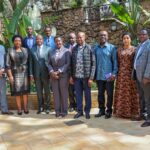
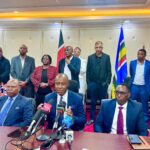
The State Department for Livestock Development has held a productive review meeting with implementing partners of the De-Risking, Inclusion and Value Enhancement of Pastoral Economies (DRIVE) project. The meeting was led by Hon. Jonathan Mueke, the Principal Secretary for Livestock Development.

The DRIVE project in Kenya is designed to strengthen resilience among livestock keepers in arid and semi-arid counties. It has a strong focus on two main areas. The first is livestock insurance. The second is animal traceability.
These two components are critical for protecting pastoralists from drought-related losses. When animals die during drought, families lose everything. Insurance provides a safety net. It helps families recover and restock after a crisis.
Traceability, on the other hand, opens up access to formal markets. Buyers in the European Union and the Middle East want to know where their meat comes from. They want proof that animals are healthy and vaccinated. Traceability systems provide this proof.
During the meeting, stakeholders agreed to fast-track support for pastoralist communities. They also explored sustainable pathways to commercialize and scale livestock enterprises. The goal is to enhance livelihoods and build long-term resilience within the sector.
One of the key areas of discussion was the establishment of fodder reserves. Pastoralists often lose large numbers of animals during drought because there is no feed. Fodder reserves would provide a buffer during dry seasons. This would reduce distress sales and prevent massive livestock deaths.
The livestock sector remains a key pillar for economic transformation in Kenya’s ASAL regions. It also plays a major role in inclusion and climate resilience. Millions of families depend on cattle, goats, camels, and sheep for their survival.
When livestock thrive, communities thrive. When they perish, families fall into poverty. The DRIVE project in Kenya is designed to break this cycle.
By providing insurance, farmers can recover some of their losses after a drought. By improving traceability, they can prove the health and origin of their animals. This makes it easier to sell to high-value markets.
The meeting concluded with a commitment from all partners to move quickly. Pastoralists cannot wait. The next drought is always just around the corner.
The DRIVE project in Kenya must deliver before the next crisis hits. The State Department for Livestock Development is leading the charge. The implementing partners are on board. The pastoralists are watching.
The time for action is now. No more meetings without results. No more promises without delivery. The DRIVE project in Kenya has the tools. It has the partners. It has the plan. Now it must execute.
https://farmerstrend.co.ke/farming-news/drive-project-in-kenya-livestock-insurance-pastoralists/https://farmerstrend.co.ke/wp-content/uploads/2026/05/DRIVE-Project-in-Kenya-to-Fast-Track-Livestock-Insurance-and-Traceability-for-Pastoralists-1024x683.jpeghttps://farmerstrend.co.ke/wp-content/uploads/2026/05/DRIVE-Project-in-Kenya-to-Fast-Track-Livestock-Insurance-and-Traceability-for-Pastoralists-150x150.jpegFarming NewsThe State Department for Livestock Development has held a productive review meeting with implementing partners of the De-Risking, Inclusion and Value Enhancement of Pastoral Economies (DRIVE) project. The meeting was led by Hon. Jonathan Mueke, the Principal Secretary for Livestock Development.The DRIVE project in Kenya is designed to strengthen...FarmersTrendjohn doefarmerstrend@gmail.comAdministratorFarmers Trend Ltd.





Leave a Reply