African Capital Market Leaders Convene in Nairobi to Help Unlock US$4 Trillion in Domestic Capital for Development and Climate Resilience
More than 300 policymakers, regulators, institutional investors, development finance leaders and market practitioners from over 20 African countries gathered in Nairobi this week for an African capital markets conference built around a single, urgent question: how does the continent finance its own future when outside money keeps drying up.
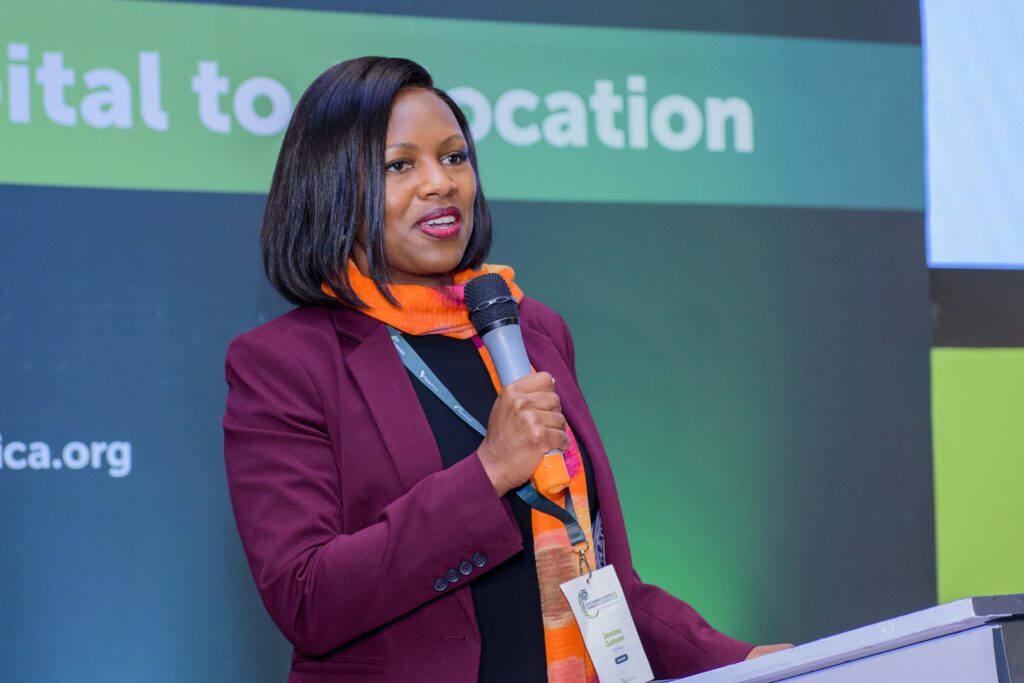
The third Sustainable Capital Markets Conference, organized by FSD Africa and partners, opened on 15 September 2026 at the Trademark Hotel in Nairobi. The timing is not accidental. Overseas development funding is contracting, foreign direct investment into African markets has slowed, and government budgets across the continent face mounting debt servicing pressure. Against this backdrop, African institutional investors now sit on an estimated US$4 trillion in assets, spread across pension funds, insurance companies, banks and sovereign wealth funds. The conference exists to close the gap between this capital pool and the infrastructure, energy and climate projects starved of funding.
This guide breaks down what this conference covers, why the $4 trillion figure matters, who showed up to shape the agenda, and what concrete outcomes organizers expect to walk away with. You will finish with a clear picture of where African domestic capital mobilization stands in 2026 and what happens next.
Key Facts at a Glance
- Over 300 delegates from more than 20 African countries attended the 2026 conference
- African institutional investors manage an estimated US$4 trillion in combined assets
- Only 2.7 percent of these institutional assets currently flow into infrastructure and other productive sectors
- Africa’s domestic equity markets grew 27-fold since 2000, reaching US$561 billion
- Fewer than half of African countries have seen a domestic firm issue a corporate bond since 2000
- The continent generates roughly 25 million new job seekers every year
- This marks the third edition of the biennial conference, following the first two editions in Nairobi
- The 2026 theme, “From Capital to Allocation,” shifts focus from raising awareness to fixing the systems blocking capital deployment
What the African Capital Markets Conference Actually Is
FSD Africa organizes this conference as its flagship gathering on capital market development across the continent. FSD Africa itself operates as a UK Aid funded specialist development agency, founded in 2012 and based in Nairobi, working to strengthen financial markets, expand access to financial services and address structural market failures holding back African economies.
The conference runs on a two-year cycle. The first edition established the gathering as a serious venue for capital markets dialogue. The second edition, held in November 2024 under the theme “Catalysing Africa’s Growth through the Capital Markets,” brought together financial leaders, policymakers and market innovators to discuss the continent’s financial future, and produced concrete outcomes including a memorandum of understanding between Uganda’s Capital Markets Authority and FSD Africa to build a sustainable bonds framework.
The 2026 edition runs for two full days, structured around dialogue sessions, panel discussions and what organizers call decision labs, working sessions aimed at producing actionable commitments rather than only conversation. FSD Africa also launched its Capital Markets Publication 2026 on the opening day, a data and analysis report grounding the conference discussions in current market figures rather than general sentiment.
This structure matters for understanding what kind of event this is. Many development conferences produce statements and photo opportunities. This one has a track record, at least at its most recent prior edition, of producing signed agreements between named institutions, a distinction worth keeping in mind when evaluating what the 2026 gathering will likely deliver.
Why Domestic Capital Now: The External Financing Squeeze
The African capital markets conference did not emerge from nowhere. It responds directly to a financing environment shifting meaningfully against African governments and businesses over the past several years, a shift covered directly in reporting on this year’s gathering.
Overseas development funding is contracting across multiple donor countries simultaneously, removing a financing source African governments have relied on for decades. Foreign direct investment into African markets has slowed at the same time, driven by higher global interest rates pulling capital toward developed markets and by investor caution around specific country risk profiles. Government fiscal pressure compounds both trends, since many African countries now spend a growing share of national budgets simply servicing existing debt rather than funding new development priorities.
This combination leaves a widening gap between what African economies need to invest and what external sources are willing or able to provide. Domestic capital mobilization exists as the response to this gap, not as an ideological preference for self-reliance but as a practical necessity once external financing options narrow.
The conference’s own framing captures this shift directly. Organizers describe the gathering as arriving at a decisive moment, one where mobilizing capital already sitting inside African economies matters more than at any point in recent memory, precisely because the alternative sources of funding are becoming less reliable.
The Numbers Behind the $4 Trillion Opportunity
The headline figure driving this entire conference is straightforward to state and more complicated to mobilize. African institutional investors, spanning pension funds, insurance companies, banks and sovereign wealth funds, collectively manage an estimated US$4 trillion in assets.
This is real, substantial capital already inside African financial systems, not money needing to be attracted from outside the continent. Pension funds alone across many African markets have grown steadily as formal employment expands and retirement savings systems mature. Insurance companies accumulate long-term liabilities requiring long-term assets to match them. Sovereign wealth funds, where they exist, hold reserves specifically meant for long-horizon investment.
Despite this scale, only 2.7 percent of these institutional assets currently flow into infrastructure and other productive sectors of the real economy. The remaining capital sits largely in government securities, short-term instruments and other lower-risk, lower-development-impact holdings. This 2.7 percent figure represents the real gap the conference exists to close, the space between capital African institutions already hold and capital reaching the roads, power plants, climate adaptation projects and businesses needing it.
Closing even a modest share of this gap would represent a meaningfully larger capital injection into African infrastructure and productive sectors than most current development finance flows achieve, which explains why this single statistic anchors so much of the conference’s framing and media coverage.
Africa’s Capital Market Growth Paradox
Africa’s domestic capital markets tell a genuinely two-sided story, and the African capital markets conference exists partly to reconcile these two sides. On one measure, growth looks impressive. The continent’s domestic equity markets expanded 27-fold since 2000, reaching a combined value of US$561 billion.
On a second, more revealing measure, Africa is losing ground rather than gaining it. Despite this 27-fold expansion, the continent’s share of global capital market activity has declined over the same period. Global markets have simply grown faster than African markets, meaning strong absolute growth still translates into relative decline on the world stage.
Bond markets show an even starker gap. Fewer than half of African countries have seen a domestic firm issue a corporate bond since the year 2000. This is not a rounding error or a temporary dip. It reflects a structural absence of corporate bond markets across roughly half the continent, cutting off an entire category of financing mature economies rely on heavily for company growth and infrastructure funding.
This paradox, visible growth alongside relative decline and structural market gaps, is precisely why organizers frame the 2026 conference around fixing systems rather than simply encouraging more investment. More capital flowing into a market with weak underlying infrastructure risks limited impact. Fixing the infrastructure first, the conference argues, makes every subsequent dollar of capital work harder.
Who Is in the Room: The Leaders Shaping This Agenda
The list of confirmed speakers at the 2026 conference spans the specific institutional roles capital market development requires, rather than a generic assembly of business leaders. Chris Olobo, Chief Executive Officer of Dhamana Guarantee, represents the credit guarantee sector, institutions reducing risk for investors willing to fund higher-risk infrastructure projects.
Jonathan Stichbury, Chief Executive Officer of SanlamAllianz Investments, brings a major institutional asset management perspective directly relevant to the $4 trillion mobilization question this guide has already covered. Albert Rweyemamu, Principal Political and Credit Risk Underwriter at the African Trade and Investment Development Insurance, addresses the risk perception barriers keeping institutional capital away from productive sectors.
Mark Napier, Chief Executive Officer of FSD Africa, and Dr Evans Osao, Chief Financial Markets Officer at the same organization, represent the conference’s own institutional backbone. Japhet Justine, Commissioner for Public Debt Management at Kenya’s Ministry of Finance, brings direct sovereign debt management authority into the room, a genuinely relevant voice given the fiscal pressure context driving this entire conference.
Daniel Mainda, Chief Executive Officer of the Nairobi International Financial Centre Authority, an institution FSD Africa itself helped establish, and stock exchange leaders including Yodit Kassa of the Ethiopia Stock Exchange and Nicholas Kebaso of the Lusaka Stock Exchange, extend the conversation across multiple national markets rather than confining it to Kenya alone. This breadth of specific institutional roles, credit guarantors, asset managers, debt managers, exchange operators, signals a working conference rather than a purely ceremonial one.
Five Themes Driving the Conference Agenda
Organizers structured discussion around five specific practical themes, each targeting a distinct piece of the domestic capital mobilization challenge.
Strengthening market infrastructure, regulatory frameworks and investment products forms the foundational theme, addressing the structural gaps behind the bond market statistics covered earlier in this guide. Without functioning market infrastructure, capital mobilization efforts struggle regardless of how much money exists in the system.
Expanding sustainable finance instruments, including green, gender and thematic bonds, gives investors specific, targeted vehicles for directing capital toward development and climate priorities rather than generic instruments disconnected from these goals. This theme connects directly to the climate resilience half of the conference’s stated purpose.
Structuring catalytic transactions crowding in private capital addresses a persistent development finance challenge: using smaller amounts of concessional or guarantee-backed capital to draw in much larger volumes of private institutional investment not otherwise entering higher-risk markets or sectors.
Supporting effective sovereign debt management and market transparency speaks directly to the fiscal pressure many African governments currently face, recognizing domestic capital mobilization cannot succeed in an environment of opaque or poorly managed government debt.
Mobilizing institutional capital for infrastructure and productive sectors closes the loop, returning directly to the 2.7 percent allocation gap this guide detailed earlier, the specific, measurable target this entire theme structure ultimately aims to move.
What “From Capital to Allocation” Means for This Conference
The 2026 conference theme marks a deliberate shift from its predecessor. The 2024 edition ran under the banner “Catalysing Africa’s Growth through the Capital Markets,” a theme focused on establishing the conference itself as a serious venue and building momentum around the general case for capital market development.
“From Capital to Allocation,” the 2026 theme, assumes this case has already been made and moves to a narrower, more technical problem. Capital already exists in African financial systems, the $4 trillion figure proves this directly. The unresolved question is allocation, why this existing capital does not flow into the sectors and projects needing it most.
This shift in framing reflects genuine progress in one sense and continued frustration in another. Organizers no longer need to convince attendees African capital markets deserve attention or domestic capital exists in meaningful volume. They now face the harder task of explaining, and fixing, why this capital stays parked in low-impact holdings rather than reaching productive use.
Fixing systems rather than raising awareness demands different tools: regulatory reform, new financial instruments, risk-sharing mechanisms and transparency improvements rather than conferences aimed simply at building consensus around a problem’s existence. The decision labs format adopted for 2026, working sessions aimed at producing specific commitments, reflects this same shift toward action-oriented outcomes.
The Track Record: What Past Editions Delivered
Evaluating whether this conference format produces real outcomes, rather than only discussion, requires looking at what previous editions delivered. The clearest documented example comes from the 2024 conference, where Uganda’s Capital Markets Authority and FSD Africa signed a memorandum of understanding specifically to support development of a sustainable bonds framework, a concrete institutional commitment rather than a general statement of intent.
FSD Africa’s broader decade of work provides additional context for evaluating the organization’s credibility as a convener. Over ten years of operation, the organization reports providing access to financial services for over 10.2 million people, alongside advancing policy and regulatory reforms and strengthening financial infrastructure across multiple African markets.
The organization’s role in establishing the Nairobi International Financial Centre Authority, an institution now represented at the 2026 conference through its own chief executive, demonstrates a pattern of convening leading to lasting institutional outcomes rather than one-off events. FSD Africa’s earlier partnership with the London Stock Exchange Group to bring the ELITE business support and capital raising programme into Kenya, dating back to 2018, further extends this track record across nearly a decade of continuous capital markets work.
This history matters directly for assessing the 2026 conference’s stated deliverables. An organization with a documented pattern of turning conference dialogue into signed agreements and new institutions carries more credibility toward its 2026 commitments than a first-time convener would.
The Three Concrete Deliverables From This Conference
Organizers set out three specific, named deliverables for the 2026 gathering rather than leaving outcomes undefined. The first is an Africa Capital Markets Roadmap, intended to set out a shared vision, collective priorities and practical commitments for deepening capital market development across the continent as a whole rather than market by market.
The second deliverable focuses specifically on capital mobilization, an agreed set of actions for strengthening domestic resource mobilization through priority financing structures, public-private partnerships, regulatory reforms and new investment vehicles. This deliverable translates the conference’s five thematic discussion areas into a working action plan rather than leaving them as discussion topics alone.
The third deliverable targets the $4 trillion figure directly: new pathways for unlocking this institutional capital pool, with explicit focus on increasing investment into infrastructure, climate resilience, energy transition projects, small and medium enterprises and other productive sectors of the real economy. This deliverable represents the conference’s most direct attempt to convert its central statistic into an actual implementation plan.
Together, these three deliverables move the conference beyond dialogue toward what organizers explicitly describe as action, a framing directly matching the shift from the 2024 theme to the 2026 theme covered earlier in this guide.
The Job Creation Pressure Behind the Urgency
Africa’s demographic reality adds a time pressure to this entire conversation purely financial arguments do not fully capture. The continent generates approximately 25 million new job seekers every year, a population entering the workforce faster than most current economic structures manage to absorb.
This job creation pressure connects directly to the infrastructure and productive sector investment gap covered throughout this guide. Businesses need capital to grow and hire. Infrastructure investment creates construction and operational employment directly while enabling broader economic activity indirectly. Energy access expands the range of businesses able to operate and employ people in the first place.
Governments face this pressure while simultaneously managing rising debt servicing costs, a combination leaving less fiscal room for direct public employment programs or infrastructure spending funded through government borrowing alone. This is precisely why the conference frames domestic capital mobilization as connected to job creation rather than treating them as separate policy areas.
The demographic clock does not pause for capital market reform timelines. Every year institutional capital remains parked in low-impact holdings rather than funding productive sectors represents a year of job creation capacity left unrealized against a backdrop of millions of new job seekers entering African economies annually.
What This Means for Businesses and Investors
If you run a business seeking growth capital in an African market, this conference’s outcomes matter directly to your future financing options. A functioning corporate bond market, still absent in more than half of African countries, would give growing businesses an alternative to bank lending or equity dilution, precisely the market infrastructure gap the conference’s first thematic area targets directly.
If you manage institutional capital, whether a pension fund, insurance portfolio or sovereign wealth allocation, the conference’s focus on catalytic transactions and risk-sharing mechanisms speaks directly to the risk perception barriers likely keeping your own institution below the aggregate 2.7 percent infrastructure allocation figure. New guarantee structures and blended finance vehicles discussed at this conference stand to shift your own institution’s risk calculus on specific transactions.
If you work in sovereign debt management or public finance, the conference’s attention to debt transparency and management practices connects directly to your own institution’s borrowing costs and market credibility. Investors price sovereign risk partly based on exactly the kind of transparency and management practice improvements this conference’s fourth thematic area addresses.
Even outside these direct roles, any business operating in Africa benefits indirectly from deeper, more efficient capital markets, since improved market infrastructure eventually lowers financing costs and expands available capital across the wider economy rather than only for conference attendees’ own institutions.
Challenges Standing in the Way of the African Capital Markets Conference Goals
Understanding why only 2.7 percent of a $4 trillion capital pool reaches productive sectors requires looking honestly at the barriers this conference explicitly targets rather than assuming simple unwillingness explains the gap.
Regulatory frameworks in many African markets have not kept pace with the sophistication needed to channel institutional capital safely into infrastructure and long-term productive investment. Pension fund and insurance regulations, often designed primarily around capital preservation, sometimes restrict exactly the kind of longer-term, higher-return investment infrastructure projects require.
Risk perception compounds regulatory constraints. Institutional investors managing pension and insurance liabilities owe fiduciary duties prioritizing capital safety, and infrastructure projects in markets with weaker track records of completion, transparent governance or reliable returns understandably struggle to attract this risk-averse capital without additional guarantee or credit enhancement support.
Market infrastructure gaps, the underdeveloped corporate bond markets covered earlier in this guide, remove entire financing categories from the table before risk and regulatory questions even arise. A market with no functioning corporate bond mechanism cannot channel pension capital into corporate infrastructure financing regardless of how willing individual institutions might otherwise be.
None of these barriers responds to a single conference or a single roadmap document alone. They require sustained regulatory reform, patient institution-building and continued convening exactly like this biennial gathering, which is precisely why FSD Africa structured this as a recurring conference series rather than a one-time event.
Frequently Asked Questions About the African Capital Markets Conference
What is the African capital markets conference in Nairobi about?
The conference brings together policymakers, regulators, institutional investors and development finance leaders from over 20 African countries to address how to mobilize domestic capital, an estimated $4 trillion in institutional assets, toward infrastructure, climate resilience and productive sectors currently receiving only 2.7 percent of this capital pool.
Who organizes this conference?
FSD Africa, a UK Aid funded specialist development agency founded in 2012 and based in Nairobi, organizes the conference alongside development partners. This marks the third edition of the biennial gathering, following a 2024 edition also held in Nairobi.
Why does Africa need to focus on domestic capital now?
Overseas development funding is contracting, foreign direct investment has slowed, and many African governments face rising debt servicing costs limiting fiscal space for development spending. Domestic capital mobilization responds directly to this narrowing set of external financing options.
What is the $4 trillion figure the conference keeps mentioning?
This figure represents the estimated combined assets managed by African institutional investors, including pension funds, insurance companies, banks and sovereign wealth funds. Currently, only 2.7 percent of these assets flow into infrastructure and other productive sectors of the real economy.
What concrete outcomes does the conference aim to produce?
Organizers set three specific deliverables: an Africa Capital Markets Roadmap, a capital mobilization roadmap covering financing structures and regulatory reforms, and new pathways for directing institutional capital toward infrastructure, climate resilience, energy transition and small business financing.
Has a previous edition of this conference produced real results?
Yes. The 2024 edition produced a memorandum of understanding between Uganda’s Capital Markets Authority and FSD Africa to develop a sustainable bonds framework, a documented institutional outcome rather than only discussion.
Why do so few African countries have corporate bond markets?
Fewer than half of African countries have seen a domestic firm issue a corporate bond since 2000, reflecting underdeveloped market infrastructure, regulatory gaps and limited investor familiarity with corporate credit risk in many markets, exactly the structural issues this conference’s market infrastructure theme targets directly.
Where the African Capital Markets Conference Leads Next
The African capital markets conference in Nairobi addresses a problem simple to state and difficult to solve: African economies already hold the capital needed to fund their own infrastructure, climate resilience and job creation priorities, yet this capital overwhelmingly sits outside the productive sectors needing it most.
Closing the gap between $4 trillion in institutional assets and the 2.7 percent currently reaching productive use will not happen through a single roadmap document or a two-day gathering, no matter how well attended. It requires the regulatory reform, risk-sharing instruments and market infrastructure investment this conference’s five thematic areas laid out directly, sustained across years rather than concentrated into a single event.
What this conference does offer is a recurring, credible venue with a documented track record of turning dialogue into signed institutional commitments, backed by an organization with a decade of measurable financial market impact across the continent. The 2024 edition’s Uganda bonds framework agreement shows this model working at least once. Whether the 2026 edition’s three named deliverables produce similar concrete results will become clear over the coming months as the roadmaps organizers promised move from conference stage to actual implementation.
Twenty five million new job seekers enter African economies every year, and the infrastructure, energy and business financing gap keeping capital away from productive use directly limits how many of them find work. The conference’s own framing puts it plainly: the capital already exists. What remains is building the systems to allocate it where the continent’s growth depends on it landing.
https://farmerstrend.co.ke/trending/african-capital-markets-conference/https://farmerstrend.co.ke/wp-content/uploads/2026/09/FSDA_181-1024x684.jpghttps://farmerstrend.co.ke/wp-content/uploads/2026/09/FSDA_181-150x150.jpg# TrendingAfrica Capital Markets Compact,Africa Development Finance,Africa Finance Corporation,African Capital Markets,ATIDI,Blended Finance,Capital Market Development Africa,Capital Markets Roadmap,Catalytic Transactions,Climate Finance Africa,Climate Resilience Finance,Corporate Bond Market Africa,Debt Servicing Costs,Development Finance,Dhamana Guarantee,Domestic Capital Mobilisation,Energy Transition Africa,Equity Markets Africa,Ethiopia Stock Exchange,financial inclusion,Foreign Direct Investment Africa,FSD Africa,Gender Bonds,Green Bonds Africa,Green Climate Fund,Griffin Capital Financial Group,Infrastructure Climate-Resilient Fund,Infrastructure Financing Africa,Institutional Investment,Insurance Companies Africa,Investment Vehicles,IOSCO,Job Creation Africa,Kenya Capital Markets,Lusaka Stock Exchange,Market Infrastructure,MSME Financing,Nairobi 2026,Nairobi International Financial Centre,National Social Security Fund,Pension Funds Africa,Petra Trust Company,public-private partnerships,Regulatory Reforms,SanlamAllianz Investments,Sovereign Debt Management,Sovereign Wealth Funds,Stock Exchanges Africa,Sustainable Capital Markets Conference,Sustainable Finance,Thematic Bonds,UN Sustainable Stock Exchanges Initiative,US$4 Trillion Institutional Capital,ZanacoMore than 300 policymakers, regulators, institutional investors, development finance leaders and market practitioners from over 20 African countries gathered in Nairobi this week for an African capital markets conference built around a single, urgent question: how does the continent finance its own future when outside money keeps drying up.The third Sustainable Capital...FarmersTrendjohn doefarmerstrend@gmail.comAdministratorFarmers Trend Ltd.



Leave a Reply